








INCITING INSIGHTS
President Ferdinand “Bongbong” Marcos Jr. delivered his penultimate State of the Nation Address (SONA) against a backdrop of severe global and domestic strain. Soaring oil prices driven by the ongoing Middle East war continue to fuel economic hardships, particularly for vulnerable sectors. Domestically, the political climate remains tense, rocked by a multi-billion-peso flood control corruption scandal implicating lawmakers, DPWH engineers, local officials, and private contractors, alongside a highly polarized, live-broadcasted impeachment trial against Vice President Sara Duterte.
While the SONA highlighted several measures to ease the daily economic burden on ordinary Filipinos, many rely on short-term populist remedies—such as subsidies (ayuda), oil price rollbacks, excise tax reductions, targeted relief for farmers and transport workers, and free commuter rides. Although these emergency interventions provide immediate relief to vulnerable sectors, the speech lacked sufficient emphasis on long-term institutional solutions. The President did outline key legislative initiatives—including the Sariling Kuryente Act, EPIRA amendments, and revisions to the Ecological Solid Waste Management Act—which require painstaking congressional approval. While much of his "progress report" naturally centered on Executive initiatives, actively engaging Congress is vital to institutionalizing these reforms so they endure beyond his term.
Addressing high energy costs is critical, as electricity prices remain a major barrier to attracting investments, building heavy industries, and expanding local businesses. While the President’s push for renewable and indigenous energy is commendable, bolder solutions are urgently needed. Because the Philippines suffers from the highest electricity rates in ASEAN, its foreign direct investment (FDI) inflows consistently rank among the lowest in the region. The President also highlighted the Pax Silica initiative, which promises to bring high-tech industries to Luzon; however, it will demand massive energy capacities that the country cannot supply in the short term. On a more decisive note, he boldly reopened the debate on nuclear energy—a highly contentious and emotionally charged political issue, but a necessary conversation given our energy realities.
On food security, the President rightly acknowledged the gravity of the problem and detailed support programs for farmers, proudly announcing the distribution of land titles. However, land redistribution alone merits a more nuanced look based on empirical research. Numerous studies highlight the drawbacks of micro-farming, where smallholders face acute shortages of capital, technology, entrepreneurial skills, and market access. In contrast, agricultural leaders like Vietnam and Thailand leverage large-scale farming to maximize economies of scale, mechanization, and global competitiveness. Furthermore, a major gap in the speech was the absence of a strategy for water security, particularly our overdependence on the dwindling capacity of Angat Dam, which supplies both Luzon's agricultural heartlands and Metro Manila's consumer needs.
The administration deserves credit for major infrastructure projects—both ongoing and nearing completion—such as railways and highways. Yet these remain heavily concentrated in Luzon; expanding modern transit networks to the Visayas and Mindanao is essential for stimulating rural economic growth.
To his credit, the President set a strong tone by opening his SONA with a sharp focus on corruption—specifically targeting the multi-billion-peso flood control scandal. His declaration—“Hindi ako pangulo ng aking pamilya, hindi ako pangulo ng aking kaibigan, ako ay pangulo ng Pilipinas at ang tungkulin ko ay sa inyo, ang aking mga kapwa Pilipino”—marked a dramatic moment. The public now expects him to mobilize the full force of government to hold all perpetrators accountable, regardless of political ties.
However, the speech noticeably omitted two systemic anti-corruption and governance measures currently pending in Congress: the Anti-Political Dynasty Bill and the Political Party Reform Bill. Without these legislative safeguards to curb oligarchic dominance and foster democratic maturity, the nation's underlying political, social, and economic struggles will persist.
On the international front, the President reaffirmed the nation’s resolve to defend its territory in the West Philippine Sea, and directed a message to China, “Let me remind our friends and our detractors: Filipinos are a noble, kind, gracious, and great race. We are not greedy. We are not racists. We are not liars. We are respectful, and we are dignified. We are Filipinos, and we do not yield.” To amplify this declaration on the global stage, he could have explicitly cited the support of our Western allies, sending an unmistakable signal of collective deterrence to China.
Finally, the President closed on a strong nationalist note, and a call for unity: “Pilipino sa diwa; Pilipino sa dugo. Mana-ig nawa ang pagkakaisa, at ang pagmamahal natin sa Inang Bayan at sa kapwa-Pilipino. Sa bagay na ito, hindi tayo magkaka-tunggali. Tayo ay magkakabigkis — tulad ng ating pinamalas sa ating buong kasaysayan. Sa mga pang-aalipusta, hindi tayo matitinag. Sa manlulupig, hindi tayo pasisiil ... My beloved countrymen, Let us continue the work that we have started. To make the Philippines the country that Filipinos deserve. There is no nobler cause than this. We do this for our children. We do this for our future. We can but do this, because we love our country and we love our people.”
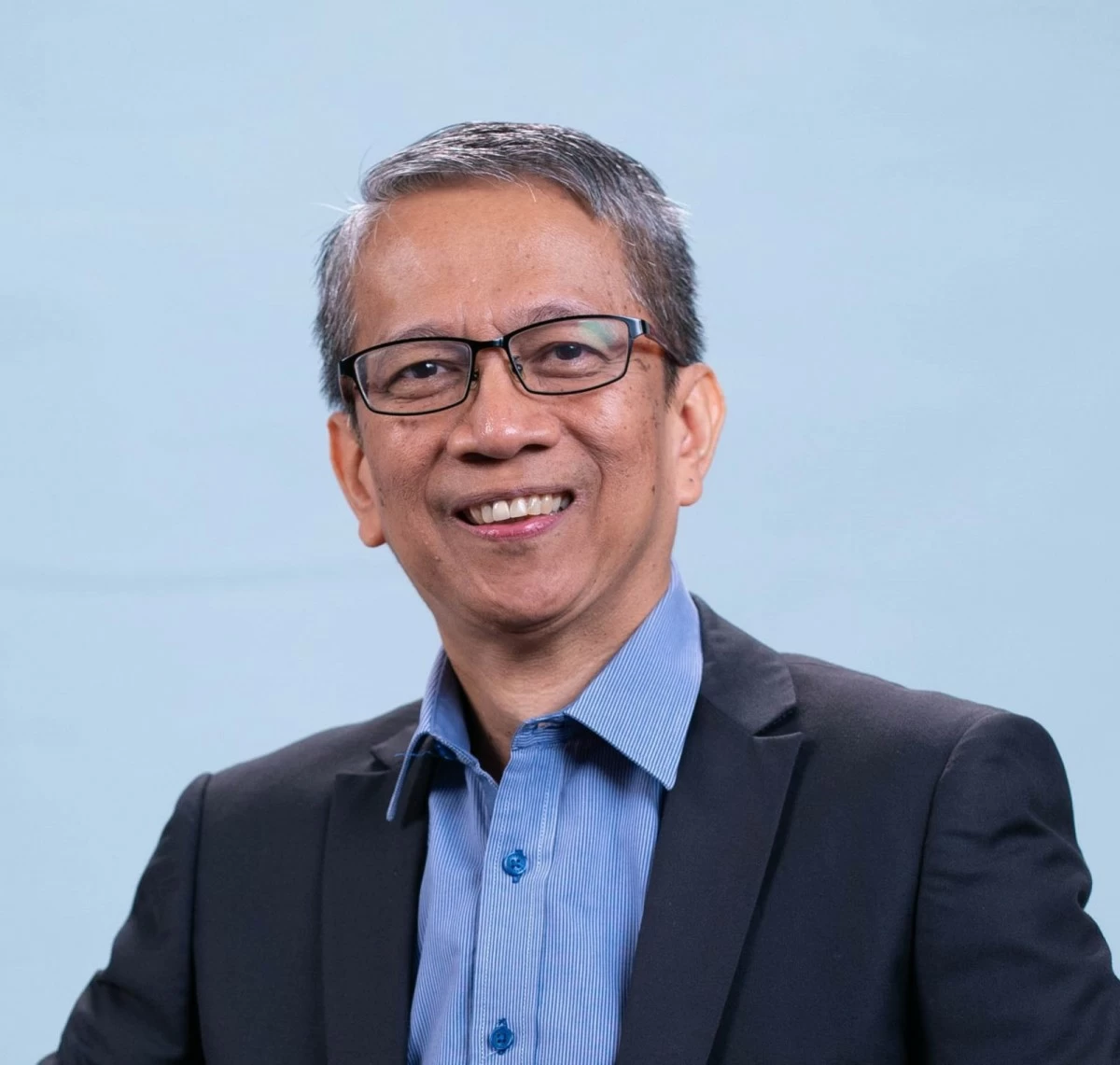
Nicomedes ‘Nick’ Alviar, PhD is with the School of Politics and Governance, University of Asia and the Pacific (UA&P).