







Philippines, US 'moving fast' on Pax Silica, says US envoy


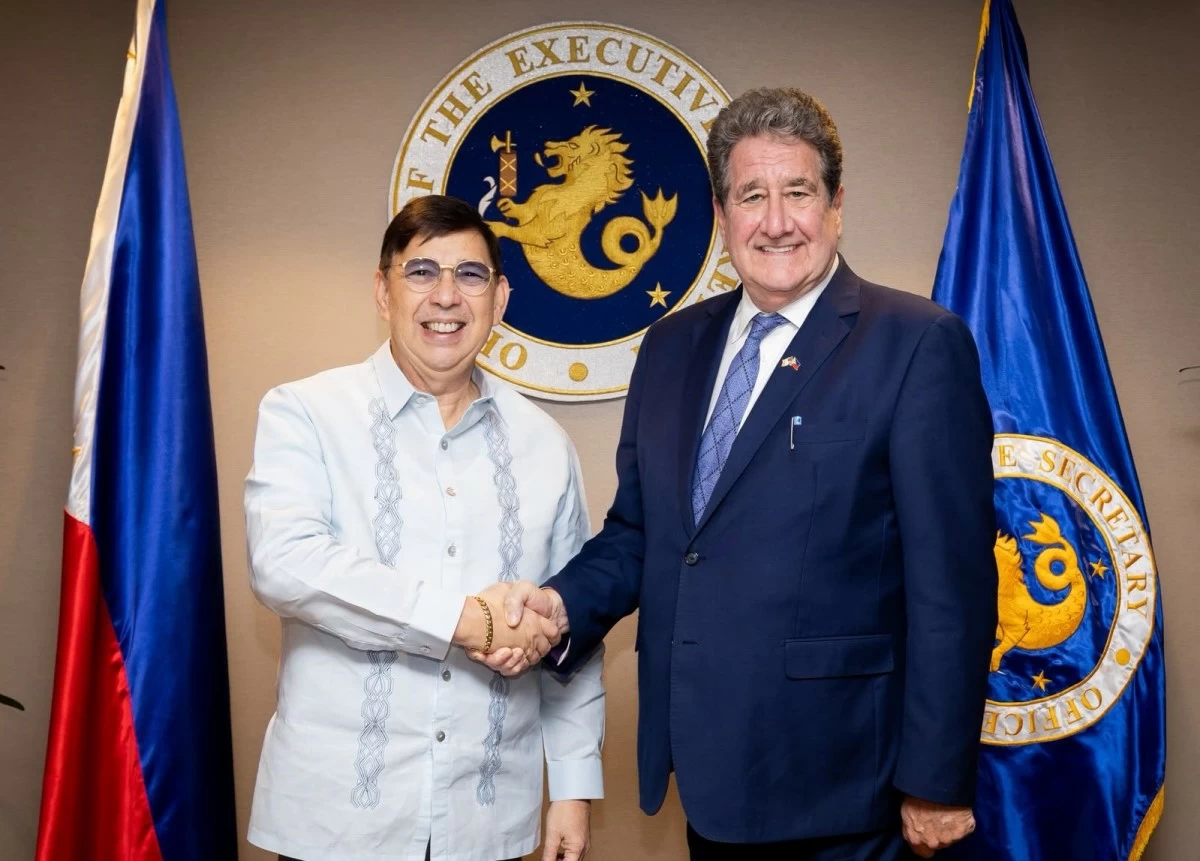
The Philippines and the United States are moving quickly to advance the proposed Pax Silica initiative, with US Ambassador to the Philippines Lee Lipton saying Washington and Manila are "moving FAST" on what he described as one of the two countries' biggest shared priorities.
In a post on X on Friday, July 31, Lipton said he had a "GREAT meeting" with Executive Secretary Ralph Recto, noting that the discussions centered on accelerating both the Luzon Economic Corridor and Pax Silica.
"Just had a GREAT meeting with Executive Secretary Ralph Recto, one of the Philippines' top economic leaders! We're moving FAST on the Luzon Economic Corridor and Pax Silica – HUGE priorities for America and our Filipino #PartnersInProsperity," Lipton wrote.
The post is part of a series of public endorsements by the US envoy highlighting the proposed industrial hub as a key pillar of the growing Philippines-United States partnership.
On Thursday, July 30, Lipton praised Department of National Defense (DND) Secretary Gilberto Teodoro Jr.'s defense of the project, writing: "Powerful message from Sec. Teodoro on #PaxSilica and the path forward for the Philippines! Proud to work together to build a #SafeStrongProsperous future."
Teodoro described Pax Silica as "a step toward national resilience," saying the project would help prepare the country for future economic and technological challenges despite criticism from some sectors.
"It is a step toward national resilience. Criticizing without realizing the challenges that this country and future generations need to meet, and refusing to evolve with the times, is a bigger challenge for us,” the Defense chief said.
“So, for the critics, a closed mindset in today's day and age means to say that you'll never be able to position your country to face the challenges of the future," he added.
A day earlier, Lipton also threw his support behind President Marcos' vision for the project, saying: "I completely agree with President @BongbongMarcos! #PaxSilica promises a #SafeStrongProsperous future for Filipinos and Americans."
During his fifth State of the Nation Address (SONA), President Marcos presented Pax Silica as one of the administration's flagship industrial initiatives that would anchor the country's push into artificial intelligence and advanced manufacturing.
"The Pax Silica Industrial Hub will create an ecosystem that will have AI at its core,” Marcos said.
“It will bring quality jobs to our people, accelerate our industrial competitiveness, and revitalize our economy," he added.
The proposed Pax Silica Economic Security Zone is a planned Philippine-United States initiative within the Luzon Economic Corridor that aims to develop a strategic hub for semiconductors, artificial intelligence, critical minerals processing, advanced manufacturing, and digital infrastructure, while attracting investment and creating high-quality jobs.
Both governments have described the initiative as a key component of efforts to strengthen supply chain resilience, expand high-value manufacturing, and position the Philippines as a regional center for emerging technologies.
The proposal, however, has raised concerns from various groups about its projected water and power requirements, potential environmental impacts, the conversion of agricultural land, the potential displacement of farming communities, and the role of foreign investors in developing the country's strategic mineral resources.
Some critics have also questioned whether the initiative could compromise Philippine sovereignty and control over critical resources because of the planned participation of American companies.
Malacañang has repeatedly sought to allay those concerns, with Presidential Communications Office (PCO) Undersecretary Claire Castro saying that President Marcos has directed the project to be implemented in accordance with Philippine laws, while ensuring the protection of the environment and the welfare of affected communities.
Citing the National Water Resources Board (NWRB), Castro said available water sources within the proposed project area are sufficient to meet the project's requirements without affecting nearby communities, while the Department of Environment and Natural Resources (DENR) will require environmental impact assessments, environmental management plans, and continuous compliance monitoring.
The Palace has likewise dismissed concerns that the project could result in foreign control of the country's critical mineral resources, stressing that all investments will remain subject to Philippine laws and regulations and reiterating President Marcos' position that the country "will not surrender even a square inch of our territory to any foreign power."
Castro also assured that the government would protect the livelihood of affected farmers should any displacement occur, adding that authorities have yet to receive reports that farmers have been displaced by the proposed development.
Vice President Sara Duterte, meanwhile, recently declined to comment on Pax Silica when asked by reporters during an interview in The Hague, saying only that she had "no comment."
Even before this week's series of posts, Lipton had consistently promoted the initiative on social media, including after visiting the proposed project site where he described Pax Silica as "the FUTURE of US-Philippine partnership" that would create "endless jobs through emerging technologies, investment, and infrastructure."
The US envoy has repeatedly portrayed Pax Silica as a cornerstone of the expanding Philippines-United States partnership, complementing the two countries' growing cooperation in economic security, critical technologies, infrastructure development, and regional supply chains.