ADVERTISEMENT

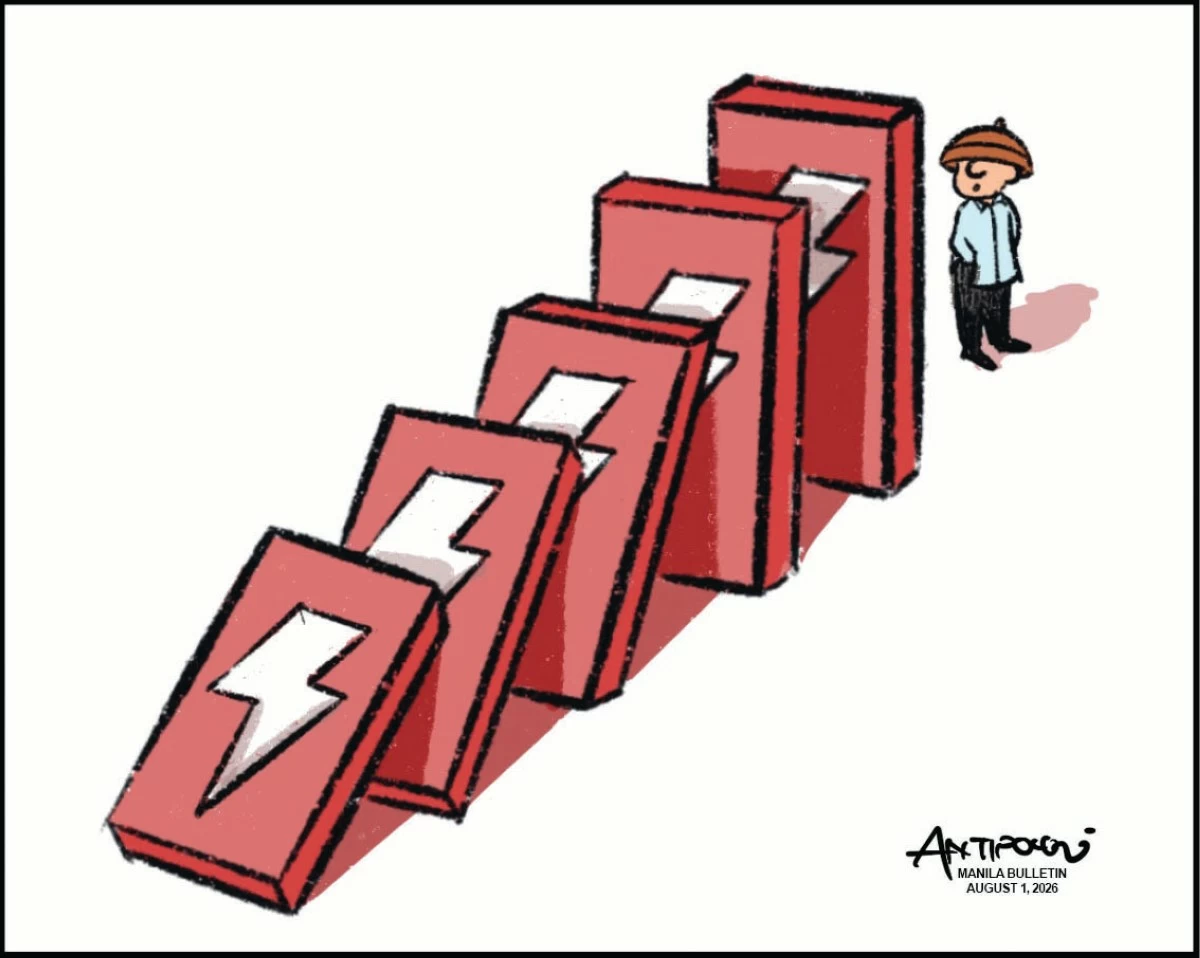
Electricity doesn't fall free from heaven

Published Aug 1, 2026 12:05 am
A former Cabinet official likes to remind listeners of an unyielding truth: “Nothing comes free from heaven, and everything is a trade-off.”
It is a principle that populist politics regularly tries to sidestep. For decades, a political culture built on sweeping promises has fed the illusion that basic costs can simply be legislated away. In Congress, pending bills routinely propose consumer relief without ever identifying where the funding will come from.
The latest crowd-pleasing soundbite came during President Ferdinand Marcos Jr.’s State of the Nation Address (SONA), when he called for an immediate amendment to the 25-year-old Electric Power Industry Reform Act (EPIRA) to ban utilities from passing “system loss” charges onto consumers.
The logic feels appealing—nobody wants to pay for power they did not use. But recovering the cost of electricity loss is standard practice worldwide, even if calculation methods and billing displays vary by country. Crucially, energy distribution operates under the laws of physics, not legislative decree.
When electricity travels across copper wires, natural resistance converts a portion of that energy into heat. Even ultra-modern power grids in Singapore and South Korea experience these unavoidable “technical losses.” Combine that physical reality with “non-technical losses”—power theft through illegal jumper cables, defective meters, and administrative errors—and you get total system loss. Erasing that loss entirely is a physical impossibility.
Energy stakeholders have voiced support for reviewing EPIRA, but they caution against cutting system loss charges without a clear plan to recover those costs. The Manila Electric Co. (Meralco), the country’s largest utility, noted that while it keeps its charges around five percent—well below the Energy Regulatory Commission's (ERC) 5.5 percent cap for private utilities—some level of technical loss remains inherent in operating any grid.
The real crisis looms in the provinces. The Philippine Rural Electric Cooperatives Association (Philreca), representing 121 electric cooperatives, warned that losses on rural networks stem from thermodynamics and sprawling terrain rather than poor management. While the ERC caps co-op losses at 8.25 percent, the Department of Energy (DOE) noted that some inefficient cooperatives suffer losses as high as 16 percent. Outlawing loss recovery without state subsidies, Philreca warned, will simply drive non-profit co-ops into bankruptcy.
If rural distributors fail, state entities like the National Power Corp. will have to step in to keep regional grids running. Taxpayers would ultimately fund government bailouts and loan guarantees, while the treasury forfeits the value-added tax (VAT) revenue currently collected on those billing lines.
Government agencies are now scrambling to figure out how to handle the proposed ban. The ERC emphasized that any reduction in system loss caps must be grounded in technical reality rather than arbitrary mandates, asking whether utilities are actually ready to absorb the hit without compromising operations. Instead of an outright ban, Philreca has urged Congress to adopt a performance-driven transition model with customized, feeder-specific caps, paired with government funding for grid upgrades and anti-pilferage enforcement.
To cushion the policy shift, the DOE noted that the agency and the National Electrification Administration are evaluating soft loans to help co-ops modernize. Yet financing grid upgrades through state-backed loans merely shuffles the bill from one government account to another.
As Meralco's chairman pointed out, nature is commanded only by obeying its laws. Moving electricity creates resistance, resistance creates loss, and someone has to absorb that cost. Shifting tens of billions of pesos in losses onto power producers and distributors threatens the stability of the entire energy sector.
Pretending that technical line loss is merely corporate greed makes for great political theater, but terrible economic policy. Outlawing the laws of physics will not lower the cost of living; it only ensures that citizens pay a much steeper price when the grid goes dark.
ADVERTISEMENT
.most-popular .layout-ratio{ padding-bottom: 79.13%; } @media (min-width: 768px) and (max-width: 1024px) { .widget-title { font-size: 15px !important; } }

{{ articles_filter_1561_widget.title }}

.most-popular .layout-ratio{ padding-bottom: 79.13%; } @media (min-width: 768px) and (max-width: 1024px) { .widget-title { font-size: 15px !important; } }

{{ static_articles_1562_widget.title }}

.most-popular .layout-ratio{ padding-bottom: 79.13%; } @media (min-width: 768px) and (max-width: 1024px) { .widget-title { font-size: 15px !important; } }

{{ articles_filter_1563_widget.title }}

{{ articles_filter_1564_widget.title }}

.mb-article-details { position: relative; } .mb-article-details .article-body-preview, .mb-article-details .article-body-summary{ font-size: 17px; line-height: 30px; font-family: "Libre Caslon Text", serif; color: #000; } .mb-article-details .article-body-preview iframe , .mb-article-details .article-body-summary iframe{ width: 100%; margin: auto; } .read-more-background { background: linear-gradient(180deg, color(display-p3 1.000 1.000 1.000 / 0) 13.75%, color(display-p3 1.000 1.000 1.000 / 0.8) 30.79%, color(display-p3 1.000 1.000 1.000) 72.5%); position: absolute; height: 200px; width: 100%; bottom: 0; display: flex; justify-content: center; align-items: center; padding: 0; } .read-more-background a{ color: #000; } .read-more-btn { padding: 17px 45px; font-family: Inter; font-weight: 700; font-size: 18px; line-height: 16px; text-align: center; vertical-align: middle; border: 1px solid black; background-color: white; } .hidden { display: none; }
function initializeAllSwipers() { // Get all hidden inputs with cms_article_id document.querySelectorAll('[id^="cms_article_id_"]').forEach(function (input) { const cmsArticleId = input.value; const articleSelector = '#article-' + cmsArticleId + ' .body_images'; const swiperElement = document.querySelector(articleSelector); if (swiperElement && !swiperElement.classList.contains('swiper-initialized')) { new Swiper(articleSelector, { loop: true, pagination: false, navigation: { nextEl: '#article-' + cmsArticleId + ' .swiper-button-next', prevEl: '#article-' + cmsArticleId + ' .swiper-button-prev', }, }); } }); } setTimeout(initializeAllSwipers, 3000); const intersectionObserver = new IntersectionObserver( (entries) => { entries.forEach((entry) => { if (entry.isIntersecting) { const newUrl = entry.target.getAttribute("data-url"); if (newUrl) { history.pushState(null, null, newUrl); let article = entry.target; // Extract metadata const author = article.querySelector('.author-section').textContent.replace('By', '').trim(); const section = article.querySelector('.section-info ').textContent.replace(' ', ' '); const title = article.querySelector('.article-title h1').textContent; // Parse URL for Chartbeat path format const parsedUrl = new URL(newUrl, window.location.origin); const cleanUrl = parsedUrl.host + parsedUrl.pathname; // Update Chartbeat configuration if (typeof window._sf_async_config !== 'undefined') { window._sf_async_config.path = cleanUrl; window._sf_async_config.sections = section; window._sf_async_config.authors = author; } // Track virtual page view with Chartbeat if (typeof pSUPERFLY !== 'undefined' && typeof pSUPERFLY.virtualPage === 'function') { try { pSUPERFLY.virtualPage({ path: cleanUrl, title: title, sections: section, authors: author }); } catch (error) { console.error('ping error', error); } } // Optional: Update document title if (title && title !== document.title) { document.title = title; } } } }); }, { threshold: 0.1 } ); function showArticleBody(button) { const article = button.closest("article"); const summary = article.querySelector(".article-body-summary"); const body = article.querySelector(".article-body-preview"); const readMoreSection = article.querySelector(".read-more-background"); // Hide summary and read-more section summary.style.display = "none"; readMoreSection.style.display = "none"; // Show the full article body body.classList.remove("hidden"); } document.addEventListener("DOMContentLoaded", () => { let loadCount = 0; // Track how many times articles are loaded const offset = [1, 2, 3, 4, 5, 6, 7, 8, 9, 10]; // Offset values const currentUrl = window.location.pathname.substring(1); let isLoading = false; // Prevent multiple calls if (!currentUrl) { console.log("Current URL is invalid."); return; } const sentinel = document.getElementById("load-more-sentinel"); if (!sentinel) { console.log("Sentinel element not found."); return; } function isSentinelVisible() { const rect = sentinel.getBoundingClientRect(); return ( rect.top < window.innerHeight && rect.bottom >= 0 ); } function onScroll() { if (isLoading) return; if (isSentinelVisible()) { if (loadCount >= offset.length) { console.log("Maximum load attempts reached."); window.removeEventListener("scroll", onScroll); return; } isLoading = true; const currentOffset = offset[loadCount]; window.loadMoreItems().then(() => { let article = document.querySelector('#widget_1690 > div:nth-last-of-type(2) article'); intersectionObserver.observe(article) loadCount++; }).catch(error => { console.error("Error loading more items:", error); }).finally(() => { isLoading = false; }); } } window.addEventListener("scroll", onScroll); });

Sign up by email to receive news.