ADVERTISEMENT

Australia backs fight against drug-resistant tuberculosis

Published Aug 1, 2026 03:08 pm
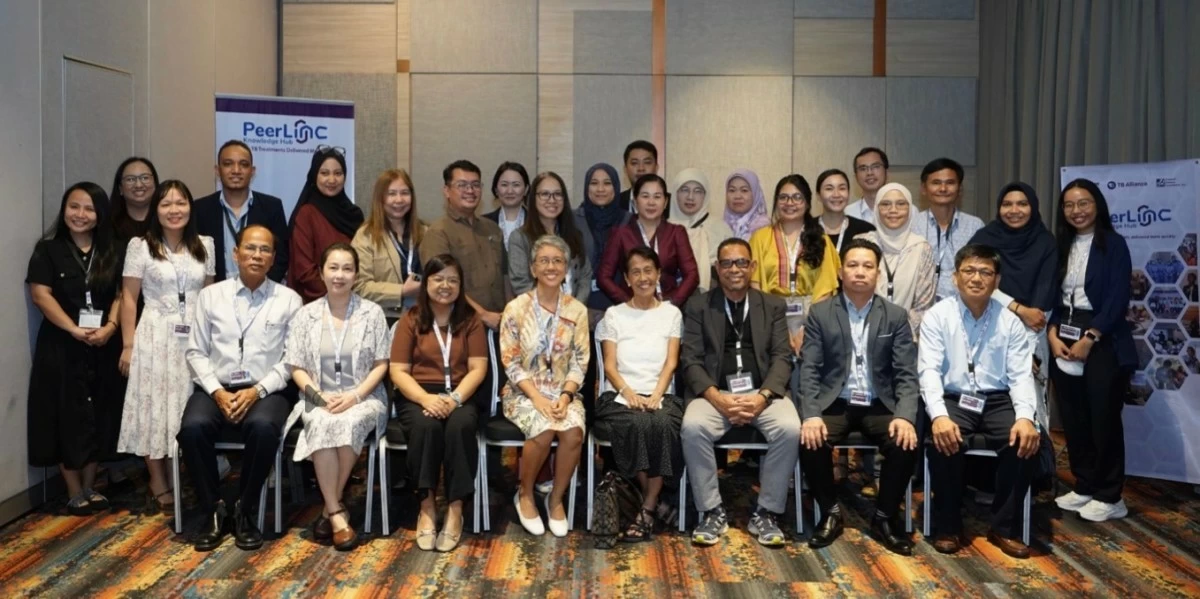
Delegates and partners from across Southeast Asia gather at the PeerLINC regional workshop in Makati, where country teams exchanged practical lessons and developed next steps to strengthen drug-resistant tuberculosis care. (Photos: PeerLINC)
Health security rarely makes headlines, but it remains one of the most practical forms of diplomacy. That was evident as healthcare professionals, tuberculosis specialists, and public health officials from seven Southeast Asian countries gathered in Makati City for a regional capacity-building program aimed at strengthening the fight against drug-resistant tuberculosis (DR-TB).
Organized by the PeerLINC Knowledge Hub in partnership with TB Alliance and the Tropical Disease Foundation (TDF), the four-day program was supported by the Australian Government through AusAID and brought together delegates from Cambodia, Indonesia, Lao PDR, Malaysia, Timor-Leste, Vietnam, and the Philippines.
Rather than focusing solely on scientific advances, the training emphasized something equally important: helping countries learn directly from one another as they adapt new treatment approaches to their own healthcare systems.
Opening the program, Patrick Angeles, Program Officer for Health Partnerships at the Australian Embassy in the Philippines, highlighted the value of regional cooperation in addressing health challenges that do not recognize national borders.
“This PeerLINC regional training is an important platform to exchange knowledge,” Angeles said. “We encourage participants to draw not only from the expertise of our resource persons and site visits, but also from each other’s successes and challenges.”
He added that Australia’s development cooperation places strong emphasis on building lasting professional relationships, expressing hope that participants would leave with not only new technical knowledge but also a network of colleagues they could continue working with long after the training concluded.
The initiative reflects Australia’s continuing support for strengthening health systems across the region through technical cooperation and knowledge sharing.
That partnership has grown steadily in recent years. In 2025, Australia’s Department of Foreign Affairs and Trade also supported a PeerLINC regional training involving delegates from Somalia and several Pacific Island countries, underscoring Australia’s broader commitment to improving regional preparedness against infectious diseases.
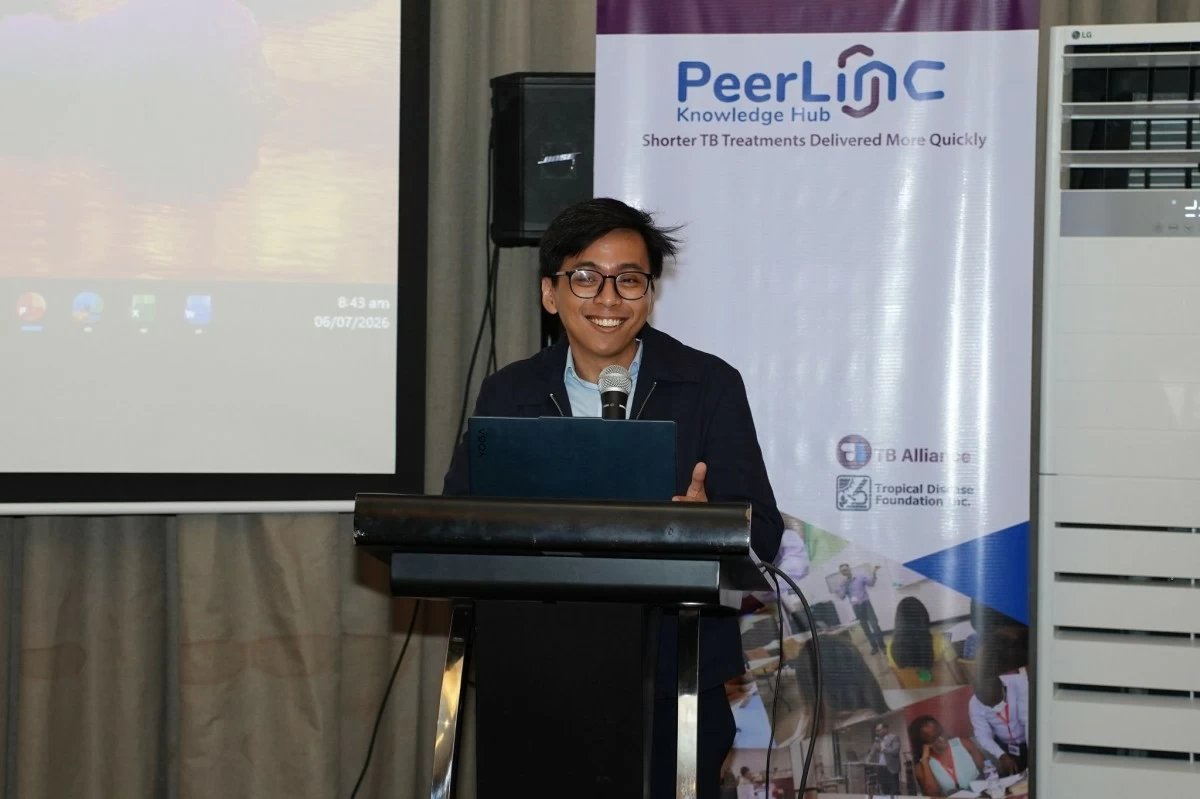
Patrick Angeles, Program Officer for Health Partnerships at the Australian Embassy in the Philippines, underscored the value of regional cooperation, peer learning, and people-to-people partnerships in addressing drug-resistant tuberculosis.
Over four days, participants explored the implementation of newer, shorter, and more patient-centered treatment regimens for drug-resistant tuberculosis through technical discussions, clinical case exercises, cross-country exchanges, and field visits to health facilities in Makati and Pasay.
The visits allowed delegates to observe how treatment protocols are applied beyond the classroom and within community health settings.
For Michelle Goroh, a public health physician and tuberculosis program manager with Malaysia’s Sabah State Health Department, the opportunity to visit Philippine health facilities proved especially valuable.
“We were able to assess the accessibility of health facilities, the availability of tests, the acceptability of BPaLM/BPaL regimens among patients, and the feasibility of implementing drug-resistant TB care in the Philippines,” she said.
Dr. Eden Mendoza-Hisey, head of the PeerLINC Knowledge Hub, said the program was designed to help countries move beyond clinical evidence toward practical implementation.
“When program leaders learn from peers who have already worked through similar challenges, they can adapt practical solutions more effectively and strengthen the care available to patients,” she said.
The program concluded with each delegation developing country-specific action plans for the coming year, covering priorities in diagnostics, clinical care, patient support, and program management. While tuberculosis remains a national public health concern, controlling drug-resistant strains increasingly depends on countries sharing knowledge, experience, and practical solutions across borders.
For Australia, supporting such initiatives represents another example of how development cooperation extends beyond financial assistance. It is equally about building the regional partnerships and professional networks needed to confront shared challenges together.

Related Tags

Embassy of Australia PeerLINC
ADVERTISEMENT
.most-popular .layout-ratio{ padding-bottom: 79.13%; } @media (min-width: 768px) and (max-width: 1024px) { .widget-title { font-size: 15px !important; } }

{{ articles_filter_1561_widget.title }}

.most-popular .layout-ratio{ padding-bottom: 79.13%; } @media (min-width: 768px) and (max-width: 1024px) { .widget-title { font-size: 15px !important; } }

{{ static_articles_1562_widget.title }}

.most-popular .layout-ratio{ padding-bottom: 79.13%; } @media (min-width: 768px) and (max-width: 1024px) { .widget-title { font-size: 15px !important; } }

{{ articles_filter_1563_widget.title }}

{{ articles_filter_1564_widget.title }}

.mb-article-details { position: relative; } .mb-article-details .article-body-preview, .mb-article-details .article-body-summary{ font-size: 17px; line-height: 30px; font-family: "Libre Caslon Text", serif; color: #000; } .mb-article-details .article-body-preview iframe , .mb-article-details .article-body-summary iframe{ width: 100%; margin: auto; } .read-more-background { background: linear-gradient(180deg, color(display-p3 1.000 1.000 1.000 / 0) 13.75%, color(display-p3 1.000 1.000 1.000 / 0.8) 30.79%, color(display-p3 1.000 1.000 1.000) 72.5%); position: absolute; height: 200px; width: 100%; bottom: 0; display: flex; justify-content: center; align-items: center; padding: 0; } .read-more-background a{ color: #000; } .read-more-btn { padding: 17px 45px; font-family: Inter; font-weight: 700; font-size: 18px; line-height: 16px; text-align: center; vertical-align: middle; border: 1px solid black; background-color: white; } .hidden { display: none; }
function initializeAllSwipers() { // Get all hidden inputs with cms_article_id document.querySelectorAll('[id^="cms_article_id_"]').forEach(function (input) { const cmsArticleId = input.value; const articleSelector = '#article-' + cmsArticleId + ' .body_images'; const swiperElement = document.querySelector(articleSelector); if (swiperElement && !swiperElement.classList.contains('swiper-initialized')) { new Swiper(articleSelector, { loop: true, pagination: false, navigation: { nextEl: '#article-' + cmsArticleId + ' .swiper-button-next', prevEl: '#article-' + cmsArticleId + ' .swiper-button-prev', }, }); } }); } setTimeout(initializeAllSwipers, 3000); const intersectionObserver = new IntersectionObserver( (entries) => { entries.forEach((entry) => { if (entry.isIntersecting) { const newUrl = entry.target.getAttribute("data-url"); if (newUrl) { history.pushState(null, null, newUrl); let article = entry.target; // Extract metadata const author = article.querySelector('.author-section').textContent.replace('By', '').trim(); const section = article.querySelector('.section-info ').textContent.replace(' ', ' '); const title = article.querySelector('.article-title h1').textContent; // Parse URL for Chartbeat path format const parsedUrl = new URL(newUrl, window.location.origin); const cleanUrl = parsedUrl.host + parsedUrl.pathname; // Update Chartbeat configuration if (typeof window._sf_async_config !== 'undefined') { window._sf_async_config.path = cleanUrl; window._sf_async_config.sections = section; window._sf_async_config.authors = author; } // Track virtual page view with Chartbeat if (typeof pSUPERFLY !== 'undefined' && typeof pSUPERFLY.virtualPage === 'function') { try { pSUPERFLY.virtualPage({ path: cleanUrl, title: title, sections: section, authors: author }); } catch (error) { console.error('ping error', error); } } // Optional: Update document title if (title && title !== document.title) { document.title = title; } } } }); }, { threshold: 0.1 } ); function showArticleBody(button) { const article = button.closest("article"); const summary = article.querySelector(".article-body-summary"); const body = article.querySelector(".article-body-preview"); const readMoreSection = article.querySelector(".read-more-background"); // Hide summary and read-more section summary.style.display = "none"; readMoreSection.style.display = "none"; // Show the full article body body.classList.remove("hidden"); } document.addEventListener("DOMContentLoaded", () => { let loadCount = 0; // Track how many times articles are loaded const offset = [1, 2, 3, 4, 5, 6, 7, 8, 9, 10]; // Offset values const currentUrl = window.location.pathname.substring(1); let isLoading = false; // Prevent multiple calls if (!currentUrl) { console.log("Current URL is invalid."); return; } const sentinel = document.getElementById("load-more-sentinel"); if (!sentinel) { console.log("Sentinel element not found."); return; } function isSentinelVisible() { const rect = sentinel.getBoundingClientRect(); return ( rect.top < window.innerHeight && rect.bottom >= 0 ); } function onScroll() { if (isLoading) return; if (isSentinelVisible()) { if (loadCount >= offset.length) { console.log("Maximum load attempts reached."); window.removeEventListener("scroll", onScroll); return; } isLoading = true; const currentOffset = offset[loadCount]; window.loadMoreItems().then(() => { let article = document.querySelector('#widget_1690 > div:nth-last-of-type(2) article'); intersectionObserver.observe(article) loadCount++; }).catch(error => { console.error("Error loading more items:", error); }).finally(() => { isLoading = false; }); } } window.addEventListener("scroll", onScroll); });

Sign up by email to receive news.