

ADVERTISEMENT

PNP expands bomb threat training to strengthen police response

Published Jul 31, 2026 03:41 pm

At A Glance

  • The Philippine National Police (PNP) has expanded specialized training on improvised explosive device (IED) threats to strengthen the capability of police investigators, bomb disposal personnel, and K-9 units in responding to bomb-related incidents.
  • Police Gen. Jose Melencio C. Nartatez Jr., PNP chief, said continuous training is essential as security threats continue to evolve, stressing that police officers must keep their knowledge and skills up to date.
  • The symposium built on a March 2026 training in Bohol and introduced updated techniques in bomb threat identification, analysis, investigation, and case build-up, with the PNP planning more local and overseas training for specialized units.
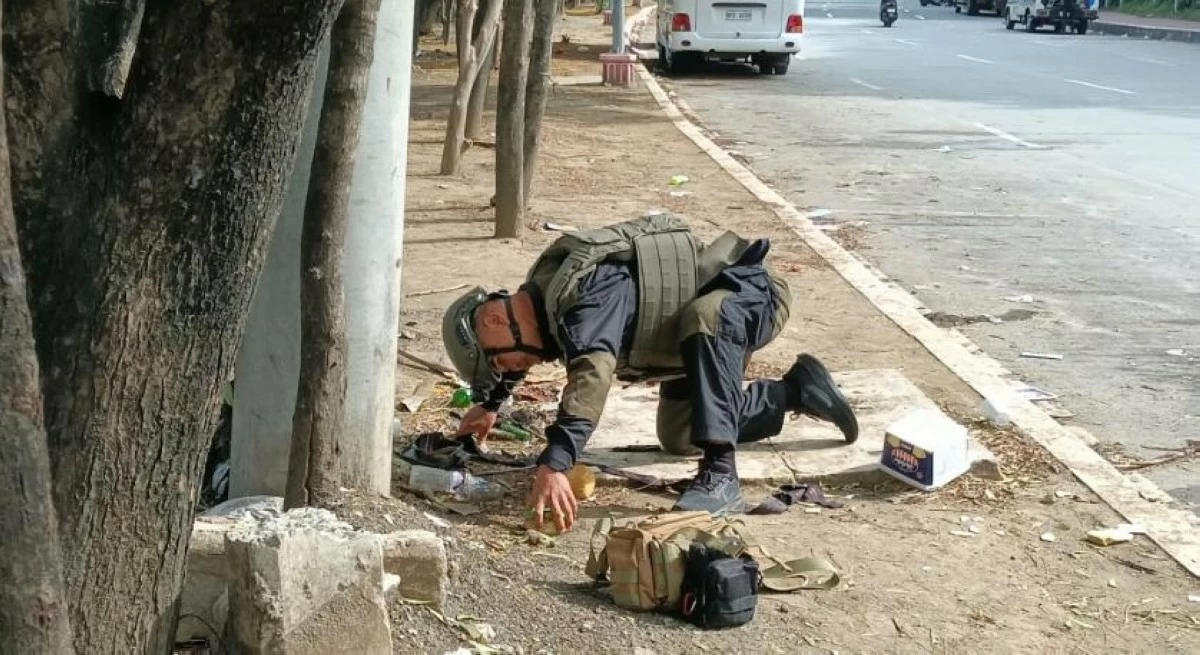
A member of the PNP bomb disposal unit checks on an improvised explosive device shortly after it was safely disposed on Diokno Boulevard in Pasay City on Monday morning, July 27, 2026, or hours before President Marcos' 5th SONA.  (photo: PNP)
A member of the PNP bomb disposal unit checks on an improvised explosive device shortly after it was safely disposed on Diokno Boulevard in Pasay City on Monday morning, July 27, 2026, or hours before President Marcos' 5th SONA. (photo: PNP)
The Philippine National Police (PNP) said it has widened specialized instruction for its personnel handling explosive-related incidents as part of efforts to improve operational readiness against emerging security threats.
Police Gen. Jose Melencio C. Nartatez Jr., PNP chief, said the police force will continue providing seminars and specialized courses to enhance the investigative and operational capabilities of police officers assigned to various fields of law enforcement.
“The nature of threats and the peace and order landscape are continuously evolving. We have to innovate and we have to continuously upgrade our knowledge and skills to ensure that we will be able to respond properly,” Nartatez said during the closing ceremony of the Improvised Explosive Device (IED) Threat and Security Symposium in Malay, Aklan on Friday, July 31.
“When it comes to peace and order and security, the Philippine National Police should always be updated and not left behind,” he added.
The symposium gathered police investigators and personnel from bomb disposal and K-9 units down to the regional and provincial levels.
It served as a follow-up to a similar training conducted in Bohol in March 2026 by the Southeast Asian International Command in partnership with the Australian Federal Police.
This year's training expanded participation to more field personnel and introduced updated approaches in identifying, analyzing, and investigating various bomb threats. The program also focused on strengthening case build-up to support the prosecution of offenders.
According to Nartatez, the activity emphasized capability development, knowledge sharing, and closer coordination among partner agencies involved in responding to explosive-related incidents.
“This activity is intended to equip our personnel with all the necessary skills to respond properly in the interest of peace and order and public safety,” he said.
“Through this program, we are able to identify both our strengths and weaknesses in order to further enhance our capability and equipment for various IED threats anytime and anywhere in the country,” he added.
Nartatez said the PNP will continue pursuing similar local and overseas training programs for police personnel assigned to other operational fields and specialized units as part of its continuing capability development program.

Related Tags

PNP bomb disposal training Aklan
ADVERTISEMENT
.most-popular .layout-ratio{ padding-bottom: 79.13%; } @media (min-width: 768px) and (max-width: 1024px) { .widget-title { font-size: 15px !important; } }

{{ articles_filter_1561_widget.title }}

.most-popular .layout-ratio{ padding-bottom: 79.13%; } @media (min-width: 768px) and (max-width: 1024px) { .widget-title { font-size: 15px !important; } }

{{ static_articles_1562_widget.title }}

.most-popular .layout-ratio{ padding-bottom: 79.13%; } @media (min-width: 768px) and (max-width: 1024px) { .widget-title { font-size: 15px !important; } }

{{ articles_filter_1563_widget.title }}

{{ articles_filter_1564_widget.title }}

.mb-article-details { position: relative; } .mb-article-details .article-body-preview, .mb-article-details .article-body-summary{ font-size: 17px; line-height: 30px; font-family: "Libre Caslon Text", serif; color: #000; } .mb-article-details .article-body-preview iframe , .mb-article-details .article-body-summary iframe{ width: 100%; margin: auto; } .read-more-background { background: linear-gradient(180deg, color(display-p3 1.000 1.000 1.000 / 0) 13.75%, color(display-p3 1.000 1.000 1.000 / 0.8) 30.79%, color(display-p3 1.000 1.000 1.000) 72.5%); position: absolute; height: 200px; width: 100%; bottom: 0; display: flex; justify-content: center; align-items: center; padding: 0; } .read-more-background a{ color: #000; } .read-more-btn { padding: 17px 45px; font-family: Inter; font-weight: 700; font-size: 18px; line-height: 16px; text-align: center; vertical-align: middle; border: 1px solid black; background-color: white; } .hidden { display: none; }
function initializeAllSwipers() { // Get all hidden inputs with cms_article_id document.querySelectorAll('[id^="cms_article_id_"]').forEach(function (input) { const cmsArticleId = input.value; const articleSelector = '#article-' + cmsArticleId + ' .body_images'; const swiperElement = document.querySelector(articleSelector); if (swiperElement && !swiperElement.classList.contains('swiper-initialized')) { new Swiper(articleSelector, { loop: true, pagination: false, navigation: { nextEl: '#article-' + cmsArticleId + ' .swiper-button-next', prevEl: '#article-' + cmsArticleId + ' .swiper-button-prev', }, }); } }); } setTimeout(initializeAllSwipers, 3000); const intersectionObserver = new IntersectionObserver( (entries) => { entries.forEach((entry) => { if (entry.isIntersecting) { const newUrl = entry.target.getAttribute("data-url"); if (newUrl) { history.pushState(null, null, newUrl); let article = entry.target; // Extract metadata const author = article.querySelector('.author-section').textContent.replace('By', '').trim(); const section = article.querySelector('.section-info ').textContent.replace(' ', ' '); const title = article.querySelector('.article-title h1').textContent; // Parse URL for Chartbeat path format const parsedUrl = new URL(newUrl, window.location.origin); const cleanUrl = parsedUrl.host + parsedUrl.pathname; // Update Chartbeat configuration if (typeof window._sf_async_config !== 'undefined') { window._sf_async_config.path = cleanUrl; window._sf_async_config.sections = section; window._sf_async_config.authors = author; } // Track virtual page view with Chartbeat if (typeof pSUPERFLY !== 'undefined' && typeof pSUPERFLY.virtualPage === 'function') { try { pSUPERFLY.virtualPage({ path: cleanUrl, title: title, sections: section, authors: author }); } catch (error) { console.error('ping error', error); } } // Optional: Update document title if (title && title !== document.title) { document.title = title; } } } }); }, { threshold: 0.1 } ); function showArticleBody(button) { const article = button.closest("article"); const summary = article.querySelector(".article-body-summary"); const body = article.querySelector(".article-body-preview"); const readMoreSection = article.querySelector(".read-more-background"); // Hide summary and read-more section summary.style.display = "none"; readMoreSection.style.display = "none"; // Show the full article body body.classList.remove("hidden"); } document.addEventListener("DOMContentLoaded", () => { let loadCount = 0; // Track how many times articles are loaded const offset = [1, 2, 3, 4, 5, 6, 7, 8, 9, 10]; // Offset values const currentUrl = window.location.pathname.substring(1); let isLoading = false; // Prevent multiple calls if (!currentUrl) { console.log("Current URL is invalid."); return; } const sentinel = document.getElementById("load-more-sentinel"); if (!sentinel) { console.log("Sentinel element not found."); return; } function isSentinelVisible() { const rect = sentinel.getBoundingClientRect(); return ( rect.top < window.innerHeight && rect.bottom >= 0 ); } function onScroll() { if (isLoading) return; if (isSentinelVisible()) { if (loadCount >= offset.length) { console.log("Maximum load attempts reached."); window.removeEventListener("scroll", onScroll); return; } isLoading = true; const currentOffset = offset[loadCount]; window.loadMoreItems().then(() => { let article = document.querySelector('#widget_1690 > div:nth-last-of-type(2) article'); intersectionObserver.observe(article) loadCount++; }).catch(error => { console.error("Error loading more items:", error); }).finally(() => { isLoading = false; }); } } window.addEventListener("scroll", onScroll); });

Sign up by email to receive news.