






Manila Bulletin
 Philippines
National
Justice Miranda opposed Revilla's bail, cites 'strong evidence of conspiracy'
Philippines
National
Justice Miranda opposed Revilla's bail, cites 'strong evidence of conspiracy'
Philippines
National
Justice Miranda opposed Revilla's bail, cites 'strong evidence of conspiracy'
Justice Miranda opposed Revilla's bail, cites 'strong evidence of conspiracy'
By Jel Santos
Published Jul 31, 2026 09:28 pm
|
Updated Aug 1, 2026 05:27 pm


At A Glance
- In a resolution penned by Associate Justice Fritz Bryn Anthony M. Delos Santos, the anti-graft court's Third Division on July 31 granted bail to Revilla but denied the bail applications of his co-accused, all officials of the DPWH Bulacan 1st District Engineering Office (DEO).
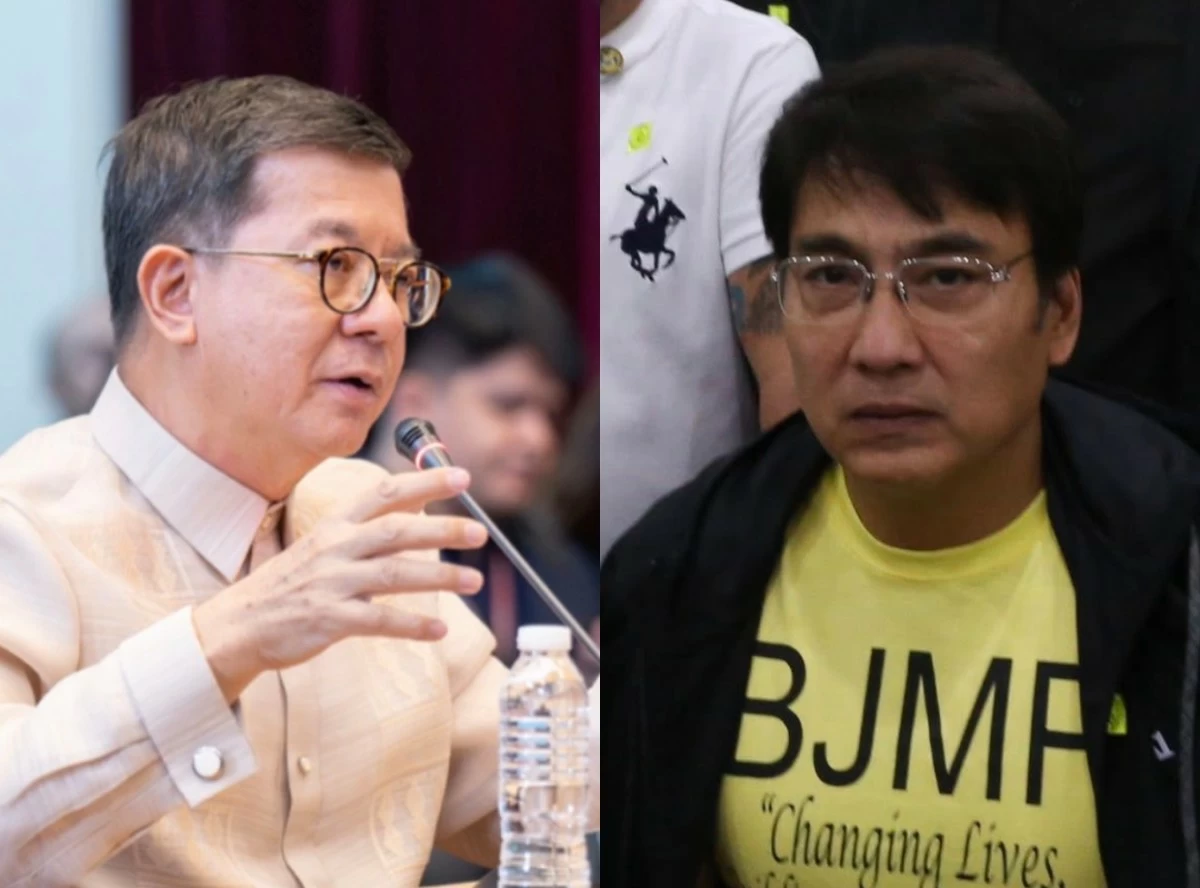
(Photo courtesy of the Philippine Supreme Court Public Information Office X account/MB File)
No less than the sitting chairperson of the Sandiganbayan’s Third Division, Associate Justice Karl B. Miranda, has opposed the grant of bail to former senator Ramon “Bong” Revilla Jr. in connection with the pending malversation case linked to the alleged anomalous P92.8-million flood control project in Pandi, Bulacan.
In a resolution penned by Associate Justice Fritz Bryn Anthony M. Delos Santos, the anti-graft court’s Third Division on July 31 granted bail to Revilla but denied the bail applications of his co-accused, all officials of the DPWH Bulacan 1st District Engineering Office (DEO).
“[J]ustice Karl B. Miranda agreed with the denial of bail of all the accused from DPWH – Bulacan 1st DEO but asserted that there is also strong evidence that Revilla committed the acts alleged in the Information, in furtherance of a conspiracy, and this warrants the denial of his bail,” a briefer of the Concurring and Dissenting Opinion of Justice Miranda stated.
It noted that Associate Justice Ronald B. Moreno, senior member of the Third Division, joined the “main opinion” in granting Revilla’s bail application.
However, he argued that the application for bail of Christina Mae Del Rosario Pienda, former cashier of DPWH – Bulacan 1st DEO, must also be granted, considering that she acted within her official duties and functions under the relevant rules and regulations.
It was noted that Miranda disagreed with three principal conclusions of the “main opinion” that led to the grant of Revilla’s bail.
He disagreed to the following:
First, the main opinion ruled there was no evidence shown that Revilla facilitated the inclusion of the subject project for funding.
Second, the main opinion emphasized that the malversation happened in the implementation stage, in which Revilla had no participation.
Third, the main opinion underscored that there was no proof shown that connects the alleged acts of Revilla of obtaining the list and of facilitating the funding of the subject project to the eventual understanding that the recovery of the advance kickbacks allegedly paid to Revilla will be recovered by his co-accused by way of malversation.
Although Miranda concurred that the alleged malversation took place during the implementation stage of the project, he maintained that the evidence against Revilla must be assessed in the context of the alleged “kalakaran,” or scheme, in the DPWH rather than in isolation.
“Justice Miranda argues that the prosecution was able to present strong evidence against Revilla to warrant the denial of his bail application. At the outset, he emphasized that the alleged acts of Revilla may only be appreciated properly when contextualized in the kalakaran or scheme perpetrated in the DPWH,” the Court Briefer stated.
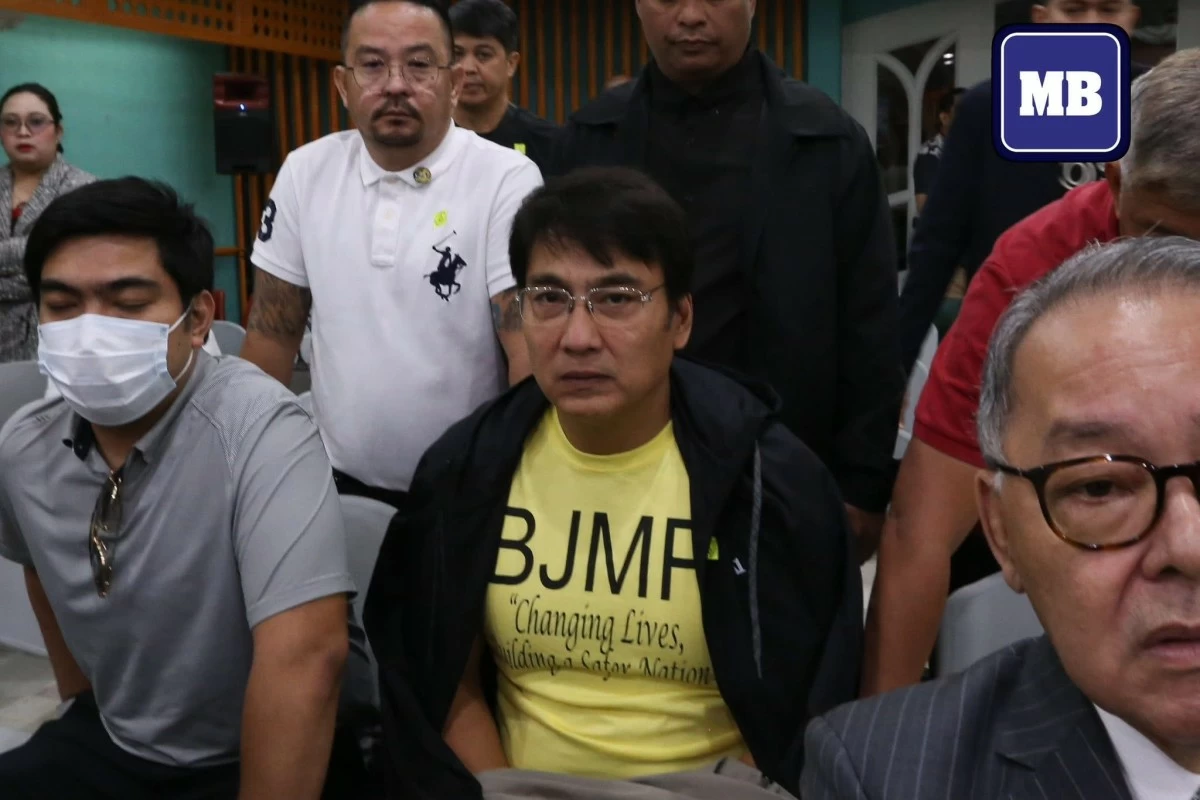
(MB File)
Miranda underscored that because contractors allegedly advance kickbacks as a percentage of the project cost, they would necessarily have to recover those expenses from the project’s allocated funds in order to make a profit.
“In short, a portion of the project’s budget would be diverted to the contractor as reimbursement for the kickback it paid the proponent,” it read.
“This has been confirmed through the testimony of Engr. Alcantara when he admitted to the court that only 30%-35% of the project budget would be left for the actual project implementation.”
With this, Miranda argued that it is erroneous to treat the alleged advance kickback payment to the project proponent as an isolated offense, as the contractor would have to recover the amount through subsequent acts involving public funds, ultimately leaving the government to shoulder the cost of the bribe.
Revilla’s alleged acts, according to Miranda, must be assessed within the context of the alleged scheme, maintaining that his participation should not be considered separately since each participant allegedly performed a different role in executing a common criminal design.
Likewise, the chairperson of the Third Division said that the terms “facilitated” and “caused” in the Information must be understood in their ordinary and plain meaning.
“Hence, it is not required to prove that Revilla personally intervened in congressional deliberations to ensure the funding of the project. It is sufficient to show that he committed overt acts, in the absence of which, the project would not have been included in the GAA.”
‘Evidence of conspiracy’
Miranda said Revilla acted in furtherance of a conspiracy and stressed that direct proof is not necessary to prove conspiracy because it may be inferred from the acts of the accused.
“Justice Miranda observed that the acts of all the accused, as stated in the Information, depict the scheme perpetrated in the DPWH, involving the project proponent, contractor, and DPWH officials. In other words, the kalakaran or scheme perpetrated in the DPWH already served as the criminal blueprint for the commission of the acts alleged in the Information,” the Court Briefer read.
“As such, the acts of all of the accused, including Revilla, must not be viewed in isolation but as a part of a broader pattern of conduct,” it added.
He clarified that the alleged “kalakaran” centered not on the construction of a “ghost” or non-existent project but on the use of an identified project to divert public funds.
Miranda added that the design already operates even before project implementation, and the diversion of public funds is committed through manipulation of the project identification, funding, and procurement processes.
“In this case, there is strong evidence that Revilla participated in the conspiracy as the project proponent by facilitating the funding of the subject project and receiving advance commissions therefrom,” it stated.
As such, it noted that “Revilla’s participation, as the project proponent, is pivotal in the execution of the conspiracy.”
“By facilitating thefunding of the subject project, Revilla set into motion a series of transactions that culminated in the release of public funds to SYMS,” it said.
“Without Revilla’s participation, there would have been no appropriation to disburse and no opportunity for the other accused to gain access to the project allocation and subsequently misappropriate the same.”
Miranda said the main opinion incorrectly required direct evidence of an agreement that the alleged amounts received by Revilla would be recouped from public funds.
“He argued that such requirement completely disregards the evidence presented by the prosecution of how Revilla’s alleged acts fit in the kalakaran or scheme in the DPWH in which the contractor’s recovery of the advanced kickbacks to the proponent is necessarily implied,” it stated.
Miranda emphasized that the character of the funds allegedly advanced to Revilla did not matter because the Information identified the money released to the contractor as the public funds allegedly malversed.
“Instead, Revilla’s receipt of the advance commissions stands as proof of his assent to the criminal design,” it stated.
“Justice Miranda also maintained that a conspirator need not participate in every stage of the offense. Hence, a project proponent who allegedly initiated and facilitated the funding of a project may be held liable for the subsequent diversion of public funds committed during project implementation, as long as there is proof of a common criminal design.”