







Estate tax: Death should not be taxed twice
Published Jul 31, 2026 12:05 am
|
Updated Jul 30, 2026 05:26 pm


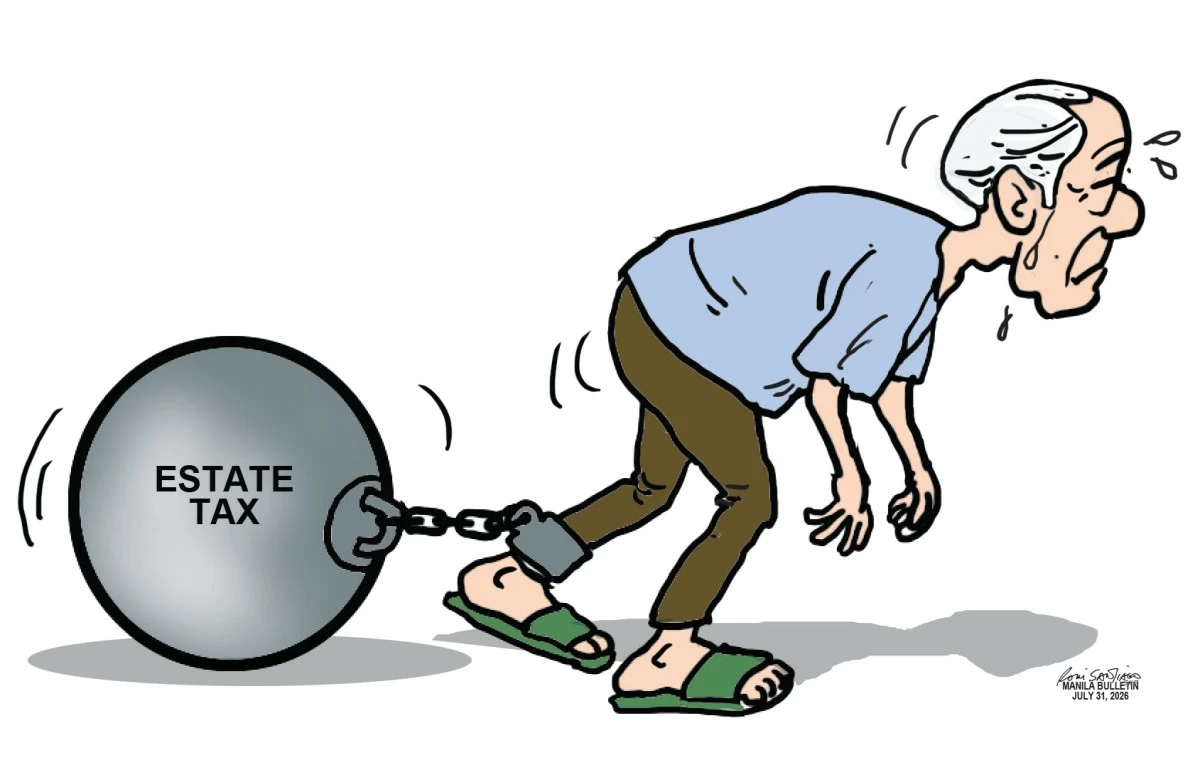
Death is painful enough. It should not become the beginning of another ordeal for the family left behind.
This is why the proposal to revisit the country’s estate tax policy deserves serious attention. More than a fiscal debate, the call by lawmakers to raise the estate tax exemption to at least ₱100 million is a question of fairness, economic common sense, and social justice.
Estate taxes were designed to generate government revenue and promote equity by taxing the transfer of wealth from one generation to another. In principle, the policy has merit. But policies must evolve with changing economic realities. A tax system that has become punitive rather than practical ceases to serve its purpose.
Under the present system, many heirs suffer twice. First comes the taxing emotional devastation of losing a parent, spouse, or loved one. Then comes the financial burden of paying estate taxes that many families simply cannot afford. Properties painstakingly built over decades often remain frozen for years because heirs lack the resources to settle tax obligations. Others are forced into distress sales, disposing of family homes, ancestral lands, or small businesses at prices far below their true value simply to comply with the law.
Where is the justice in that?
The irony is difficult to ignore. During their lifetime, property owners acquired these assets through years of hard work. They paid income taxes on their earnings. They paid value-added taxes on purchases, documentary stamp taxes on transactions, real property taxes year after year, and numerous other government fees. Yet upon death, the same assets become subject once again to a hefty tax before the heirs can legally enjoy what has already been heavily taxed throughout the owner's lifetime.
The government certainly has every right to collect taxes. They finance public services and national development. But taxation must never lose sight of its most important principle—it should be equitable, reasonable, and sensitive to people’s circumstances.
If abolishing the estate tax is neither practical nor fiscally viable, then a drastic reform becomes imperative.
Raising the exemption threshold is an important first step. Inflation and soaring property values have transformed many ordinary homeowners into paper millionaires without making them genuinely wealthy. A modest family home purchased decades ago can now exceed current exemption levels simply because land prices have skyrocketed. That should not automatically classify grieving families alongside the country's wealthiest estates.
The government should also consider more compassionate alternatives. Installment payment schemes extending over longer periods would allow heirs to settle obligations without sacrificing family assets. Interest rates and penalties for delayed settlement could be substantially reduced, especially when delays arise from legitimate financial hardship. Simplifying documentary requirements and digitizing estate settlement procedures would eliminate unnecessary bureaucracy that only adds to families’ burden during an already difficult time.
Perhaps the government could even distinguish between productive assets and speculative wealth. Family farms, small enterprises, and owner-occupied homes contribute directly to livelihoods and local economies. Policies should encourage their continued productive use rather than compel their liquidation.
A more realistic estate tax policy could ultimately benefit the government itself. Lower, affordable taxes often produce higher compliance. Estates that remain unsettled for decades generate no revenue at all. But when taxes become manageable, more heirs are likely to register properties, settle obligations promptly, and place idle assets back into productive economic use. The government can then collect not only estate taxes but also future revenues from capital gains, business activities, and property transactions.
Taxation should never punish families for preserving the fruits of honest labor. A loved one’s lifetime of sacrifice should not end with heirs being forced to surrender what generations worked so hard to build.
A compassionate government is not one that taxes the dead most aggressively. It is one that recognizes that justice includes protecting the living. Estate tax reform is not about granting favors to the wealthy. It is about ensuring that grief is not compounded by financial ruin and that the law reflects both fiscal responsibility and human dignity.
The time has come to make the estate tax not merely collectible, but just.