







Cycling toward change: An open letter to PBBM
Published Jul 31, 2026 06:00 am
|
Updated Jul 31, 2026 04:34 pm


Dear President Ferdinand R. Marcos Jr.,
Don’t leave pedestrians and cyclists behind.
Every State of the Nation Address tells us where our country is headed. This year, I listened as someone who has spent the past several years working alongside people who rely on our roads every day, not behind the wheel of a car, but on bicycles and on foot. Along the way, I have met students who bike to school, workers who walk to save on transport costs, and communities that simply want roads where they can travel safely. Yet our road infrastructure continues to overlook their needs.
Mr. President, this is why your 2026 SONA mattered to our community. Like many cyclists and pedestrians across the country, I listened, hoping that active mobility would finally be recognized as a national infrastructure and climate action priority.
We hoped to hear a concrete roadmap that would uphold active transport infrastructure as a vital tool for climate action, especially in light of the severe and successive cuts to active mobility funding over the past several years.
Budget allocations specifically earmarked for active transport infrastructure have declined significantly in recent years, according to the General Appropriations Act (GAA). Despite the pressing need for safer and more inclusive infrastructure for pedestrians and cyclists, the significant reduction raises concerns about the government’s capacity to expand and maintain these programs.
This reduction also weakens efforts to encourage more people to shift away from private vehicles and fossil fuel dependence. Prioritizing active transportation means maintaining and expanding protected bike lane networks, improving sidewalks and pedestrian crossings, and supporting local governments in building walkable communities.
The past few years since the pandemic have shown that safer spaces for walking and cycling are possible. The challenge now is ensuring that these gains are not lost but are further strengthened.
Unless immediate action is taken, our roads will continue to place vulnerable road users at risk. The Philippine National Police reported a 35 percent increase in road crashes between 2023 and 2024. Today, an average of 32 Filipinos die on our roads every day. Road safety advocates have linked many of these fatalities to road design, underscoring the need for safer infrastructure that protects all road users.
In your SONA 2026, Mr. President, you rightly highlighted railways and the MRT-7 as key public transportation projects. However, there was no mention of the millions of Filipinos who walk and cycle every day; no mention of bike lanes or safer pedestrian crossings. For public transportation to truly embody makatao at makatarungan, our streets must protect every user, not only those who travel by car.
For many of us, that silence was difficult to ignore. National infrastructure planning continues to prioritize motorized transport, leaving ordinary workers and students to navigate shrinking budgets and unsafe roads on their own.
Don’t get me wrong, Mr. President. Expanding mass transit is essential. But every MRT station and bus terminal begins and ends with people walking or cycling. Without safe infrastructure for those first and last miles, even the best transit projects fall short.
More importantly, overlooking active transport also limits one of our most immediate and affordable low-carbon solutions. While industrialization and major transit projects take years to complete, protected walking and cycling networks can help reduce carbon emissions by encouraging more Filipinos to shift to non-motorized transportation.
Despite these policy challenges and shrinking budgets, civil society has refused to stand still. Across the country, youth leaders, cyclists, and climate advocates continue demonstrating that safer streets are possible, even with limited resources.
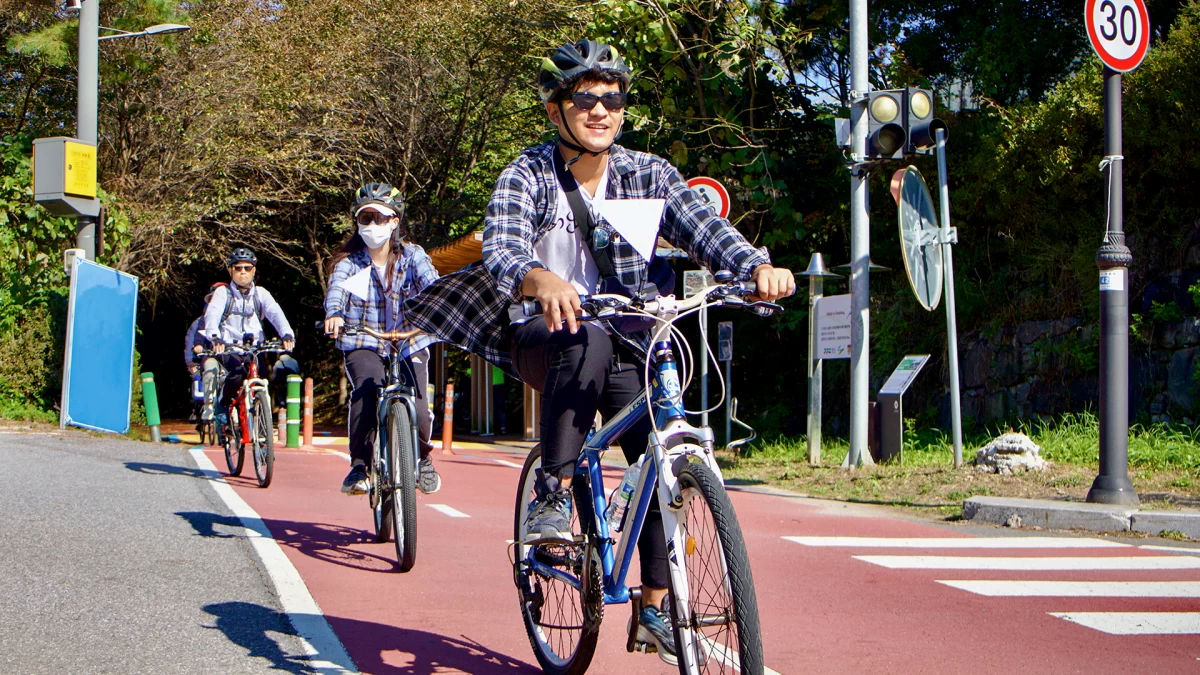
In the CARAGA region, our team of youth leaders has established bicycle parking facilities, launched a campus bike-sharing system, conducted road safety campaigns, and engaged local government officials in active transport planning. These initiatives may seem modest compared with national infrastructure projects, but they demonstrate that people are willing to choose active transport when safe and accessible options are available. Our campus bike-sharing system alone has recorded thousands of student rides, replacing trips that otherwise would have relied on motorized transport.
Last year, I also participated in the country's largest citizen-led bicycle count through the Mobility Awards. Across 15 cities, volunteers recorded more than 218,000 cyclists. This demonstrates that cycling has already become an essential and affordable mode of transportation for many Filipinos.
Mr. President, communities will continue doing their part—organizing, educating, collecting data, partnering with receptive local governments, and proving that safer streets are possible. Those of us on the ground know exactly where bike lanes abruptly end, where sidewalks disappear into ditches, and where commuters hesitate to cross busy roads.
This is why your leadership and your voice matter.
Meaningful national investment in active transport can encourage local governments and other partners to strengthen their own initiatives. Government agencies are better able to align their priorities. Private sector partners become more willing to contribute. Most importantly, Filipinos begin to see walking and cycling not as afterthoughts but as legitimate, dignified, and sustainable ways of moving.
So please don't leave pedestrians and cyclists behind.
Give us transportation systems that protect the climate, save lives, and recognize walking and cycling as essential parts of a transport system that gives every Filipino the freedom to move. (Sheen Milger Ochavo is the founder and executive director of iKilos Bayugan and a Filipino Climate Reality Leader.)