






Manila Bulletin
 Philippines
National
Cordillera peace process reaches final chapter after 15 years – OPAPRU chief
Philippines
National
Cordillera peace process reaches final chapter after 15 years – OPAPRU chief
Philippines
National
Cordillera peace process reaches final chapter after 15 years – OPAPRU chief
Cordillera peace process reaches final chapter after 15 years – OPAPRU chief
Published Jul 31, 2026 03:11 pm


At A Glance
- The national government is preparing to sign a Completion Document that will formally conclude its 15-year implementation of the peace agreement with the Cordillera Bodong Administration-Cordillera People's Liberation Army (CBA-CPLA) and transition to sustaining peace and development.
- OPAPRU Secretary Mel Senen S. Sarmiento said the Marcos administration remains committed to fulfilling all signed peace agreements, stressing that the long-running Cordillera peace process reflects continuity across several administrations.
- The peace process traces its roots to the 1986 Mt. Data Peace Accord and reached a major milestone with the 2011 Closure Agreement and June 2026 Substantial Compliance Agreement, paving the way for the final closure of the government's peace engagement with the former rebel group.
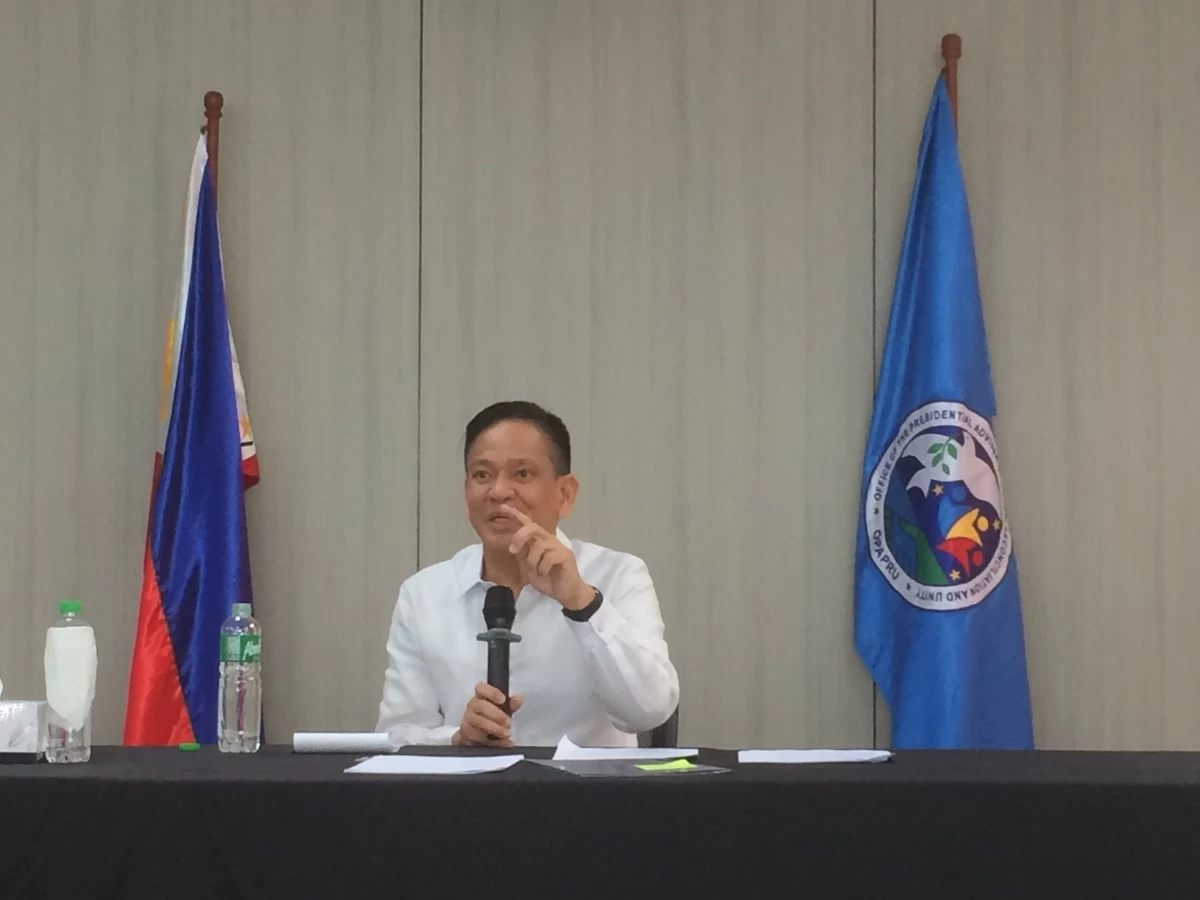
Presidential Peace Adviser Mel Senen S. Sarmiento (Martin A. Sadongdong / MANILA BULLETIN)
The national government is set to formally conclude its peace negotiations with the Cordillera Bodong Administration-Cordillera People's Liberation Army (CBA-CPLA), a former armed group in the Cordillera region that fought for regional autonomy and the protection of indigenous peoples' rights during the 1980s.
Secretary Mel Senen S. Sarmiento of the Office of the Presidential Adviser on Peace, Reconciliation and Unity (OPAPRU) was elated with the fulfillment of commitments made by. both the national government and the CBA-CPLA over the years.
Sarmiento said the planned signing of the Completion Document will formally end the implementation phase of the peace agreement and shift both parties toward sustaining peace and development in the Cordillera.
“The President announced in his most recent State of the Nation Address that the stage is now set to bring the government's historic peace process with the CBA-CPLA to its formal and meaningful conclusion after 15 years,” Sarmiento said during a press conference on Friday, July 31, as he marked his first 100 days in office.
In his SONA last July 27, Marcos cited the completion of the Cordillera peace process alongside the first Bangsamoro parliamentary elections.
Sarmiento said the President's mention underscored the administration's commitment to carrying out all signed peace agreements.
“The President's message is very important because some people ask why the CPLA was mentioned. Peace is a process. From the signing of the agreement, many succeeding agreements had to be signed. If the government had not been serious, we could have abandoned it after the second phase,” he said.
Cordillera peace process
The peace process began with the signing of the Mt. Data Peace Accord on Sept. 13, 1986, which ended hostilities between the government and the CBA-CPLA.
It was followed by a series of agreements, including Administrative Order No. 18 in 2001 that integrated CPLA members into the Armed Forces of the Philippines (AFP).
Finally in 2011, exactly 15 years ago, a Closure Agreement was signed by both parties, which laid out the framework for normalization, socio-economic integration, community development, and organizational transformation.
Sarmiento said the government's consistency over several administrations helped bring the process to its final stage.
“The most important message is continuity. Think about how many presidents have served since then. Now the process is finally receiving full attention because of our President,” he said.
“We want every peace agreement to reach its intended conclusion. Some require acceptance while others require compliance based on the agreed timetable,” he added.
Agreements inked
Last June 25, the government and the CBA-CPLA signed the Substantial Compliance Agreement, recognizing that both sides had fulfilled the core commitments under the 2011 Closure Agreement. The remaining activities now focus on maintaining peace rather than meeting compliance requirements, according to the peace adviser.
Sarmiento further explained that the next step would be the signing of the Completion Document, which will officially transition the peace agreement into its peace sustainability phase.
“The Cordillera Peace Process is recognized as an exemplary model of genuine commitment and transparency in peacebuilding,” he said.
“With the Completion Document, we can expect a stronger, more resilient, and more united Cordillera that is determined to sustain and build on the gains of peace,” the OPAPRU chief added.
Concerns, worries
Sarmiento acknowledged that some former rebels worry the government may lose interest after agreements are signed but he insisted the Marcos administration remains committed to carrying out every obligation.
“There is always some concern among those who sign agreements that they will be forgotten afterward. That will not happen. It will not happen because the President follows the mandate of the Constitution,” he said.
He said the administration is closely monitoring all signed peace agreements, including those with the CBA-CPLA, the Moro National Liberation Front (MNLF), the Moro Islamic Liberation Front MILF), and Kapatiran.
Meanwhile, Sarmiento also stressed that ending armed conflict takes time and sustained engagement.
“I want to make this clear. Peace is a process that cannot be achieved overnight. Our agency remains firmly committed to doing things right. True and lasting peace cannot be rushed. It requires years of listening, understanding, and rebuilding together,” he concluded.