






Manila Bulletin
 Philippines
National
UPLIFT assistance for Group 3 beneficiaries: When will low-income SSS members receive their cash aid?
Philippines
National
UPLIFT assistance for Group 3 beneficiaries: When will low-income SSS members receive their cash aid?
Philippines
National
UPLIFT assistance for Group 3 beneficiaries: When will low-income SSS members receive their cash aid?
UPLIFT assistance for Group 3 beneficiaries: When will low-income SSS members receive their cash aid?
Published Jul 30, 2026 04:37 pm


At A Glance
- Of the estimated 1.5 million low-income SSS members targeted to receive the assistance, 978,290 have been identified for the initial payout "this week or early next week."
- To qualify, an SSS member must be currently employed, have made at least one contribution in the past year, have a monthly salary credit of not more than ₱20,249, and have a disbursement account.
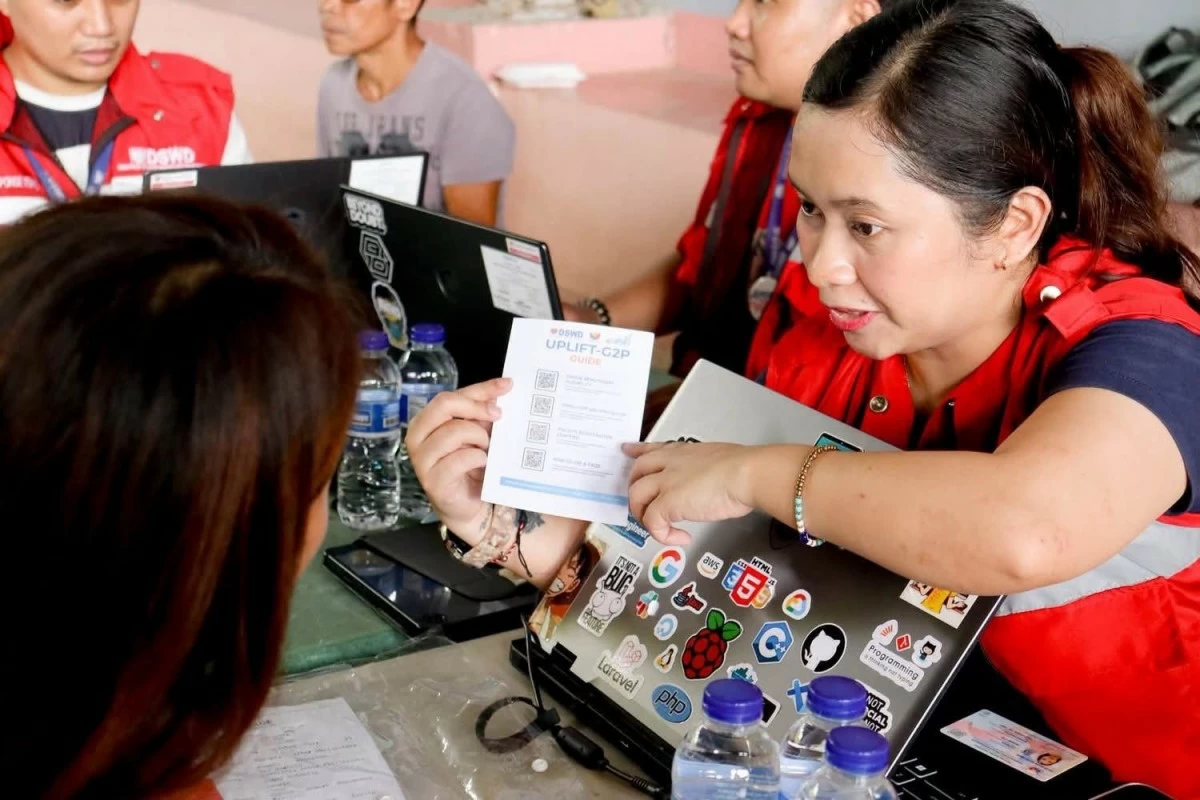
(DSWD photo)
Nearly 1 million low-income members of the Social Security System (SSS) are next in line to receive their initial ₱2,000 assistance under the Unified Package for Livelihood, Industry, Food, and Transport (UPLIFT) program, the Department of Social Welfare and Development (DSWD) said on Thursday, July 30.
Of the estimated 1.5 million low-income SSS members targeted to receive the assistance, 978,290 have been identified for the initial payout “this week or early next week.”
DSWD Undersecretary Adonis Sulit of the Policy and Planning Group (PPG) said SSS has already submitted the initial list of beneficiaries to the Land Bank of the Philippines for processing.
“Magandang balita po, nagsabi na sa amin ang officials ng SSS na naipadala na nila yung listahan sa LandBank. So, very soon, inaasahan namin, siguro pinakamatagal na yung next week na Lunes or Martes. Pero the earliest is until this week ay makakatanggap na po ang mga na-identify na low-income or low-wage earners mula sa registry ng SSS (Good news, the SSS officials told us that they have already sent the list to LandBank. So, very soon, we expect that the latest would be next Monday or Tuesday. But the earliest is that those identified as low-income or low-wage earners from the SSS registry may receive the assistance within this week),” Sulit said in a forum.
Who is included in the initial batch?
The 978,290 beneficiaries are employed SSS members whose records were successfully matched with the Philippine Statistics Authority’s (PSA) Community-Based Monitoring System (CBMS), which the DSWD uses to help identify qualified beneficiaries.
“Ayon po sa datos ng SSS, may na-identify na silang ready na bayaran na 978,000 individuals. Ito, mga employed. Ang ginawa, from the individual database ng SSS, minatch natin siya sa CBMS, kasi yung CBMS, households. Ang rule, isa lang ang puwedeng makinabang sa isang household. So, yung 978,000 individuals, yan po ay parte ng mas malalaking households (According to SSS data, they have identified 978,000 individuals who are ready for payment. These are employed individuals. We matched the SSS individual database with the CBMS because the CBMS covers households. The rule is that only one person per household can benefit. So, those 978,000 individuals are part of larger households),” Sulit said.
How much will qualified SSS members receive?
Qualified Group 3 beneficiaries will receive ₱2,000 monthly from July to December 2026 through their registered disbursement accounts.
This means eligible beneficiaries may receive a total of ₱12,000 over the six-month period.
To qualify, an SSS member must be currently employed, have made at least one contribution in the past year, have a monthly salary credit of not more than ₱20,249, and have a disbursement account.
Why are only 978,290 included in the first payout?
Sulit said the initial batch represents qualified SSS members who already have registered disbursement accounts.
The DSWD is still working to identify other qualified low-income SSS members who do not have disbursement accounts, with the agency aiming to eventually cover the full target of 1.5 million beneficiaries under Group 3.
“Sinabi sa amin ng SSS na mayroon pa rin daw pong mga low-income earners na walang disbursement accounts. So ngayon, ang nira-run namin ngayon, yung mga mabababa (ang income) na walang disbursement accounts. Gaya po ng Group 2, may financial inclusion track din kami. Yung mga walang disbursement accounts, sinabi namin kay SSS, kayo na po yung bahala kasi kaya ninyong i-inform ang member ninyo (The SSS told us that there are still low-income earners who do not have disbursement accounts. So now, we are running the list of those with low incomes who do not have disbursement accounts. Like in Group 2, we also have a financial inclusion track. For those without disbursement accounts, we told the SSS to handle informing their members because they are in a position to do so),” Sulit said.
Sulit urged qualified members who have yet to register a disbursement account to do so as soon as possible.
“It's never too late. It's also a good opportunity for you to give your disbursement account to the SSS so that habang inaaral nila ito, makakasama ka. Ang instruction ni Secretary [Rex Gatchalian], macover lahat ng 1.5 million from among the low-income SSS members (It's never too late. It's also a good opportunity to provide your disbursement account to the SSS so that while they are processing this, you can still be included. Secretary Rex Gatchalian's instruction is to cover all 1.5 million low-income SSS members),” he added.
Beneficiaries whose first payout is processed in August will still receive the ₱2,000 assistance allocated for July, Sulit said.
He said Gatchalian directed that beneficiaries should not lose the assistance because of delays that were not their fault.
What about the other UPLIFT beneficiary groups?
DSWD said the initial SSS payout is the latest phase in the continuing rollout of the UPLIFT Assistance.
Group 1, composed of 3.5 million beneficiaries of the Pantawid Pamilyang Pilipino Program (4Ps) and the Walang Gutom Program (WGP), continues to receive its one-time ₱2,000 assistance.
Group 2, covering 2.5 million poor and near-poor households identified through the 2024 CBMS, is currently undergoing manual payouts for the first month's assistance before shifting to digital disbursement beginning August.
For Group 2 beneficiaries who remain unlocated, validation efforts are ongoing, with results expected by mid-August.
“By August 14, we will have something to say kung ilan yung hindi nahanap. But again, pag hindi namin nahanap, may 1.4 million pang near-poor na nasa listahan, so yun ang ibibigay namin. Tapos pag hindi pa rin nahanap, may preliminary instructions na si Secretary and I'm sure he will announce it when it's ready (By August 14, we will have something to say about how many could not be located. But again, if we cannot find them, there are still 1.4 million near-poor individuals on the list, so that is what we will use. If they still cannot be located, the Secretary already has preliminary instructions, and I'm sure he will announce them when they are ready),” Sulit said.
Why is DSWD using CBMS?
Sulit explained that the DSWD continues to use the CBMS to help ensure that UPLIFT assistance reaches qualified households.
“We're proud to say that the DSWD is one of the national government agencies which uses or popularizes the use of CBMS data. Kasi nga maraming nagsasabi na subject to politicking, eh ito wala. Wala kaming kausap na politiko dito, ang kausap mo dito ay data ng PSA (We're proud to say that the DSWD is one of the national government agencies that uses or popularizes the use of CBMS data. Many say that these programs are subject to politicking, but there is none here. We are not dealing with politicians here. What we are dealing with is PSA data),” he said.
The UPLIFT Assistance is part of the government's response to the national energy emergency amid ongoing geopolitical tensions in the Middle East.