






Manila Bulletin
 Property and Living
More investments and opportunities heading towards the industrial sector
Property and Living
More investments and opportunities heading towards the industrial sector
Property and Living
More investments and opportunities heading towards the industrial sector
More investments and opportunities heading towards the industrial sector
Santos Knight Frank disclosed growth areas involving data centers, logistics facilities, and manufacturing in the Luzon Economic Corridor
Published Jul 30, 2026 06:08 pm


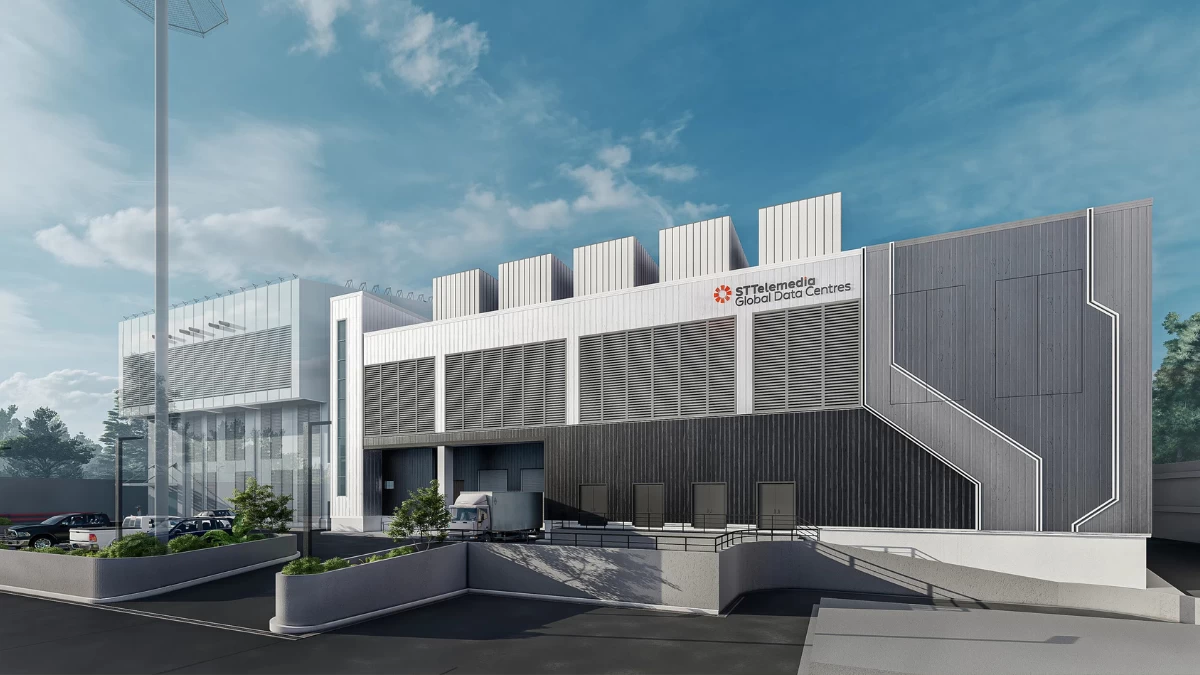
STT Cavite data center campus (Photo: STT GDC Phils)
In its recent Philippine property market overview for the first half of 2026, Santos Knight Frank revealed that evolving industrial demand is driving a shift in the sector from traditional dry warehouses to specialized facilities such as data centers, cold storage, and smart manufacturing facilities. The report also forecasted that the country will play a bigger role in global maritime and aerial logistics.
“The Philippine industrial and logistics sectors have been a bright spot in the market. Last-mile logistics, storage, warehousing, and cold storage have all been quite busy and active. So that has been a very solid area for investment while other sectors had some ups and downs,” said Rick Santos, Santos Knight Frank (SKF) chairman and CEO. He added that renewable energy, e-commerce, and digital infrastructure are emerging as key demand drivers alongside manufacturing and logistics.
In terms of location, Santos identified Regions 4A and 3 as industrial hotspots, commanding the demand for industrial facilities due to their proximity to ports, roads, industrial parks, and PEZA zones.
The report also showed the continued growth of the e-commerce sector, with logistics companies following suit to meet the expanding demand. “E-commerce is spending up P2.1 trillion in 2026. Philippine e-commerce is one of the fastest-growing in Southeast Asia,” shared Santos.
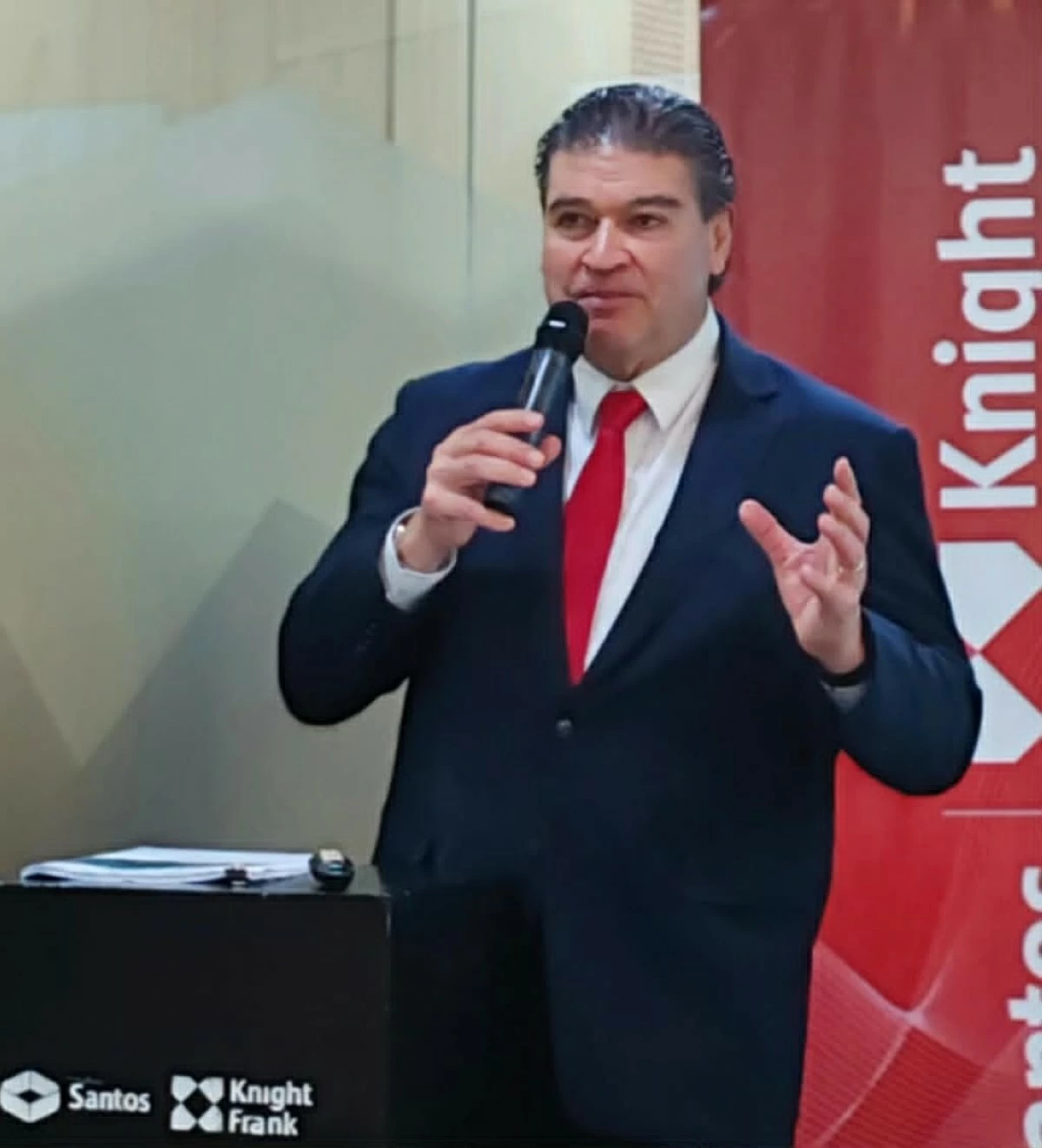
Rick Santos, Santos Knight Frank chairman and CEO (Photo: Carla Mortel)
To meet the energy demand, the Philippine government targets a 35 percent share of renewable energy in the power generation mix by 2030, involving solar, wind, hydrogen, thermal, and small-scale nuclear in the pipeline. Investments in renewables include MTerra Solutions in Nueva Ecija and Bulacan, San Miguel Solar Power Plant in Pangasinan, and Citicore Solar Batangas 1 in Lumbangan, Batangas
Investments in cold storage warehouses are also expanding from the public and private sectors.
In the data center industry, Santos is optimistic about its growth as more operators, both foreign and local, continue to set up facilities in the country. Cloud services, digital transformation, and continued AI integration are steadily fueling the demand for data centers. “The Philippines opens itself up more to hosting local and international operators. There are already some Chinese hyperscalers here, and the U.S. hyperscalers will be coming in. These are large-scale data centers and will have multiple phases,” he added.
SKF identified some of the existing data companies, including Evolution DC MNL1, VITRO Cavite, and STT GDC Cavite in General Trias, Cavite; Narra Technology Park in New Clark City, Tarlac; and DAMAC Digital Laguna in Sta. Rosa, Laguna; and STT GDC in Fairview.
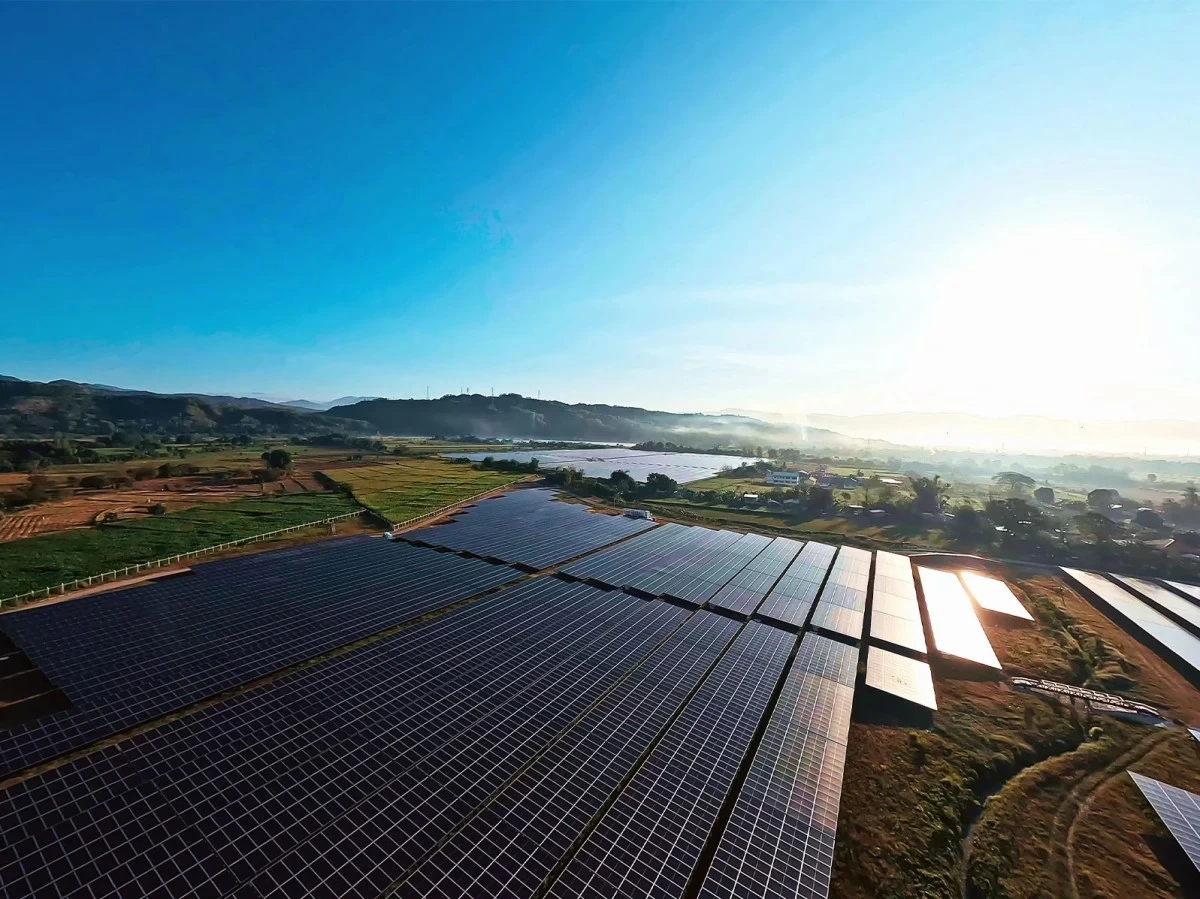
San Manuel Solar project (Photo: ACEN)
AI and data centers, as well as the semiconductor and manufacturing sectors, are poised to benefit from initiatives tied to the Luzon Economic Corridor (LEC) and Pax Silica. Following the BPO era, SKF deemed both movements to position the Philippines as a serious player in the region’s AI and semiconductor supply chains, opening up next-generation opportunities, creating higher-paying jobs, and attracting long-term institutional capital.
Launched in 2024, the Luzon Economic Corridor is a tangible transport and economic corridor connecting four critical hubs: Subic Bay, Clark, Manila, and Batangas, which together account for roughly 50 percent of the country’s GDP. It focuses on building railways, upgrading ports, deploying clean energy grids, and establishing 5G digital infrastructure.
Launched in 2024, the Luzon Economic Corridor is poised to further support the Philippines’ future manufacturing capabilities through US-Japan-Philippines cooperation.
At the core of the Luzon Economic Corridor is Pax Silica, a geopolitical and economic framework led by the United States aimed at securing global technology supply chains—specifically regarding semiconductors, AI, and critical minerals—among allied nations.
This global network will build secure, diversified, and resilient tech supply chains, manufacturing, and AI-related industries.
“We’re continuing to see technology and AI treated more as an enabler of real estate rather than a threat,” said Santos. “Sectors that will benefit from the LEC and Pack Silica are real estate, energy infrastructure, AI, and data centers. Many parts of the world have data center moratoriums, so it's an opportunity for the emerging markets in the Philippines to grow in that sector.”