






 Business
The Economy
Middle East conflict could push 86,000 more Philippine urban residents into poverty—UNESCAP
Business
The Economy
Middle East conflict could push 86,000 more Philippine urban residents into poverty—UNESCAP
Middle East conflict could push 86,000 more Philippine urban residents into poverty—UNESCAP


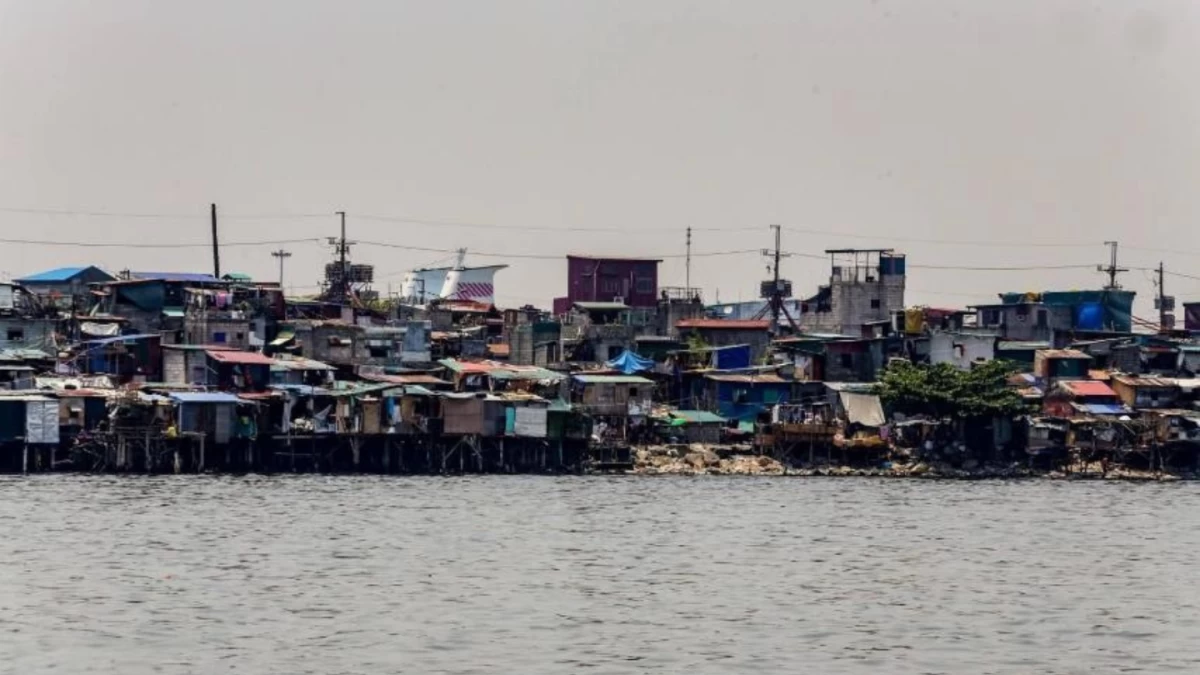
The war in the Middle East could push as many as 86,000 more people living in Philippine urban areas into poverty as higher fuel, food, as well as transport costs strain household budgets, according to the United Nations Economic and Social Commission for Asia and the Pacific (UNESCAP).
In its policy brief “Urban Exposure: Human Development Impacts of the Middle East Conflict in Asia and the Pacific” published last Wednesday, July 29, Bangkok-based UNESCAP estimated that the number of urban residents in the Philippines falling below the international poverty line could increase by about 51,000 under Scenario 1, around 70,000 under Scenario 2, and approximately 86,000 under Scenario 3.
All three scenarios assume a 120-day conflict shock. Scenario 1 assumes an immediate return to pre-conflict conditions after the war ends, while Scenario 2 assumes a four-month recovery period, and Scenario 3—the most severe scenario—assumes an eight-month recovery.
The report classified the Philippines as a lower-middle-income economy because the simulations used a 2023 global trade analysis project (GTAP) modeling baseline. However, it noted that the World Bank reclassified the Philippines, along with Sri Lanka and Vietnam, as an upper-middle-income country (UMIC) just this month, although the earlier classifications were retained for consistency.
Before the Middle East crisis, about 18.58 million people in Philippine urban areas were estimated to be living below the international poverty line of $4.20 a day used for lower-middle-income economies in the report.
Had the report applied the Philippines’ current UMIC classification, it would have used the higher income level’s international poverty line of $8.30 per person per day.
UNESCAP said the Philippines, India, Pakistan, and Vietnam face urban economic losses that are smaller in absolute terms than those of larger economies. However, the losses represent a proportionally heavier burden relative to the size of their urban economies and could increase pressure on existing social protection systems.
According to the report, urban residents are particularly vulnerable because they rely overwhelmingly on purchased food, energy, transport, and housing. As inflation accelerates and labor market conditions weaken, households situated just above the poverty line face a heightened risk of falling into poverty.
Informal workers, low-wage service workers, recent migrants, women-headed households, and those lacking access to social protection are likely to be particularly exposed, placing additional pressure on local services, urban social protection systems, as well as local government response capacities.
The report noted that the Middle East conflict had already begun feeding into Philippine inflation. It cited Philippine Statistics Authority (PSA) data showing that between January and May this year, inflation accelerated by 2.9 percentage points (ppts) in National Capital Region (NCR) and surrounding urban areas.
It also cited an increase in the Philippines’ food consumer price index (CPI) from 4.5 percent last March to 6.1 percent in April. During the same period, year-on-year inflation likewise rose from 4.2 percent to 7.1 percent in areas outside NCR (AONCR) and from 3.5 percent to five percent in Metro Manila.
UNESCAP likewise cited data showing that retail diesel prices increased by more than 100 percent in the Philippines following disruptions in global energy markets. It warned that higher fertilizer costs could eventually feed into food prices as farmers reduce fertilizer application and planting because of rising production expenses.
The policy brief explained that the conflict’s effects are transmitted through multiple channels, including higher energy prices, food and fertilizer costs, trade and logistics disruptions, reduced remittance flows, fiscal and financial pressures, as well as labor market disruptions.
These factors could raise living costs, disrupt employment and livelihoods, weaken public finances, reduce household income, as well as constrain external financial inflows, with the pressures compounding one another in urban economies.
Across Asia-Pacific, UNESCAP estimated that urban economies could lose as much as $73 billion in gross domestic product (GDP), $143 billion in consumption, and $53 billion in investment under Scenario 3. Urban poverty could increase by about 9.5 million people, while urban job losses could reach 3.9 million.
China is projected to register the largest increase in urban poverty under Scenario 3, with nearly 3.4 million additional people falling below the international poverty line, followed by India with almost 3.1 million, Iran with over 1.2 million, Pakistan with about 651,000, Thailand with around 187,000, and Afghanistan with approximately 175,000.
These six economies would account for nearly nine-tenths of the projected increase in urban poverty across the countries covered by the analysis.
In Southeast Asia, Thailand is projected to post the largest increase in urban poverty under Scenario 3, followed by Vietnam with about 141,000, the Philippines, Malaysia with around 64,000, Indonesia with approximately 63,000, Cambodia with about 19,000, and Laos with around 17,000.
The report noted that the Philippine government had introduced fuel subsidies and tax cuts, price controls, as well as power demand-reduction measures in response to the prolonged conflict. It also launched a service contracting program for public utility vehicle (PUV) operators and drivers that provides commuters with a 20-percent fare discount.
UNESCAP urged governments to provide temporary and targeted support to poor as well as near-poor urban households through measures such as cash transfers, food support, transport relief, as well as rental and utility bill assistance.
It also called for targeted recovery assistance for micro, small, and medium enterprises (MSMEs) as well as informal workers, stronger urban social protection and monitoring systems, investments in clean energy and resilient urban food systems, sustainable local service financing, as well as improved crisis preparedness.