ADVERTISEMENT

Malaysia begins screening 5,000 refugees for their planned return to Myanmar

Published Jul 30, 2026 11:38 am  |  Updated Jul 30, 2026 10:49 pm
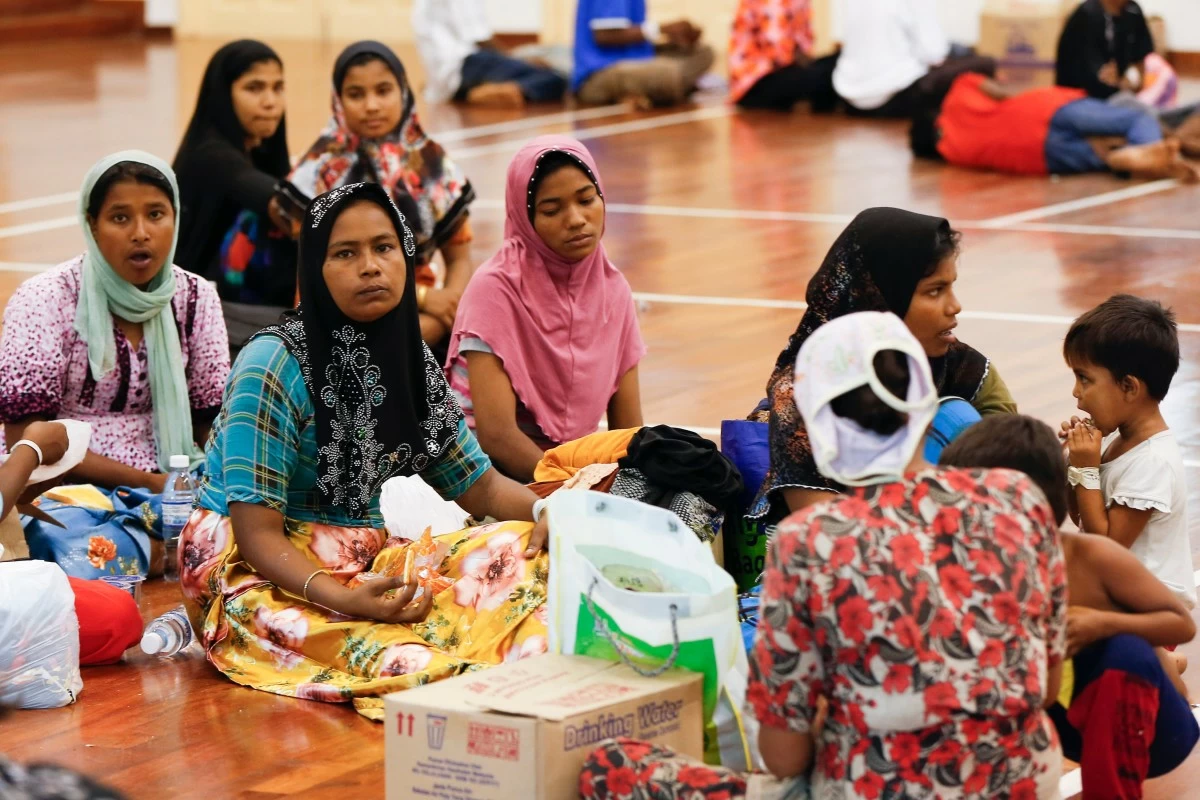
FILE - Illegal immigrants from Myanmar rest at a temporary immigration detention center in Langkawi, Malaysia on May 12, 2015.  (AP Photo/Vincent Thian)
FILE - Illegal immigrants from Myanmar rest at a temporary immigration detention center in Langkawi, Malaysia on May 12, 2015. (AP Photo/Vincent Thian)

KUALA LUMPUR, Malaysia (AP) — Malaysia has started documenting and screening thousands of detained Myanmar nationals as part of a repatriation program agreed with Myanmar, Home Minister Saifuddin Nasution said Thursday.

Saifuddin said Myanmar had committed to accept up to 5,000 of its citizens currently living in Malaysia and an unspecified number currently in Cox’s Bazar, a town in south east Bangladesh.

Malaysia had identified up to 4,000 Myanmar nationals in its 19 detention depots, who will be moved to a single site for security screening and documentation purposes, he said.

“We will certainly meet the target of 5,000 individuals once this process is complete,” Saifuddin told to reporters, adding that the foreign ministry will handle the next stage of the repatriation process with Myanmar.

Prime Minister Anwar Ibrahim had said Wednesday that those being repatriated were Rohingya refugees.

“People ask why we do not simply send them back. Send them where? Myanmar had refused to accept them before. Now, because of our good relations with Myanmar, they have agreed to take back 5,000 from Malaysia,” Anwar was cited as saying by the New Straits Times.

However, Saifuddin, who did not explicitly identify the 5,000 individuals as Rohingya, said only Myanmar nationals with refugee status were being repatriated.

Foreign ministry officials could not be immediately reached for comment.

Mohammed Mizanur Rahman, a commissioner for refugee, relief and repatriation in Cox’s Bazar, told The Associated Press by phone that he was not aware of any repatriation of Rohingya from Bangladesh.

In Naypyitaw, the capital of Myanmar, officials also rejected reports that the government would accept Rohingyas.

Han Win Aung, director-general of the ASEAN department at Myanmar’s Foreign Affairs Ministry, said the repatriation program was focused solely on verified Myanmar nationals currently held in detention centers in Malaysia.

Myanmar, formerly known as Burma, does not recognize the Rohingya as one of the country’s 135 lawful ethnic minorities, instead referring to them as Bengalis to imply they are natives from Bangladesh and are illegally settled in Myanmar.

“This is not about bringing back Bengalis. There are Myanmar nationals who are being held in detention centers in Malaysia for various reasons,” Han Win Aung told the AP. “Both sides are still at the stage of coordinating to repatriate only those whose identity as genuine Myanmar citizens has been verified.”

He said the plan follows earlier repatriation operations in 2021 and 2022, when Myanmar received more than 1,100 of its nationals stranded in Malaysia.

Han Win Aung said the number of people to be repatriated and the timeline for transfer remain under discussion.

Malaysia is home to about 215,600 refugees and asylum seekers registered with the U.N. refugee agency, including about 126,000 Rohingya who make up one of Southeast Asia's largest refugee community. Despite hosting them, Malaysia is not a party to the U.N. Refugee Convention and treats refugees as undocumented migrants.

Related Tags

WORLDNEWS
ADVERTISEMENT
.most-popular .layout-ratio{ padding-bottom: 79.13%; } @media (min-width: 768px) and (max-width: 1024px) { .widget-title { font-size: 15px !important; } }

{{ articles_filter_1561_widget.title }}

.most-popular .layout-ratio{ padding-bottom: 79.13%; } @media (min-width: 768px) and (max-width: 1024px) { .widget-title { font-size: 15px !important; } }

{{ static_articles_1562_widget.title }}

.most-popular .layout-ratio{ padding-bottom: 79.13%; } @media (min-width: 768px) and (max-width: 1024px) { .widget-title { font-size: 15px !important; } }

{{ articles_filter_1563_widget.title }}

{{ articles_filter_1564_widget.title }}

.mb-article-details { position: relative; } .mb-article-details .article-body-preview, .mb-article-details .article-body-summary{ font-size: 17px; line-height: 30px; font-family: "Libre Caslon Text", serif; color: #000; } .mb-article-details .article-body-preview iframe , .mb-article-details .article-body-summary iframe{ width: 100%; margin: auto; } .read-more-background { background: linear-gradient(180deg, color(display-p3 1.000 1.000 1.000 / 0) 13.75%, color(display-p3 1.000 1.000 1.000 / 0.8) 30.79%, color(display-p3 1.000 1.000 1.000) 72.5%); position: absolute; height: 200px; width: 100%; bottom: 0; display: flex; justify-content: center; align-items: center; padding: 0; } .read-more-background a{ color: #000; } .read-more-btn { padding: 17px 45px; font-family: Inter; font-weight: 700; font-size: 18px; line-height: 16px; text-align: center; vertical-align: middle; border: 1px solid black; background-color: white; } .hidden { display: none; }
function initializeAllSwipers() { // Get all hidden inputs with cms_article_id document.querySelectorAll('[id^="cms_article_id_"]').forEach(function (input) { const cmsArticleId = input.value; const articleSelector = '#article-' + cmsArticleId + ' .body_images'; const swiperElement = document.querySelector(articleSelector); if (swiperElement && !swiperElement.classList.contains('swiper-initialized')) { new Swiper(articleSelector, { loop: true, pagination: false, navigation: { nextEl: '#article-' + cmsArticleId + ' .swiper-button-next', prevEl: '#article-' + cmsArticleId + ' .swiper-button-prev', }, }); } }); } setTimeout(initializeAllSwipers, 3000); const intersectionObserver = new IntersectionObserver( (entries) => { entries.forEach((entry) => { if (entry.isIntersecting) { const newUrl = entry.target.getAttribute("data-url"); if (newUrl) { history.pushState(null, null, newUrl); let article = entry.target; // Extract metadata const author = article.querySelector('.author-section').textContent.replace('By', '').trim(); const section = article.querySelector('.section-info ').textContent.replace(' ', ' '); const title = article.querySelector('.article-title h1').textContent; // Parse URL for Chartbeat path format const parsedUrl = new URL(newUrl, window.location.origin); const cleanUrl = parsedUrl.host + parsedUrl.pathname; // Update Chartbeat configuration if (typeof window._sf_async_config !== 'undefined') { window._sf_async_config.path = cleanUrl; window._sf_async_config.sections = section; window._sf_async_config.authors = author; } // Track virtual page view with Chartbeat if (typeof pSUPERFLY !== 'undefined' && typeof pSUPERFLY.virtualPage === 'function') { try { pSUPERFLY.virtualPage({ path: cleanUrl, title: title, sections: section, authors: author }); } catch (error) { console.error('ping error', error); } } // Optional: Update document title if (title && title !== document.title) { document.title = title; } } } }); }, { threshold: 0.1 } ); function showArticleBody(button) { const article = button.closest("article"); const summary = article.querySelector(".article-body-summary"); const body = article.querySelector(".article-body-preview"); const readMoreSection = article.querySelector(".read-more-background"); // Hide summary and read-more section summary.style.display = "none"; readMoreSection.style.display = "none"; // Show the full article body body.classList.remove("hidden"); } document.addEventListener("DOMContentLoaded", () => { let loadCount = 0; // Track how many times articles are loaded const offset = [1, 2, 3, 4, 5, 6, 7, 8, 9, 10]; // Offset values const currentUrl = window.location.pathname.substring(1); let isLoading = false; // Prevent multiple calls if (!currentUrl) { console.log("Current URL is invalid."); return; } const sentinel = document.getElementById("load-more-sentinel"); if (!sentinel) { console.log("Sentinel element not found."); return; } function isSentinelVisible() { const rect = sentinel.getBoundingClientRect(); return ( rect.top < window.innerHeight && rect.bottom >= 0 ); } function onScroll() { if (isLoading) return; if (isSentinelVisible()) { if (loadCount >= offset.length) { console.log("Maximum load attempts reached."); window.removeEventListener("scroll", onScroll); return; } isLoading = true; const currentOffset = offset[loadCount]; window.loadMoreItems().then(() => { let article = document.querySelector('#widget_1690 > div:nth-last-of-type(2) article'); intersectionObserver.observe(article) loadCount++; }).catch(error => { console.error("Error loading more items:", error); }).finally(() => { isLoading = false; }); } } window.addEventListener("scroll", onScroll); });

Sign up by email to receive news.