ADVERTISEMENT

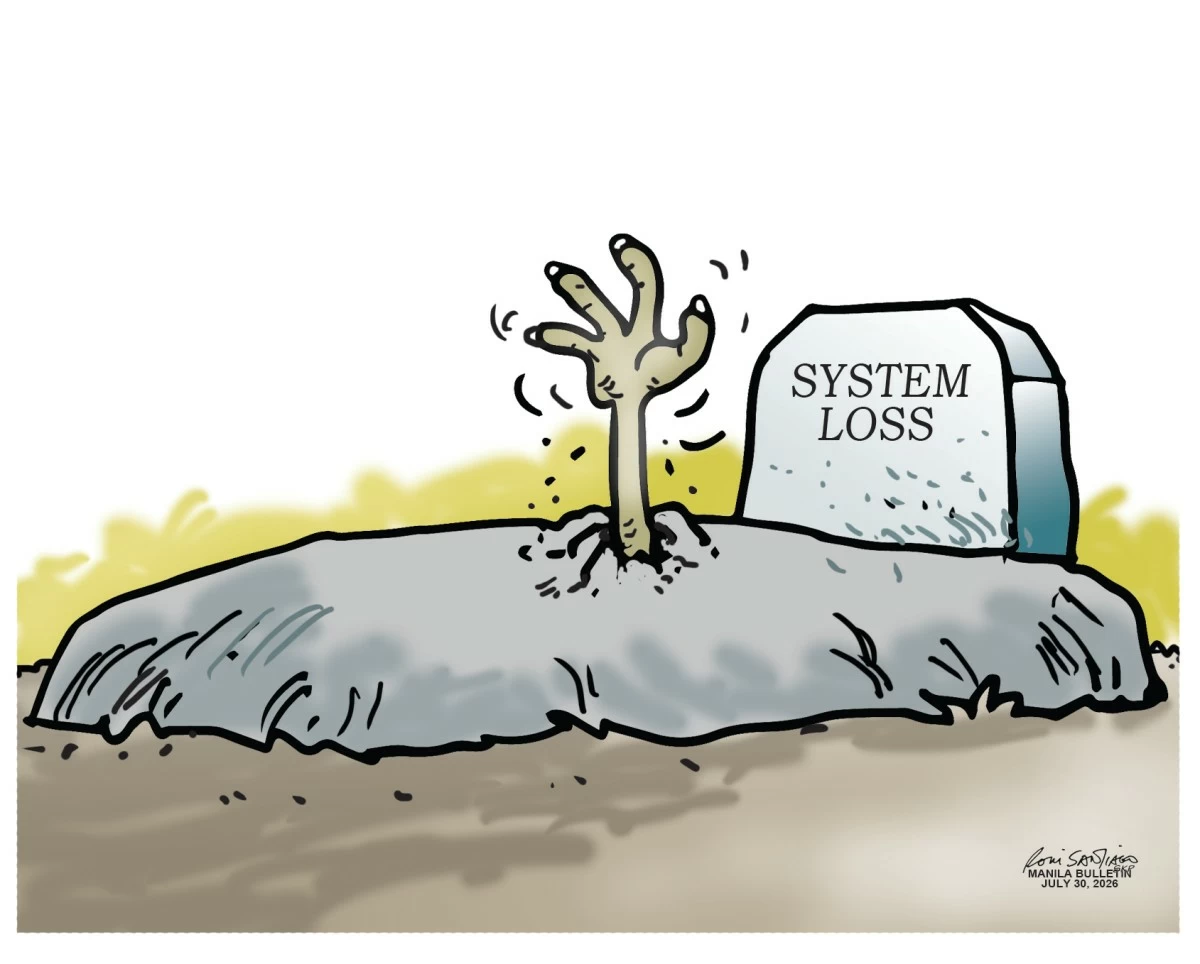
Congress must ensure system loss won't resurrect

Published Jul 30, 2026 12:01 am  |  Updated Jul 29, 2026 03:38 pm
President Ferdinand Marcos Jr. earned widespread public approval when he declared in his fifth State of the Nation Address that consumers should no longer pay the system loss charge on their electricity bills. His reasoning was straightforward. Electricity lost before it reaches homes and businesses is not the consumers’ fault. They should not be made to pay for it.
The proposal deserves support. But it also demands careful legislation.
Removing the system loss charge will only bring genuine relief if Congress amends the Electric Power Industry Reform Act (EPIRA) with airtight safeguards that prevent power companies from recovering the same amount through another billing component. Otherwise, consumers may celebrate lower electricity bills today only to find the same burden quietly reappearing under a different name.
Under EPIRA, distribution utilities are allowed to recover a portion of system losses from consumers, subject to regulatory limits. According to the Department of Energy (DOE), these losses are either technical—electricity dissipated during transmission and distribution because of resistance, aging facilities, and equipment inefficiencies—or non-technical, which result from electricity theft, illegal connections, faulty metering, and other unauthorized consumption.
Reports estimate that system loss accounts for about 5 percent to 10 percent of an average consumer’s annual electricity bill, amounting to roughly ₱3.24 billion to more than ₱13.5 billion collected each year. These figures explain why the President's pronouncement resonated with Filipino households already burdened by persistently high electricity costs.
Consumers have long questioned why they should shoulder losses caused by inefficient infrastructure or illegal activities committed by others. On this point, the President's position is difficult to dispute.
Yet fairness alone will not guarantee meaningful reform.
Congress must first answer a crucial question: Who will absorb the revenue power utilities stand to lose once the system loss charge is removed?
Ignoring that issue could undermine the very reform lawmakers hope to achieve. Utilities still incur legitimate operating costs. If the amended law merely deletes the existing provision without expressly prohibiting its recovery elsewhere, companies may eventually recoup the lost revenue through adjustments in other bill components, administrative fees, or newly created charges. Consumers would still pay, only under a less recognizable label.
That is why the amendment must be comprehensive rather than cosmetic.
The revised EPIRA should categorically prohibit the direct or indirect recovery of system losses from consumers. The ban should cover not only existing billing components but also future charges, pass-through mechanisms, or cost-recovery schemes that produce the same result. The law must leave no room for creative accounting or regulatory circumvention.
Equally important, Congress must impose stiff penalties on any distribution utility or power company that attempts to disguise system loss recoveries. Mandatory refunds, substantial fines, regulatory sanctions, and even suspension or revocation of operating authority for repeated violations should be clearly provided. Strong penalties will discourage attempts to shift the burden back to consumers through legal loopholes.
If the government believes consumers should no longer shoulder system losses, it must also determine who will. One practical option is for the national government to absorb the cost through transparent appropriations subject to congressional oversight. While this carries fiscal implications, it is preferable to allowing hidden charges to quietly return to consumers' monthly bills. Any government support, however, should be tied to measurable improvements in reducing technical losses, modernizing infrastructure, and curbing electricity theft.
Marcos has opened the door to a long-overdue reform. The Executive has set the policy direction; Congress must now ensure the amendment is airtight. Scrapping the system loss charge should not become a mere exercise in relabeling costs. It should mark the beginning of a more transparent, accountable, and consumer-centered power sector.
EPIRA should indeed be amended. But every loophole must be sealed. Otherwise, the system loss charge may disappear from electricity bills only on paper, while Filipino consumers continue paying for it under a new name.

Related Tags

EPIRA amendment system loss charge electricity bills Marcos SONA electricity consumers power rates Department of Energy distribution utilities
ADVERTISEMENT
.most-popular .layout-ratio{ padding-bottom: 79.13%; } @media (min-width: 768px) and (max-width: 1024px) { .widget-title { font-size: 15px !important; } }

{{ articles_filter_1561_widget.title }}

.most-popular .layout-ratio{ padding-bottom: 79.13%; } @media (min-width: 768px) and (max-width: 1024px) { .widget-title { font-size: 15px !important; } }

{{ static_articles_1562_widget.title }}

.most-popular .layout-ratio{ padding-bottom: 79.13%; } @media (min-width: 768px) and (max-width: 1024px) { .widget-title { font-size: 15px !important; } }

{{ articles_filter_1563_widget.title }}

{{ articles_filter_1564_widget.title }}

.mb-article-details { position: relative; } .mb-article-details .article-body-preview, .mb-article-details .article-body-summary{ font-size: 17px; line-height: 30px; font-family: "Libre Caslon Text", serif; color: #000; } .mb-article-details .article-body-preview iframe , .mb-article-details .article-body-summary iframe{ width: 100%; margin: auto; } .read-more-background { background: linear-gradient(180deg, color(display-p3 1.000 1.000 1.000 / 0) 13.75%, color(display-p3 1.000 1.000 1.000 / 0.8) 30.79%, color(display-p3 1.000 1.000 1.000) 72.5%); position: absolute; height: 200px; width: 100%; bottom: 0; display: flex; justify-content: center; align-items: center; padding: 0; } .read-more-background a{ color: #000; } .read-more-btn { padding: 17px 45px; font-family: Inter; font-weight: 700; font-size: 18px; line-height: 16px; text-align: center; vertical-align: middle; border: 1px solid black; background-color: white; } .hidden { display: none; }
function initializeAllSwipers() { // Get all hidden inputs with cms_article_id document.querySelectorAll('[id^="cms_article_id_"]').forEach(function (input) { const cmsArticleId = input.value; const articleSelector = '#article-' + cmsArticleId + ' .body_images'; const swiperElement = document.querySelector(articleSelector); if (swiperElement && !swiperElement.classList.contains('swiper-initialized')) { new Swiper(articleSelector, { loop: true, pagination: false, navigation: { nextEl: '#article-' + cmsArticleId + ' .swiper-button-next', prevEl: '#article-' + cmsArticleId + ' .swiper-button-prev', }, }); } }); } setTimeout(initializeAllSwipers, 3000); const intersectionObserver = new IntersectionObserver( (entries) => { entries.forEach((entry) => { if (entry.isIntersecting) { const newUrl = entry.target.getAttribute("data-url"); if (newUrl) { history.pushState(null, null, newUrl); let article = entry.target; // Extract metadata const author = article.querySelector('.author-section').textContent.replace('By', '').trim(); const section = article.querySelector('.section-info ').textContent.replace(' ', ' '); const title = article.querySelector('.article-title h1').textContent; // Parse URL for Chartbeat path format const parsedUrl = new URL(newUrl, window.location.origin); const cleanUrl = parsedUrl.host + parsedUrl.pathname; // Update Chartbeat configuration if (typeof window._sf_async_config !== 'undefined') { window._sf_async_config.path = cleanUrl; window._sf_async_config.sections = section; window._sf_async_config.authors = author; } // Track virtual page view with Chartbeat if (typeof pSUPERFLY !== 'undefined' && typeof pSUPERFLY.virtualPage === 'function') { try { pSUPERFLY.virtualPage({ path: cleanUrl, title: title, sections: section, authors: author }); } catch (error) { console.error('ping error', error); } } // Optional: Update document title if (title && title !== document.title) { document.title = title; } } } }); }, { threshold: 0.1 } ); function showArticleBody(button) { const article = button.closest("article"); const summary = article.querySelector(".article-body-summary"); const body = article.querySelector(".article-body-preview"); const readMoreSection = article.querySelector(".read-more-background"); // Hide summary and read-more section summary.style.display = "none"; readMoreSection.style.display = "none"; // Show the full article body body.classList.remove("hidden"); } document.addEventListener("DOMContentLoaded", () => { let loadCount = 0; // Track how many times articles are loaded const offset = [1, 2, 3, 4, 5, 6, 7, 8, 9, 10]; // Offset values const currentUrl = window.location.pathname.substring(1); let isLoading = false; // Prevent multiple calls if (!currentUrl) { console.log("Current URL is invalid."); return; } const sentinel = document.getElementById("load-more-sentinel"); if (!sentinel) { console.log("Sentinel element not found."); return; } function isSentinelVisible() { const rect = sentinel.getBoundingClientRect(); return ( rect.top < window.innerHeight && rect.bottom >= 0 ); } function onScroll() { if (isLoading) return; if (isSentinelVisible()) { if (loadCount >= offset.length) { console.log("Maximum load attempts reached."); window.removeEventListener("scroll", onScroll); return; } isLoading = true; const currentOffset = offset[loadCount]; window.loadMoreItems().then(() => { let article = document.querySelector('#widget_1690 > div:nth-last-of-type(2) article'); intersectionObserver.observe(article) loadCount++; }).catch(error => { console.error("Error loading more items:", error); }).finally(() => { isLoading = false; }); } } window.addEventListener("scroll", onScroll); });

Sign up by email to receive news.