

ADVERTISEMENT

Jerome Lorico's 'Alembong' reclaims stories of womanhood, heritage, and self-expression

Published Jul 29, 2026 09:19 am
It is an image of a woman bathing, lounging in a lush rainforest that immediately captures your attention. Her enigma and sensuality will remind anyone who has witnessed Rody Vera’s "Ang Unang Aswang" play that reimagines the origin story of a Philippine folkloric character. But there is grace and poetry in the way she poses, much like the subjects of early Filipino paintings.
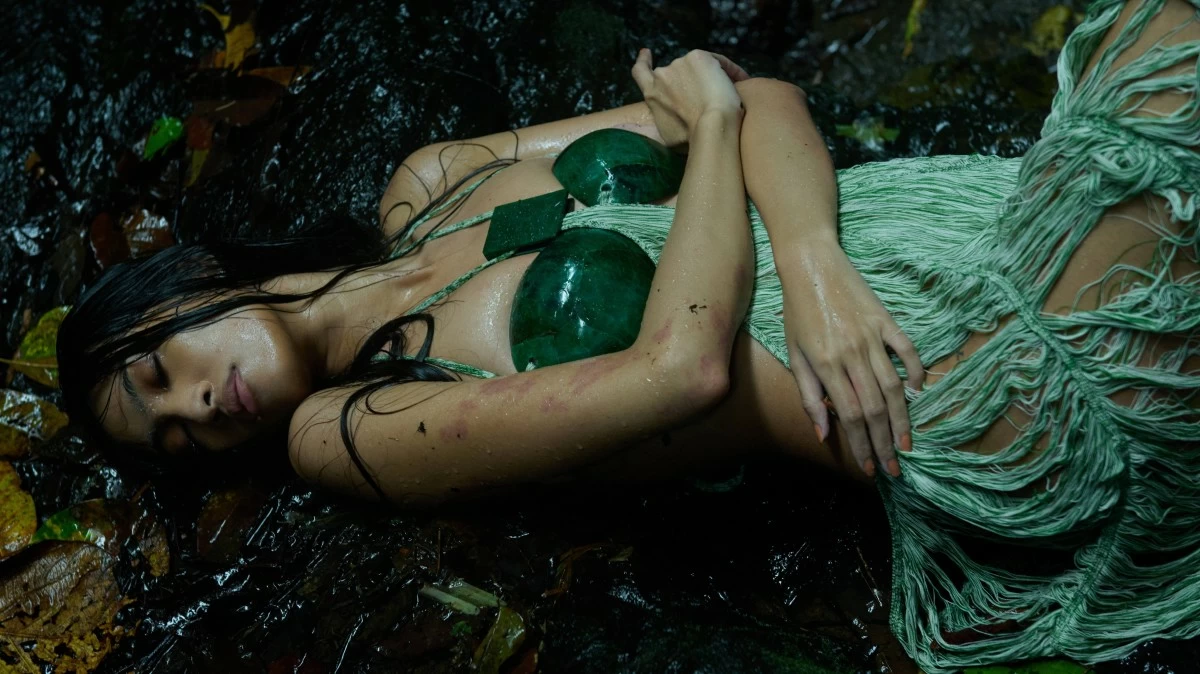
Jeromo Lorico's 'Alembong' collection (Photos: Jerick Sanchez | Make-up: Zidjian Paul | Muse: Sidney Flores)
The image we are talking about is part of Jerome Lorico’s editorial campaign for his latest collection, dubbed “Alembong.” Captured by photographer Jerick Sanchez, the photos transport viewers to a time when freedom was not just a spoken word, but something lived and expressed without prejudice.
“It's a little ironic that, although we are living in an era where there should be more freedom, our culture still seems to censor a lot of different things. Part of this problem, I noticed, is the inability of a Filipino woman to freely express herself sexually and physically. Being brazen or aware of one's energy and confidence still seems to merit a few disapproving opinions within the Filipino community,” Jerome tells Manila Bulletin Lifestyle. “A century ago, Filipinas could bathe in the river with complete freedom, their golden-brown skin shining under the summer sun, as depicted in many of the works of our National Artist for Visual Arts, Fernando Amorsolo.”
“Alembong,” for Jerome, is an interpretation of the raw and naked beauty of the country's islands and women. He quotes curator and typography designer Ric Gindap of Design for Tomorrow, who says, “‘Alembong’ is a word that, in its modern aftertaste, carries the sly curl of a lip: flirt, coquette, frivolous.”
“Historically and anthropologically, before the weight of colonization and the catechism of virtue, it was something else,” the designer muses. “‘Alembong’ was ebullience itself, a feminine street-smartness that brightened the barangay.”
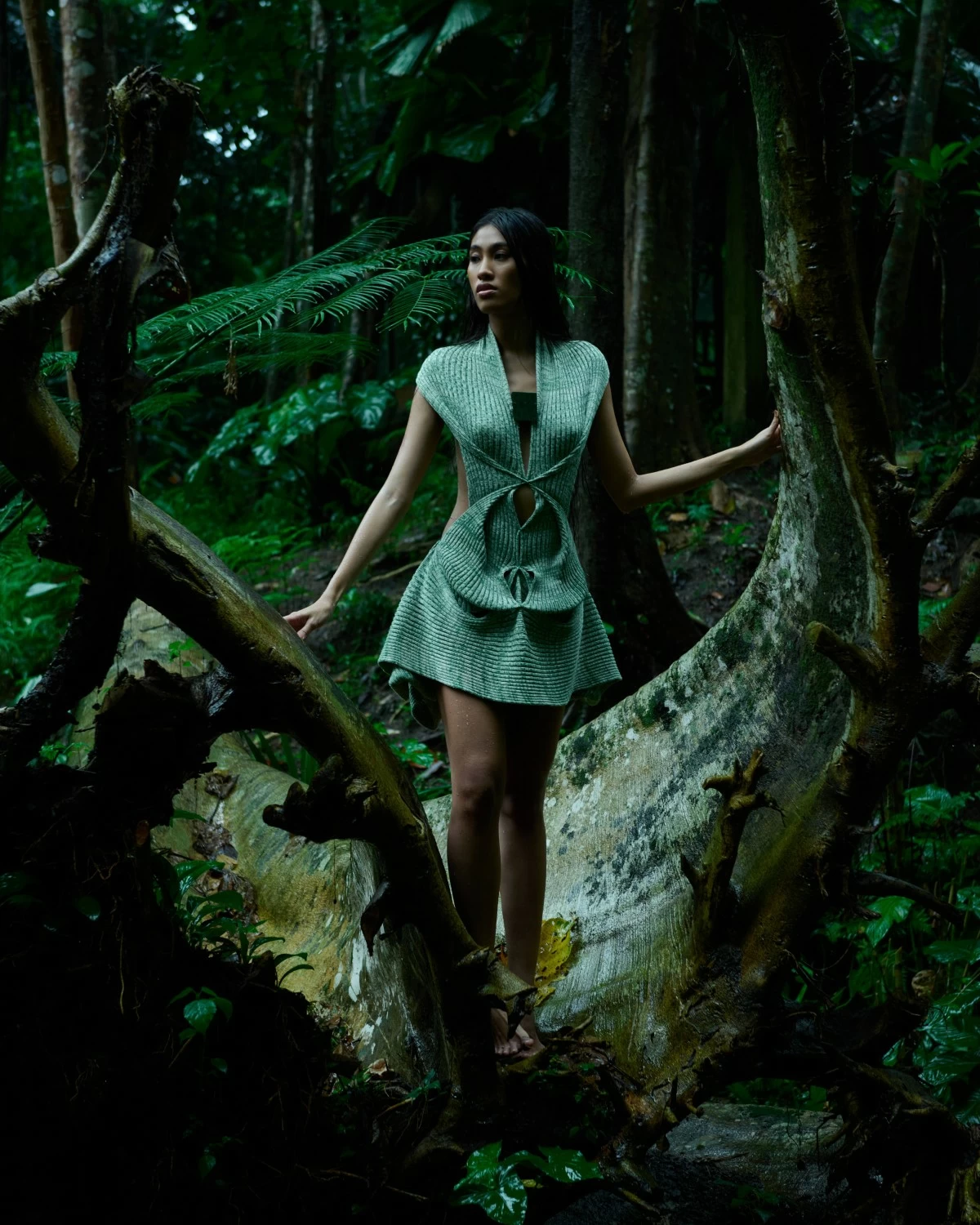
Knitted symmetric tension draped top in cotton and piña with mother of pearl clip in forest jade color.
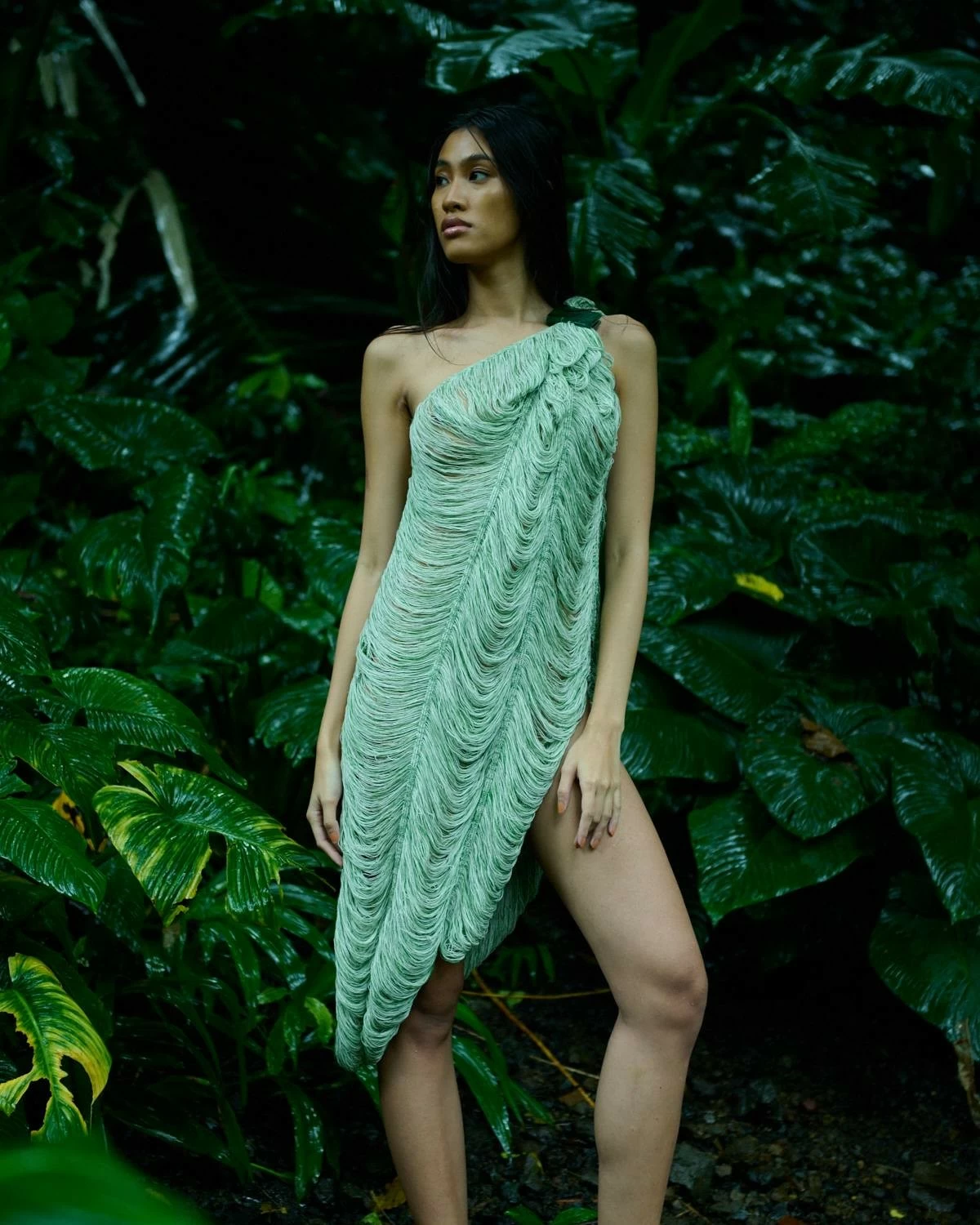
Knitted one-shoulder fringe dress in cotton and piña with mother of pearl clip in tropical jade color
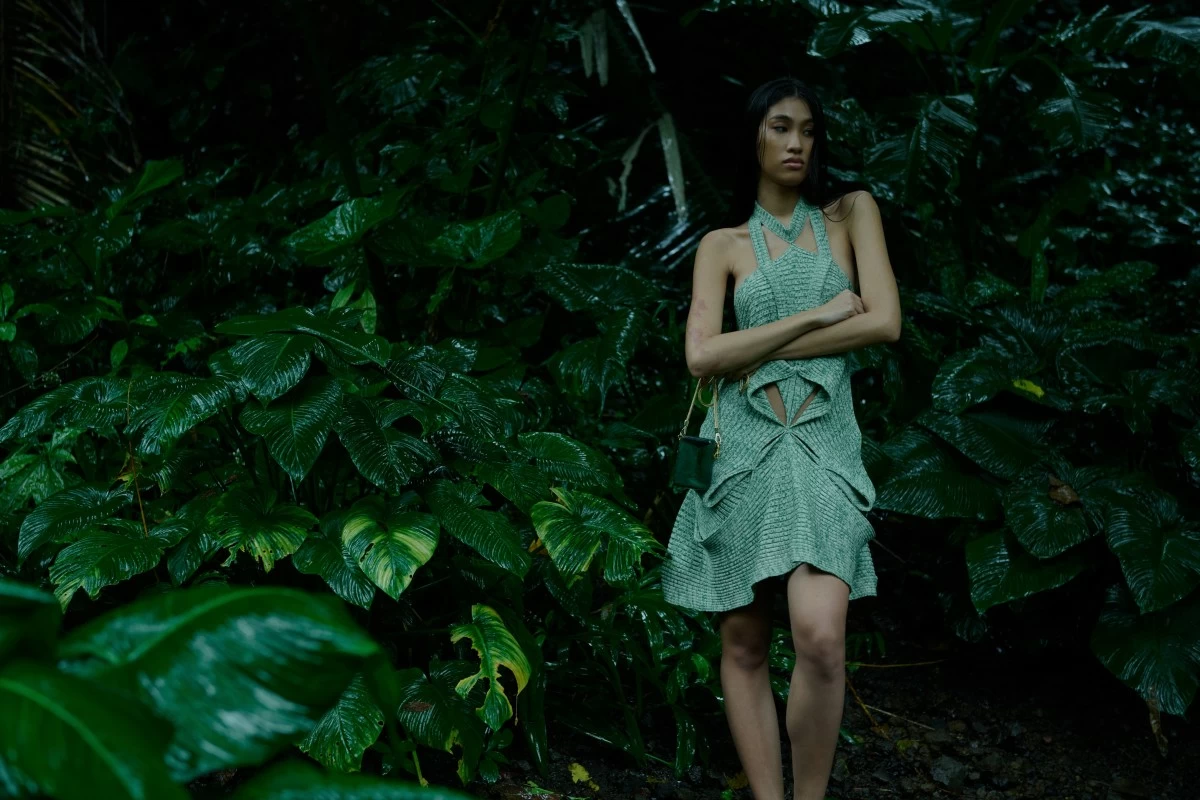
Knitted symmetric tension draped dress in cotton and piña
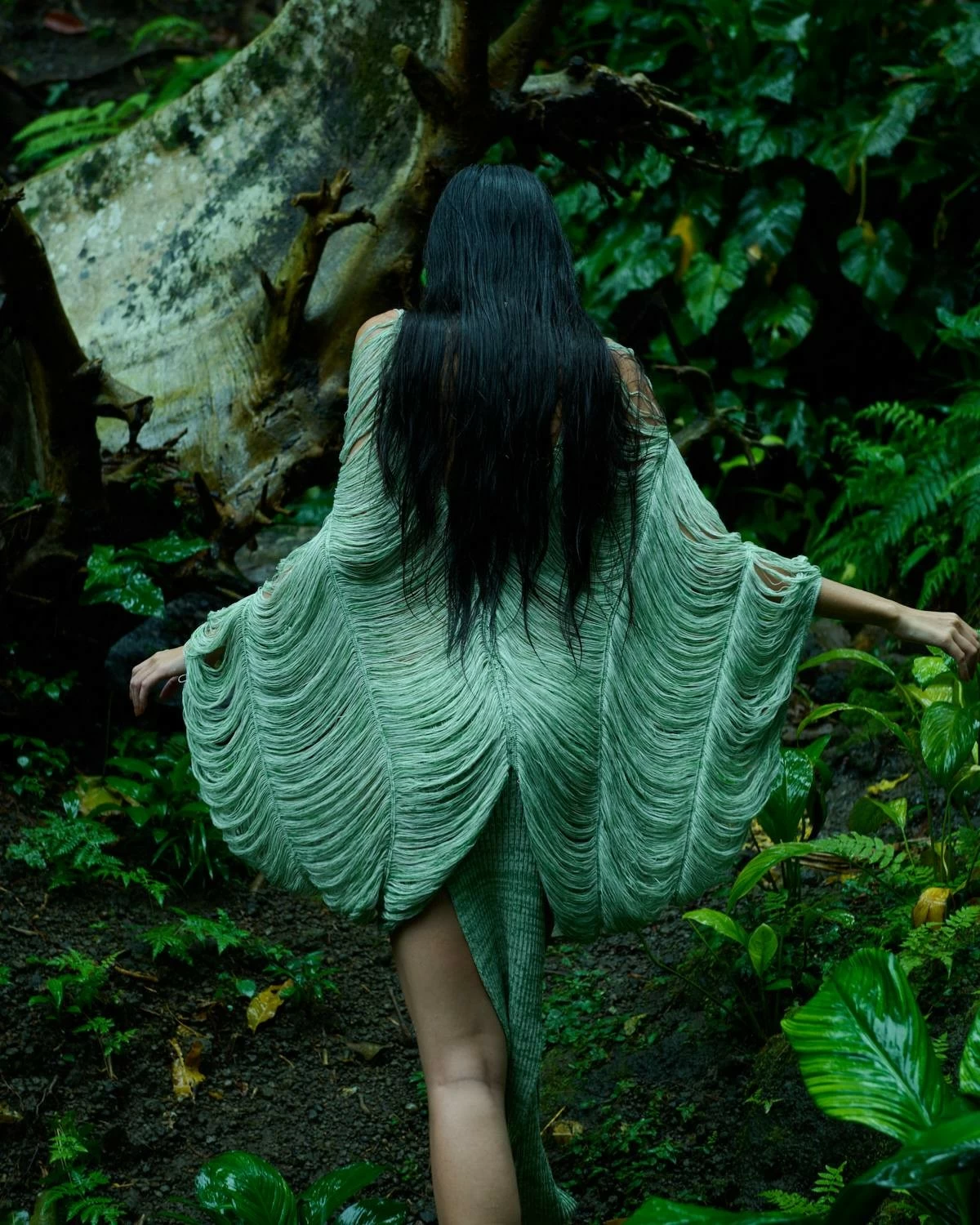
Knitted fringe dress in cotton and piña
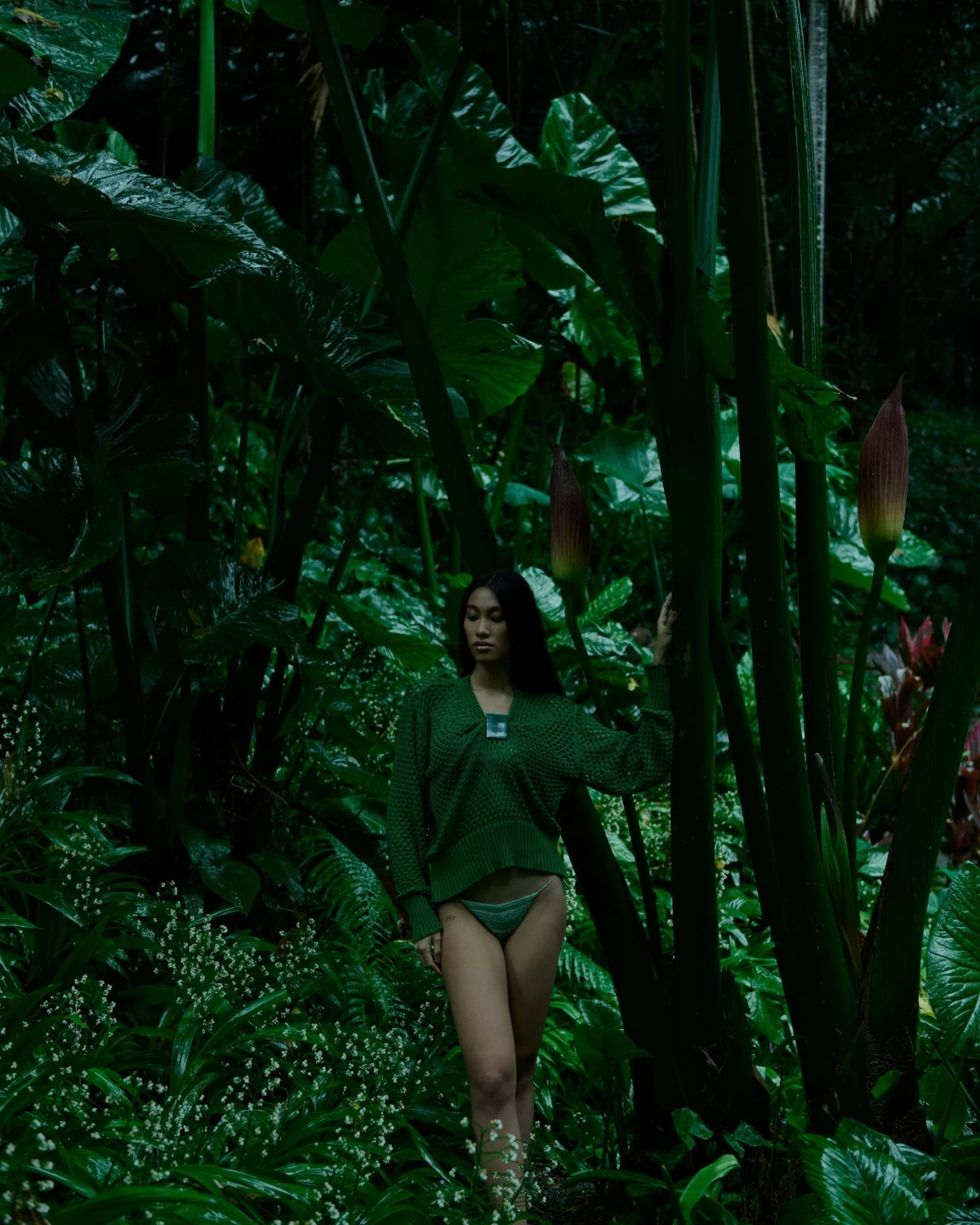
Knitted draped top in solihiya pattern in cotton, piña (pineapple fiber) with mother of pearl clip in forest jade color
Mirroring the sense of liberation embodied by the word, Jerome translates Alembong into garments that balance softness with strength. Airy silhouettes, sheer layers, hand-finished textures, and fluid draping evoke the effortless beauty of island living while celebrating the confidence of the modern Filipina.
To create something that is truly Filipino, it was only natural for Jerome to present a collection crafted by Filipino hands using materials sourced from across the country. For at least a month, the designer experimented with artisanal materials. The collection features elements such as brass buttons specially made by an anting-anting craftsman in Lipa, Batangas. The pineapple and cotton yarns came from Iloilo and the Philippine Textile Research Institute. Meanwhile, the woven abaca and cotton yarns are sourced from the place where the designer grew up—Albay in the Bicol Region.

Knitted draped sleeve cape in cotton and piña; mother of Pearl bikini top in amber tortoise color; and knitted draped skirt in cotton and piña
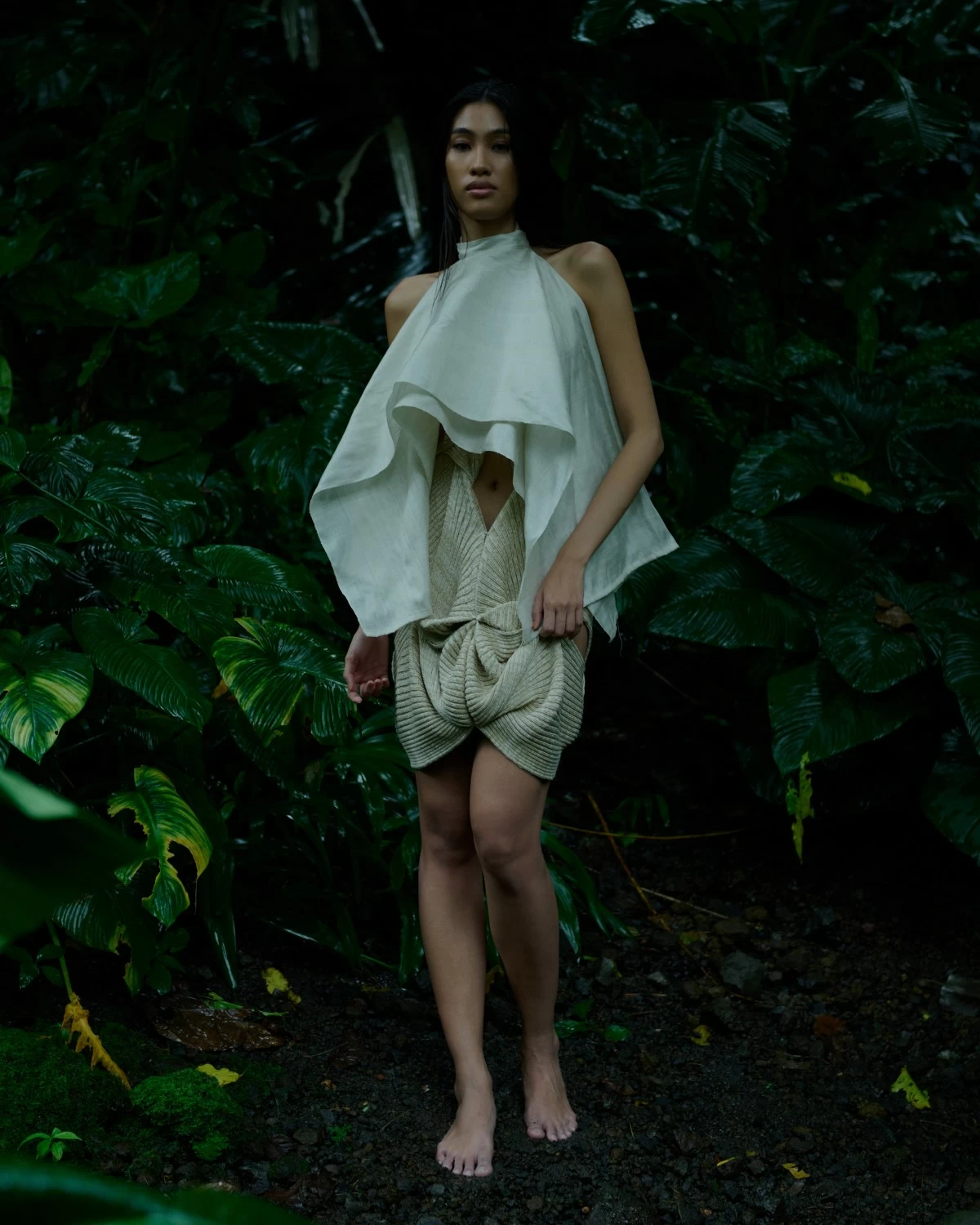
Knitted draped dress in cotton and piña and draped local silk top
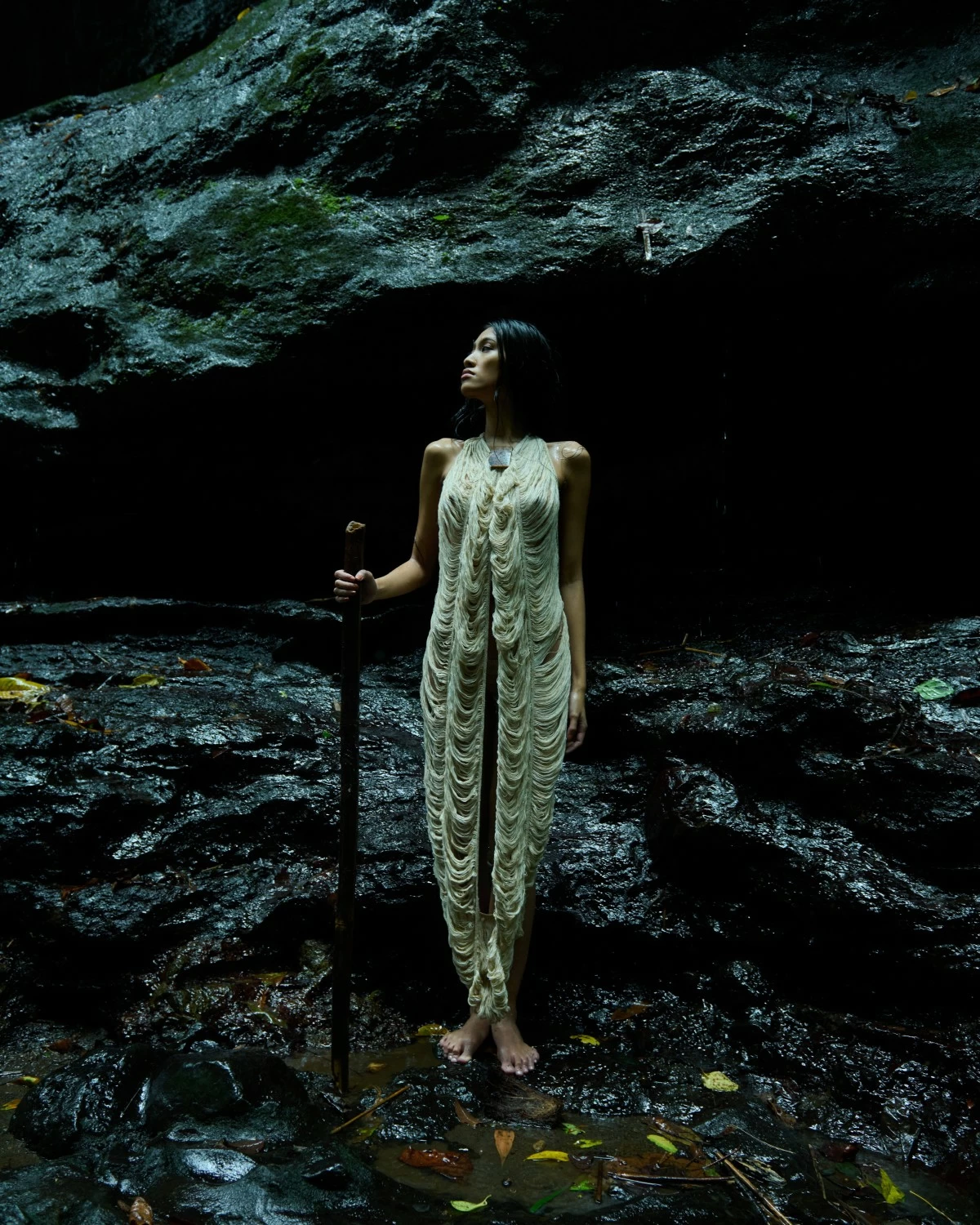
Knitted fringe dress in cotton and piña
“I believe it is very important to support whatever has a deep connection to our culture, heritage, and history,” Jerome explains. “Artisans create with soul, and that is why I always love working and collaborating with them. Creation, for me, is a sacred ritual that connects the past and the future.”
Accessories are just as important as the clothes because they are also part of the collection’s story. “Alembong” spotlights pieces made from mother-of-pearl sourced in Cebu. Although they echo natural and organic shapes, they are designed through a contemporary lens, allowing them to be both abstract and utilitarian.
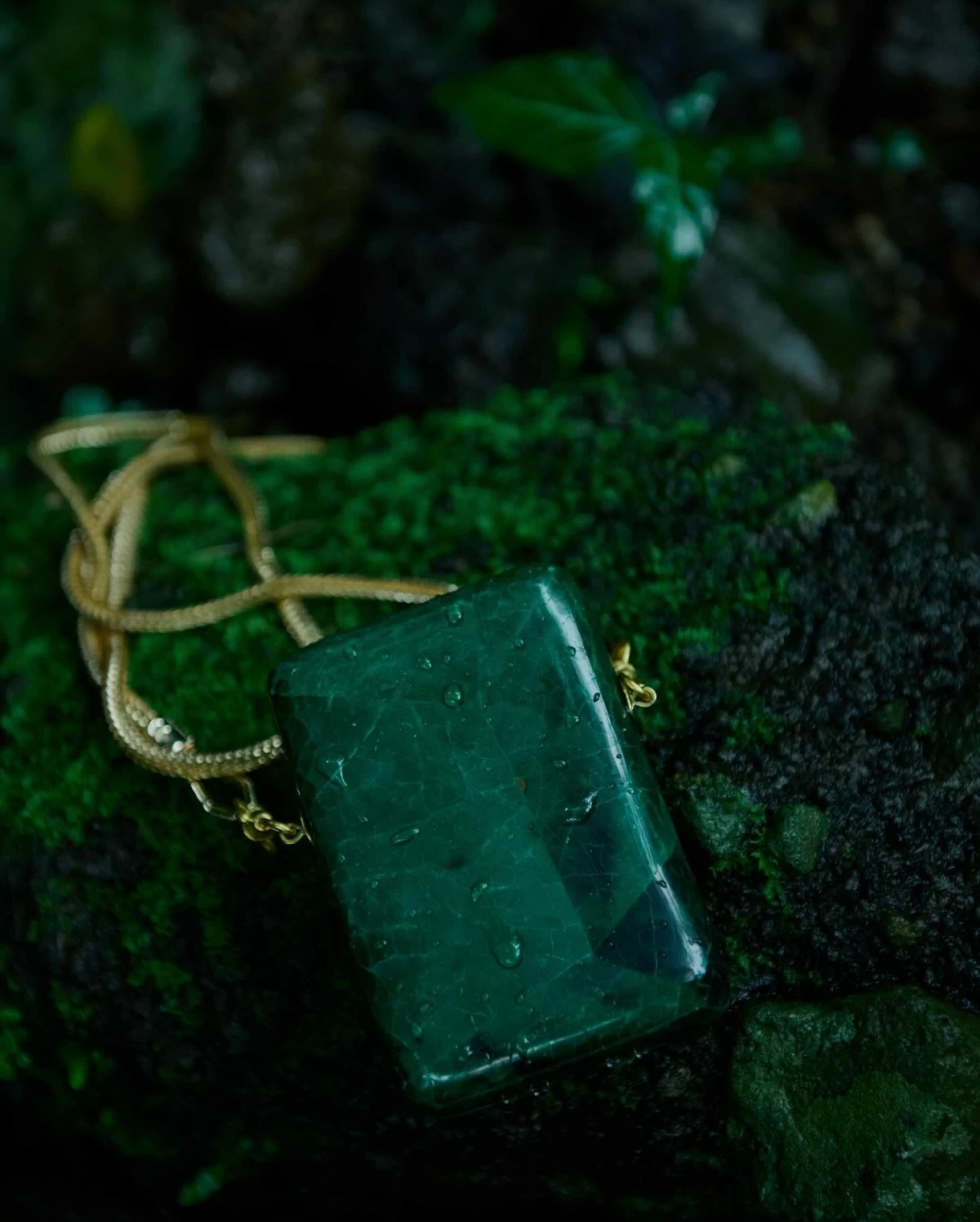
Mother of pearl mini minaudiere in forest jade color
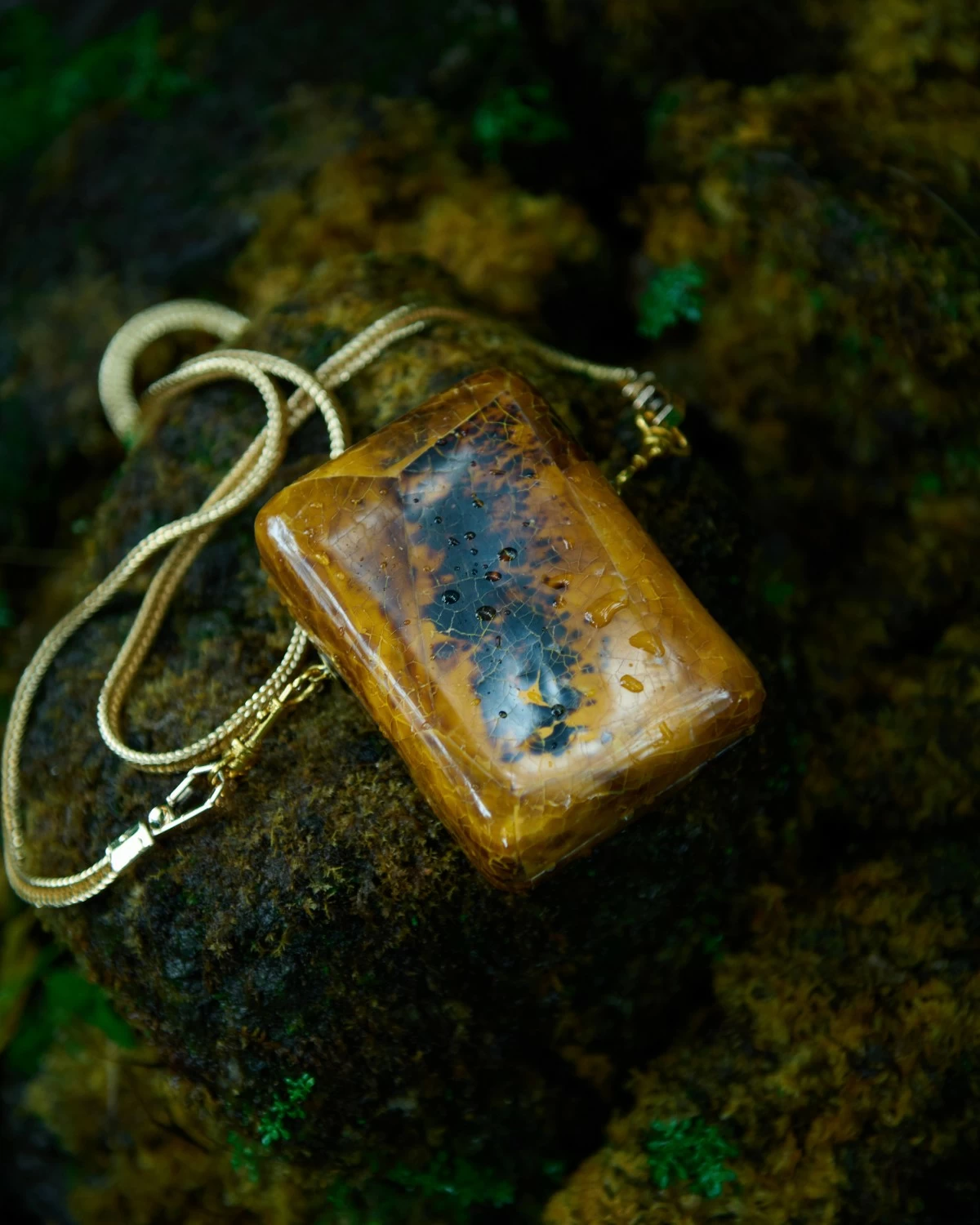
Mother of pearl mini minaudiere in amber tortoise color
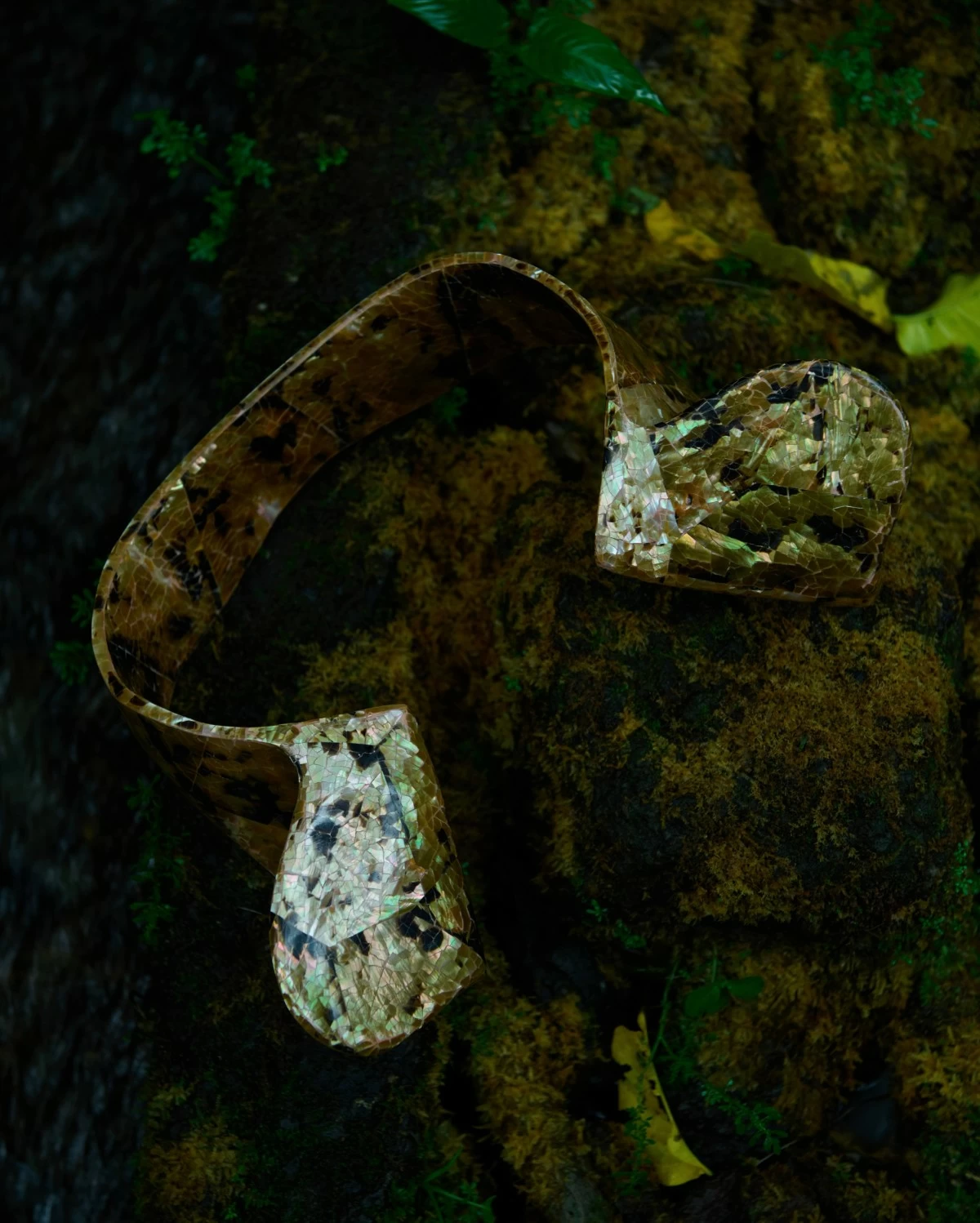
Mother of pearl obi belt in gold tortoise color
While “Alembong” celebrates the beauty of the Filipina and the richness of the country's natural resources, Jerome also treats it as a form of rebellion—a call to reconnect with what is primal, natural, and human.
“Our skin is like a landscape of stories, histories, and possibilities. The modern Filipina is someone who is now more aware of her own energy and capabilities. She knows that nothing can set boundaries for her and that the world is waiting for her. This collection is a way to help her express herself in any way that she wants,” Jerome concludes.

Related Tags

fashion and beauty Jerome Lorico Alembong
ADVERTISEMENT
.most-popular .layout-ratio{ padding-bottom: 79.13%; } @media (min-width: 768px) and (max-width: 1024px) { .widget-title { font-size: 15px !important; } }

{{ articles_filter_1561_widget.title }}

.most-popular .layout-ratio{ padding-bottom: 79.13%; } @media (min-width: 768px) and (max-width: 1024px) { .widget-title { font-size: 15px !important; } }

{{ static_articles_1562_widget.title }}

.most-popular .layout-ratio{ padding-bottom: 79.13%; } @media (min-width: 768px) and (max-width: 1024px) { .widget-title { font-size: 15px !important; } }

{{ articles_filter_1563_widget.title }}

{{ articles_filter_1564_widget.title }}

.mb-article-details { position: relative; } .mb-article-details .article-body-preview, .mb-article-details .article-body-summary{ font-size: 17px; line-height: 30px; font-family: "Libre Caslon Text", serif; color: #000; } .mb-article-details .article-body-preview iframe , .mb-article-details .article-body-summary iframe{ width: 100%; margin: auto; } .read-more-background { background: linear-gradient(180deg, color(display-p3 1.000 1.000 1.000 / 0) 13.75%, color(display-p3 1.000 1.000 1.000 / 0.8) 30.79%, color(display-p3 1.000 1.000 1.000) 72.5%); position: absolute; height: 200px; width: 100%; bottom: 0; display: flex; justify-content: center; align-items: center; padding: 0; } .read-more-background a{ color: #000; } .read-more-btn { padding: 17px 45px; font-family: Inter; font-weight: 700; font-size: 18px; line-height: 16px; text-align: center; vertical-align: middle; border: 1px solid black; background-color: white; } .hidden { display: none; }
function initializeAllSwipers() { // Get all hidden inputs with cms_article_id document.querySelectorAll('[id^="cms_article_id_"]').forEach(function (input) { const cmsArticleId = input.value; const articleSelector = '#article-' + cmsArticleId + ' .body_images'; const swiperElement = document.querySelector(articleSelector); if (swiperElement && !swiperElement.classList.contains('swiper-initialized')) { new Swiper(articleSelector, { loop: true, pagination: false, navigation: { nextEl: '#article-' + cmsArticleId + ' .swiper-button-next', prevEl: '#article-' + cmsArticleId + ' .swiper-button-prev', }, }); } }); } setTimeout(initializeAllSwipers, 3000); const intersectionObserver = new IntersectionObserver( (entries) => { entries.forEach((entry) => { if (entry.isIntersecting) { const newUrl = entry.target.getAttribute("data-url"); if (newUrl) { history.pushState(null, null, newUrl); let article = entry.target; // Extract metadata const author = article.querySelector('.author-section').textContent.replace('By', '').trim(); const section = article.querySelector('.section-info ').textContent.replace(' ', ' '); const title = article.querySelector('.article-title h1').textContent; // Parse URL for Chartbeat path format const parsedUrl = new URL(newUrl, window.location.origin); const cleanUrl = parsedUrl.host + parsedUrl.pathname; // Update Chartbeat configuration if (typeof window._sf_async_config !== 'undefined') { window._sf_async_config.path = cleanUrl; window._sf_async_config.sections = section; window._sf_async_config.authors = author; } // Track virtual page view with Chartbeat if (typeof pSUPERFLY !== 'undefined' && typeof pSUPERFLY.virtualPage === 'function') { try { pSUPERFLY.virtualPage({ path: cleanUrl, title: title, sections: section, authors: author }); } catch (error) { console.error('ping error', error); } } // Optional: Update document title if (title && title !== document.title) { document.title = title; } } } }); }, { threshold: 0.1 } ); function showArticleBody(button) { const article = button.closest("article"); const summary = article.querySelector(".article-body-summary"); const body = article.querySelector(".article-body-preview"); const readMoreSection = article.querySelector(".read-more-background"); // Hide summary and read-more section summary.style.display = "none"; readMoreSection.style.display = "none"; // Show the full article body body.classList.remove("hidden"); } document.addEventListener("DOMContentLoaded", () => { let loadCount = 0; // Track how many times articles are loaded const offset = [1, 2, 3, 4, 5, 6, 7, 8, 9, 10]; // Offset values const currentUrl = window.location.pathname.substring(1); let isLoading = false; // Prevent multiple calls if (!currentUrl) { console.log("Current URL is invalid."); return; } const sentinel = document.getElementById("load-more-sentinel"); if (!sentinel) { console.log("Sentinel element not found."); return; } function isSentinelVisible() { const rect = sentinel.getBoundingClientRect(); return ( rect.top < window.innerHeight && rect.bottom >= 0 ); } function onScroll() { if (isLoading) return; if (isSentinelVisible()) { if (loadCount >= offset.length) { console.log("Maximum load attempts reached."); window.removeEventListener("scroll", onScroll); return; } isLoading = true; const currentOffset = offset[loadCount]; window.loadMoreItems().then(() => { let article = document.querySelector('#widget_1690 > div:nth-last-of-type(2) article'); intersectionObserver.observe(article) loadCount++; }).catch(error => { console.error("Error loading more items:", error); }).finally(() => { isLoading = false; }); } } window.addEventListener("scroll", onScroll); });

Sign up by email to receive news.