






Manila Bulletin
 Business
Trade & Industry
'It's laws of physics': MVP says electricity line losses are unavoidable
Business
Trade & Industry
'It's laws of physics': MVP says electricity line losses are unavoidable
Business
Trade & Industry
'It's laws of physics': MVP says electricity line losses are unavoidable
'It's laws of physics': MVP says electricity line losses are unavoidable
Published Jul 29, 2026 05:22 pm


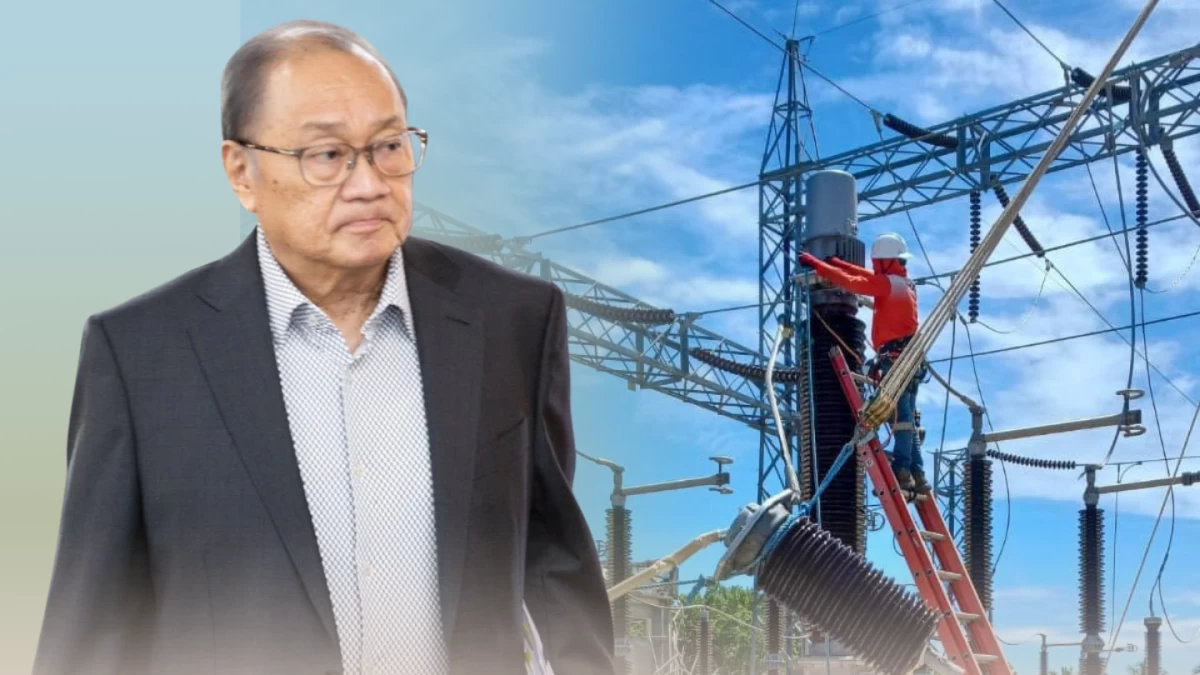
Manila Electric Co. (Meralco) Chairman Manuel V. Pangilinan
Manila Electric Co. (Meralco) Chairman Manuel V. Pangilinan cautioned that removing system loss charges from electricity bills would place an unsustainable financial burden on the power industry, emphasizing that technical line losses are an unavoidable reality of power distribution.
While the utility supports broader efforts to lower electricity rates, Pangilinan explained that physically eliminating technical system losses is impossible due to standard electrical resistance across distribution networks.
“Regarding the laws of physics, what do they say? Nature is to be commanded by obeying its laws, right? Any operation that involves transmission from point A to point B will involve some losses. That’s just the way it is,” Pangilinan said.
“When you push electricity through copper wires, there will be resistance. The longer the lines are, the higher the losses will be,” he added.
Pangilinan’s comments came in response to recent calls made during the State of the Nation Address to lower utility rates by removing system loss charges for consumers.
“It is not a question of inefficiency; it is just the way it is, and there’s a cost to it. So, the real question is: who bears that cost?” Pangilinan said.
Consumers within Meralco’s franchise area could see rate reductions of five percent to 10 percent if system loss charges are eliminated. However, shifting those costs away from end-users threatens the financial stability of utility providers and power producers alike.
“It's a big bill for the industry because it cuts across generation, transmission, and distribution. The bill is too big for the industry to absorb on its own, so there has to be a discussion. It's going to impact the entire power industry in this country,” Pangilinan said.
To cushion the impact of a potential policy shift, the Department of Energy (DOE) is planning structural adjustments alongside the National Electrification Administration (NEA).
Energy Undersecretary Rowena Guevara said authorities are evaluating options to extend long-term financing to electric cooperatives.
These soft loans would allow regional distribution utilities to fund critical grid infrastructure upgrades without passing capital expenditure costs directly to retail customers.
Guevara noted that the NEA will establish specific guidelines for a gradual reduction in system costs to protect rural electric cooperatives from sudden liquidity shocks.
Beyond state-backed funding mechanisms, the DOE is also exploring external financing options, including partnerships with multilateral development banks and local commercial lenders. Those preliminary proposals remain under formal review by participating government agencies.