ADVERTISEMENT

Bold tax relief unveiled, but where's the fiscal plan?

Published Jul 29, 2026 12:05 am  |  Updated Jul 28, 2026 04:16 pm
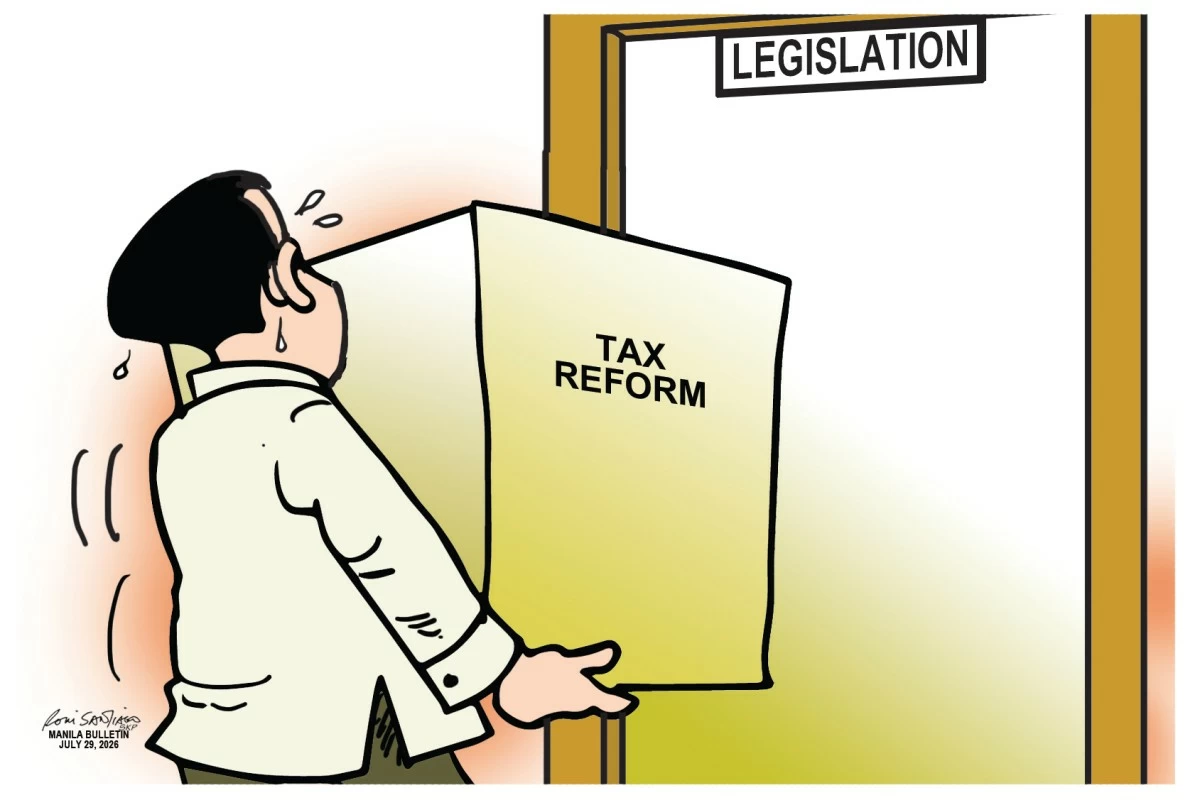
President Ferdinand R. Marcos Jr. deserves credit for placing tax relief at the heart of his administration's final two years. At a time when Filipino families continue to grapple with rising prices, geopolitical uncertainty triggered by the Middle East crisis, and slowing global growth, his proposal to ease the tax burden on workers and small businesses reflects both compassion and economic pragmatism.
The package is ambitious. It seeks to raise the personal income tax exemption from ₱250,000 to ₱350,000, exempt qualified small enterprises from corporate income tax, and grant a broad tax amnesty covering unpaid estate, income, donor's and value-added taxes, including associated penalties. These proposals, announced by President Marcos and subject to congressional approval, have the potential to put more money into the hands of ordinary Filipinos while giving struggling entrepreneurs much-needed breathing space.
The proposed increase in the income tax exemption alone could save a taxpayer earning exactly ₱350,000 in taxable income as much as ₱15,000 annually under the current tax schedule. That is money that could instead be spent on food, education, transportation or savings—precisely the kind of consumption that fuels domestic economic activity. Likewise, freeing qualified small businesses from corporate income tax could strengthen enterprises that generate the bulk of Philippine employment.
These are bold ideas deserving serious consideration.
Yet boldness alone does not balance fiscal health.
The missing piece in the President's announcement is an equally compelling roadmap for replacing the government's foregone revenues. Every peso of tax relief is a peso unavailable for infrastructure, healthcare, education, disaster preparedness and debt servicing unless offset by stronger collections, higher economic growth or disciplined spending.
The President has effectively entrusted Congress with designing the legislation that will make these reforms fiscally sustainable. That is both constitutionally appropriate and politically challenging. Under the National Internal Revenue Code, Congress—not Malacañang—must amend income tax brackets and enact permanent tax changes. The responsibility now shifts to lawmakers and the government’s economic managers to ensure that generosity today does not become a fiscal burden tomorrow.
Congress must therefore resist the temptation to view tax relief as an isolated political victory. It should instead package these reforms with equally robust revenue-enhancing measures. These may include intensifying the Bureau of Internal Revenue's digital transformation, expanding electronic invoicing, aggressively combating tax evasion and smuggling, rationalizing fiscal incentives, and improving collection efficiency before considering new taxes. The Department of Finance must likewise continue pursuing prudent expenditure management so that every public peso delivers measurable value.
The private sector also has a decisive role. Businesses benefiting from lower taxes should channel the savings into expansion, innovation, higher productivity and job creation rather than simply improving balance sheets. Responsible corporate citizenship means recognizing that tax relief is an investment by society, one that should yield broader economic gains.
Individual Filipinos, too, share responsibility. Paying taxes honestly, demanding accountability in government spending, supporting local enterprises and participating actively in the formal economy are indispensable contributions to fiscal stability. A stronger tax culture begins not only with fairer laws but with greater public trust that taxes are collected efficiently and spent wisely.
President Marcos has opened an important national conversation. His tax reform agenda recognizes that economic recovery must begin with people whose purchasing power has been eroded by inflation and uncertainty. That vision deserves applause. But compassion must always be paired with credible fiscal discipline.
Leadership is measured not only by the courage to give relief, but by the wisdom to sustain it. And the real measure of this reform will not be how much tax is reduced, but whether the Philippines emerges with stronger businesses, more resilient public finances and greater confidence in its institutions.
ADVERTISEMENT
.most-popular .layout-ratio{ padding-bottom: 79.13%; } @media (min-width: 768px) and (max-width: 1024px) { .widget-title { font-size: 15px !important; } }

{{ articles_filter_1561_widget.title }}

.most-popular .layout-ratio{ padding-bottom: 79.13%; } @media (min-width: 768px) and (max-width: 1024px) { .widget-title { font-size: 15px !important; } }

{{ static_articles_1562_widget.title }}

.most-popular .layout-ratio{ padding-bottom: 79.13%; } @media (min-width: 768px) and (max-width: 1024px) { .widget-title { font-size: 15px !important; } }

{{ articles_filter_1563_widget.title }}

{{ articles_filter_1564_widget.title }}

.mb-article-details { position: relative; } .mb-article-details .article-body-preview, .mb-article-details .article-body-summary{ font-size: 17px; line-height: 30px; font-family: "Libre Caslon Text", serif; color: #000; } .mb-article-details .article-body-preview iframe , .mb-article-details .article-body-summary iframe{ width: 100%; margin: auto; } .read-more-background { background: linear-gradient(180deg, color(display-p3 1.000 1.000 1.000 / 0) 13.75%, color(display-p3 1.000 1.000 1.000 / 0.8) 30.79%, color(display-p3 1.000 1.000 1.000) 72.5%); position: absolute; height: 200px; width: 100%; bottom: 0; display: flex; justify-content: center; align-items: center; padding: 0; } .read-more-background a{ color: #000; } .read-more-btn { padding: 17px 45px; font-family: Inter; font-weight: 700; font-size: 18px; line-height: 16px; text-align: center; vertical-align: middle; border: 1px solid black; background-color: white; } .hidden { display: none; }
function initializeAllSwipers() { // Get all hidden inputs with cms_article_id document.querySelectorAll('[id^="cms_article_id_"]').forEach(function (input) { const cmsArticleId = input.value; const articleSelector = '#article-' + cmsArticleId + ' .body_images'; const swiperElement = document.querySelector(articleSelector); if (swiperElement && !swiperElement.classList.contains('swiper-initialized')) { new Swiper(articleSelector, { loop: true, pagination: false, navigation: { nextEl: '#article-' + cmsArticleId + ' .swiper-button-next', prevEl: '#article-' + cmsArticleId + ' .swiper-button-prev', }, }); } }); } setTimeout(initializeAllSwipers, 3000); const intersectionObserver = new IntersectionObserver( (entries) => { entries.forEach((entry) => { if (entry.isIntersecting) { const newUrl = entry.target.getAttribute("data-url"); if (newUrl) { history.pushState(null, null, newUrl); let article = entry.target; // Extract metadata const author = article.querySelector('.author-section').textContent.replace('By', '').trim(); const section = article.querySelector('.section-info ').textContent.replace(' ', ' '); const title = article.querySelector('.article-title h1').textContent; // Parse URL for Chartbeat path format const parsedUrl = new URL(newUrl, window.location.origin); const cleanUrl = parsedUrl.host + parsedUrl.pathname; // Update Chartbeat configuration if (typeof window._sf_async_config !== 'undefined') { window._sf_async_config.path = cleanUrl; window._sf_async_config.sections = section; window._sf_async_config.authors = author; } // Track virtual page view with Chartbeat if (typeof pSUPERFLY !== 'undefined' && typeof pSUPERFLY.virtualPage === 'function') { try { pSUPERFLY.virtualPage({ path: cleanUrl, title: title, sections: section, authors: author }); } catch (error) { console.error('ping error', error); } } // Optional: Update document title if (title && title !== document.title) { document.title = title; } } } }); }, { threshold: 0.1 } ); function showArticleBody(button) { const article = button.closest("article"); const summary = article.querySelector(".article-body-summary"); const body = article.querySelector(".article-body-preview"); const readMoreSection = article.querySelector(".read-more-background"); // Hide summary and read-more section summary.style.display = "none"; readMoreSection.style.display = "none"; // Show the full article body body.classList.remove("hidden"); } document.addEventListener("DOMContentLoaded", () => { let loadCount = 0; // Track how many times articles are loaded const offset = [1, 2, 3, 4, 5, 6, 7, 8, 9, 10]; // Offset values const currentUrl = window.location.pathname.substring(1); let isLoading = false; // Prevent multiple calls if (!currentUrl) { console.log("Current URL is invalid."); return; } const sentinel = document.getElementById("load-more-sentinel"); if (!sentinel) { console.log("Sentinel element not found."); return; } function isSentinelVisible() { const rect = sentinel.getBoundingClientRect(); return ( rect.top < window.innerHeight && rect.bottom >= 0 ); } function onScroll() { if (isLoading) return; if (isSentinelVisible()) { if (loadCount >= offset.length) { console.log("Maximum load attempts reached."); window.removeEventListener("scroll", onScroll); return; } isLoading = true; const currentOffset = offset[loadCount]; window.loadMoreItems().then(() => { let article = document.querySelector('#widget_1690 > div:nth-last-of-type(2) article'); intersectionObserver.observe(article) loadCount++; }).catch(error => { console.error("Error loading more items:", error); }).finally(() => { isLoading = false; }); } } window.addEventListener("scroll", onScroll); });

Sign up by email to receive news.