ADVERTISEMENT

AboitizPower posts ₱18-billion net income as renewable drive pays off

Published Jul 29, 2026 02:42 pm
Aboitiz Power Corp. posted a 45 percent surge in first-half profit to ₱18.4 billion, driven by improved market prices, additional hydroelectric and gas contributions, and fresh output from newly completed solar facilities.
In a disclosure to the Philippine Stock Exchange on Wednesday, July 29, AboitizPower said that net income for the six months ended June expanded from ₱12.7 billion recorded in the same period last year.
Earnings before interest, taxes, depreciation, and amortization (Ebita) rose 27 percent to ₱43 billion from ₱34 billion a year earlier on the back of wider profit margins within AboitizPower’s generation business segment.
The company attributed the earnings growth primarily to stronger wholesale electricity market prices, increased generation capacity following the integration of the Caliraya-Botocan-Kalayaan Hydroelectric Power Plant Complex, and initial first-half financial contributions from Chromite Gas Holdings Inc.
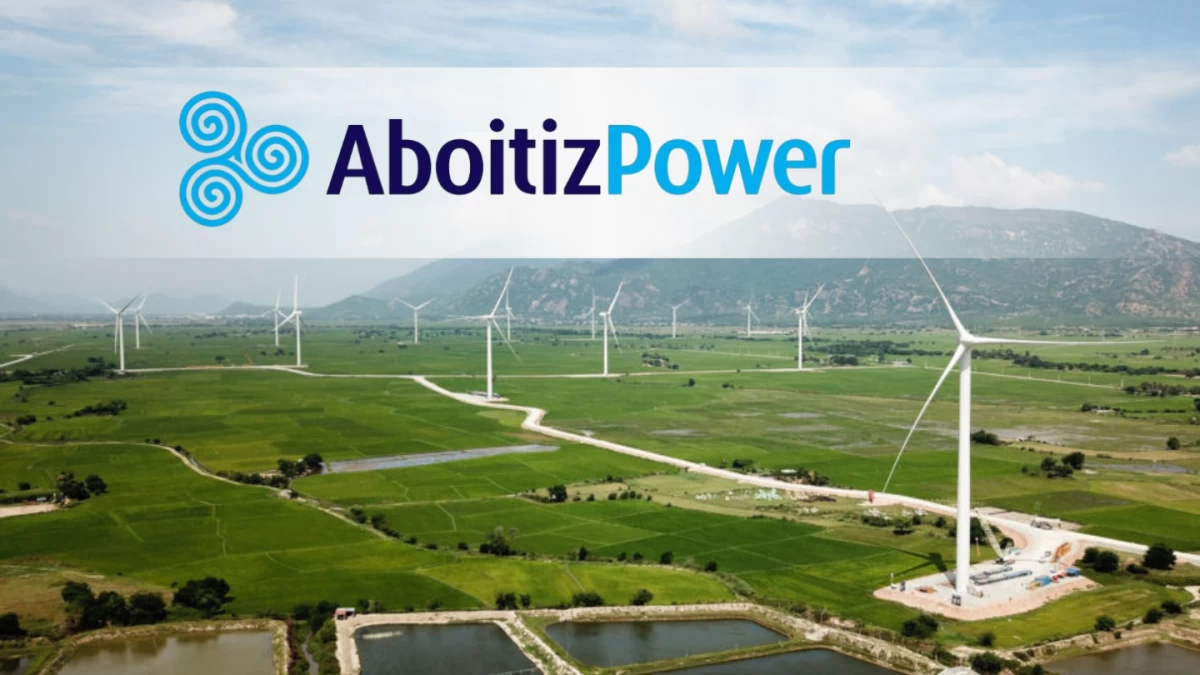
The growth was further supported by the commercial delivery of three solar power plants during the second quarter. The newly operational assets include the 221-megawatt-peak Olongapo facility, the 47-megawatt-peak Armenia plant, and the 93-megawatt-peak San Manuel project.
The influx of renewable energy generation helped offset lower availability from AboitizPower’s coal-fired generation assets during the period. An extended shutdown at a plant owned by subsidiary Therma Visayas Inc. had temporarily constrained thermal capacity earlier in the year, contributing to yellow grid alerts across the Visayas power network.
Operational metrics remained robust across both wholesale supply and retail distribution divisions. Total energy sold through generation and retail electricity supply climbed 17% to 22,764 gigawatt-hours during the six-month period, compared with 19,440 gigawatt-hours in the prior year. Power distribution sales rose six percent to 3,606 gigawatt-hours from 3,386 gigawatt-hours.
AboitizPower remains the country’s dominant power generator, holding a 24.3 percent share of total national installed power capacity, according to data from the Energy Regulatory Commission.
The majority of the company’s generation footprint is concentrated in North Luzon, where it controls 5.6 gigawatts of operational projects. In addition, the firm maintains 673.9 megawatts of capacity in Mindanao and 591 megawatts in the Visayas region. (Gabriell Christel Galang)

Related Tags

AboitizPower Caliraya-Botocan-Kalayaan (CBK) hydropower plants solar energy
ADVERTISEMENT
.most-popular .layout-ratio{ padding-bottom: 79.13%; } @media (min-width: 768px) and (max-width: 1024px) { .widget-title { font-size: 15px !important; } }

{{ articles_filter_1561_widget.title }}

.most-popular .layout-ratio{ padding-bottom: 79.13%; } @media (min-width: 768px) and (max-width: 1024px) { .widget-title { font-size: 15px !important; } }

{{ static_articles_1562_widget.title }}

.most-popular .layout-ratio{ padding-bottom: 79.13%; } @media (min-width: 768px) and (max-width: 1024px) { .widget-title { font-size: 15px !important; } }

{{ articles_filter_1563_widget.title }}

{{ articles_filter_1564_widget.title }}

.mb-article-details { position: relative; } .mb-article-details .article-body-preview, .mb-article-details .article-body-summary{ font-size: 17px; line-height: 30px; font-family: "Libre Caslon Text", serif; color: #000; } .mb-article-details .article-body-preview iframe , .mb-article-details .article-body-summary iframe{ width: 100%; margin: auto; } .read-more-background { background: linear-gradient(180deg, color(display-p3 1.000 1.000 1.000 / 0) 13.75%, color(display-p3 1.000 1.000 1.000 / 0.8) 30.79%, color(display-p3 1.000 1.000 1.000) 72.5%); position: absolute; height: 200px; width: 100%; bottom: 0; display: flex; justify-content: center; align-items: center; padding: 0; } .read-more-background a{ color: #000; } .read-more-btn { padding: 17px 45px; font-family: Inter; font-weight: 700; font-size: 18px; line-height: 16px; text-align: center; vertical-align: middle; border: 1px solid black; background-color: white; } .hidden { display: none; }
function initializeAllSwipers() { // Get all hidden inputs with cms_article_id document.querySelectorAll('[id^="cms_article_id_"]').forEach(function (input) { const cmsArticleId = input.value; const articleSelector = '#article-' + cmsArticleId + ' .body_images'; const swiperElement = document.querySelector(articleSelector); if (swiperElement && !swiperElement.classList.contains('swiper-initialized')) { new Swiper(articleSelector, { loop: true, pagination: false, navigation: { nextEl: '#article-' + cmsArticleId + ' .swiper-button-next', prevEl: '#article-' + cmsArticleId + ' .swiper-button-prev', }, }); } }); } setTimeout(initializeAllSwipers, 3000); const intersectionObserver = new IntersectionObserver( (entries) => { entries.forEach((entry) => { if (entry.isIntersecting) { const newUrl = entry.target.getAttribute("data-url"); if (newUrl) { history.pushState(null, null, newUrl); let article = entry.target; // Extract metadata const author = article.querySelector('.author-section').textContent.replace('By', '').trim(); const section = article.querySelector('.section-info ').textContent.replace(' ', ' '); const title = article.querySelector('.article-title h1').textContent; // Parse URL for Chartbeat path format const parsedUrl = new URL(newUrl, window.location.origin); const cleanUrl = parsedUrl.host + parsedUrl.pathname; // Update Chartbeat configuration if (typeof window._sf_async_config !== 'undefined') { window._sf_async_config.path = cleanUrl; window._sf_async_config.sections = section; window._sf_async_config.authors = author; } // Track virtual page view with Chartbeat if (typeof pSUPERFLY !== 'undefined' && typeof pSUPERFLY.virtualPage === 'function') { try { pSUPERFLY.virtualPage({ path: cleanUrl, title: title, sections: section, authors: author }); } catch (error) { console.error('ping error', error); } } // Optional: Update document title if (title && title !== document.title) { document.title = title; } } } }); }, { threshold: 0.1 } ); function showArticleBody(button) { const article = button.closest("article"); const summary = article.querySelector(".article-body-summary"); const body = article.querySelector(".article-body-preview"); const readMoreSection = article.querySelector(".read-more-background"); // Hide summary and read-more section summary.style.display = "none"; readMoreSection.style.display = "none"; // Show the full article body body.classList.remove("hidden"); } document.addEventListener("DOMContentLoaded", () => { let loadCount = 0; // Track how many times articles are loaded const offset = [1, 2, 3, 4, 5, 6, 7, 8, 9, 10]; // Offset values const currentUrl = window.location.pathname.substring(1); let isLoading = false; // Prevent multiple calls if (!currentUrl) { console.log("Current URL is invalid."); return; } const sentinel = document.getElementById("load-more-sentinel"); if (!sentinel) { console.log("Sentinel element not found."); return; } function isSentinelVisible() { const rect = sentinel.getBoundingClientRect(); return ( rect.top < window.innerHeight && rect.bottom >= 0 ); } function onScroll() { if (isLoading) return; if (isSentinelVisible()) { if (loadCount >= offset.length) { console.log("Maximum load attempts reached."); window.removeEventListener("scroll", onScroll); return; } isLoading = true; const currentOffset = offset[loadCount]; window.loadMoreItems().then(() => { let article = document.querySelector('#widget_1690 > div:nth-last-of-type(2) article'); intersectionObserver.observe(article) loadCount++; }).catch(error => { console.error("Error loading more items:", error); }).finally(() => { isLoading = false; }); } } window.addEventListener("scroll", onScroll); });

Sign up by email to receive news.