






Manila Bulletin
 Spotlight Features
A name worth protecting: Guimaras mango's journey to global markets
Spotlight Features
A name worth protecting: Guimaras mango's journey to global markets
Spotlight Features
A name worth protecting: Guimaras mango's journey to global markets
A name worth protecting: Guimaras mango's journey to global markets
By Pam Pascual
Published Jul 29, 2026 04:01 pm


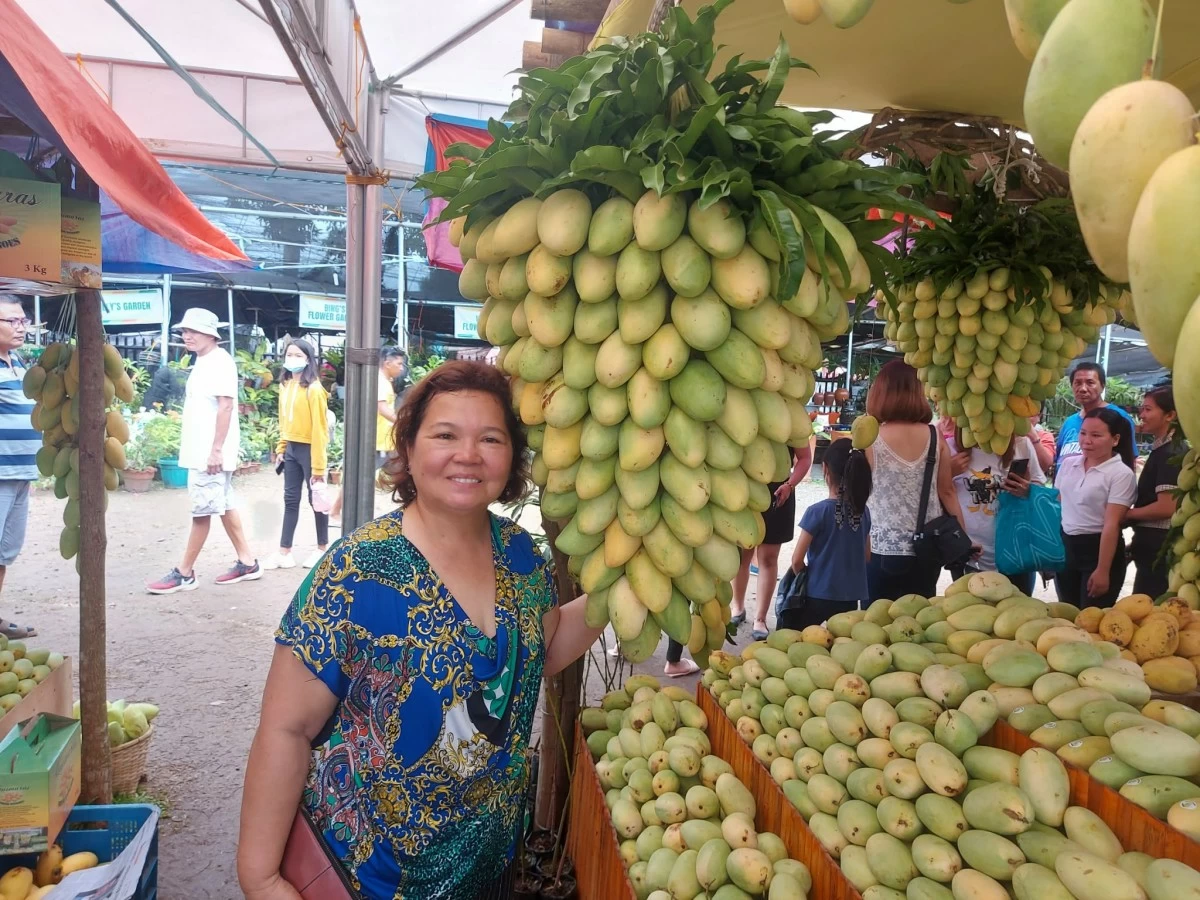
PROUD GUIMARASNON — Helena Quezon, board member of the Guimaras Mango Growers and Producers Development Cooperative, beside tons of Guimaras mangoes being sold at a market.
Known as one of the sweetest mangoes in the world, the Guimaras mango continues to strengthen its reputation in both local and international markets, backed by scientific studies, strict production standards, and its recognition as a geographical indication (GI) product.
For Helena Quezon, board member of the Guimaras Mango Growers and Producers Development Cooperative, the journey toward the recognition of the world-renowned Philippine carabao mangoes has been both scientific and community-driven.
According to Quezon, early studies conducted between 2005 and 2009 already identified the island’s unique soil composition and climatic conditions as key contributors to the mango’s exceptional sweetness. However, it was only in later years, through value chain studies supported by the Department of Trade and Industry (DTI) and funded by the European Union, that these claims were formally documented and strengthened.
“When we talk about Guimaras mango, it’s not just about taste. It’s about where it comes from and how it is grown,” Quezon said.
This connection between product and place is at the heart of geographical indication—a certification that ensures a product’s quality, reputation, and characteristics are directly linked to its origin. In Guimaras, this concept is closely tied to what locals refer to as “kapuokan,” similar to the French term “terroir,” which encompasses the natural and human factors that define a product.
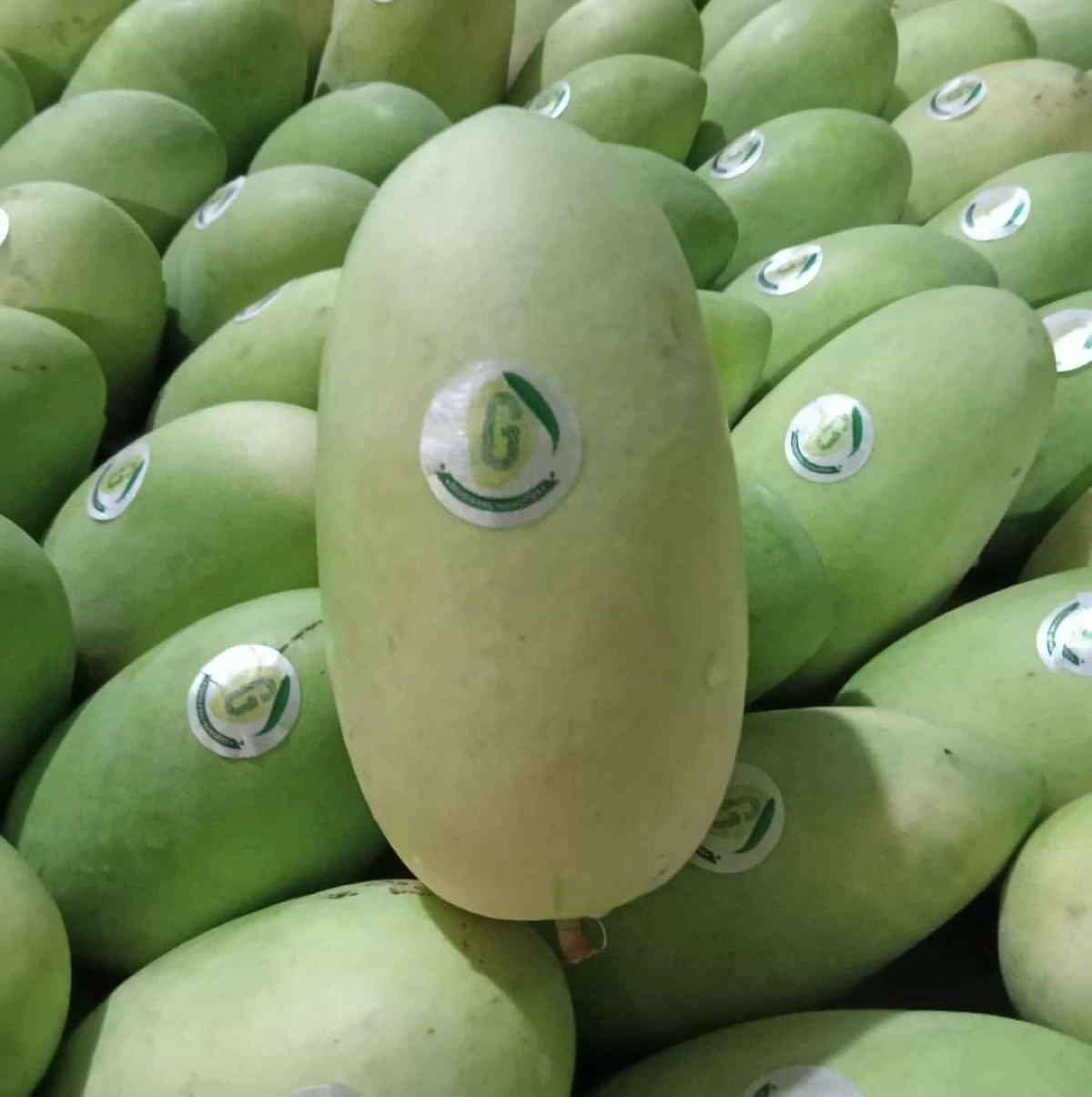
AUTHENTIC GUIMARAS MANGO — Close-up photo of a Guimaras mango with a sticker label. (Helena Quezon)
Guimaras mangoes were officially recognized as the Philippines’ first GI product on May 13, 2023. To preserve this identity, producers follow a detailed “book of specification,” outlining strict standards from cultivation to market. Among these is the rule that mangoes must only be harvested 115 to 120 days after flower induction to ensure optimal sweetness and maturity.
By following the standards, Guimaras mangoes can reach a sweetness level of 16 degrees Brix and higher.
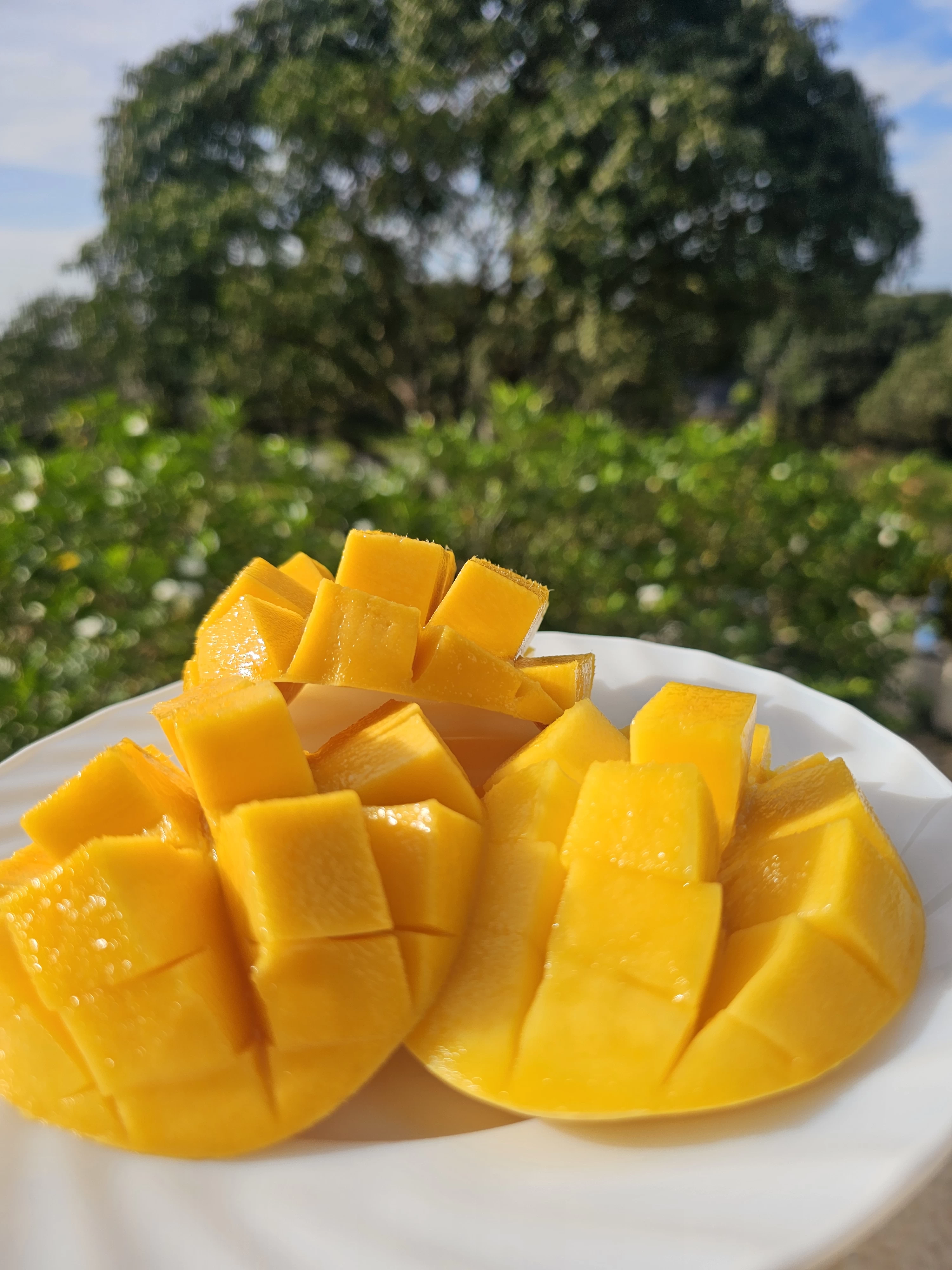
Aside from its sweetness, the fruit stands out because of its distinct physical and quality characteristics. It is green when unripe but turns yellow-orange to bright yellow as it ripens. The fruit is also known for its meaty, smooth, firm, and juicy flesh, which is notably non-fibrous.
In terms of quality standards, blemishes on the skin must not exceed 10 percent of the total fruit surface. To achieve this, mangoes undergo hot water treatment before leaving the island, a process that reduces the risk of pests and diseases.
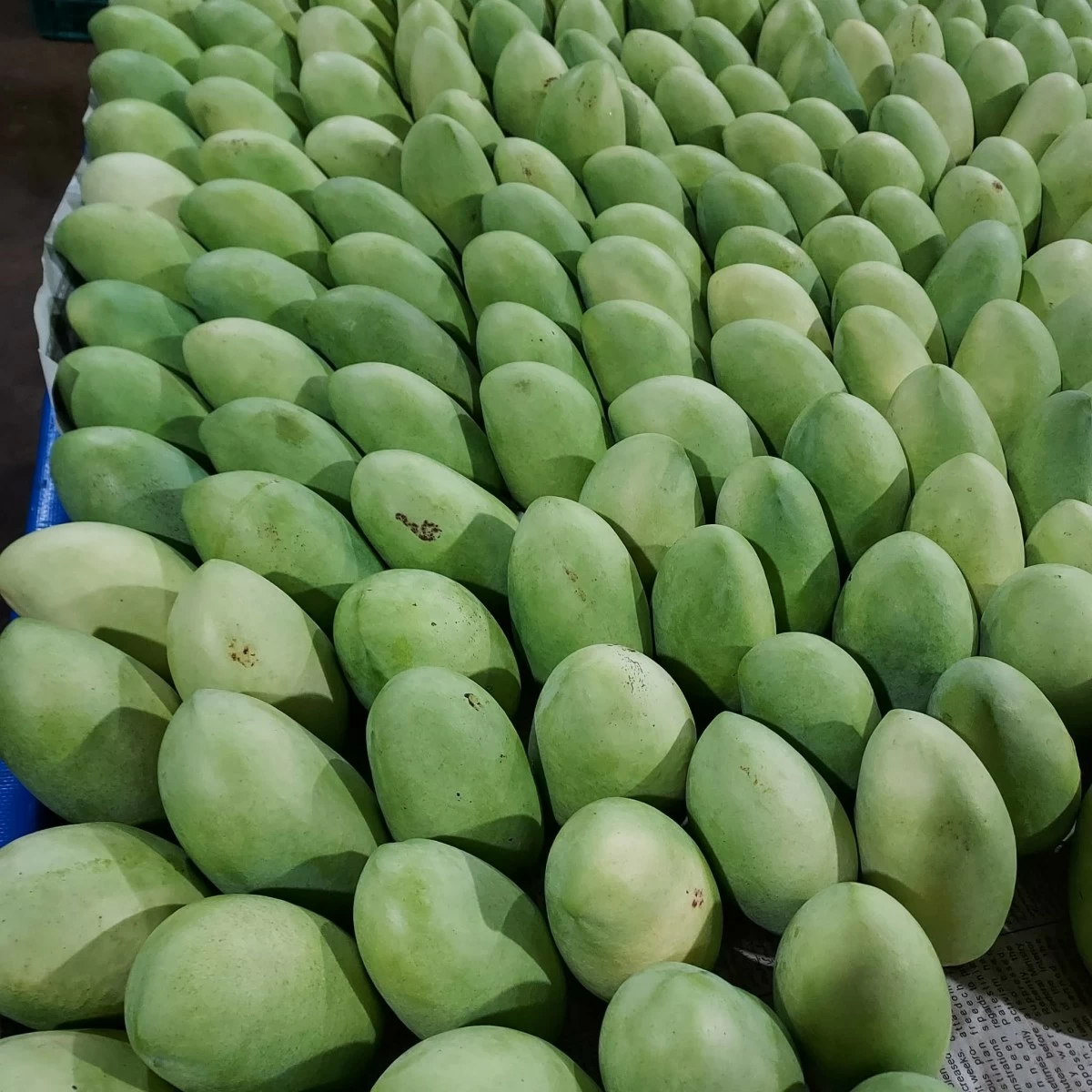
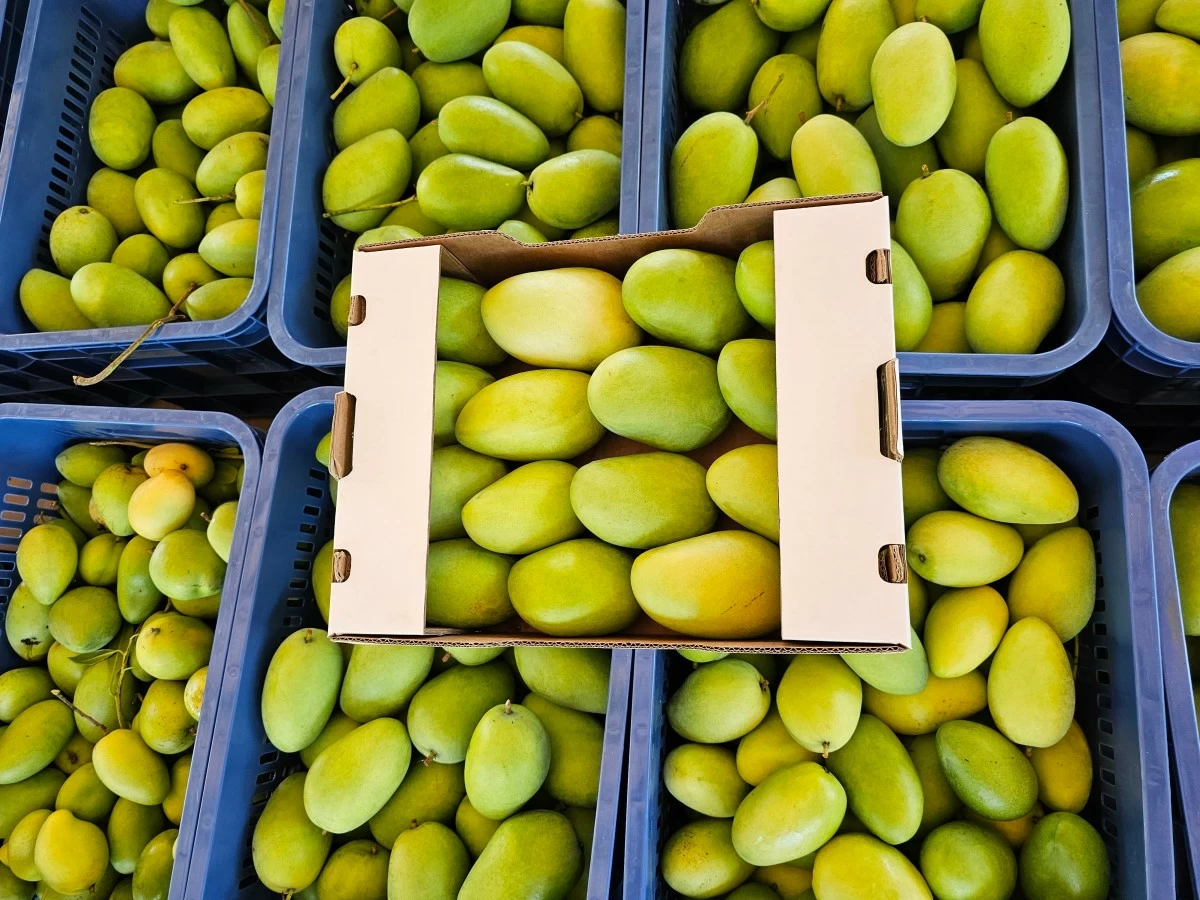
SORTED MANGOES — Freshly picked and sorted mangoes prepared for delivery.
According to the certificate of GI recognition, the exceptional quality and characteristics of Guimaras mangoes are largely attributed to the province’s unique topography. The terrain ranges from flat to steeply sloping, while the island’s elevation provides highly suitable conditions for growing carabao mangoes.
The economic impact of GI recognition has been significant. Before the certification, farm gate prices for Guimaras mangoes were as low as ₱20 per kilo. Today, prices can reach ₱200 per kilo at the farm level, with retail prices climbing up to ₱400 in premium markets such as Metro Manila and Boracay.
“This is one of the biggest advantages of GI, it allows us to command a premium price because we can guarantee quality and authenticity,” Quezon said.
Pushing for export growth
Beyond local markets, GI has opened doors for international trade. Recent trial shipments of Guimaras mangoes have been sent to several European countries, including Spain, Belgium, Germany, France, and Switzerland. These shipments aim to test market acceptance and establish future export channels.
“What we're hoping is it would spark or start up for us to get orders so that next season we can really export more in those areas,” she said.
RIPE MANGOES — Guimaras mangoes displayed at the Manggahan Festival 2025.
However, Quezon acknowledged that meeting global demand remains a challenge. Strict quality standards mean that not all harvested mangoes qualify for export. Factors such as blemishes, size inconsistencies, and climate-related issues like prolonged drought can significantly affect output.
“At present, we are not yet fully ready [to export] in terms of volume,” she admitted. “But this is also an opportunity to encourage more farmers to follow the standards so their produce can be included.”
Support systems are in place to help farmers meet these requirements. The Department of Agriculture provides training, inputs, and technical assistance, particularly in pest management and climate adaptation. Meanwhile, the DTI focuses on market expansion and logistics, connecting producers to buyers and facilitating programs such as “ManGoes to the Metro,” which brings Guimaras mangoes directly to Metro Manila and Metro Cebu.
How GI opens income opportunities
The benefits of GI extend beyond economics. Socially, it has strengthened farmer cooperation and encouraged consolidation through cooperatives, improving both productivity and income stability. It has also boosted tourism, with the mango becoming a central attraction in Guimaras, especially during the annual Manggahan Festival.
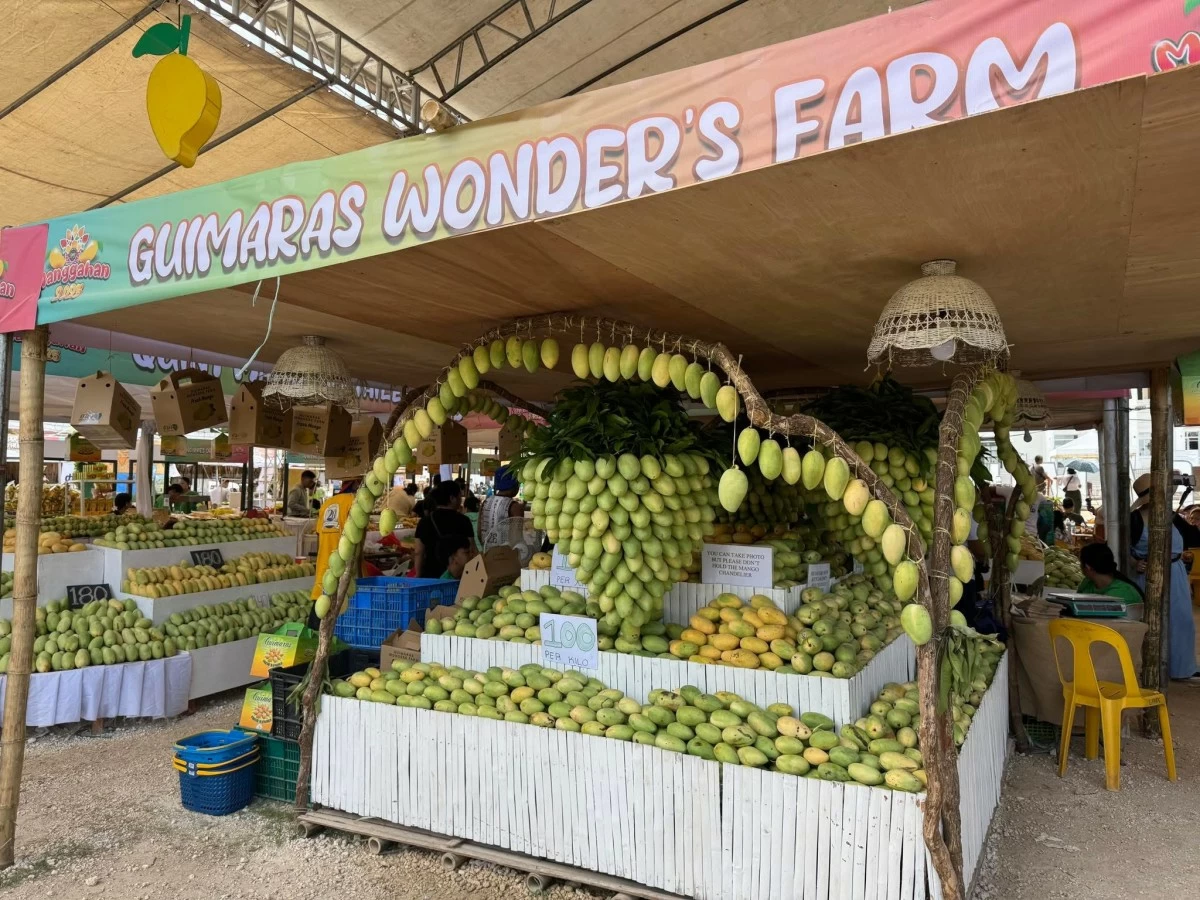
CARABAO MANGOES — A store filled with the Philippines’ prized fruit, Guimaras mangoes.
Parallel to fresh fruit sales, innovation in mango-based products continues to grow. Lower-grade mangoes are processed into dried mangoes, jams, ketchup, and even unique culinary creations such as mango pizza and mango-based dishes showcased during local festivals.
These innovations ensure minimal waste and provide additional income streams for micro and small enterprises.
Protecting the Guimaras mango identity
Despite these gains, another challenge persists—particularly in protecting the Guimaras mango brand. Cases of mislabeling and the unauthorized use of the name in other markets have raised concerns among producers.
Efforts are underway, in coordination with the Intellectual Property Office of the Philippines, to strengthen enforcement and push for legislation that will penalize such violations.
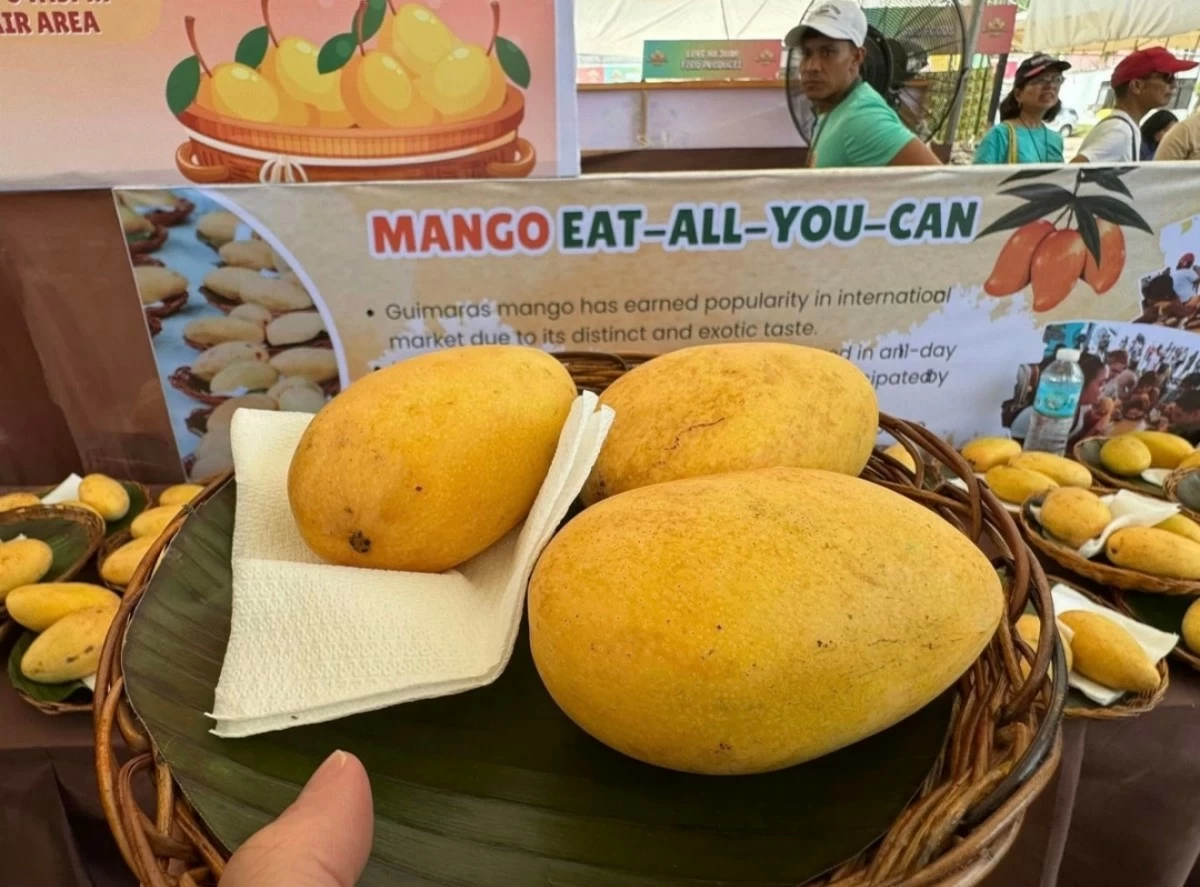
RIPE MANGOES — Guimaras mangoes displayed at the Manggahan Festival 2025.
“I hope the Senate will act on it soon, as there is a pending measure—Senate Bill 512—that aims to tighten the rules so that other provinces or individuals cannot simply claim their products as Guimaras mangoes when they do not actually come from us,” she said.
Aside from government intervention, Quezon is also calling on consumers to be more mindful and discerning.
“It takes a lot of work to reach this level and to receive Geographic Indication,” Quezon said, stressing the importance of protecting what has been built.
“Consumers should be vigilant. Genuine Guimaras mangoes come with traceability—from the farm where they were grown to the date they were harvested,” she added.
Supporting authentic Guimaras mangoes is not simply about buying fruit; it also means recognizing the dedication of the entire community behind it.
More than just a crop, the Guimaras mango stands as a model of how geographic identity and quality assurance can transform a local product into a globally competitive commodity. (Photos courtesy of Helena Quezon)