






Manila Bulletin
 Philippines
National
What we know about the Philippines' first liquid-fueled rocket test in 2027
Philippines
National
What we know about the Philippines' first liquid-fueled rocket test in 2027
Philippines
National
What we know about the Philippines' first liquid-fueled rocket test in 2027
What we know about the Philippines' first liquid-fueled rocket test in 2027
Published Jul 28, 2026 10:28 am


At A Glance
- President Ferdinand R. Marcos Jr. announced the planned test during his fifth State of the Nation Address on July 27, saying Cagayan is being positioned as a potential gateway to space.
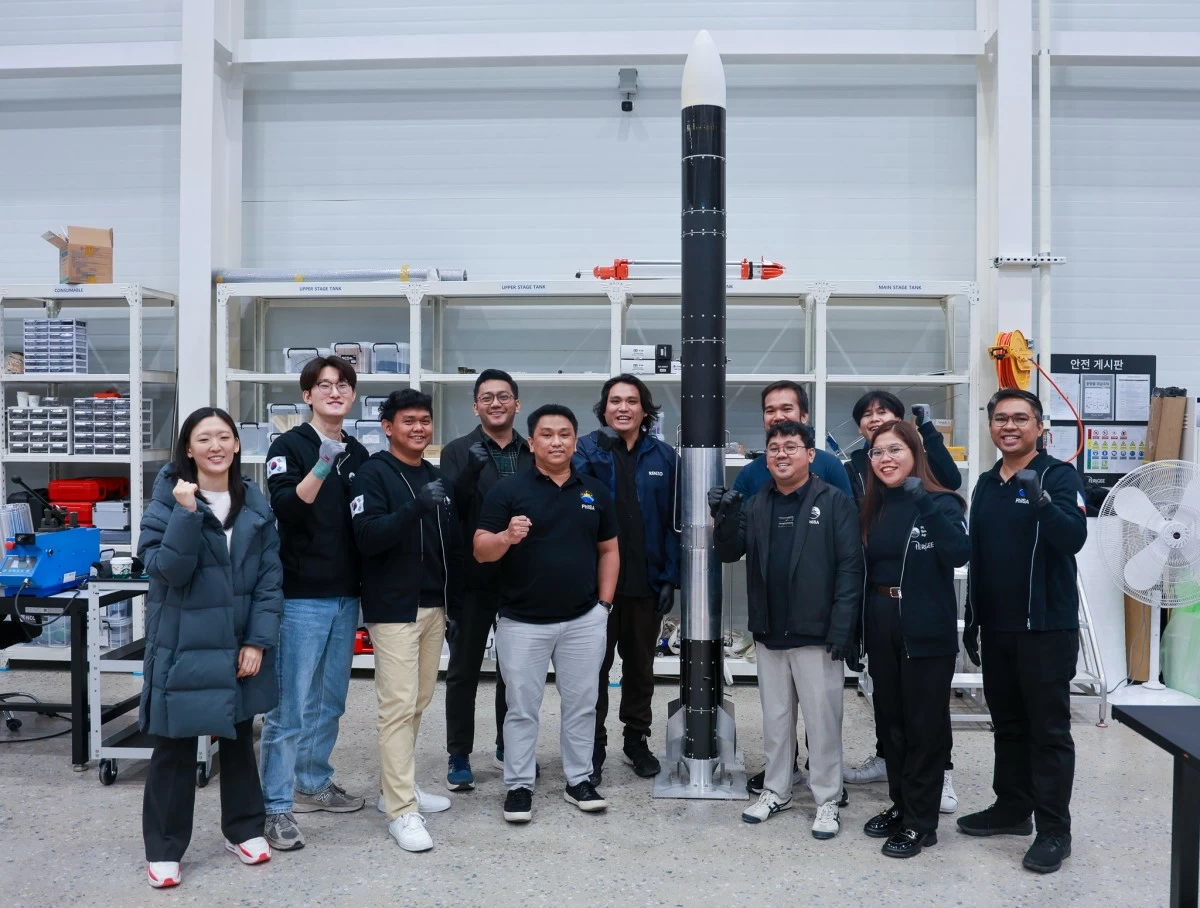
Philippine Space Agency advances the Philippines’ launch capability during Phase 1 of the Know-How Transfer and Training Program on Small Launch Vehicles in partnership with Perigee Aerospace in October-November 2025. (PhiSA)
The Philippines is preparing to launch a liquid-fueled sounding rocket from Cagayan in 2027, with the Philippine Space Agency (PhilSA) describing the test as part of efforts to develop local expertise in rocket technology and lay the groundwork for a future Philippine spaceport.
President Ferdinand R. Marcos Jr. announced the planned test during his fifth State of the Nation Address on July 27, saying Cagayan is being positioned as a potential gateway to space.
The flight will involve a liquid-fueled sounding rocket that will carry a locally developed payload weighing up to two kilograms and reach an altitude of at least five kilometers.
It will not be an orbital launch that puts a satellite around Earth.
Instead, the test will demonstrate the rocket and allow the Philippines to gain experience in conducting a launch from its own territory, according to PhilSA.
The agency said the project will also give Filipino engineers an opportunity to gain hands-on experience in rocket technology and launch operations.
The test will be carried out by PhilSA, the Department of Information and Communications Technology (DICT), and the Cagayan Economic Zone Authority (CEZA), in partnership with Ascend International Gateway Inc. and South Korean aerospace company Perigee Aerospace Inc.
The partnership was formalized through a Memorandum of Understanding signed during the Philippines-Korea Business Forum in March 2026.
Why Cagayan?
Cagayan is being considered as a potential launch site because of its location facing the Pacific Ocean and its proximity to the equator.
PhilSA Director General Gay Jane Perez said these geographic advantages could support rocket launch and recovery operations, but location is only one factor that launch companies consider.
“Apart from location, launch companies also take into consideration the approval process: whether it is clear, whether the approvals arrive on a schedule they can plan around, and whether the country meets its international obligations,” Perez said.
“That reliability is where the Philippines intends to compete,” she added.
Beyond one rocket launch
PhilSA said the 2027 test is part of a more extensive effort to develop the country's capacity to support rocket launches.
The agency is pursuing a public-private partnership for the development of a Philippine spaceport that could eventually accommodate commercial rocket launches.
PhilSA is also working to develop the workforce needed to support the country's space activities.
Selected Filipino engineers will undergo advanced training and hands-on activities involving Perigee's Blue Whale class sounding rocket platform under the second phase of a technology transfer and training program.
The agency is also considering tapping the growing interest in rocketry among universities.
Perez said PhilSA is encouraged by rocketry activities in universities across the country and intends to support them as part of efforts to develop the country's future space workforce.
“We are encouraged by rocketry activities of universities across the country, which PhilSA intends to support,” Perez said.
She said the activities reflect growing interest in space launch vehicles and could help develop the skills needed for the Philippines to take part in the global space industry.
A chance to enter space market
PhilSA said the project comes as commercial space launches continue to increase worldwide.
Space Foundation's Global Space Economy Report recorded 153 orbital launches in the first half of 2026, putting the year on track to surpass the 329 launches recorded in 2025.
PhilSA said it sees an opportunity for the Philippines to enter this growing market by developing its own launch infrastructure and creating a regulatory environment that can attract companies.
It added that the agency's ambition also extends beyond commercial launches.
DICT Secretary Henry R. Aguda said sovereign launch capability could eventually allow the Philippines to independently deploy communications satellites, Earth observation systems, and navigation assets.
Perez said PhilSA's also visions the country to establish a spaceport that could serve as a gateway for space access in the region and beyond.
“Our vision is for the Philippines to have a spaceport that serves as a gateway for safe, responsible, and sustainable space access for the region and the world,” she said.
For now, PhilSA said the 2027 test will provide an opportunity to demonstrate a liquid-fueled rocket from Philippine soil and gain experience that could support the country's future participation in the space launch industry.