






Manila Bulletin
 Business
Trade & Industry
Top business group pressures Marcos over lack of details on Pax Silica AI hub
Business
Trade & Industry
Top business group pressures Marcos over lack of details on Pax Silica AI hub
Business
Trade & Industry
Top business group pressures Marcos over lack of details on Pax Silica AI hub
Top business group pressures Marcos over lack of details on Pax Silica AI hub
Published Jul 28, 2026 08:24 pm


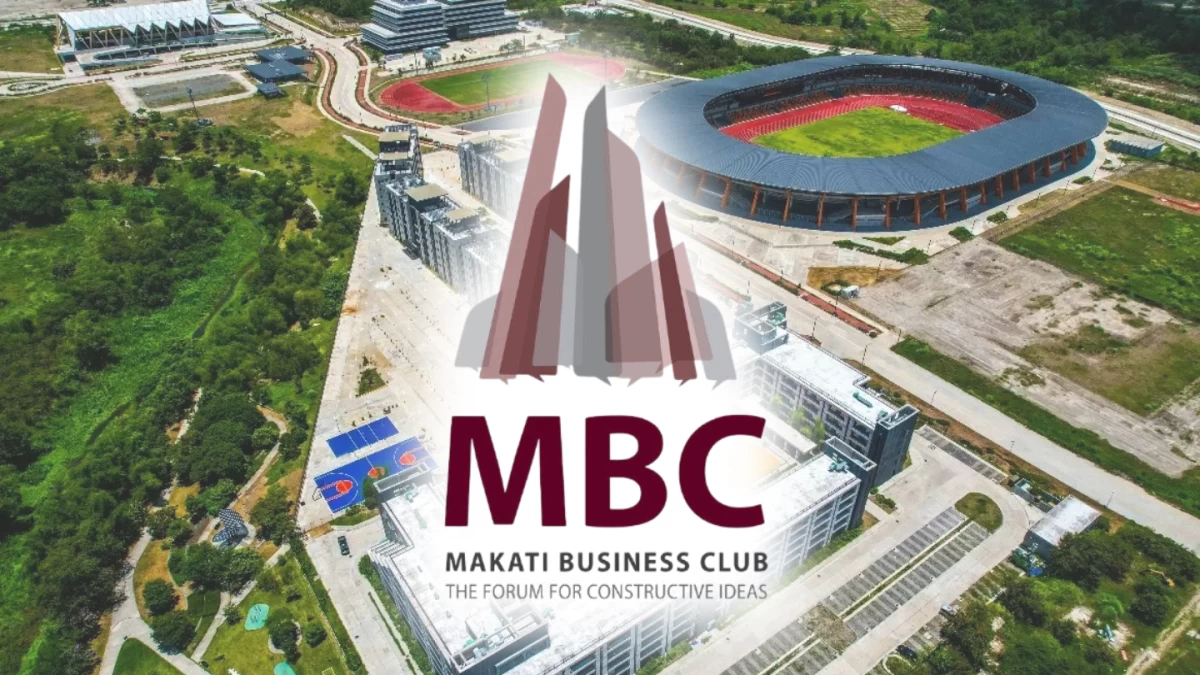
The influential Makati Business Club (MBC) has questioned the lack of concrete plans presented for the proposed Pax Silica artificial intelligence (AI) industrial hub in New Clark City during President Ferdinand Marcos Jr.’s recent State of the Nation Address (SONA).
The MBC, which represents the country’s top business executives, stated that the President should have used his SONA on Monday, July 27, as a platform to outline specific execution details and address growing public concerns surrounding the hub.
Calling it a missed opportunity, the business group said the address should have featured a clear roadmap detailing governance mechanisms, investment frameworks, and critical project safeguards.
During his SONA, Marcos described the AI industrial hub as a flagship project that would generate quality jobs, accelerate industrial competitiveness, and revitalize the national economy.
“As a strategic component of the Luzon Economic Corridor (LEC), the hub will serve as an advanced manufacturing and logistics center in the global AI and technology value chain,” Marcos said.
However, the MBC noted that the administration should have further articulated the project’s scope from a foreign policy standpoint.
“Distinguishing the specific function of the LEC and Pax Silica from typical Philippine Economic Zone Authority (PEZA) zones was [also] left unaddressed,” the group added.
The proposed AI hub is the centerpiece of the Philippines’ participation in the Pax Silica initiative, a United States-led partnership aimed at securing allied control over critical nodes in the global AI supply chain. Under the proposal, the Philippine government is allocating 1,619 hectares within New Clark City in Tarlac to host the development.
The facility is also envisioned as an anchor for the broader Luzon Economic Corridor—a trilateral framework among the Philippines, the US, and Japan designed to boost infrastructure and industrial connectivity across Luzon.
According to the Bases Conversion and Development Authority (BCDA), Philippine and US officials are still negotiating the project’s long-term framework, with a formal deal expected to be signed by November.
BCDA estimates project full buildout could attract up to $70 billion in capital and create as many as 130,000 high-value jobs.
Despite its economic promise, the hub has sparked public debate over the high energy and water demands typical of large-scale data centers and tech facilities. Questions were also raised over an initial US request to designate the site as a diplomatic property operating under US common law.
The BCDA has since clarified that it rejected the diplomatic designation, affirming that the property will operate strictly under the Investors’ Lease Act and the BCDA charter.
In contrast to MBC's critique, the American Chamber of Commerce of the Philippines (AmCham) voiced support for the President’s SONA remarks. AmCham stated that Marcos’ explicit backing of the project underscores the government’s commitment to raising competitiveness and attracting high-value foreign direct investment.
Similarly, the European Chamber of Commerce of the Philippines (ECCP) welcomed the initiative, noting that the AI hub will strengthen the country’s integration into global technology and logistics value chains.
“European companies in advanced manufacturing, digital services, and technical education are natural partners in developing the skilled local workforce and supplier base these emerging industries require,” the ECCP said in a statement.