






Manila Bulletin
 Philippines
National
'Tama yan, boss!': Congressmen all over PBBM's call to remove systems loss charges
Philippines
National
'Tama yan, boss!': Congressmen all over PBBM's call to remove systems loss charges
Philippines
National
'Tama yan, boss!': Congressmen all over PBBM's call to remove systems loss charges
'Tama yan, boss!': Congressmen all over PBBM's call to remove systems loss charges
Published Jul 28, 2026 10:23 am


At A Glance
- Lawmakers across blocs back President Marcos' call to scrap systems loss charges, with Rep. Terry Ridon urging ERC review and congressional action.
- Rep. Toby Tiangco refiles his 2016 bill banning private utilities from passing losses to consumers, capping rural cooperative losses at five percent, and removing VAT.
- Rep. Jonathan Keith Flores says hearings can proceed alongside budget deliberations, stressing removal of systems loss charges and VAT is overdue.
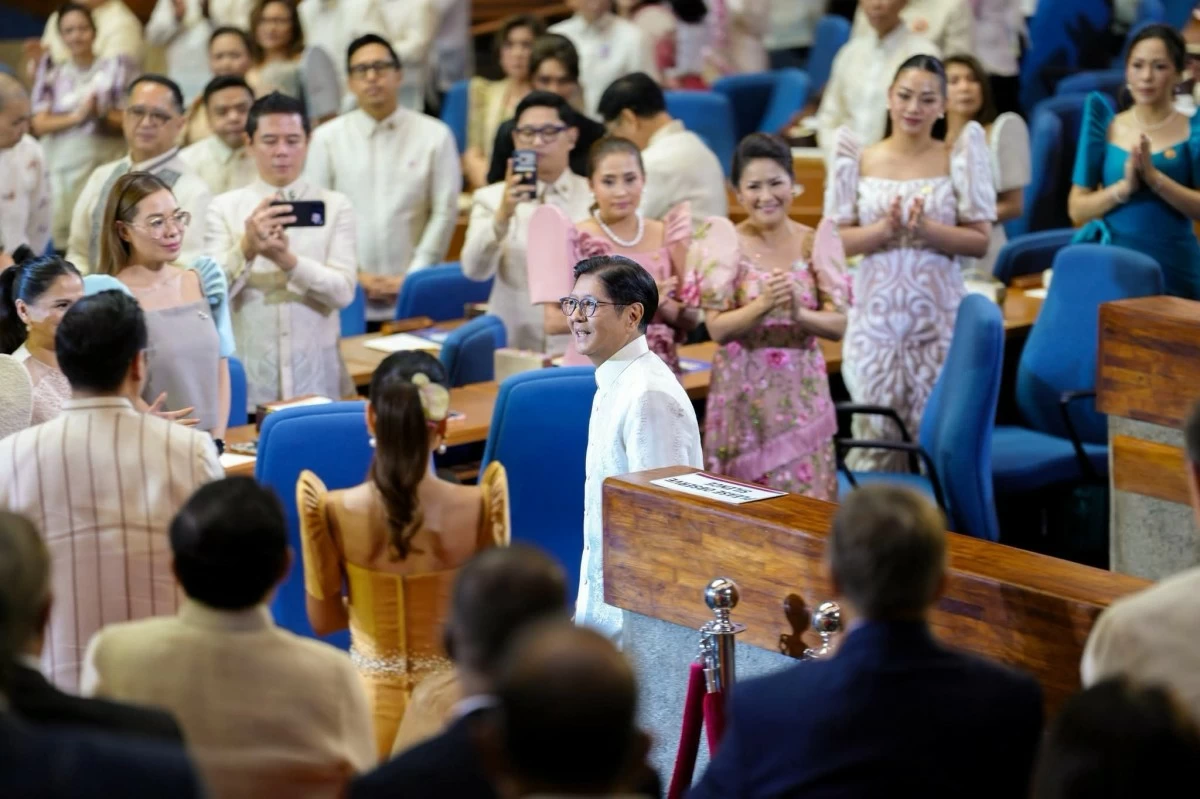
President Ferdinand "Bongbong" Marcos Jr. (Facebook)
House members from the majority and minority blocs have expressed equal parts elation and eagerness to respond to President Marcos call to remove the much-maligned systems loss charges on electricity bills.
Bicol Saro Party-list Rep. Terry Ridon, a member of the House Committee on Energy for the minority bloc, said he supports the President’s call to remove the particular charge, which the latter framed in his State of the Nation Address (SONA) Monday, July 27 as unreasonable to consumers who had no hand in such losses.
Marcos received a standing ovation from the attending lawmakers for this.
"Congress should immediately prioritize and pass legislation prohibiting distribution utilities (DUs) from recovering systems losses through consumers’ electricity bills. The burden of technical and nontechnical losses should no longer be passed on to households and businesses through a separate systems loss charge," he said.
Ridon said the Energy Regulatory Commission (ERC) should immediately review its existing rules and exercise the full extent of its authority to minimize system loss charges pending congressional action.
"It must disallow recoveries arising from inefficiency, poor system maintenance, electricity theft and other preventable causes, and impose stricter efficiency and accountability standards on [DUs]," he noted.
"This reform must produce an actual reduction in electricity bills—not merely remove, rename, transfer or incorporate the system loss charge into another billing item," stressed the lawyer-legislator.
Savings for Pinoy families
Ridon said that based on an illustrative system loss charge of P0.7413 per kilowatt-hour (kWh), a household consuming 200 kWh would save approximately P148.26 per month if the charge were fully removed.
"For Filipino families struggling with high prices, those savings can help pay for food, medicines, transportation, education and other essential needs," he said.
"Congress and the ERC must act without delay. Consumers should no longer be made to bear system losses through a separate charge on their monthly electricity bills. [DUs] must be made responsible for improving their systems, reducing losses, preventing electricity theft and delivering reliable electricity at the lowest reasonable cost," he pointed out.
Decade-old bill
Navotas City lone district Rep. Toby Tiangco is set to refile Tuesday, July 28 a measure seeking to do away with systems loss charges. He says Marcos' SONA has created the opportunity to finally pass a reform that directly lowers electricity costs for Filipino families.
As early as 2016, Tiangco said he filed House Bill (HB) No. 942, which sought to prohibit private DUs from passing system losses on to consumers, limit recoverable system losses of rural electric cooperatives to technical losses capped at five percent, and remove the value-added tax (VAT) imposed on systems loss charges.
"Natutuwa ako na ang panukalang ito ay malinaw nang bahaging legislative agenda ng Pangulo. Matagal na nating sinasabi na hindi makatarungan na ang ordinaryong konsyumer ang pinagbabayad sa mga pagkalugi at inefficiencies na wala naman silang kinalaman," said the majority solon.
(I am glad that this proposal is now clearly part of the President’s legislative agenda. We have long said that it is unjust for ordinary consumers to be charged for losses and inefficiencies they have nothing to do with.)
Under Tiangco's proposed measure, only rural electric cooperatives would be allowed to recover legitimate technical losses arising from the physical delivery of electricity, subject to strict verification by the ERC and a maximum cap of five percent.
Private DUs would no longer be allowed to pass system loss charges on to consumers. The bill also exempts allowable systems loss charges from VAT.
"Noong 2016, hindi ito umusad. Ngayon, malinaw na kinikilala na mismo ng Pangulo na dapat nang itigil ang pagpapasa ng systems loss sa mga konsyumer. Umaasa ako na sa Kongresong ito ay magkakaroon na tayo ng sapat na political will upang maisabatas ang repormang ito."
(In 2016, this did not progress. Now, it is clear that the President himself recognizes that passing systems loss to consumers must stop. I hope that in this Congress we will finally have enough political will to enact this reform.)
Parallel hearings with budget
Bukidnon 2nd district Rep. Jonathan Keith Flores, an energy panel member for the majority, says the proposed the systems loss EPIRA amendment can move forward despite Congress' prioritization of the proposed 2027 national budget.
"The systems loss bill hearings can run parallel to the budget hearings, so that it can be approved before this year ends," Flores said.
"Removing systems loss charges and the VAT imposed on it is long overdue," he added.
Malacañang is expected to submit to the House of Representatives the 2027 National Expenditure Program (NEP) --the precursor to the national budget--next month.