

ADVERTISEMENT

Sabalenka, Djokovic lead star-studded US Open mixed doubles entries

Published Jul 28, 2026 08:12 am

At A Glance

  • The tournament was overhauled last year, with a $1 million prize going to the winners, in an effort to get top singles players to compete. Many of those types of stars were listed among the teams announced Monday, July 27, by the U.S. Tennis Association.
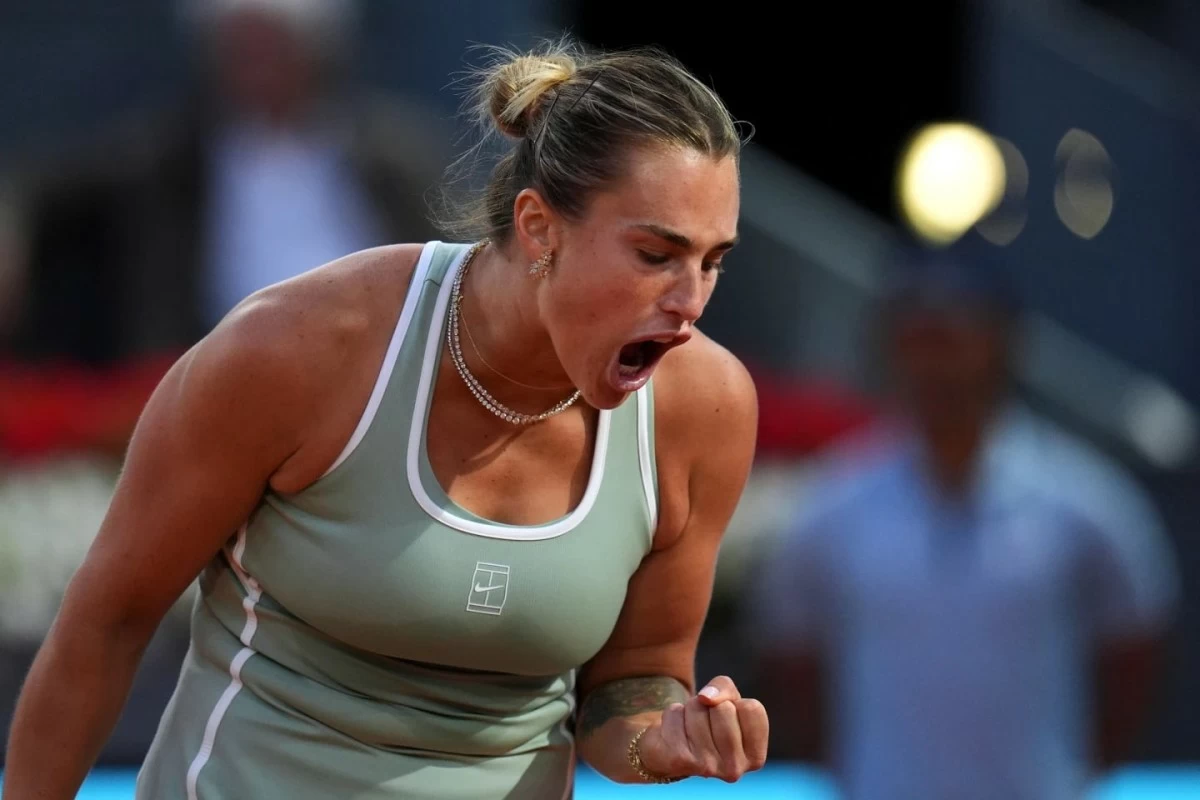
Belarus' Aryna Sabalenka (AP)
NEW YORK (AP) — Top-ranked Aryna Sabalenka and 24-time Grand Slam champion Novak Djokovic headline the initial list of 16 teams entered into the U.S. Open mixed doubles championship.
The tournament was overhauled last year, with a $1 million prize going to the winners, in an effort to get top singles players to compete. Many of those types of stars were listed among the teams announced Monday, July 27, by the U.S. Tennis Association.
Iga Swiatek and Casper Ruud, the runners-up in 2025, are entered again, along with Elena Rybakina and Taylor Fritz, the Japanese duo of Naomi Osaka and Kei Nishikori, and Jessica Pegula and Jack Draper.
The main draw will be played over two days on Aug. 25-26, with all the matches set to be held in Arthur Ashe Stadium and Louis Armstrong Stadium, the two biggest venues at the U.S. Open, and televised on ESPN's properties.
Teams can enter up until Aug. 17, when the six duos with the best combined singles rankings at the time will be automatically entered into the main draw. That means Sabalenka, the two-time defending U.S. Open women's champion, and Djokovic, still ranked No. 5 on the men's tour at age 39, will be safely into the field.
Eight teams will be given wild cards by the USTA, and two other teams will play their way into the field through a qualifying tournament to be held Aug. 24.
The remainder of the teams that were entered as of Monday:
Mirra Andreeva and Andrey Rublev, Belinda Bencic and Flavio Cobolli, Diana Shnaider and Daniil Medvedev, Amanda Anisimova and Learner Tien, Alex Eala and Felix Auger-Aliassime, Leylah Fernandez and Frances Tiafoe, Taylor Townsend and Alexander Zverev, Elena-Gabriela Ruse and Nuno Borges, Sara Errani and Andrea Vavassori, Katerina Siniakova and Henry Patten, and siblings Peyton Stearns and Preston Stearns.
Errani and Vavassori are the two-time defending U.S. Open champions. The Italians needed a wild card to get into last year's event because their singles ranking was too low, and that will be the case again this year.
The U.S. Open was initially criticized last year because the format of the event shut out doubles specialists such as Errani and Vavassori, but the tournament certainly seemed a success, helping draw 78,000 fans to the grounds and selling out Ashe both days.
"Any time you can bring women and men together on the same team, you showcase tennis at its best. This is exactly what the mixed doubles championship does," USTA CEO Craig Tiley said in a statement.
"The mixed doubles championship is an innovation that will engage new audiences and give our fans another opportunity to see the biggest stars compete together.”
Errani and Vavassori were the only traditional doubles team in last year's tournament. There is a chance for more this year — Siniakova and Patten are doubles specialists — with the addition of the eight-team qualifying tournament, which will include six direct entries and two wild cards.
The format will be best-of-three-set matches with sets to four games, tiebreakers at 4-all and a 10-point match tiebreak instead of a third set, through the semifinals. The final will be standard scoring with sets to six games and a tiebreaker at 6-all, and a 10-point match tiebreaker if necessary.

Related Tags

Aryna Sabalenka Novak Djokovic US Open
ADVERTISEMENT
.most-popular .layout-ratio{ padding-bottom: 79.13%; } @media (min-width: 768px) and (max-width: 1024px) { .widget-title { font-size: 15px !important; } }

{{ articles_filter_1561_widget.title }}

.most-popular .layout-ratio{ padding-bottom: 79.13%; } @media (min-width: 768px) and (max-width: 1024px) { .widget-title { font-size: 15px !important; } }

{{ static_articles_1562_widget.title }}

.most-popular .layout-ratio{ padding-bottom: 79.13%; } @media (min-width: 768px) and (max-width: 1024px) { .widget-title { font-size: 15px !important; } }

{{ articles_filter_1563_widget.title }}

{{ articles_filter_1564_widget.title }}

.mb-article-details { position: relative; } .mb-article-details .article-body-preview, .mb-article-details .article-body-summary{ font-size: 17px; line-height: 30px; font-family: "Libre Caslon Text", serif; color: #000; } .mb-article-details .article-body-preview iframe , .mb-article-details .article-body-summary iframe{ width: 100%; margin: auto; } .read-more-background { background: linear-gradient(180deg, color(display-p3 1.000 1.000 1.000 / 0) 13.75%, color(display-p3 1.000 1.000 1.000 / 0.8) 30.79%, color(display-p3 1.000 1.000 1.000) 72.5%); position: absolute; height: 200px; width: 100%; bottom: 0; display: flex; justify-content: center; align-items: center; padding: 0; } .read-more-background a{ color: #000; } .read-more-btn { padding: 17px 45px; font-family: Inter; font-weight: 700; font-size: 18px; line-height: 16px; text-align: center; vertical-align: middle; border: 1px solid black; background-color: white; } .hidden { display: none; }
function initializeAllSwipers() { // Get all hidden inputs with cms_article_id document.querySelectorAll('[id^="cms_article_id_"]').forEach(function (input) { const cmsArticleId = input.value; const articleSelector = '#article-' + cmsArticleId + ' .body_images'; const swiperElement = document.querySelector(articleSelector); if (swiperElement && !swiperElement.classList.contains('swiper-initialized')) { new Swiper(articleSelector, { loop: true, pagination: false, navigation: { nextEl: '#article-' + cmsArticleId + ' .swiper-button-next', prevEl: '#article-' + cmsArticleId + ' .swiper-button-prev', }, }); } }); } setTimeout(initializeAllSwipers, 3000); const intersectionObserver = new IntersectionObserver( (entries) => { entries.forEach((entry) => { if (entry.isIntersecting) { const newUrl = entry.target.getAttribute("data-url"); if (newUrl) { history.pushState(null, null, newUrl); let article = entry.target; // Extract metadata const author = article.querySelector('.author-section').textContent.replace('By', '').trim(); const section = article.querySelector('.section-info ').textContent.replace(' ', ' '); const title = article.querySelector('.article-title h1').textContent; // Parse URL for Chartbeat path format const parsedUrl = new URL(newUrl, window.location.origin); const cleanUrl = parsedUrl.host + parsedUrl.pathname; // Update Chartbeat configuration if (typeof window._sf_async_config !== 'undefined') { window._sf_async_config.path = cleanUrl; window._sf_async_config.sections = section; window._sf_async_config.authors = author; } // Track virtual page view with Chartbeat if (typeof pSUPERFLY !== 'undefined' && typeof pSUPERFLY.virtualPage === 'function') { try { pSUPERFLY.virtualPage({ path: cleanUrl, title: title, sections: section, authors: author }); } catch (error) { console.error('ping error', error); } } // Optional: Update document title if (title && title !== document.title) { document.title = title; } } } }); }, { threshold: 0.1 } ); function showArticleBody(button) { const article = button.closest("article"); const summary = article.querySelector(".article-body-summary"); const body = article.querySelector(".article-body-preview"); const readMoreSection = article.querySelector(".read-more-background"); // Hide summary and read-more section summary.style.display = "none"; readMoreSection.style.display = "none"; // Show the full article body body.classList.remove("hidden"); } document.addEventListener("DOMContentLoaded", () => { let loadCount = 0; // Track how many times articles are loaded const offset = [1, 2, 3, 4, 5, 6, 7, 8, 9, 10]; // Offset values const currentUrl = window.location.pathname.substring(1); let isLoading = false; // Prevent multiple calls if (!currentUrl) { console.log("Current URL is invalid."); return; } const sentinel = document.getElementById("load-more-sentinel"); if (!sentinel) { console.log("Sentinel element not found."); return; } function isSentinelVisible() { const rect = sentinel.getBoundingClientRect(); return ( rect.top < window.innerHeight && rect.bottom >= 0 ); } function onScroll() { if (isLoading) return; if (isSentinelVisible()) { if (loadCount >= offset.length) { console.log("Maximum load attempts reached."); window.removeEventListener("scroll", onScroll); return; } isLoading = true; const currentOffset = offset[loadCount]; window.loadMoreItems().then(() => { let article = document.querySelector('#widget_1690 > div:nth-last-of-type(2) article'); intersectionObserver.observe(article) loadCount++; }).catch(error => { console.error("Error loading more items:", error); }).finally(() => { isLoading = false; }); } } window.addEventListener("scroll", onScroll); });

Sign up by email to receive news.