







More work needed to save PH Eagles from extinction – PEF
Published Jul 28, 2026 03:07 pm


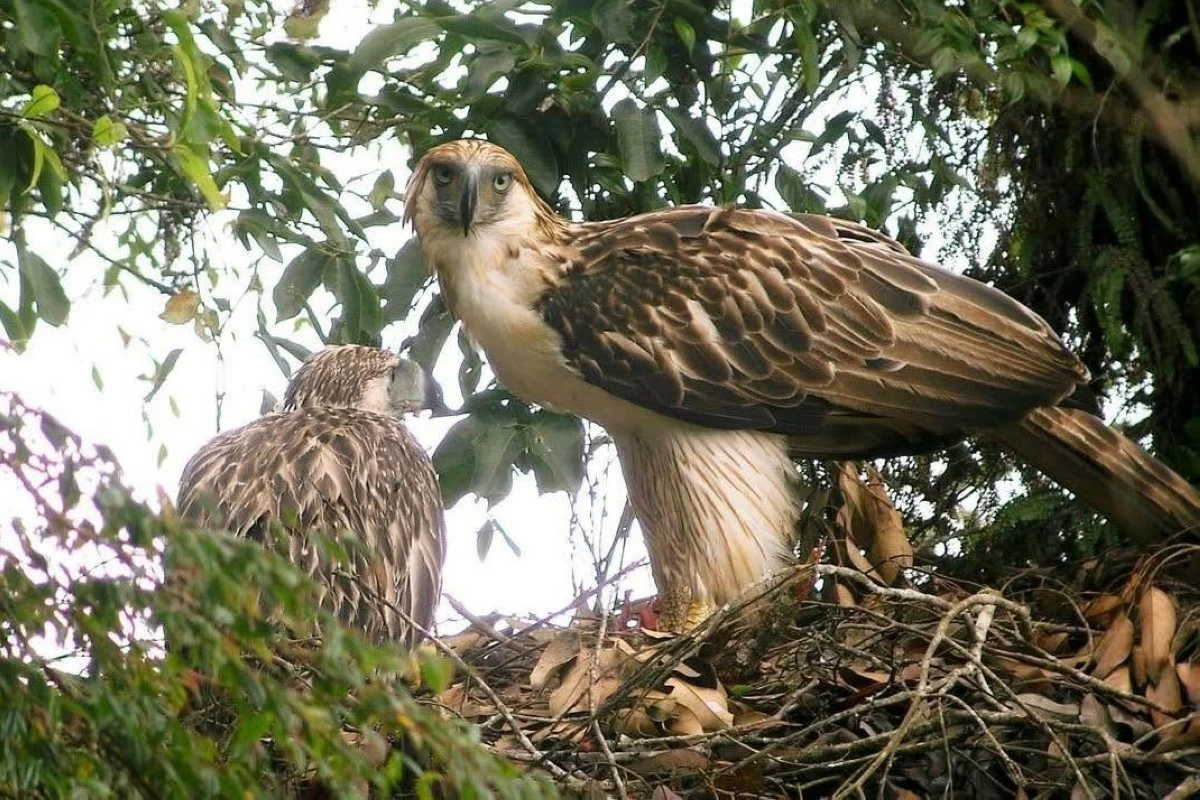
PHILIPPINE Eagles in the wild. (PEF)
DAVAO CITY – The Philippine Eagle Foundation has been moving heaven and earth to protect the critically-endangered Philippine Eagles and conserve their remaining habitats for nearly 40 years.
Shooting and habitat destruction remain the biggest threat in the survival of about 400 pairs of eagles in the wild.
PEF Director of Operations Dr. Jayson Ibañez acknowledged that there is still so much work to be done on the ground even after nearly four decades of conservation work to save the Philippine Eagle from extinction.
Among the interventions that the PEF is implementing is the culture-based conservation program, which recognizes the vital role of the indigenous communities in the survival of the Philippine Eagle.
Through the program, the foundation is collaborating with Indigenous Peoples by integrating ancestral knowledge such as sacred grove protection and wildlife taboos with modern conservation strategies.
The PEF is organizing the indigenous tribes as "Bantay Bukid," which trains indigenous partners to monitor nests, report threats, and lead reforestation, fostering a sense of shared responsibility.
Despite these efforts, Ibañez admitted that the PEF cannot do it alone due to limited resources and manpower.
He said that a whole-of-government approach is needed to address the gaps in the conservation efforts for the national bird.
“We acknowledge we need an innovative yet practical approach. Part of our intervention also is not just to educate them but also to provide the tribe an alternative livelihood to discourage them from hunting activities,” said Ibañez on Tuesday, July 28, World Nature Conservation Day.
He said the initiative is an initial step towards protecting the eagles and its habitat. “But this is a long-term effort, you cannot see the impact right away.”
Ibañez said that there’s also a need for government to religiously implement existing laws and policies for the protection of wildlife.
He acknowledged that the most urgent threat that needs to be addressed is the proliferation of air and jolen guns as these are commonly used in shooting the eagles.
The PEF has rescued 24 eagles since 2019, nine from bullet wounds, eight due to trappings, and the rest from various reasons.
The most recent rescue was Sawaga-Dalwangan in the forests of Malaybaly City in Bukidnon last July 3. However, Sawaga-Dalwangan died while undergoing rehabilitation at the Philippine Eagle Center in Barangay Malagos here on July 18.
The death of the eagle has renewed the group's call for the regulation or total ban of airguns in known Philippine Eagle territories.
The PEF has called for a deeper investigation on the circumstances surrounding the rescue of the eagle after veterinarians discovered two airgun pellets lodged inside its right wing and left thigh.
PEF senior biologist Ron Taraya said that while the PEF and government are working hand-in-hand to save the Philippine Eagles, there is still a need for further awareness and education campaigns in the remote areas, particularly in known eagle territories.
Taraya, who has been working as a field biologist of PEF for 16 years, said that there are still some areas in the country that government presence is hardly felt.
“In some of the areas that I have visited as part of my work, there are still some remote areas where the government's presence is hardly felt. Especially in terms of education and livelihood,” he said.
In these areas, Taraya added, there is a need to educate the people and provide alternative livelihood so that they will not solely depend on the forests to survive.
Tribes could also help protect the Philippine Eagles, he said. “How many eagles have we rescued already? How many of them died due to gunshot? And yet no one has been held accountable yet. No one,” Taraya said.
He acknowledged the challenges that the PEF is facing while working alongside the indigenous communities whose livelihoods are closely tied to the forests the group is trying to protect.
“Conservation is not only about the species—it is about people, culture, livelihoods, science, law enforcement, habitat protection, policy, and long-term commitment. Protecting a Philippine Eagle also means understanding the communities living beside its forest home and working with them as partners,” Taraya said.