







Making 4Ps work better
Published Jul 28, 2026 12:05 am
|
Updated Jul 27, 2026 03:59 pm


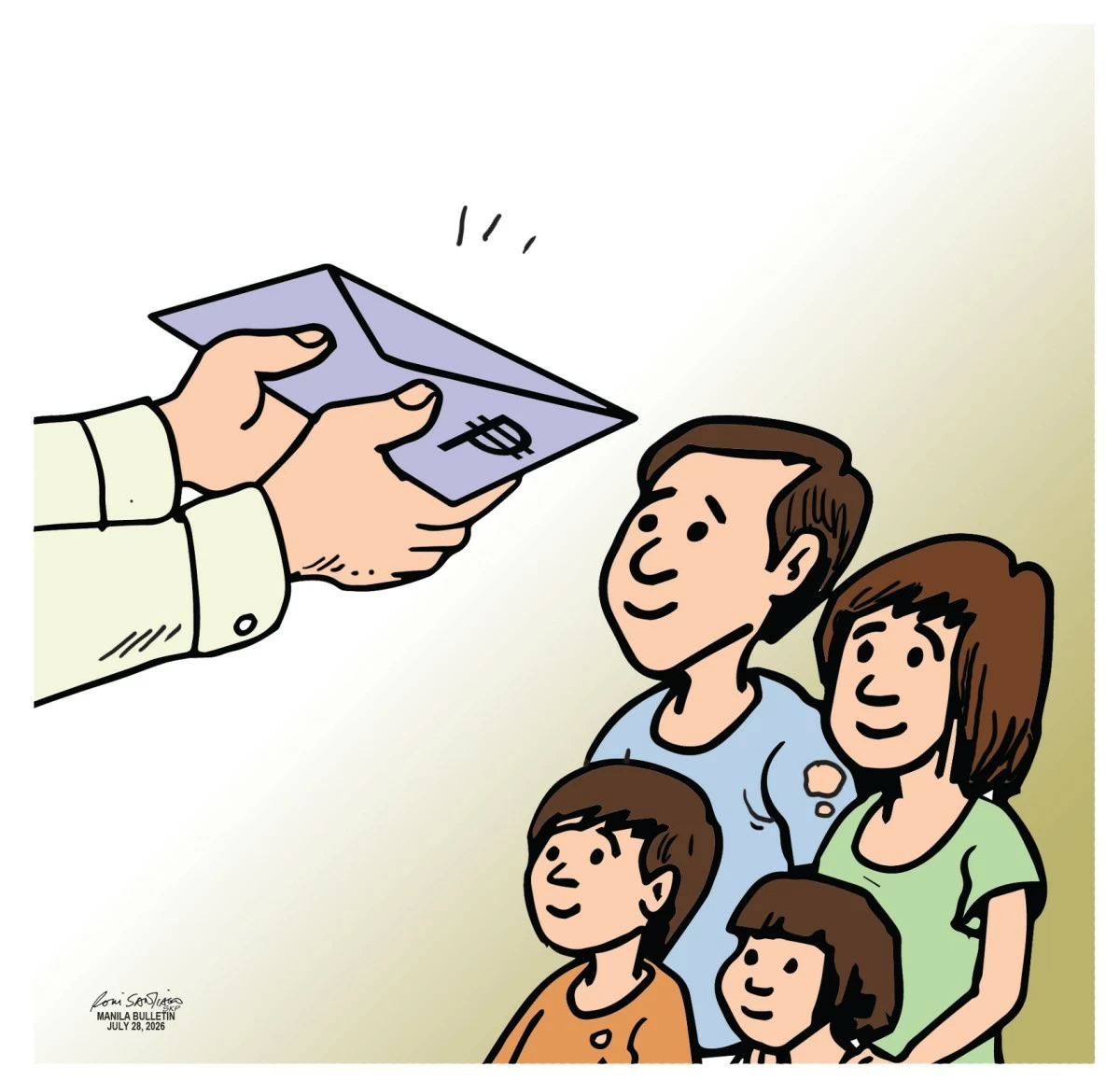
The Pantawid Pamilyang Pilipino Program (4Ps) has become one of the country’s most enduring social protection initiatives. Since its nationwide rollout during the administration of President Benigno S. Aquino III, and its subsequent institutionalization through Republic Act No. 11310 in 2019, the program has survived changes in political leadership. Successive administrations—those of Presidents Rodrigo Duterte and Ferdinand R. Marcos Jr.—have retained and expanded it, a testament to the broad national consensus that government has a responsibility to help the poorest Filipinos break free from the cycle of poverty.
Today, millions of households continue to benefit from conditional cash grants tied to children’s education, maternal health, and family development sessions. While the monthly assistance may appear modest, it has helped keep children in school, encouraged regular health checkups and immunization, and cushioned vulnerable families from economic shocks brought about by the pandemic, inflation, natural disasters, and other crises.
The program’s greatest strength lies in its long-term vision. Unlike traditional dole-outs, 4Ps seeks to invest in human capital. It recognizes that poverty is not merely the absence of income but also the lack of opportunities to acquire education, maintain good health, and develop productive capacities. By requiring compliance with conditions that promote these objectives, the program aspires to give the next generation a better chance at escaping poverty.
Yet after nearly two decades, it is timely to ask whether the program is fulfilling its promise. The answer is mixed.
There is substantial evidence that 4Ps has improved school attendance, maternal and child health outcomes, and household consumption among beneficiaries. However, questions remain about the pace at which families are graduating from poverty. Some households continue to rely on government assistance for extended periods because livelihood opportunities remain scarce, particularly in geographically isolated and disadvantaged communities.
Leakages and targeting errors also persist. Some deserving families have yet to be included, while others who may no longer qualify continue to receive benefits. Keeping the National Household Targeting System updated is therefore essential to ensure that assistance reaches those who truly need it most.
The program must also evolve with changing realities. Cash assistance alone cannot permanently lift families out of poverty. Beneficiaries should be connected to skills training, livelihood financing, agricultural support, digital literacy, and employment opportunities. The transition from welfare to self-reliance must become a deliberate and measurable objective.
Equally important is strengthening coordination among national agencies, local government units, schools, health centers, and the private sector. Poverty is multidimensional and cannot be addressed by cash transfers alone. Communities must become active partners in helping families build sustainable sources of income and resilience.
Congress, for its part, should ensure that 4Ps remains adequately funded while demanding rigorous monitoring and regular impact assessments. Every peso invested must produce measurable improvements in education, health, nutrition, and family well-being. Transparency and accountability should remain central to maintaining public confidence in the program.
The true measure of 4Ps is not the number of beneficiaries it serves but the number of families that eventually no longer need government assistance. Its success should be measured by graduation rather than dependence.
As the nation continues its pursuit of inclusive growth, 4Ps remains an indispensable pillar of social protection. But its long-term viability will depend on transforming temporary assistance into lasting opportunity. Helping the poor is an obligation of government; empowering them to stand on their own is its highest responsibility.