

ADVERTISEMENT

House prosecutors agree to alternate evidence presentation in VP Sara trial

Published Jul 28, 2026 05:18 pm

At A Glance

  • House prosecutors agreed to an article-by-article presentation of evidence, allowing the defense to present its case immediately after the prosecution on each impeachment article instead of waiting until all four articles have been presented.
  • The defense has yet to formally respond, and the Senate impeachment court is awaiting its manifestation before Presiding Officer Francis Escudero decides whether to adopt the new sequence and possibly postpone the next scheduled hearing on Article 1.
  • The proposed change will not shorten the trial or hasten voting, as Senate impeachment rules require the presentation of evidence on all four impeachment articles before senator-judges can vote on each article and on the final question of conviction.
The House prosecution panel has agreed to a proposal to alternate the presentation of evidence between the prosecution and the defense on an article-by-article basis in Vice President Sara Duterte's impeachment trial, although the Senate impeachment court is still awaiting the respondent's formal position.
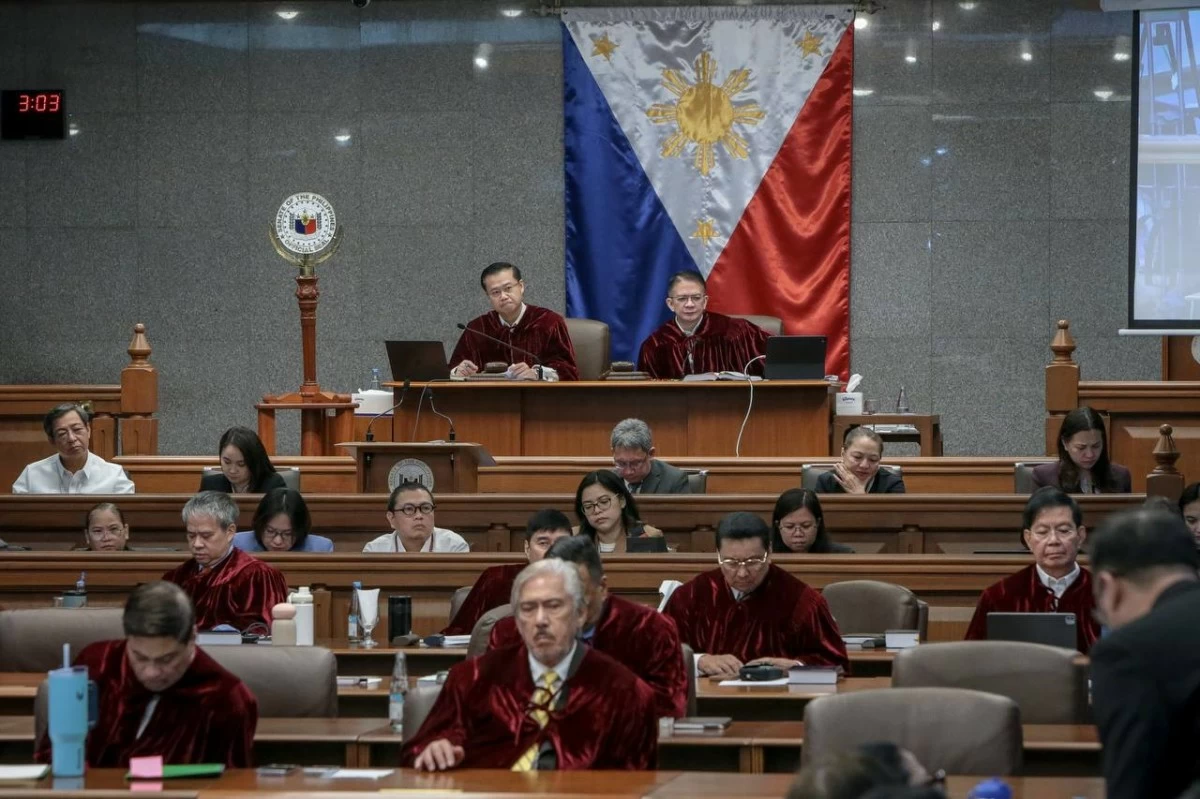
Scenes from the eighth day of the impeachment proceedings discuss Article IV on alleged grave threats that the Vice President Sara Duterte has mentioned in multiple incidents. (SPPA POOL)
Senate impeachment court spokesperson Atty. Regie Tongol said the prosecution had submitted a manifestation agreeing to the proposed sequence, under which the prosecution would first present its evidence on a specific impeachment article, followed immediately by the defense's evidence on the same article before the court proceeds to the next charge.
"They are agreeing to the alternating presentation of the prosecution and the defense on an article-per-article basis," Tongol said during a Zoom interview.
The proposed arrangement departs from the original sequence in which the prosecution would complete presenting evidence on all four impeachment articles before the defense begins its case.
Tongol, however, said the court has yet to receive any formal manifestation from Duterte's defense panel.
If the defense also agrees, he said Presiding Officer Francis Escudero may issue an order approving the new sequence, which could also lead to the cancellation of the next scheduled hearing on Article 1.
Under the proposed arrangement, the defense would instead begin presenting its evidence on Article 4 — which covers allegations of an assassination plot, grave threats, and inciting to sedition — after the prosecution completed its presentation on that charge.
"We still don't know if the presiding officer will cancel tomorrow's hearing if they agree today," Tongol said.
Tongol explained that unlike ordinary criminal proceedings governed by the Rules of Court, impeachment trials are sui generis, or unique proceedings, involving multiple impeachment articles rather than a single charge.
He said the proposal aims to balance efficiency and fairness while helping senator-judges evaluate each article more comprehensively.
One consideration, Tongol noted, is that hearing both sides' evidence on the same article consecutively would allow senator-judges to see the "whole picture" before moving on to the next allegation, rather than waiting until the prosecution finishes all four articles before hearing the defense.
He added that the change would not significantly affect the trial's overall timetable.
Article 1 alone is expected to take 31 trial days based on the parties' pre-trial submissions, but the total projected duration of the proceedings would remain at around 90 trial days because the number of days allotted to each side's presentation would stay the same.
Tongol also clarified that the proposed sequencing would not result in an earlier vote on the impeachment complaint.
Under the Senate impeachment rules, he said, the court must first hear evidence on all four impeachment articles before senator-judges deliberate and vote on each article and on the final question of conviction.

Related Tags

impeachment trial Vice President Sara Duterte House prosecution panel regie tongol
ADVERTISEMENT
.most-popular .layout-ratio{ padding-bottom: 79.13%; } @media (min-width: 768px) and (max-width: 1024px) { .widget-title { font-size: 15px !important; } }

{{ articles_filter_1561_widget.title }}

.most-popular .layout-ratio{ padding-bottom: 79.13%; } @media (min-width: 768px) and (max-width: 1024px) { .widget-title { font-size: 15px !important; } }

{{ static_articles_1562_widget.title }}

.most-popular .layout-ratio{ padding-bottom: 79.13%; } @media (min-width: 768px) and (max-width: 1024px) { .widget-title { font-size: 15px !important; } }

{{ articles_filter_1563_widget.title }}

{{ articles_filter_1564_widget.title }}

.mb-article-details { position: relative; } .mb-article-details .article-body-preview, .mb-article-details .article-body-summary{ font-size: 17px; line-height: 30px; font-family: "Libre Caslon Text", serif; color: #000; } .mb-article-details .article-body-preview iframe , .mb-article-details .article-body-summary iframe{ width: 100%; margin: auto; } .read-more-background { background: linear-gradient(180deg, color(display-p3 1.000 1.000 1.000 / 0) 13.75%, color(display-p3 1.000 1.000 1.000 / 0.8) 30.79%, color(display-p3 1.000 1.000 1.000) 72.5%); position: absolute; height: 200px; width: 100%; bottom: 0; display: flex; justify-content: center; align-items: center; padding: 0; } .read-more-background a{ color: #000; } .read-more-btn { padding: 17px 45px; font-family: Inter; font-weight: 700; font-size: 18px; line-height: 16px; text-align: center; vertical-align: middle; border: 1px solid black; background-color: white; } .hidden { display: none; }
function initializeAllSwipers() { // Get all hidden inputs with cms_article_id document.querySelectorAll('[id^="cms_article_id_"]').forEach(function (input) { const cmsArticleId = input.value; const articleSelector = '#article-' + cmsArticleId + ' .body_images'; const swiperElement = document.querySelector(articleSelector); if (swiperElement && !swiperElement.classList.contains('swiper-initialized')) { new Swiper(articleSelector, { loop: true, pagination: false, navigation: { nextEl: '#article-' + cmsArticleId + ' .swiper-button-next', prevEl: '#article-' + cmsArticleId + ' .swiper-button-prev', }, }); } }); } setTimeout(initializeAllSwipers, 3000); const intersectionObserver = new IntersectionObserver( (entries) => { entries.forEach((entry) => { if (entry.isIntersecting) { const newUrl = entry.target.getAttribute("data-url"); if (newUrl) { history.pushState(null, null, newUrl); let article = entry.target; // Extract metadata const author = article.querySelector('.author-section').textContent.replace('By', '').trim(); const section = article.querySelector('.section-info ').textContent.replace(' ', ' '); const title = article.querySelector('.article-title h1').textContent; // Parse URL for Chartbeat path format const parsedUrl = new URL(newUrl, window.location.origin); const cleanUrl = parsedUrl.host + parsedUrl.pathname; // Update Chartbeat configuration if (typeof window._sf_async_config !== 'undefined') { window._sf_async_config.path = cleanUrl; window._sf_async_config.sections = section; window._sf_async_config.authors = author; } // Track virtual page view with Chartbeat if (typeof pSUPERFLY !== 'undefined' && typeof pSUPERFLY.virtualPage === 'function') { try { pSUPERFLY.virtualPage({ path: cleanUrl, title: title, sections: section, authors: author }); } catch (error) { console.error('ping error', error); } } // Optional: Update document title if (title && title !== document.title) { document.title = title; } } } }); }, { threshold: 0.1 } ); function showArticleBody(button) { const article = button.closest("article"); const summary = article.querySelector(".article-body-summary"); const body = article.querySelector(".article-body-preview"); const readMoreSection = article.querySelector(".read-more-background"); // Hide summary and read-more section summary.style.display = "none"; readMoreSection.style.display = "none"; // Show the full article body body.classList.remove("hidden"); } document.addEventListener("DOMContentLoaded", () => { let loadCount = 0; // Track how many times articles are loaded const offset = [1, 2, 3, 4, 5, 6, 7, 8, 9, 10]; // Offset values const currentUrl = window.location.pathname.substring(1); let isLoading = false; // Prevent multiple calls if (!currentUrl) { console.log("Current URL is invalid."); return; } const sentinel = document.getElementById("load-more-sentinel"); if (!sentinel) { console.log("Sentinel element not found."); return; } function isSentinelVisible() { const rect = sentinel.getBoundingClientRect(); return ( rect.top < window.innerHeight && rect.bottom >= 0 ); } function onScroll() { if (isLoading) return; if (isSentinelVisible()) { if (loadCount >= offset.length) { console.log("Maximum load attempts reached."); window.removeEventListener("scroll", onScroll); return; } isLoading = true; const currentOffset = offset[loadCount]; window.loadMoreItems().then(() => { let article = document.querySelector('#widget_1690 > div:nth-last-of-type(2) article'); intersectionObserver.observe(article) loadCount++; }).catch(error => { console.error("Error loading more items:", error); }).finally(() => { isLoading = false; }); } } window.addEventListener("scroll", onScroll); });

Sign up by email to receive news.