ADVERTISEMENT

Antipolo LGU partners with mall for free CKD screening on July 30-31

Published Jul 28, 2026 12:20 pm  |  Updated Jul 28, 2026 02:18 pm
Robinsons Antipolo post features frequently asked questions and answers about the free chronic kidney disease (CKD) screening. (Photos from Robinsons Antipolo)
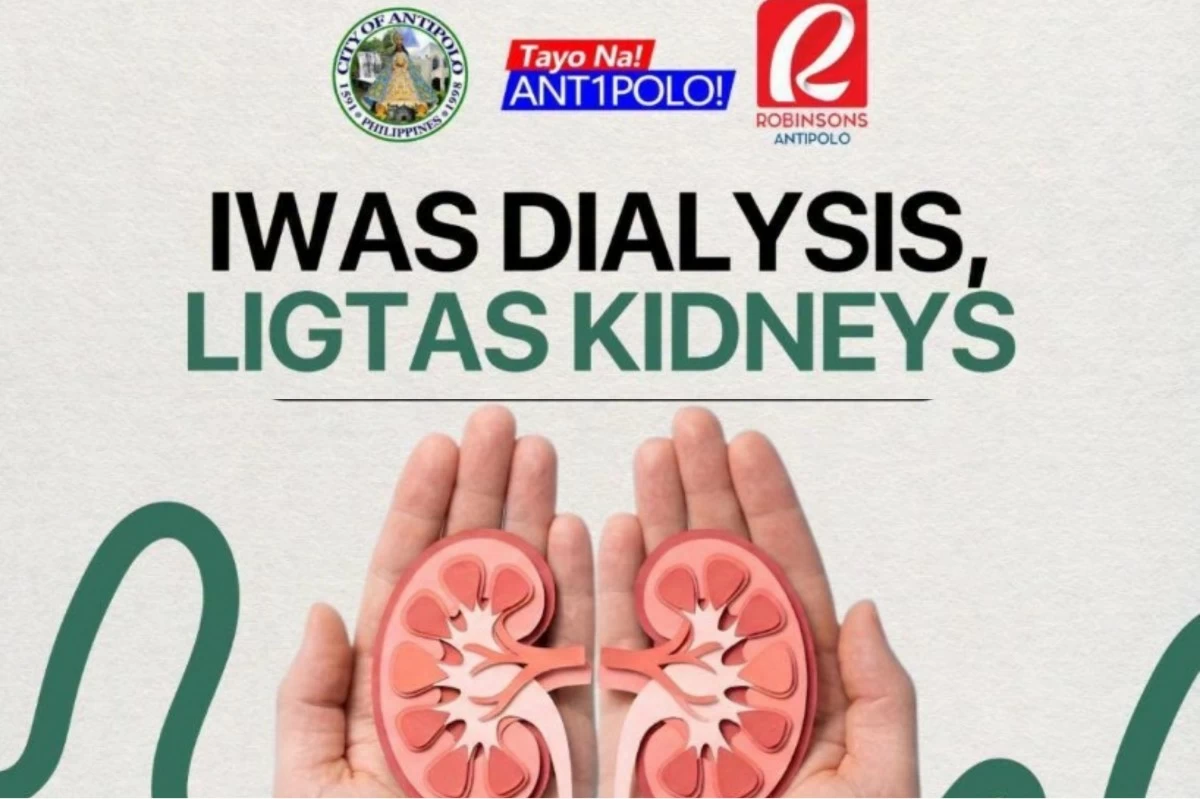
As the number of Filipinos suffering from chronic kidney disease (CKD) continues to grow, free screening and testing will be available at a mall in Antipolo on July 30 and 31, in partnership with the city government, to help detect kidney problems early and reduce the risk of requiring dialysis.
Related story: https://mb.com.ph/2026/06/26/marcos-orders-faster-completion-of-nkti-dialysis-center-as-ckd-cases-rise
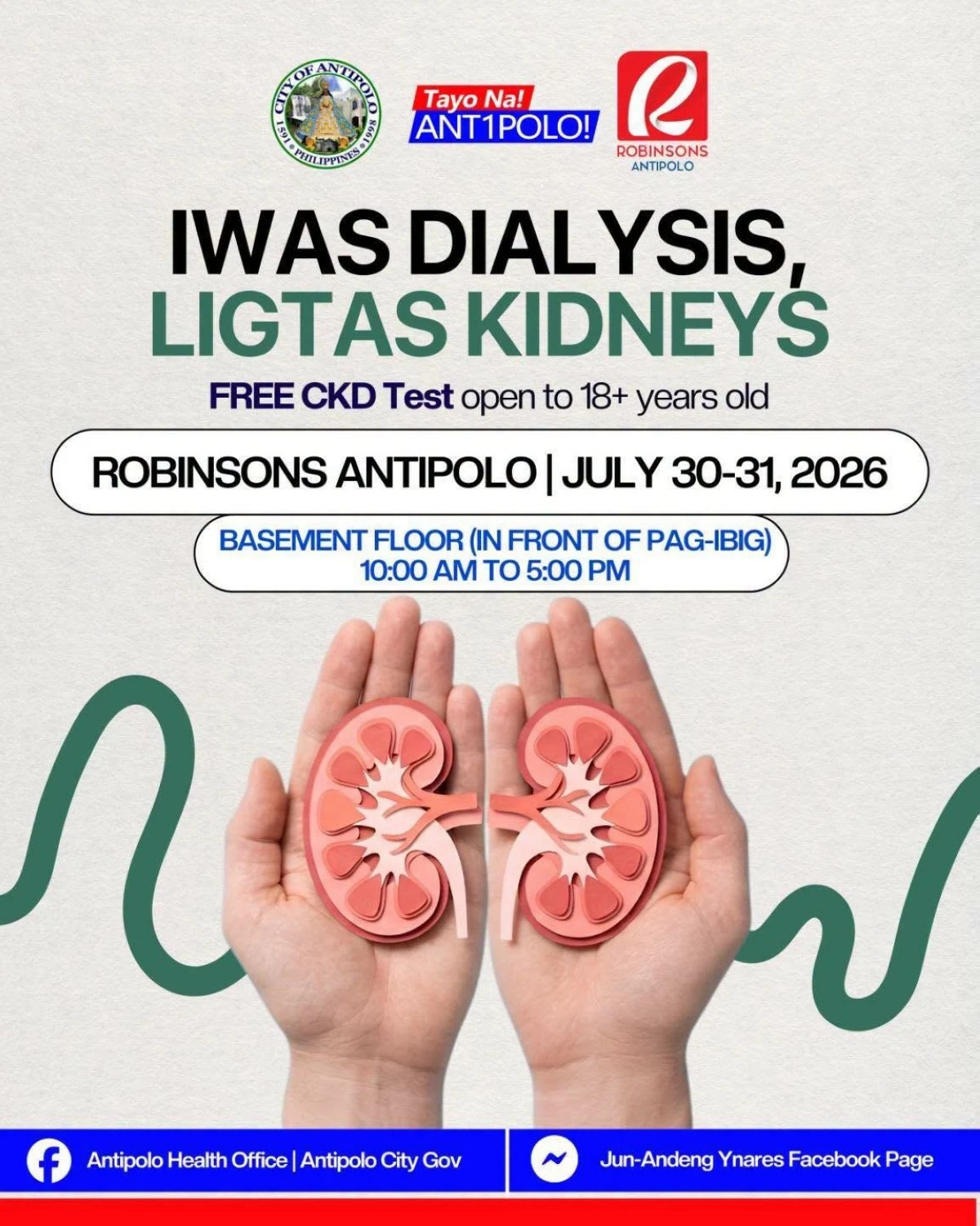
Robinsons Antipolo post features frequently asked questions and answers about the free chronic kidney disease (CKD) screening. (Photos from Robinsons Antipolo)
The free screening and testing are open to individuals aged 18 and above, including both residents and non-residents of Antipolo. It will be held at Robinsons Antipolo's Basement, North Wing, on July 30 and 31 from 10 a.m. to 5 p.m.
Under the “Iwas Dialysis, Ligtas Kidneys (IDLK)” program, the initiative aims to detect the risk of CKD early to prevent its progression and provide appropriate advice or referrals to those who need them.
The free screening includes a Urine Albumin-to-Creatinine Ratio (uACR) test, which only requires a urine sample. No blood test or fasting is required.
“Urine sample lamang ang kailangan para sa CKD screening. Hindi kailangan ng blood test o fasting. Ang Urine sample ay kokolektahin lamang sa mismong testing area (Only a urine sample is required for the CKD screening. No blood test or fasting is required, and urine samples will be collected at the designated testing area),” the city government’s partner said.
It said that the screening process typically takes 10 to 15 minutes, depending on the number of people in line, with results available within minutes. Participants will also receive health counseling based on their screening results and, if necessary, referrals to appropriate health facilities.
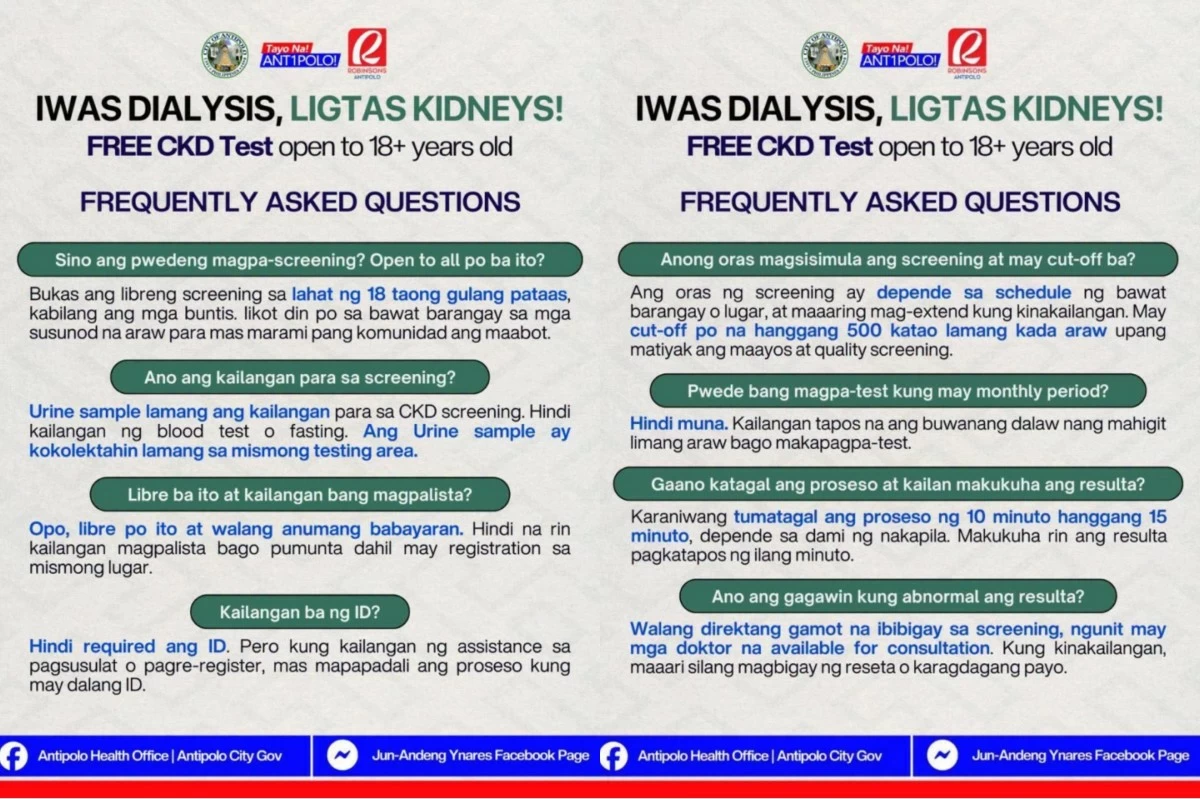
Robinsons Antipolo post features frequently asked questions and answers about the free chronic kidney disease (CKD) screening. (Photos from Robinsons Antipolo)
Aside from individuals aged 18 and above, pregnant women may also avail themselves of the free CKD screening. However, women who are menstruating are advised to undergo the test at least five days after their menstrual period ends.
If the screening results are abnormal, organizers clarified that no medication will be provided during the screening. However, doctors will be available for consultation and may prescribe medication or provide further medical advice if necessary.
The IDLK program is also set to be rolled out in barangays in the coming days to expand its reach to more communities.
“Ang oras ng screening ay depende sa schedule ng bawat barangay o lugar, at maaaring mag-extend kung kinakailangan. May cut-off po na hanggang 500 katao lamang kada araw upang matiyak ang maayos at quality screening (Screening hours in barangays will depend on the schedule of each location and may be extended if necessary. The screening is limited to 500 participants per day to ensure an orderly and quality screening process),” it explained.
“Maagang pagsusuri ang susi sa pag-iwas sa dialysis. Huwag maghintay na makaramdam ng sintomas bago magpatingin (Early screening is key to preventing the need for dialysis. Do not wait until symptoms appear before seeking medical attention," organizers said.

Related Tags

Metro News ANTIPOLO CITY mayor jun ynares Chronic kidney disease
ADVERTISEMENT
.most-popular .layout-ratio{ padding-bottom: 79.13%; } @media (min-width: 768px) and (max-width: 1024px) { .widget-title { font-size: 15px !important; } }

{{ articles_filter_1561_widget.title }}

.most-popular .layout-ratio{ padding-bottom: 79.13%; } @media (min-width: 768px) and (max-width: 1024px) { .widget-title { font-size: 15px !important; } }

{{ static_articles_1562_widget.title }}

.most-popular .layout-ratio{ padding-bottom: 79.13%; } @media (min-width: 768px) and (max-width: 1024px) { .widget-title { font-size: 15px !important; } }

{{ articles_filter_1563_widget.title }}

{{ articles_filter_1564_widget.title }}

.mb-article-details { position: relative; } .mb-article-details .article-body-preview, .mb-article-details .article-body-summary{ font-size: 17px; line-height: 30px; font-family: "Libre Caslon Text", serif; color: #000; } .mb-article-details .article-body-preview iframe , .mb-article-details .article-body-summary iframe{ width: 100%; margin: auto; } .read-more-background { background: linear-gradient(180deg, color(display-p3 1.000 1.000 1.000 / 0) 13.75%, color(display-p3 1.000 1.000 1.000 / 0.8) 30.79%, color(display-p3 1.000 1.000 1.000) 72.5%); position: absolute; height: 200px; width: 100%; bottom: 0; display: flex; justify-content: center; align-items: center; padding: 0; } .read-more-background a{ color: #000; } .read-more-btn { padding: 17px 45px; font-family: Inter; font-weight: 700; font-size: 18px; line-height: 16px; text-align: center; vertical-align: middle; border: 1px solid black; background-color: white; } .hidden { display: none; }
function initializeAllSwipers() { // Get all hidden inputs with cms_article_id document.querySelectorAll('[id^="cms_article_id_"]').forEach(function (input) { const cmsArticleId = input.value; const articleSelector = '#article-' + cmsArticleId + ' .body_images'; const swiperElement = document.querySelector(articleSelector); if (swiperElement && !swiperElement.classList.contains('swiper-initialized')) { new Swiper(articleSelector, { loop: true, pagination: false, navigation: { nextEl: '#article-' + cmsArticleId + ' .swiper-button-next', prevEl: '#article-' + cmsArticleId + ' .swiper-button-prev', }, }); } }); } setTimeout(initializeAllSwipers, 3000); const intersectionObserver = new IntersectionObserver( (entries) => { entries.forEach((entry) => { if (entry.isIntersecting) { const newUrl = entry.target.getAttribute("data-url"); if (newUrl) { history.pushState(null, null, newUrl); let article = entry.target; // Extract metadata const author = article.querySelector('.author-section').textContent.replace('By', '').trim(); const section = article.querySelector('.section-info ').textContent.replace(' ', ' '); const title = article.querySelector('.article-title h1').textContent; // Parse URL for Chartbeat path format const parsedUrl = new URL(newUrl, window.location.origin); const cleanUrl = parsedUrl.host + parsedUrl.pathname; // Update Chartbeat configuration if (typeof window._sf_async_config !== 'undefined') { window._sf_async_config.path = cleanUrl; window._sf_async_config.sections = section; window._sf_async_config.authors = author; } // Track virtual page view with Chartbeat if (typeof pSUPERFLY !== 'undefined' && typeof pSUPERFLY.virtualPage === 'function') { try { pSUPERFLY.virtualPage({ path: cleanUrl, title: title, sections: section, authors: author }); } catch (error) { console.error('ping error', error); } } // Optional: Update document title if (title && title !== document.title) { document.title = title; } } } }); }, { threshold: 0.1 } ); function showArticleBody(button) { const article = button.closest("article"); const summary = article.querySelector(".article-body-summary"); const body = article.querySelector(".article-body-preview"); const readMoreSection = article.querySelector(".read-more-background"); // Hide summary and read-more section summary.style.display = "none"; readMoreSection.style.display = "none"; // Show the full article body body.classList.remove("hidden"); } document.addEventListener("DOMContentLoaded", () => { let loadCount = 0; // Track how many times articles are loaded const offset = [1, 2, 3, 4, 5, 6, 7, 8, 9, 10]; // Offset values const currentUrl = window.location.pathname.substring(1); let isLoading = false; // Prevent multiple calls if (!currentUrl) { console.log("Current URL is invalid."); return; } const sentinel = document.getElementById("load-more-sentinel"); if (!sentinel) { console.log("Sentinel element not found."); return; } function isSentinelVisible() { const rect = sentinel.getBoundingClientRect(); return ( rect.top < window.innerHeight && rect.bottom >= 0 ); } function onScroll() { if (isLoading) return; if (isSentinelVisible()) { if (loadCount >= offset.length) { console.log("Maximum load attempts reached."); window.removeEventListener("scroll", onScroll); return; } isLoading = true; const currentOffset = offset[loadCount]; window.loadMoreItems().then(() => { let article = document.querySelector('#widget_1690 > div:nth-last-of-type(2) article'); intersectionObserver.observe(article) loadCount++; }).catch(error => { console.error("Error loading more items:", error); }).finally(() => { isLoading = false; }); } } window.addEventListener("scroll", onScroll); });

Sign up by email to receive news.