ADVERTISEMENT

US and Iran pause their attacks after days of escalation

Published Jul 27, 2026 05:48 am  |  Updated Jul 27, 2026 01:54 pm
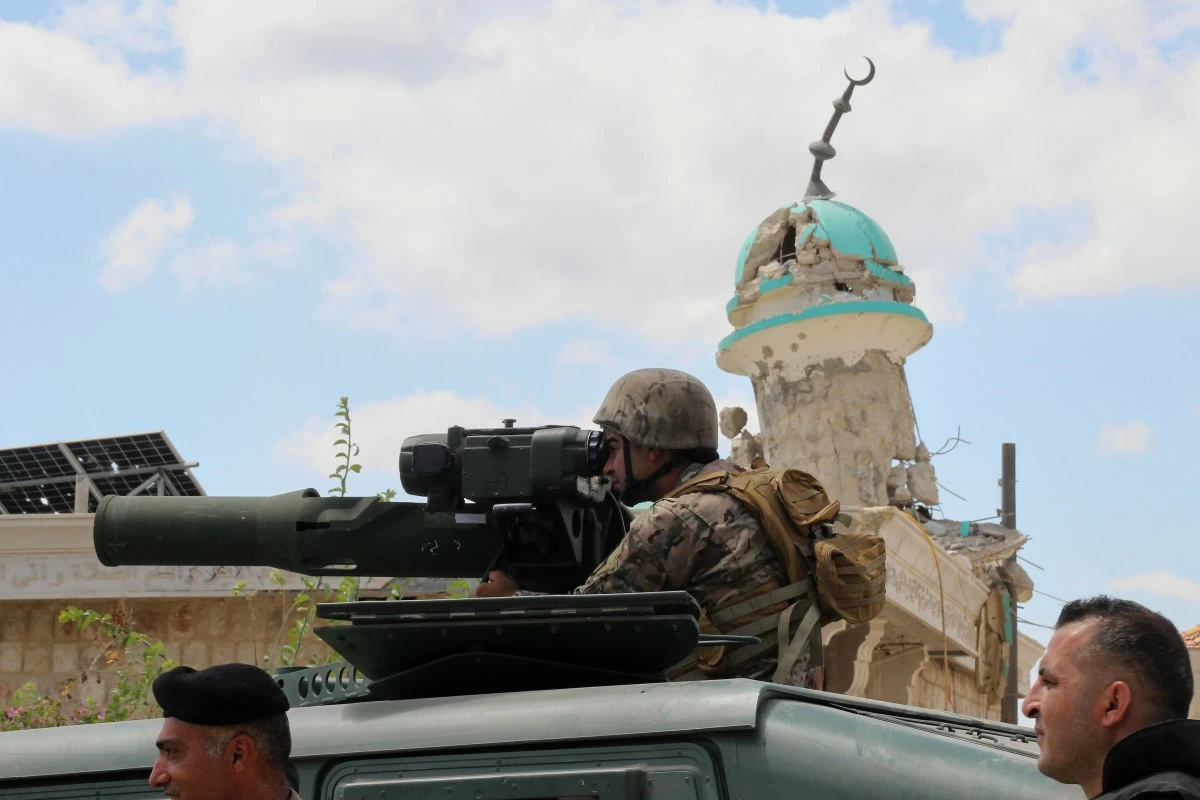
A Lebanese soldier looks through the binoculars of an anti-tank launcher in front of a destroyed mosque after deploying in the village of Zawtar al-Gharbiyeh, southern Lebanon, Sunday, July 26, 2026. (AP Photo/Ahmad Mantash)
CAIRO (AP) — The United States and Iran paused their attacks for a second straight day Sunday, as efforts continued to bring them back to negotiations on an interim ceasefire deal largely undermined by recent exchanges of fire.
It was not clear why the U.S. has paused after targeting Iranian coastal areas and infrastructure in a nearly two-week escalation sparked by Iran’s firing at ships trying to transit the Strait of Hormuz. The Pentagon did not respond to questions.
U.S. President Donald Trump is “giving talks some space. He’s giving it a little bit of room," Mike Waltz, the U.S. ambassador to the United Nations, told Fox News. "We’ve had both Oman and Iran, and a number of our other negotiators, engaged at every level, from the most senior levels all the way down to the technical level over the past few weeks, and particularly in the past few days."
Waltz dismissed the idea that the U.S. stockpile of interceptors crucial in defending against Iranian attacks is running low, but experts have questioned how long both the U.S. and Iran can afford to keep up attacks.
Since the U.S. has halted attacks for the past two nights, Iran has as well, its army spokesperson told Iran’s state TV on Sunday. Tehran in recent days has counterattacked against countries in the region hosting U.S. military forces, killing at least three service members at a base in Jordan and one in Iraq.
A regional official calls the pause a ‘positive signal’
The 60-day period that began when the interim deal was signed by both countries in mid-June is now well into its second half, and major issues that were meant to be negotiated -– notably Iran’s nuclear program at the heart of tensions -– remain set aside as mediators try to keep both sides talking.
A regional official involved in mediation efforts said diplomacy was underway and that a pause in U.S. and Iranian strikes was a “positive signal that helps their efforts to de-escalate.”
The official said both countries want to return to the interim ceasefire deal and that a compromise being negotiated centers on having Iran run vessel transit through the Strait of Hormuz with fewer restrictions on ships. The official was not authorized to discuss the matter and spoke on condition of anonymity.
Shipping traffic on the strait is at a 3-week low
Concerns continued about shipping on the strait and now on another crucial waterway in the region, the Bab al-Mandeb strait to the Red Sea. Iranian-backed Houthi rebels in Yemen last week threatened a blockade of Saudi shipping there.
Global energy supplies and the economy remain in the balance as gasoline prices have risen again.
Commercial shipping traffic on the Strait of Hormuz was at a three-week low, a maritime body overseen by the U.S. Navy said Sunday, adding that no new attacks had been confirmed in the past 72 hours. It said traffic remained steady through the Bab el-Mandeb.
Iran on Sunday said it continued to speak with Oman about managing the safe passage of ships on the Strait of Hormuz, which passes between the countries. Iran’s Foreign Ministry spokesperson, Esmail Baghaei, said talks had made progress and continued.
Baghaei also said the strait's status remained unchanged. Tehran has asserted that the interim deal with the U.S. allows it to manage shipping on the waterway for now, and it has objected to U.S. efforts to support a route through the strait that passes close to Oman instead. The strait was considered an international waterway before the war.
The U.S. military on Saturday said its recently reimposed naval blockade against Iran continued, with a dozen commercial ships redirected, two disabled and two boarded. U.S. forces “remain highly vigilant, focused, lethal, and ready,” it added.
Netanyahu says he ‘fully’ backs Trump's efforts
Meanwhile, Israeli Prime Minister Benjamin Netanyahu plans to travel to the United States and meet with Trump in Washington on Tuesday, his office has said. They last met in Washington in February, weeks before they launched the war on Iran that killed senior leaders including Supreme Leader Ayatollah Ali Khamenei.
The Iranian-backed Hezbollah fired at Israel two days after the war began, and Israel responded with airstrikes and ground forces in southern Lebanon. Since then, the U.S. has supported landmark direct talks between Lebanon and Israel to try to calm that front and find a way to disarm Hezbollah.
Netanyahu on Sunday told Fox News he “fully” backs Trump's efforts to weaken Iran and press it to end its nuclear program, adding: “If he can do so without returning to intense military fighting, that’s fine. Why not?”
The prime minister indicated he would not present new information to “our good friend” Trump and instead would listen to “what he has in mind, because I think in many ways, it’s his decision.”
But Netanyahu warned that if Iran again attacks Israel, directly or with armed proxies, “it will make a terrible mistake.”

Related Tags

world news US-Iran tensions
ADVERTISEMENT
.most-popular .layout-ratio{ padding-bottom: 79.13%; } @media (min-width: 768px) and (max-width: 1024px) { .widget-title { font-size: 15px !important; } }

{{ articles_filter_1561_widget.title }}

.most-popular .layout-ratio{ padding-bottom: 79.13%; } @media (min-width: 768px) and (max-width: 1024px) { .widget-title { font-size: 15px !important; } }

{{ static_articles_1562_widget.title }}

.most-popular .layout-ratio{ padding-bottom: 79.13%; } @media (min-width: 768px) and (max-width: 1024px) { .widget-title { font-size: 15px !important; } }

{{ articles_filter_1563_widget.title }}

{{ articles_filter_1564_widget.title }}

.mb-article-details { position: relative; } .mb-article-details .article-body-preview, .mb-article-details .article-body-summary{ font-size: 17px; line-height: 30px; font-family: "Libre Caslon Text", serif; color: #000; } .mb-article-details .article-body-preview iframe , .mb-article-details .article-body-summary iframe{ width: 100%; margin: auto; } .read-more-background { background: linear-gradient(180deg, color(display-p3 1.000 1.000 1.000 / 0) 13.75%, color(display-p3 1.000 1.000 1.000 / 0.8) 30.79%, color(display-p3 1.000 1.000 1.000) 72.5%); position: absolute; height: 200px; width: 100%; bottom: 0; display: flex; justify-content: center; align-items: center; padding: 0; } .read-more-background a{ color: #000; } .read-more-btn { padding: 17px 45px; font-family: Inter; font-weight: 700; font-size: 18px; line-height: 16px; text-align: center; vertical-align: middle; border: 1px solid black; background-color: white; } .hidden { display: none; }
function initializeAllSwipers() { // Get all hidden inputs with cms_article_id document.querySelectorAll('[id^="cms_article_id_"]').forEach(function (input) { const cmsArticleId = input.value; const articleSelector = '#article-' + cmsArticleId + ' .body_images'; const swiperElement = document.querySelector(articleSelector); if (swiperElement && !swiperElement.classList.contains('swiper-initialized')) { new Swiper(articleSelector, { loop: true, pagination: false, navigation: { nextEl: '#article-' + cmsArticleId + ' .swiper-button-next', prevEl: '#article-' + cmsArticleId + ' .swiper-button-prev', }, }); } }); } setTimeout(initializeAllSwipers, 3000); const intersectionObserver = new IntersectionObserver( (entries) => { entries.forEach((entry) => { if (entry.isIntersecting) { const newUrl = entry.target.getAttribute("data-url"); if (newUrl) { history.pushState(null, null, newUrl); let article = entry.target; // Extract metadata const author = article.querySelector('.author-section').textContent.replace('By', '').trim(); const section = article.querySelector('.section-info ').textContent.replace(' ', ' '); const title = article.querySelector('.article-title h1').textContent; // Parse URL for Chartbeat path format const parsedUrl = new URL(newUrl, window.location.origin); const cleanUrl = parsedUrl.host + parsedUrl.pathname; // Update Chartbeat configuration if (typeof window._sf_async_config !== 'undefined') { window._sf_async_config.path = cleanUrl; window._sf_async_config.sections = section; window._sf_async_config.authors = author; } // Track virtual page view with Chartbeat if (typeof pSUPERFLY !== 'undefined' && typeof pSUPERFLY.virtualPage === 'function') { try { pSUPERFLY.virtualPage({ path: cleanUrl, title: title, sections: section, authors: author }); } catch (error) { console.error('ping error', error); } } // Optional: Update document title if (title && title !== document.title) { document.title = title; } } } }); }, { threshold: 0.1 } ); function showArticleBody(button) { const article = button.closest("article"); const summary = article.querySelector(".article-body-summary"); const body = article.querySelector(".article-body-preview"); const readMoreSection = article.querySelector(".read-more-background"); // Hide summary and read-more section summary.style.display = "none"; readMoreSection.style.display = "none"; // Show the full article body body.classList.remove("hidden"); } document.addEventListener("DOMContentLoaded", () => { let loadCount = 0; // Track how many times articles are loaded const offset = [1, 2, 3, 4, 5, 6, 7, 8, 9, 10]; // Offset values const currentUrl = window.location.pathname.substring(1); let isLoading = false; // Prevent multiple calls if (!currentUrl) { console.log("Current URL is invalid."); return; } const sentinel = document.getElementById("load-more-sentinel"); if (!sentinel) { console.log("Sentinel element not found."); return; } function isSentinelVisible() { const rect = sentinel.getBoundingClientRect(); return ( rect.top < window.innerHeight && rect.bottom >= 0 ); } function onScroll() { if (isLoading) return; if (isSentinelVisible()) { if (loadCount >= offset.length) { console.log("Maximum load attempts reached."); window.removeEventListener("scroll", onScroll); return; } isLoading = true; const currentOffset = offset[loadCount]; window.loadMoreItems().then(() => { let article = document.querySelector('#widget_1690 > div:nth-last-of-type(2) article'); intersectionObserver.observe(article) loadCount++; }).catch(error => { console.error("Error loading more items:", error); }).finally(() => { isLoading = false; }); } } window.addEventListener("scroll", onScroll); });

Sign up by email to receive news.