






 Philippines
National
'Hindi kasalanan ng consumer': Marcos wants systems loss charges removed from electric bills
Philippines
National
'Hindi kasalanan ng consumer': Marcos wants systems loss charges removed from electric bills
'Hindi kasalanan ng consumer': Marcos wants systems loss charges removed from electric bills


At A Glance
- President Marcos urged Congress to immediately amend the Electric Power Industry Reform Act (EPIRA) to prohibit distribution utilities from passing systems loss charges, including the corresponding value-added tax (VAT), to consumers.
- The proposal capped a broader energy agenda that includes expanding power generation, developing indigenous energy resources, and revisiting nuclear energy to strengthen energy security and lower electricity costs.
- Marcos also sought the passage of the proposed "Sariling Kuryente" Act to make rooftop solar and battery storage systems more accessible to Filipino households.
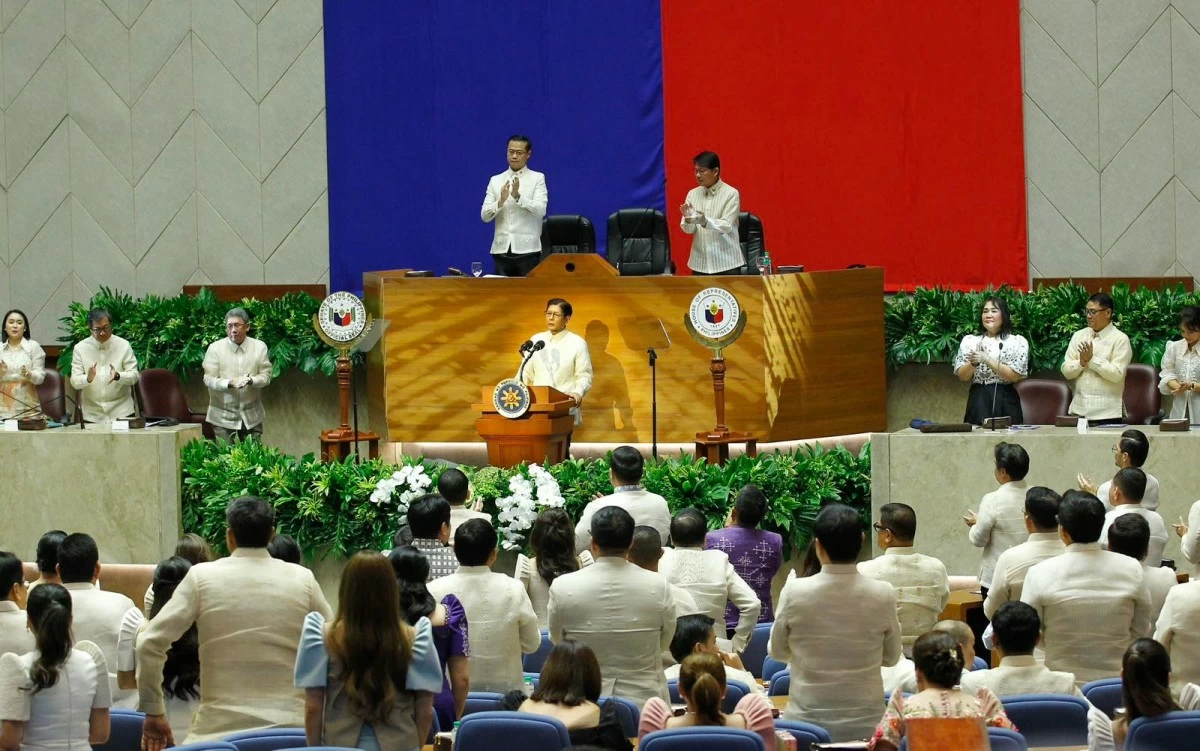
President Marcos on Monday called on Congress to immediately amend the Electric Power Industry Reform Act (EPIRA), saying consumers should no longer shoulder systems loss charges in their electricity bills because these are not their responsibility.
The announcement, made during his fifth State of the Nation Address (SONA) on Monday, July 27, earned the longest round of applause and standing ovation from those present at Batasang Pambansa.
"At kung pagbawas ng presyo ang usapan, sa aking palagay, panahon na para tanggalin na ang systems loss na ipinapasa sa consumer (And if we are talking about lowering prices, I believe it is time to remove the systems loss charge that is being passed on to consumers),” he said.
"Hindi naman kasalanan ng consumer kung bakit nagkaroon ng systems loss. Kaya hindi naman tama na sila pa ang pagbabayarin dito (The systems loss is not the consumer's fault. It is therefore not right that they should be made to pay for it),” he added.
With this, the President said the EPIRA should be amended immediately.
"Therefore, we, the people, request—no, we demand—for the immediate amendment of the EPIRA and to prohibit charging systems loss against consumers, including the value added tax thereon," he said,
EPIRA, or Republic Act No. 9136, restructured and privatized the country's electric power industry in 2001 to promote competition, encourage private investment, and improve the efficiency of electricity generation, transmission, and distribution.
Under existing regulations implementing EPIRA, distribution utilities are allowed to recover a portion of systems loss—the electricity lost during transmission and distribution because of technical losses and, within regulatory limits, non-technical losses such as pilferage—from consumers through a systems loss charge reflected in monthly electricity bills.
Marcos argued that removing the charge from consumers' bills would help reduce electricity costs by shifting the burden away from households and businesses, making an amendment to the law necessary.
'Sariling Kuryente' Act
Alongside the proposed EPIRA amendment, President Marcos appealed to lawmakers to pass the proposed "Sariling Kuryente" Act to make it easier and more affordable for households to install rooftop solar panels and battery storage systems.
"Upang maging simple, madali, at abot-kaya ang pagpapakabit ng solar panels at battery storage system sa kanilang mga bahay, hinihiling ko ang tulong ng Kongreso para maipasa ang 'Sariling Kuryente' Act (To make the installation of solar panels and battery storage systems in homes simple, easy, and affordable, I ask Congress to pass the 'Sariling Kuryente' Act),” he said.
Expanding power capacity
The President said the administration is closely monitoring around 200 energy projects scheduled for completion before the end of his term, with a combined capacity of nearly 10,000 megawatts.
He said 45 projects have already been completed, 31 are expected to come online this year, and another 124 are targeted for completion by 2028.
Marcos added that the government is also developing energy storage projects capable of delivering more than 1,700 megawatts, which he said would provide additional energy security for nearly 30 million households and industries by 2028.
He attributed the faster rollout of the projects to policy and regulatory reforms designed to make it easier for both local and foreign investors to do business in the country.
Renewable and indigenous energy
Marcos said the administration continues to prioritize energy technologies that reduce dependence on imported oil by maximizing the country's indigenous and renewable energy resources.
"Bukod sa ilang mga plantang pinapatakbo ng krudo, nakapagdagdag tayo ng mahigit animnapung plantang pinapatakbo naman ng geothermal, solar, hydro, wind, at biomass (Aside from several oil-fired power plants, we have added more than 60 power plants powered by geothermal, solar, hydro, wind, and biomass),” he said.
The President also cited the extension of the Malampaya service contract until 2039, which allowed drilling to resume for the first time in eight years.
"What we have uncovered is truly a national treasure: an untapped reserve of 222 billion cubic feet of natural gas, which bodes well for the continuous production of our premier gas field until 2034," he said.
Marcos noted that the newly discovered reserve is enough to supply electricity to about 1.6 million households for the next eight years.
He also announced that the government has awarded 14 petroleum service contracts across Luzon, Visayas, and Mindanao, the highest number issued during a single presidential term.
Four of the contracts involve hydrogen production, which he described as a clean fuel that could serve as backup power for generating plants, particularly in off-grid areas.
The President added that two petroleum service contracts are being jointly managed with the Bangsamoro Autonomous Region in Muslim Mindanao (BARMM) government, marking the first such arrangement in the country's history and supporting the region's goal of achieving energy security and full electrification.
Nuclear option revisited
The Chief Executive said the government has begun developing hydrogen power plants in Marinduque, Masbate, Zamboanga Sibugay, Basilan, and other potential sites as part of its long-term energy strategy.
He also renewed his call to revisit nuclear power generation, saying the technology could help reinforce the country's energy security while reducing electricity costs.
"Pushing the envelope further, perhaps it is time for us to revisit nuclear energy production," Marcos said.
"We are confident in its capacity to reinforce our energy security and bring down the cost of electricity in our country," he added.
The President vowed that the government will ensure that the public fully understands the benefits that nuclear energy can bring to our country.