







Cyberpunk is having a moment in 2026
Published Jul 27, 2026 03:05 pm



Photo by cheng feng on Unsplash
A genre born from the anxieties of technology in the 1980s has gone nova. In a span of months apart, four foundational cyberpunk titles are going to appear on screen.
Studio Trigger and Netflix confirmed the second season of the highly popular Cyberpunk: Edgerunners, is set to arrive later this year, with a new story and a new cast of characters. Fun little fact, while Edgerunners is based off of Cyberpunk 2077, the videogame itself is also based off of the tabletop boardgame by Mike Pondsmith simply called Cyberpunk, first released in 1988, and then updated in 1990 as Cyberpunk 2020.
Meanwhile, Ghost in the Shell returns on screen as a more faithful adaptation to the OG manga. The new Science SARU series, which began streaming in July, is the first adaptation to work directly from Masamune Shirow's original 1989 manga rather than reinterpreting it, which is chaotic, raunchier, and lighter in tone but no less insightful instead of the meditative approach of Mamoru Oshii's 1995 animated film.
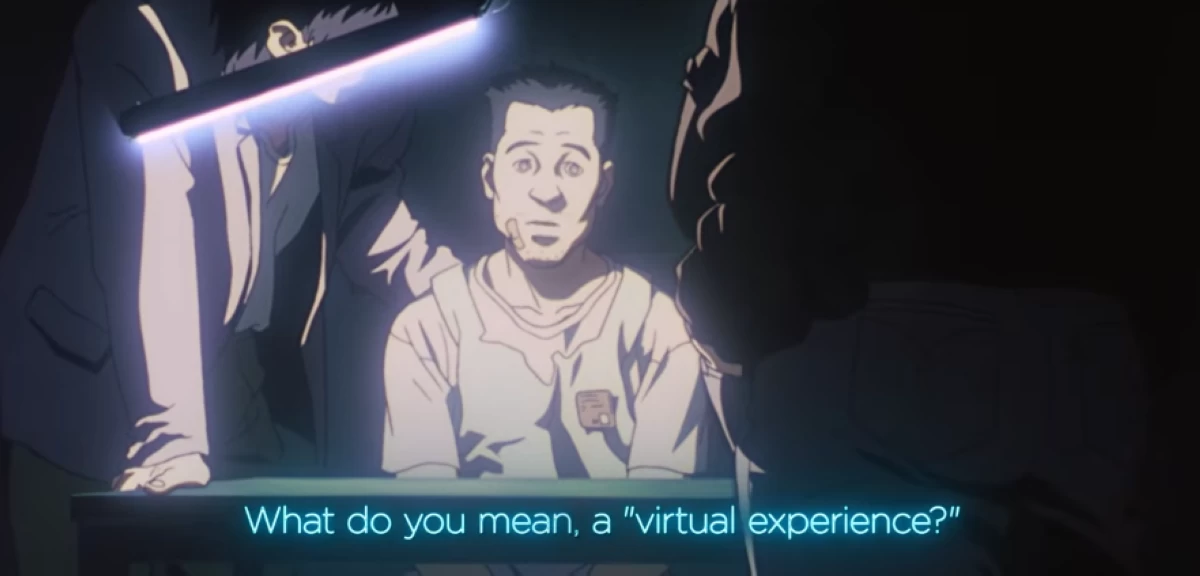
A screenshot from Ghost in the Shell (1995)
In live action screens, Amazon has revealed the trailer for Blade Runner 2099. The original Blade Runner, released in 1982, starring Harrison Ford, is a monumental hallmark in cinema, providing the grimy, dark aesthetic of high tech blended with societal rot, which many future cyberpunk stories found its inspiration from, such as animated films like Akira (1988) and the 1995 Ghost in the Shell.
The last of this list also happens to be what started it all. Apple TV has announced Neuromancer, based on the novel by William Gibson, published in 1984. The story included what are now core cyberpunk traits, cyberspace and the matrix, mega corporations, and “high tech, low life.”
It is interesting to note that four different cyberpunk stories share the same imagery, chrome, neon, and corporate skylines. It’s worth asking why these adaptations remain relevant–besides being cool, of course. And listening to what they have to say.
Cyberpunk as a genre
The term cyberpunk was coined by author Bruce Bethke in 1983, which he used to describe high tech, low life, or rebellious youth. Since cyber refers to computers, internet, digital, and other high technology, and punk as the rebelling against those technologies. Mainly because technologies end up ruling over people, creating a societal divide between rich and poor with nothing in between.
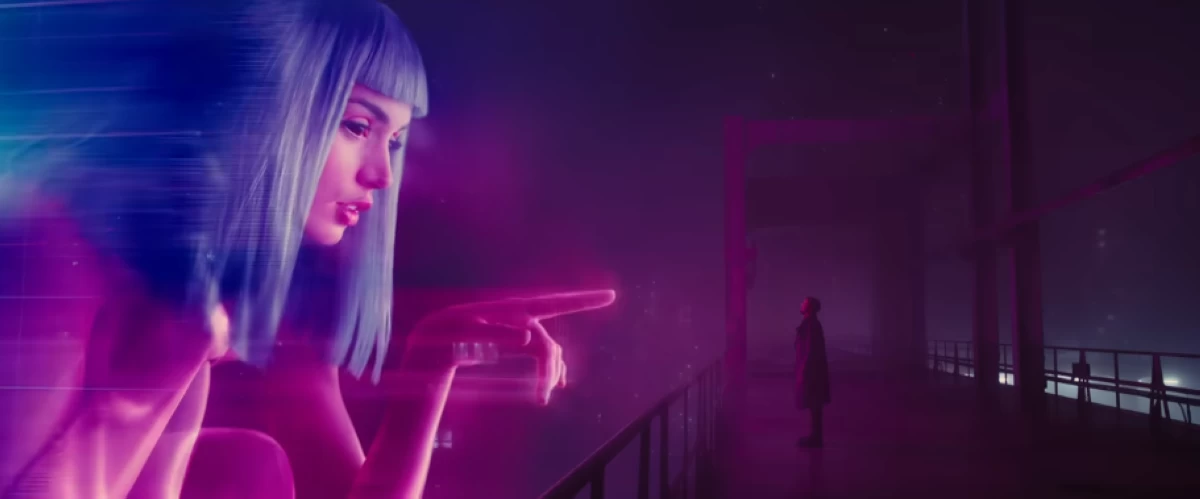
A screenshot from Blade Runner 2049
If you look at cyberpunk stories, the antagonists are almost often megacorporations who own people through technology. And these megacorporations are large and powerful enough as if they were cosmic horrors themselves.
Cyberpunk stories are dystopian, disguised as a utopian world. There is existential dread, where the people living in them either accept or reject the norm, and almost feel as if they don’t have a choice in the matter. Corporations are so powerful they own the government, and so they dictate what the people want. Outside the cities, are barren wasteland, and often the reason for its destruction is often cited as climate change and ecological disasters.
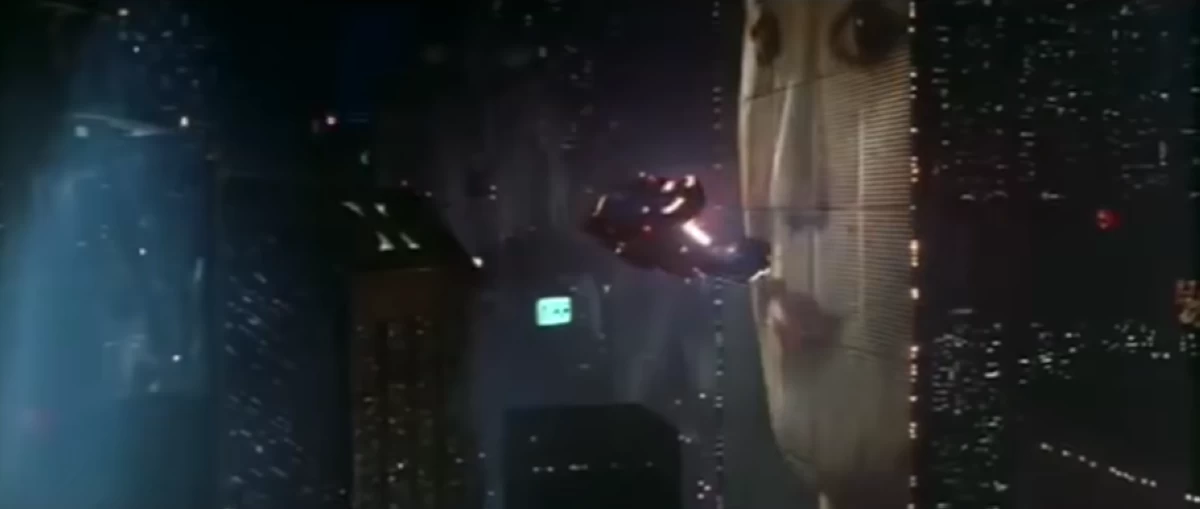
A screenshot from Blade Runner
Cyberpunk worlds tend to share a few recurring features. Megacorporations have absorbed most of the functions once held by governments. Body modification and neural implants are common, blurring the line between human and machine. Cities are dense, vertical, and perpetually lit by advertising, while the outdoors, nature, and public space have mostly disappeared. Information itself is treated as a place you can enter, steal from, and get lost in. And almost always, the protagonists are not powerful people. They're hackers, mercenaries, and drifters operating in the margins of systems built by people much more powerful than they are.
Other traits that cyberpunk stories share involve sex work. Blade Runner 2049, sequel to the first Blade Runner, and starring Ryan Gosling, depicts women appearing behind glassed windows as if they were products to be bought or rented. They have giant holographic commercials that promote an AI companion called Joi. Seriously, “Joi.” You know if you know. In the wasteland, there are statues of women in suggestive poses, ruined and forgotten, as if they were discarded byproducts or simply too old. In 1995’s Ghost in the Shell, Makoto often strips naked to activate her optical camouflage. Yes, I am aware she’s actually wearing a skin tight suit, but it does not change the fact that she looks naked with discerning details to provide everyone with enough “research” materials, and it doesn't change the symbolism that she does not own herself (if she quits Section 9, she must return the cybernetic pieces of herself, which includes her memories). All the sex work and sexually explicit are representations of extreme commodification of the body. It is saying you don’t own yourself.
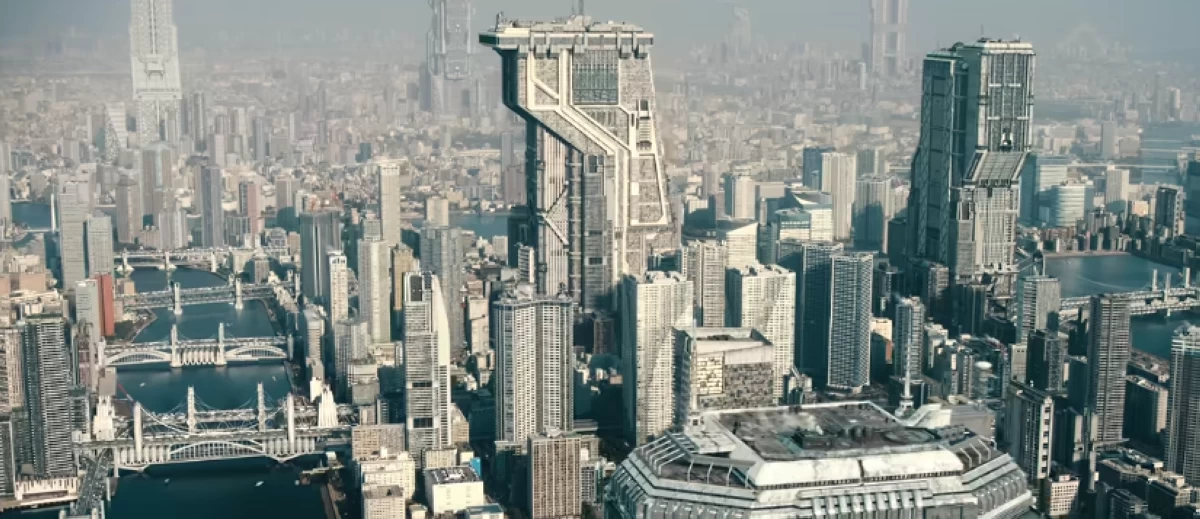
A screenshot of the upcoming Neuromancer series by Apple.
But cyberpunk is also about freedom of expression. Body modification, fluid genders, chaotic art, hackings. These little things are acts of rebellion themselves, reclaiming what was lost to them.
Cyberpunk is a genre about existential crisis, AI, and technologies by mega corporations. Many of these stories take place in the far future, and it should really go without saying, none of the settings happened instantly. It happened gradually, starting with one new product after the next, with slight nudges to condition consumers into thinking a certain way, while crippling individuals, who, unfortunately, cannot keep up.
Writers in the 1980s were watching real deregulation, the growth of multinational conglomerates, and the first waves of corporate consolidation in media and computing, and extrapolating. Four decades later, the extrapolation reads less like fantasy, less like science “fiction.”
A handful of technology companies now sit astride global communications, commerce, and increasingly, the infrastructure of artificial intelligence itself with market capitalizations that dwarf the GDP of most countries and lobbying operations that shape the laws meant to constrain them. Cyberpunk's central provocation, corporations might simply out-govern governments, is part of why the genre still feels less like prophecy fulfilled and more like a live diagnosis. It's not a coincidence that four different studios are returning to this imagery at a moment when conversations about tech-platform power, data ownership, and the political reach of a handful of companies dominate the news cycle in ways that would have felt like plot points in 1984.
The other constant in cyberpunk is verticality is the literal, architectural verticality, used as a metaphor that barely bothers to hide itself. The wealthy live above the smog line, in towers and orbital rings, insulated from the world they've built underneath them. Everyone else lives in the "sprawl," the flooded, overcrowded, rain-slicked streets where Blade Runner's replicant hunters and Gibson's console cowboys make their living. Ghost in the Shell's Section 9 operates in a Japan where cybernetic enhancement has created new tiers of citizenship: Those who can afford full-body prosthetics and those who can't. Edgerunners' entire premise is built on the gap between the "corpo" towers of Arasaka and the street-level chaos of Night City's edgerunners, mercenaries who take on body modification and lethal jobs precisely because the formal economy has no place for them.
Cybernetic enhancement, life extension, and access to cyberspace are luxuries in cyberpunk, not equalizers. The poor get the same technology eventually, but in cheaper, more dangerous, more exploitative forms, or they get left permanently behind. That's the "low life" half of the formula doing its work: Not poverty despite the technology, but poverty produced and enforced by it. And often we are led to believe that technology is meant to be a solution to problems. Yes, it still is. But “whose” problems are something worth asking about.
That tension is arguably more legible to audiences now than it's ever been. Automation reshaping labor markets, AI systems built and controlled by a small number of firms, and widening gaps between asset owners and everyone else are not background themes anymore, they're frontpage stories, they make headlines, and they have strong believers. Cyberpunk didn't invent economic anxiety about technology, but it built an entire visual and narrative language for it, and that language is proving durable enough that four different studios, working independently, all reached for it in the same short span.
All of this sounds very familiar, eh? I bet you see it everyday. With big tech gaining prominence in recent years, from developing products and services that make it hard for people to live without from communications to storing identifications, information, digital infrastructure, navigation, and human experiences such as videos and photos, followed by the rise of AI and AI data centers that take up finite resources and creates certainties within the workplace--which, management will say, AI won't replace humans, but humans with AI knowledge will replace humans, and people need to evolve and keep up--are exactly the words that creates that divide, instead of being the solution that finds ways to improve society as a whole, it's easy to see the world is headed toward a cyberpunk world. Maybe that's our best case scenario. People have better chances, it seems.
Notable mentions of cyberpunk and cyberpunk elements, Ready Player One where people are addicted to the metaverse and WALL-E where humans have lost the will to do anything and simply consume anything shown to them.