






Manila Bulletin
 Environment and Sustainability
The critical role of mangroves in coastal defense and climate change mitigation
Environment and Sustainability
The critical role of mangroves in coastal defense and climate change mitigation
Environment and Sustainability
The critical role of mangroves in coastal defense and climate change mitigation
The critical role of mangroves in coastal defense and climate change mitigation
Published Jul 26, 2026 02:00 pm


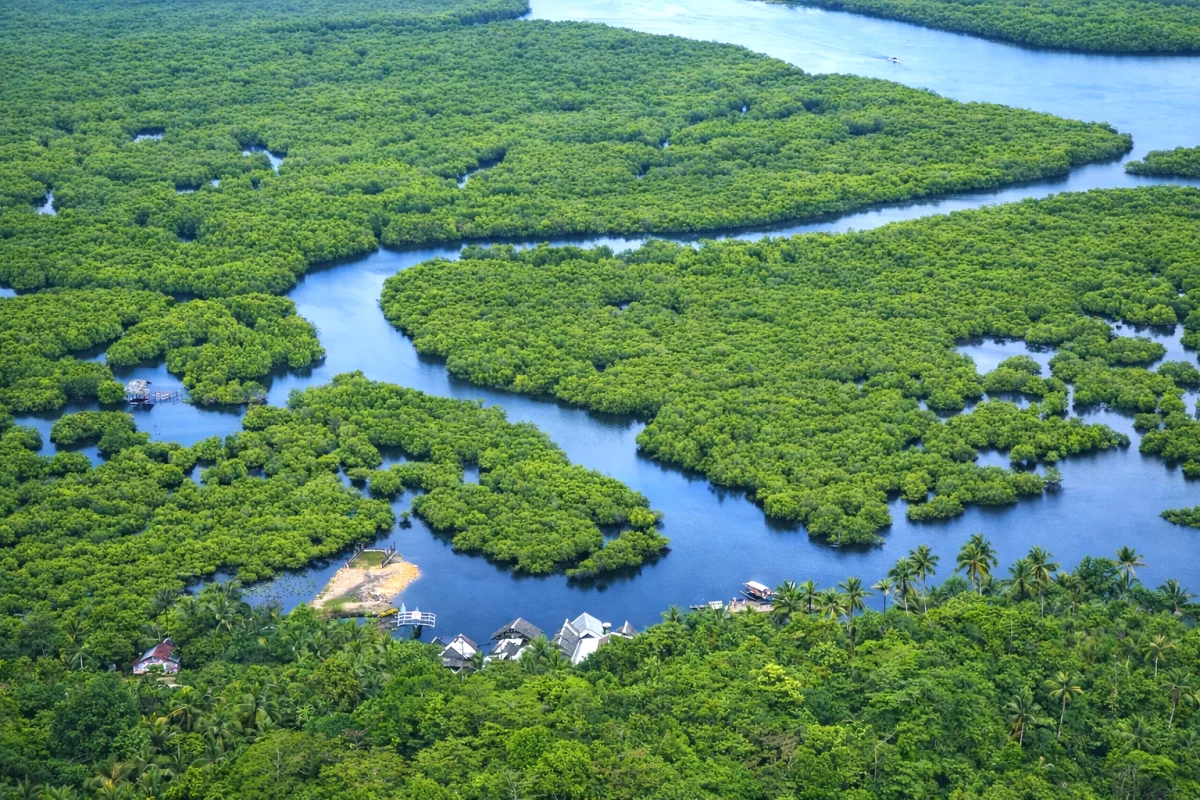
Mangrove forest in Del Carmen, Siargao.
Each year, on July 26, the world commemorates the International Day for the Conservation of the Mangrove Ecosystem. The observance was established by the United Nations Educational, Scientific and Cultural Organization (UNESCO) to raise global awareness of the importance of mangrove forests and promote their sustainable management and protection.
Mangroves are communities of trees that grow on tidal flats in coastal waters and extend inland along rivers where the water is tidal, saline, or brackish. “There are 25 to 30 species of true mangrove trees and an equal number of associated species,” said Dr. Miguel Fortes, the late professor at the Marine Science Institute of the University of the Philippines Diliman College of Science.
Dr. Theresa Mundita Lim, former director of the Biodiversity Management Bureau, said the agency has identified 42 mangrove species in the country, with notable diversity in regions such as Bohol, which hosts between 26 and 34 species.
True mangrove species grow exclusively in mangrove environments, while associated species may also thrive in beach forest and lowland areas.
“Mangroves form one of the most important tropical habitats that support many species, and their loss can affect marine and terrestrial biodiversity much more widely,” said Beth Polidoro, who led the first global assessment of the conservation status of mangroves.
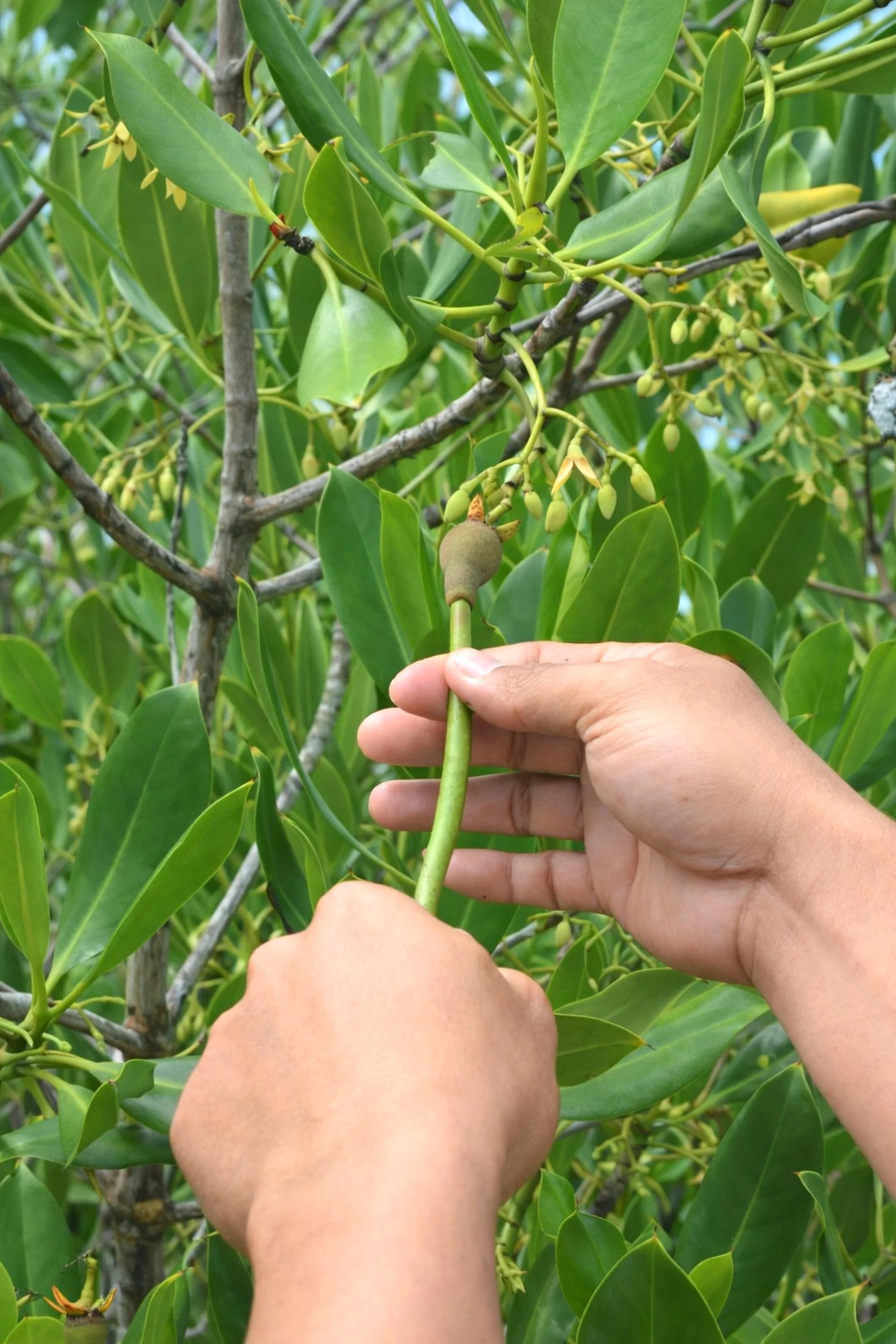
Flowers of a mangrove tree in bloom.
Mangrove trees and shrubs are specially adapted to thrive in coastal intertidal areas, such as tidal estuaries, mudflats, and muddy shorelines. They are integral components of coastal ecosystems, which also include seagrass beds and coral reefs.
“Mangroves are like the kindergarten, seagrasses are the secondary schools, and coral reefs are the high schools and colleges for fishes. And, once the fishes graduate from university, they return to kindergarten to spawn,” said Khun Psit, cofounder of Thailand’s Yad Fon mangrove preservation project.
Dr. Severino G. Salmo III, associate professor at the Institute of Biology of the University of the Philippines Diliman College of Science, agrees.
“Mangroves are known habitats for various fauna, including fishes. They are excellent feeding, nursery, and rearing grounds. Most fishes spend at least a portion of their life cycle in mangroves. Fishes are therefore dependent on the presence and health of mangroves.”
Explaining how mangroves support fish and other marine life, Salmo said: “The vertical and horizontal vegetation strata of mangroves provide an excellent habitat for fishes. Mangroves are highly productive ecosystems that provide food for fishes. The turbid waters provide protection for juvenile fish against predation.”
Mangroves also play a vital role in addressing climate change. They absorb and store carbon dioxide from the atmosphere, helping reduce greenhouse gas levels.
Mangroves’ ability to sequester carbon can be up to four times greater than that of tropical rainforests. Scientists attribute this to their unique anaerobic soil conditions, which slow the breakdown of organic matter and allow carbon-rich sediments to accumulate over time.
As mangroves grow, researchers say they absorb carbon dioxide from the atmosphere to build their biomass. When they die, much of that carbon remains trapped in the soil, contributing to what is known as “blue carbon.”
Despite their ecological and economic benefits, mangroves are under severe threat. According to Fortes, the Philippines has suffered a 75 percent reduction in mangrove cover, largely due to the establishment of fishponds, charcoal production, industrial development, land reclamation, and pollution.
The decline of mangroves is bad news for Filipinos, for whom fish is a staple source of protein. As mangrove habitats shrink, fish catches in the open seas are also expected to decline.
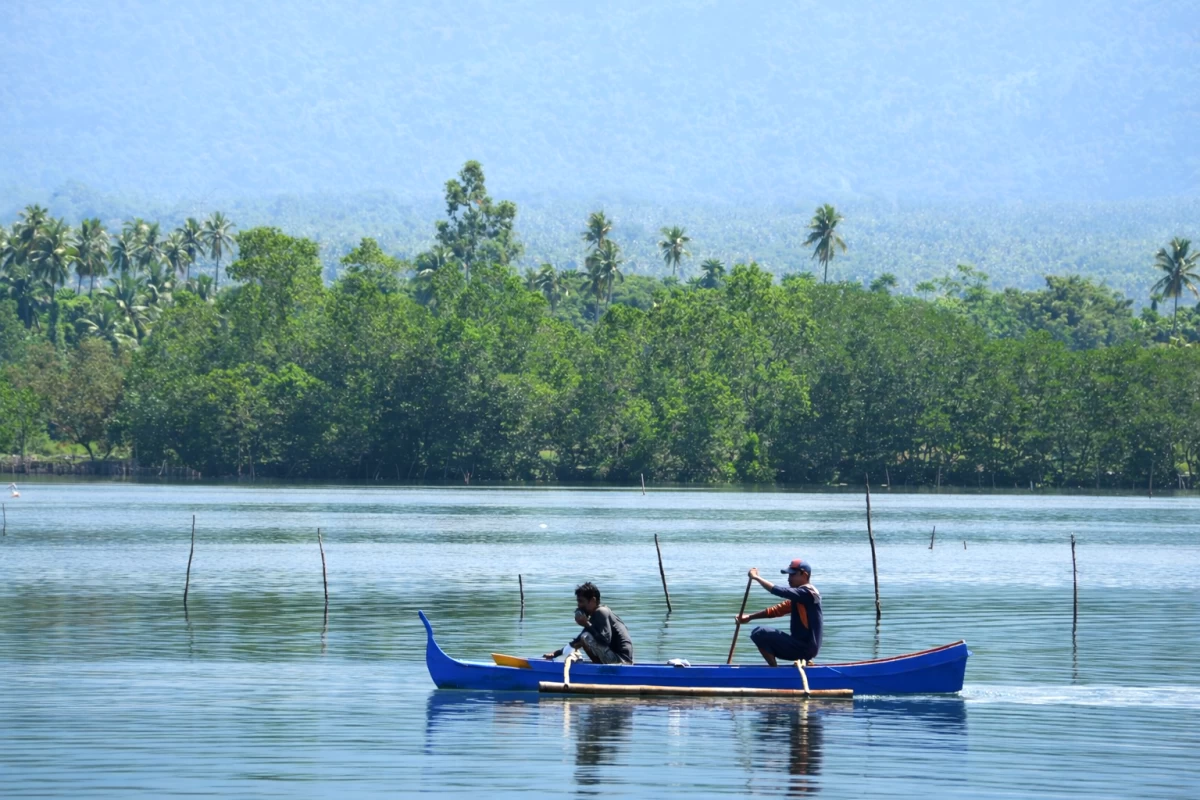
Mangrove areas support local fishing communities.
“When mangroves are disturbed or lost, it automatically translates to the reduction or loss of habitat and source of food for fishes,” Salmo said.
“We are known as one of the world’s mangrove biodiversity centers,” Salmo said. “There are commonly known species from the genera Avicennia, Sonneratia, Rhizophora, among others.”
A number of these mangrove species are disappearing. According to the International Union for Conservation of Nature (IUCN) Red List, the world’s most comprehensive inventory of species’ conservation status, Camptostemon philippinensis is classified as endangered, Ceriops decandra as near-threatened, and Avicennia rumphiana as vulnerable.
Recent analyses of satellite imagery show that Mindanao has the country’s largest mangrove area, accounting for 29 percent of the national total, while Luzon and Mindoro have the least. Most old-growth mangrove forests are found in Mindanao, with 4,582 hectares, and Palawan, with 5,317 hectares.
Mangrove forests grow where saltwater meets the shore in tropical and subtropical regions, forming an interface between terrestrial, freshwater, and marine ecosystems. These forests provide at least US$1.6 billion in ecosystem services each year.
“The loss of mangroves will have devastating economic and environmental consequences,” said Greg Stone, senior vice president of Marine Programs at Conservation International. “These ecosystems are not only a vital component in efforts to fight climate change, but they also protect some of the world’s most vulnerable people from extreme weather and provide them with a source of food and income.”
There is also encouraging news. In 2025, 16 of the country’s 26 marine protected areas with mangroves were reported to be in good to excellent condition, according to the Biodiversity Management and Monitoring Systems & Marine Protected Area Network. However, two marine protected areas recorded a notable decline in mangrove cover from 2024 to 2025.
In Tinambac, Camarines Sur, reports indicate that mangrove reforestation has increased local fish catches. The restored mangrove forest has also brought back red snapper species, which had disappeared because of habitat loss.
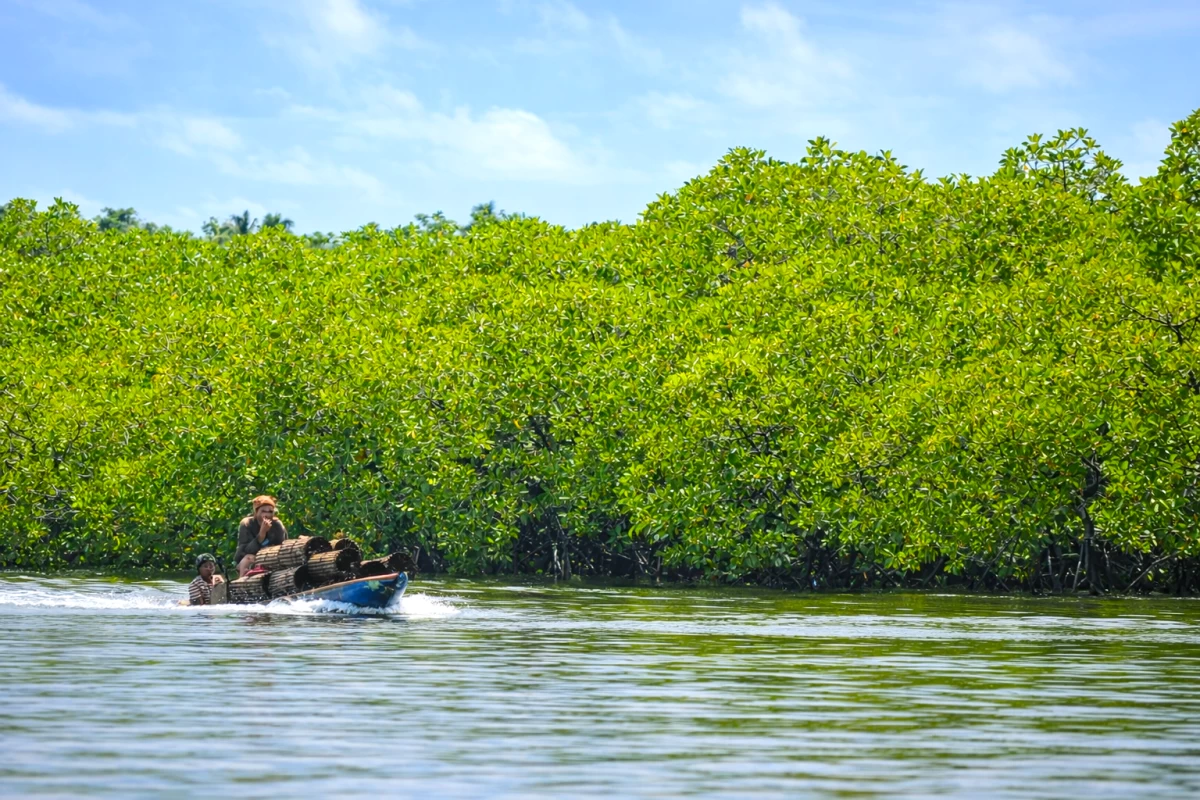
Mangrove waterways serve as transport routes for coastal residents.
On Pangangan Island off Calape, Bohol, residents have found that mangroves serve as a natural barrier protecting the island’s only road connection to the mainland from typhoon damage. The four-kilometer causeway is shielded by mangroves planted in recent decades by local schoolchildren.
“While considerable gains have been made,” Lim said, “challenges remain as a result of increasing population and growing urban and rural development. If our coastal ecosystems are damaged beyond restoration, these would have profound consequences for Philippine society.”