






 Philippines
National
SONA 2026: Senators expect PBBM to push for institutional reforms, bills to jumpstart PH economy
Philippines
National
SONA 2026: Senators expect PBBM to push for institutional reforms, bills to jumpstart PH economy
SONA 2026: Senators expect PBBM to push for institutional reforms, bills to jumpstart PH economy


At A Glance
- Senate President Sherwin Gatchalian said he is expecting President Ferdinand "Bongbong" Marcos Jr. to push Congress to expedite measures that will put in place institutional reforms and jumpstart the Philippine economy in his fifth State of the Nation Address (SONA) on Monday, July 27.
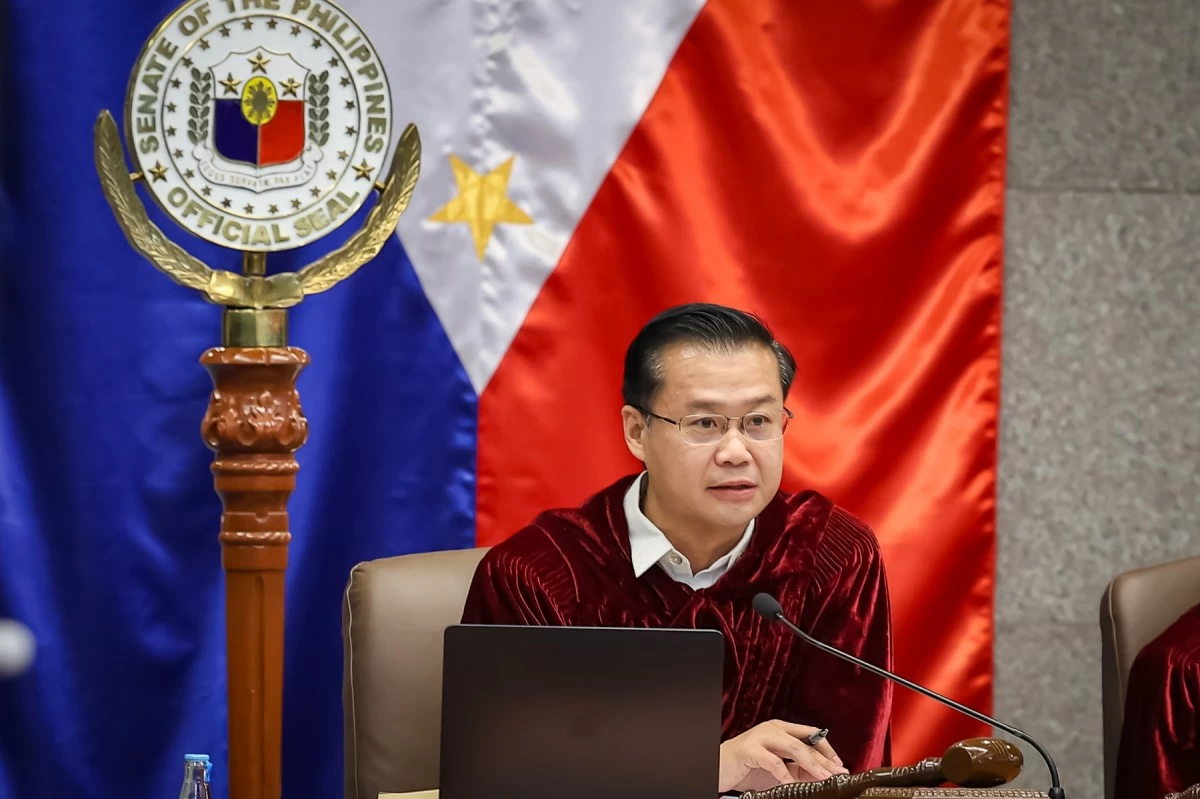
Senate President Sherwin Gatchalian said he is expecting President Ferdinand “Bongbong” Marcos Jr. to push Congress to expedite measures that will put in place institutional reforms and jumpstart the Philippine economy in his fifth State of the Nation Address (SONA) on Monday, July 27.
Gatchalian pointed this out as he remarked how the country’s economic growth has slowed down in 2026 affecting the government’s poverty reduction goals.
“I expect significant attention to be given to the issue of our slowing economy. This is a major concern for me because so many factors affecting the daily lives of our fellow citizens hinge on it,” Gatchalian said in an interview.
“When our economy slows down, our fight against poverty also slows; job creation stalls, and the number of unemployed individuals rises,” he pointed out.
“Therefore, this is one of the most critical aspects that should be addressed in the President's SONA,” he further said.
The Senate chief also said he expects the President to go on a discussion about “institutional reforms” in his fifth SONA, “specifically those aimed at preventing a recurrence of the flood control issues we’ve seen.”
“Many people have already been jailed or charged, but the priority is ensuring these flood control problems do not happen again; we want to hear about the reforms implemented to prevent a repeat of this situation,” he said.
Also, in support of the President’s goal, the Senate will give priority to the measures identified under the Legislative-Executive Development Advisory Council (LEDAC), once the Senate resumes its regular sessions.
“There are 50 LEDAC bills. We have categorized them into economic bills and what we term ‘social safety net’ bills. We will focus on discussing the economic bills to help revitalize our economy and accelerate its growth,” said the senator.
“With regards to the economic bills—these are what we will discuss to help revitalize our economy and accelerate its growth. One of the bills we will tackle concerns lowering electricity prices; because when electricity costs go down, we attract more investments and our economy grows,” the lawmaker said.
“As for safety nets, there is, for instance, the Philippine Geriatric Hospital Bill—a measure that would establish hospitals specializing in the care of our senior citizens,” he pointed out.
For his part, Senior Deputy Majority Leader Joseph Victor “JV” Ejercito urged PresidentMarcos to use his fifth SONA) to announce concrete reforms that directly address the country's most pressing problems.
Ejercito said Filipinos expect decisive action in the administration's final two years.
“There’s no time for beating around the bush. In the final two years of his term, I hope his SONA contains more than just promises. The people are fed up with promises that often go unfulfilled," Ejercito said.
At the top of Ejercito's wishlist is a decisive crackdown on corruption in flood control projects as the controversy has eroded public trust in government infrastructure spending.
"The public has lost trust in the infrastructure that was supposed to drive our economic growth. What are we waiting for? For the people to bring the floodwaters from their towns all the way to Malacañang?” he pointed out.
“Those who squandered and pocketed the funds allocated for flood control should be held accountable and put behind bars," he said.
A long-time advocate of infrastructure development, Ejercito said corruption should not derail the country's infrastructure agenda.
Ejercito lamented that the country continues to lag behind its Southeast Asian neighbors because of poor infrastructure.
"Strong political will and a long-term perspective on the problem are needed—not piecemeal engineering solutions that change whenever administrations shift," he said.