






Manila Bulletin
 Business
The Stock Market
Before the malls: The brick-and-mortar roots of the Sy empire
Business
The Stock Market
Before the malls: The brick-and-mortar roots of the Sy empire
Business
The Stock Market
Before the malls: The brick-and-mortar roots of the Sy empire
Before the malls: The brick-and-mortar roots of the Sy empire
Published Jul 26, 2026 12:00 am
|
Updated Jul 25, 2026 06:27 am


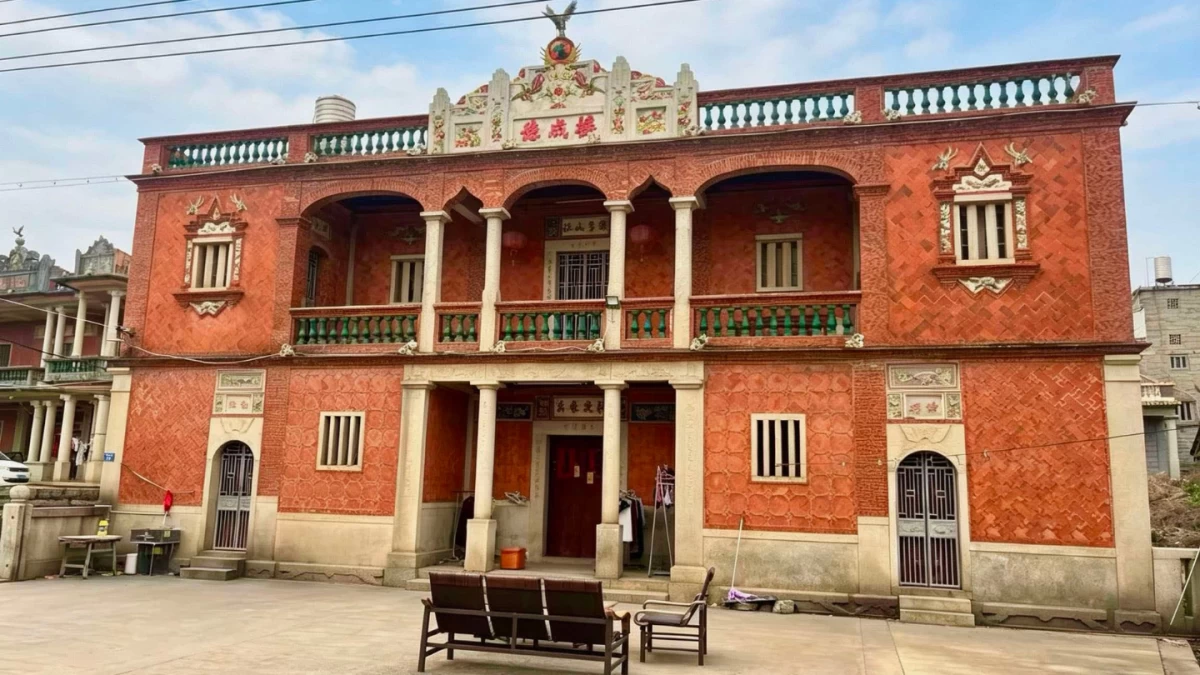
Nestled in Hongxi Village, Jinjiang, China, this two-story De Cheng Building was the ancestral home of the late retail tycoon Henry Sy Sr. Built in the 1950s using traditional Minnan architecture, the 450-square-meter residence stands as the humble origin of the SM commercial empire.
Long before the late Henry Sy Sr. built the air-conditioned megamalls that reshaped the daily lives of Filipinos, his world was bounded by just 450 square meters of red brick, granite, and tile.
Far from the retail, real estate, and banking empire in Metro Manila that made Sy the country’s wealthiest man for over a decade, the physical roots of his business tell a very different story 1,700 kilometers northwest, along a narrow road in Fujian province.
That story rests at the De Cheng Building in Hongxi Village, Jinjiang, China—a modest, two-story residence occupying roughly 450 square meters. It was in this rural pocket that a young Henry Sy spent his early years long before changing the retail landscape of the Philippines.
Practical design and mixed traditions
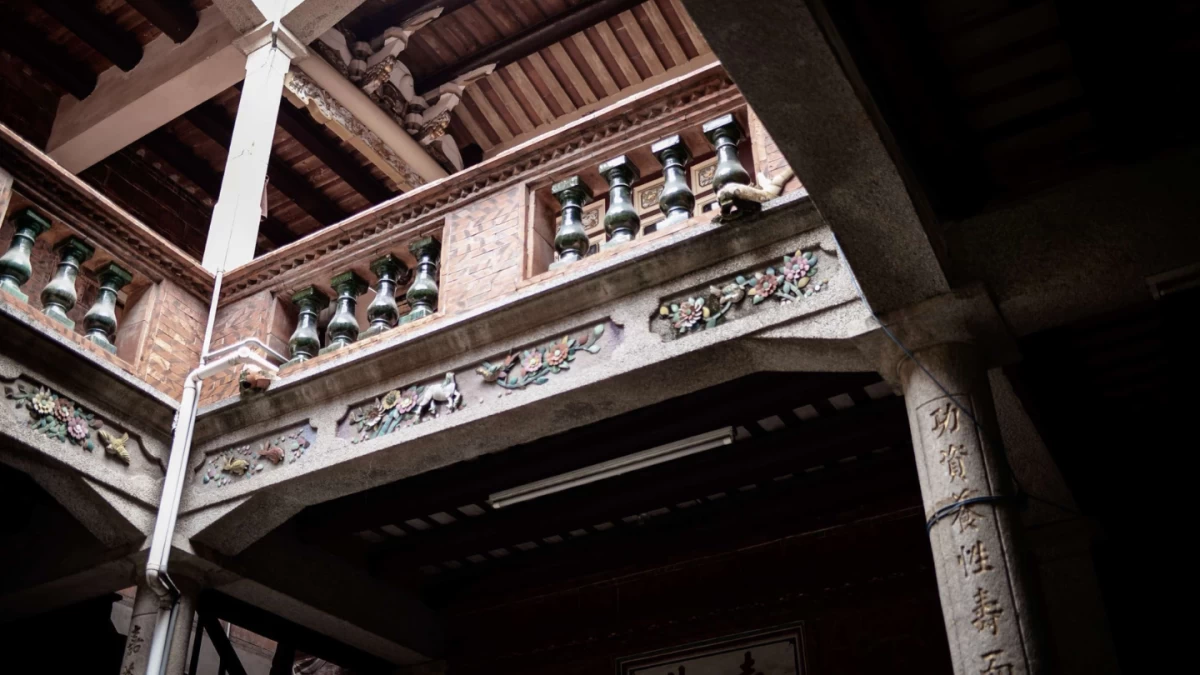
Built with local granite, deep red brick, and delicate Qianci porcelain details, the De Cheng Building showcases the traditional Fan Zai Lou architectural style.
Constructed between 1952 and 1953 for Sy’s parents, Sy Siu Tek and Tan O Sia, after they retired from trading in the Philippines, the home was completed five years before the younger Sy opened his first Shoemart store in Manila in 1958.
The structure follows the traditional Minnan Fan Zai Lou style, a design popular among Chinese families who worked abroad. Built with local stone, timber, and brick, the home combines traditional Fujian layouts with Western details like open verandahs, small balconies, exterior corridors, and decorative grilles over the windows.
Long before modern cooling systems existed, the house relied on basic and practical design. Open side gates and east-west hallways allowed natural light and air to move freely through both floors. Behind the main hall on the second floor, two doors lead out onto a simple balcony overlooking a courtyard paved in local granite.
The craftsmanship along the exterior walls is careful and detailed. White carved stone lines the bottom half of the building, offsetting the deep red brick above it. Stone pillars frame the front entrance, while local artisans used a traditional technique called Qianci—fitting pieces of colored porcelain together—to create small images of birds and flowers along the gables and window frames.
Roots of a business mindset
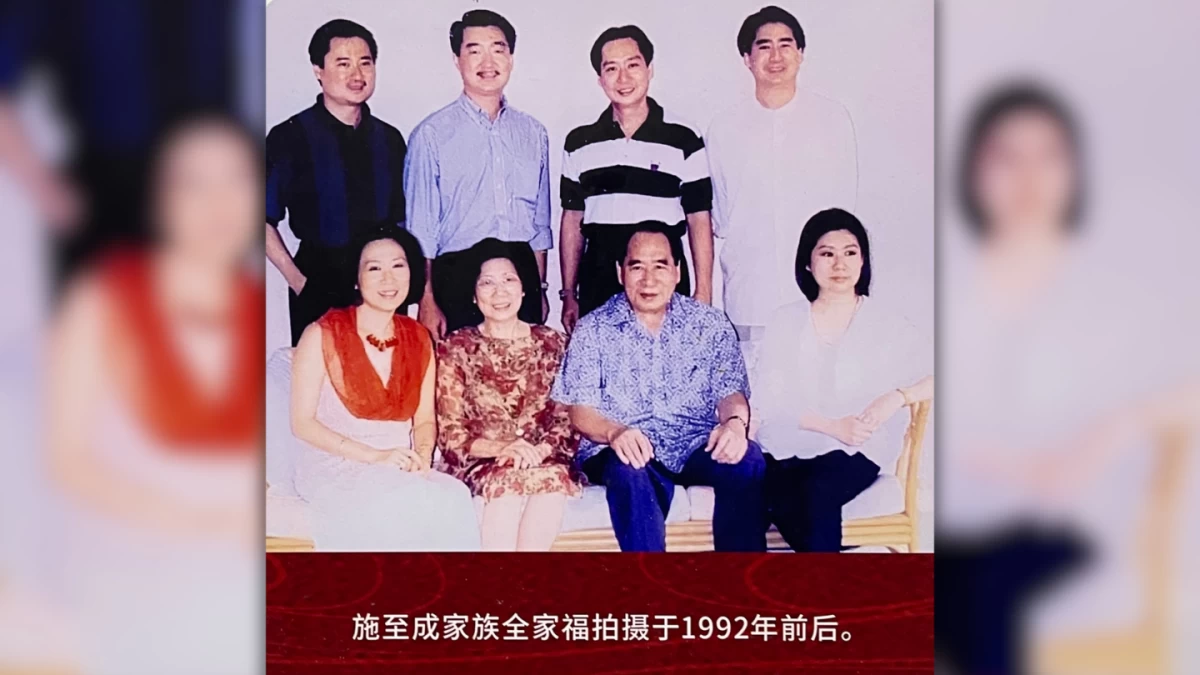
Displayed at the Hongxi Village museum, this 1992 photo captures the Sy family decades after SM founder Henry Sy Sr. began building his retail empire in the Philippines.
For those looking back at how the family business grew, the De Cheng Building is a preview of the principles that later shaped SM. The focus on practical airflow and durable materials mirrors the founder’s later emphasis on property layout, foot traffic, and operational efficiency. Mixing architectural styles from different regions also hinted at a knack for taking modern retail ideas and adapting them to everyday life in the Philippines.
Above all, the structure was built to last without being flashy. The contrast with today’s SM empire is sharp. Where modern commercial centers rely on reinforced concrete, structural steel, and vast glass facades spanning millions of square meters, the ancestral home sits on its original 450-square-meter footprint, built entirely from regional stone, timber, and brick.
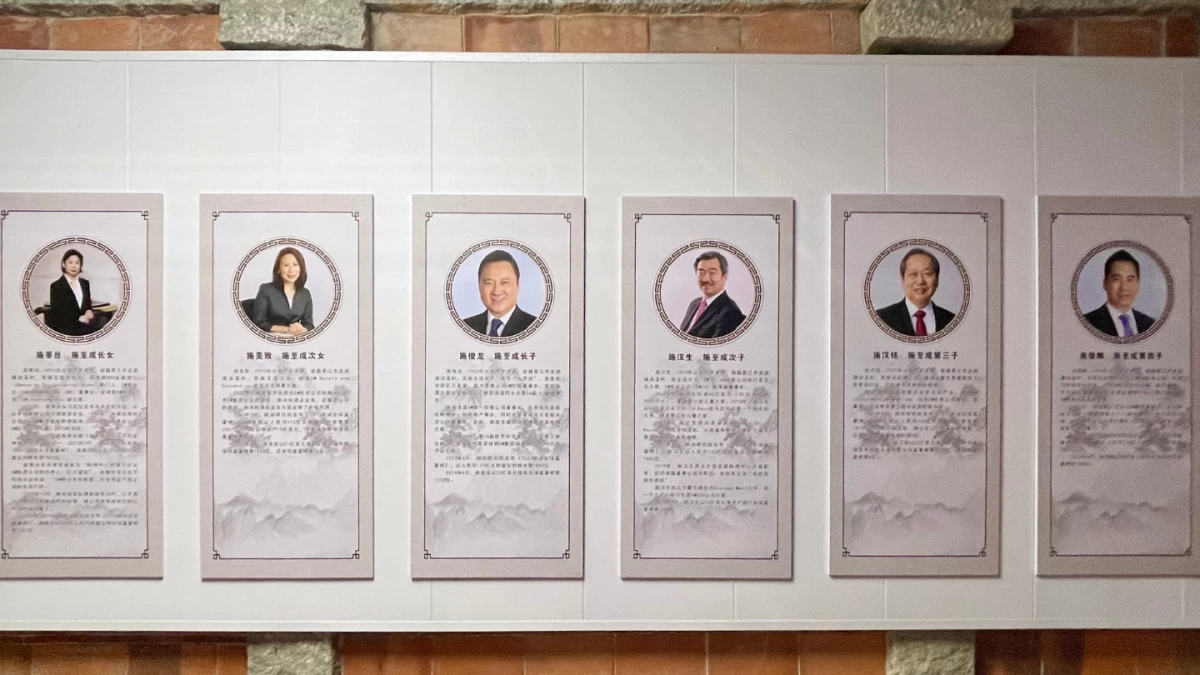
The Sy siblings are recognized in an exhibit at the Hongxi Village museum, which honors influential families originating from the Fujian province.
While the family shifted its life and business focus to Manila decades ago, they never abandoned the Fujian property. Instead, it remains an anchor connecting younger generations to where their family started.
In 2010, Sy returned to Hongxi Village to organize restoration work on the home, which wrapped up the following year. In 2013, the local village committee placed a stone marker on the site to record the history of the property.
In June 2019, several months after Sy passed away at age 94, more than 30 members of the Sy family traveled back to the village together to visit No. 37 Sanxing Road and walk through the home.
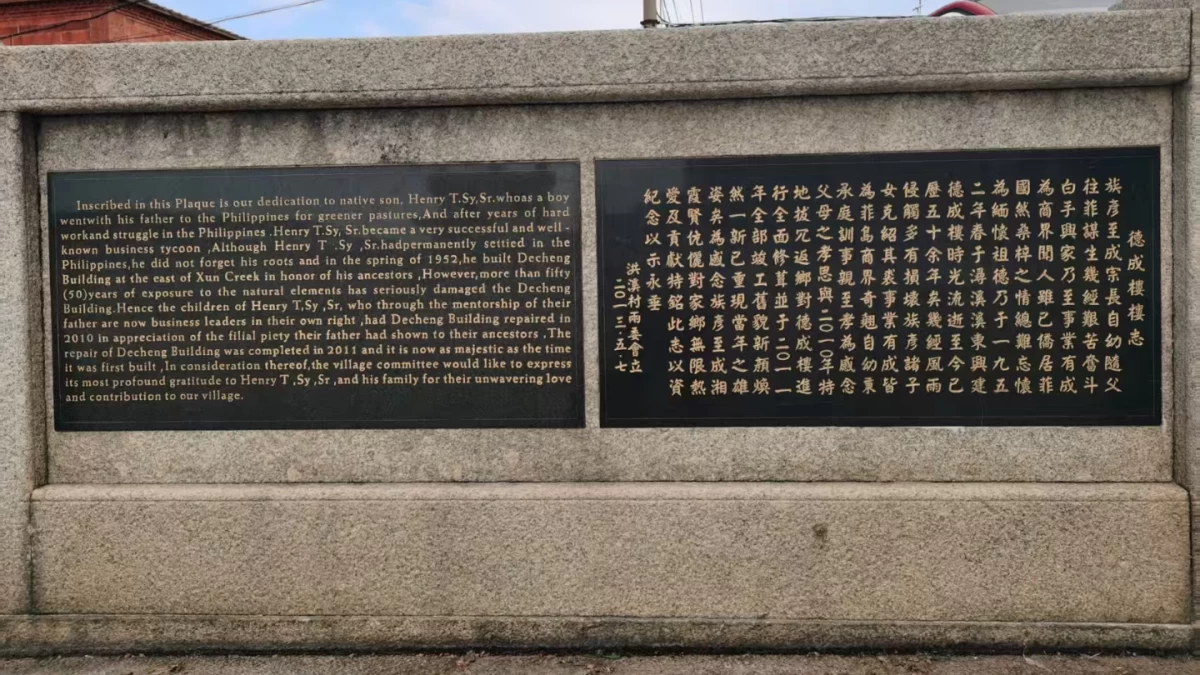
A historic marker stands outside the ancestral home of SM founder Henry Sy Sr. in Jinjiang, China.
Upkeep of the house has been steady over the years. The family completed waterproofing work in 2019, followed by structural repairs to the retaining wall, updates to the front plaza, and routine pest control in 2025.