








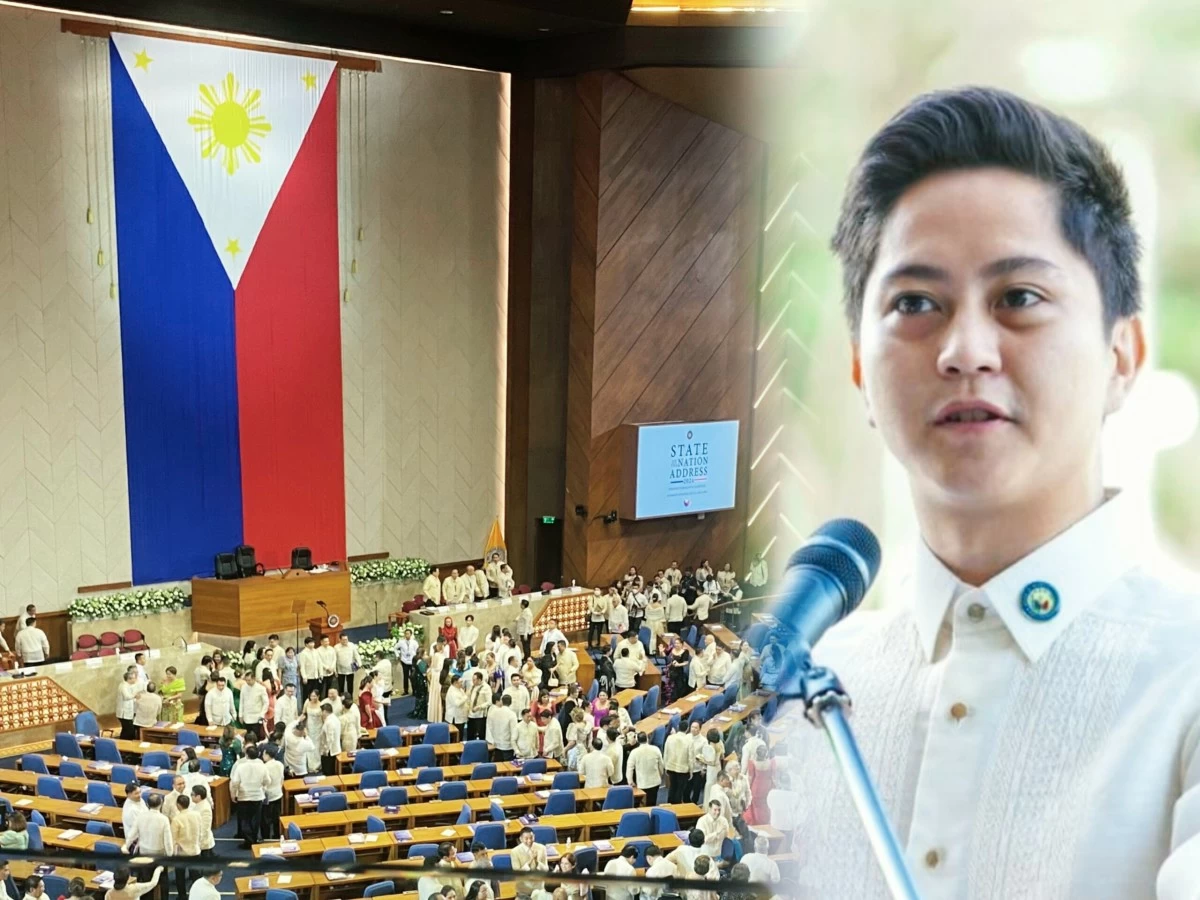
Majority Leader Ilocos Norte 1st district Rep. Sandro Marcos says the House of Representatives will begin the second regular session of the 20th Congress Monday, July 27 with at least two measures ready for final approval.
The bills--one on cooperative reform and one on the proposed National Thanksgiving Day--represent the legislative momentum that the House will carry from the first regular session.
The lower chamber had transmitted more than 160 measures to the Senate and approved 26 of the 52 priority proposals endorsed through the Legislative-Executive Development Advisory Council (LEDAC).
Rep. Marcos said this output demonstrated that the chamber kept its legislative pipeline moving during the recess. Solons will return to work prepared to vote in plenary for these measures, he said.
“President Ferdinand ‘Bongbong’ Marcos Jr. gave Congress a focused development agenda, and Speaker Faustino 'Bojie' G. Dy III organized the House to move that agenda from committee work to plenary action with discipline and urgency. We are resuming session with measures already prepared for decision because legislative time must produce concrete results for the Filipino people,” the presidential son said.
President Marcos and congressional leaders initially identified 44 measures under the Common Legislative Agenda of the 20th Congress before the LEDAC later approved a more immediate set of 21 priority proposals aimed at social protection, economic opportunity, accountable governance and improved public services.
With the second regular session opening alongside the President’s State of the Nation Address (SONA), the House leadership is preparing completed committee reports and distributed bill copies for early plenary disposition rather than allowing pending measures to lose momentum.
The cooperative amendments measure seeks tp advance the broader objective of widening livelihood, credit and market opportunities at the community level.
On the other hand, the Thanksgiving measure reflects another part of the House workload, which includes civic and institutional legislation in addition to the large economic and social-reform bills identified by LEDAC.
Their readiness for final action reflects the coordination of committees, the Committee on Rules and the plenary calendar before the adjournment of the first regular session.
“President Marcos expects the legislative and executive branches to keep pace with the needs of the country. These three bills are part of a larger production line that includes LEDAC priorities, urgent national reforms and measures already moving toward bicameral deliberation or Senate action,” Rep. Marcos said.
The House under the Speaker and Majority Leader aims to build on its record by advancing additional LEDAC measures before yearend while committees continue technical work on proposals that require further consultation.
Final approval of the two bills would immediately add them to the chamber’s legislative output and clear each measure for transmittal to the Senate under the bicameral Congress.
Dy earlier expressed confidence that the upper chamber would be able to fulfill its legislative tasks.
Status report
A status report released by the House Committee on Rules, which Rep. Marcos heads, shows the 26 priority bills that have been passed by the House include the proposal to reset the first regular elections in the Bangsamoro Autonomous Region in Muslim Mindanao (BARMM), which has been enacted into law.
The Bicameral Conference Committee report on one bill (Amendments to the Universal Access to Quality Tertiary Education Act) has already been ratified.
Three measures are under conference committee deliberations: the National Center for Geriatric Health, amendments to the Government Assistance to Students and Teachers in Private Education Act, and Assistance to Individuals in Crisis Situations (AICS) Act.
Twenty-one bills have been approved on third and final reading. These have to do with Right to Information, EPIRA Amendments: ERC Strengthening, Waste-to-Energy (Waste Treatment Technology and Regulatory Framework), Amendments to the National Building Code, and Blue Economy Act.
Also passed by the House were National Reintegration Bill, Amendments to the Teachers Professionalization Act, Presidential Merit Scholarship Program, Extension of Estate Tax Amnesty Period, Department of Water Resources Bill, Amendments to the Bank Deposits Secrecy Law, Travel Tax Abolition, Digital Payments Act, Amendments to the Biofuels Act, and National Land Use Act.
The Amendments to the Pantawid Pamilyang Pilipino Program (4Ps) Act (Strengthening and Expanding), Anti-Political Dynasty, Strengthening the Bases Conversion and Development Authority, Anti-Online Sexual Abuse or Exploitation of Children (OSAEC) and Anti-Child Sexual Abuse or Exploitation Materials (CSAEM) Act, Anti-Fake News and Disinformation Act, and Amendments to the Masustansyang Pagkain Para sa Batang Pilipino Act have also hurdled the lower chamber.
Of the 26 pending priority measures, one (Cybersecurity Act) is now in the calendar of business, while another (Disqualifying Relatives of Official (4th degree) in Government Contracts is for the filing of a committee report.