ADVERTISEMENT

US slaps Philippines with 12.5% tariff over forced labor concerns

Published Jul 24, 2026 08:45 am  |  Updated Jul 24, 2026 02:36 pm
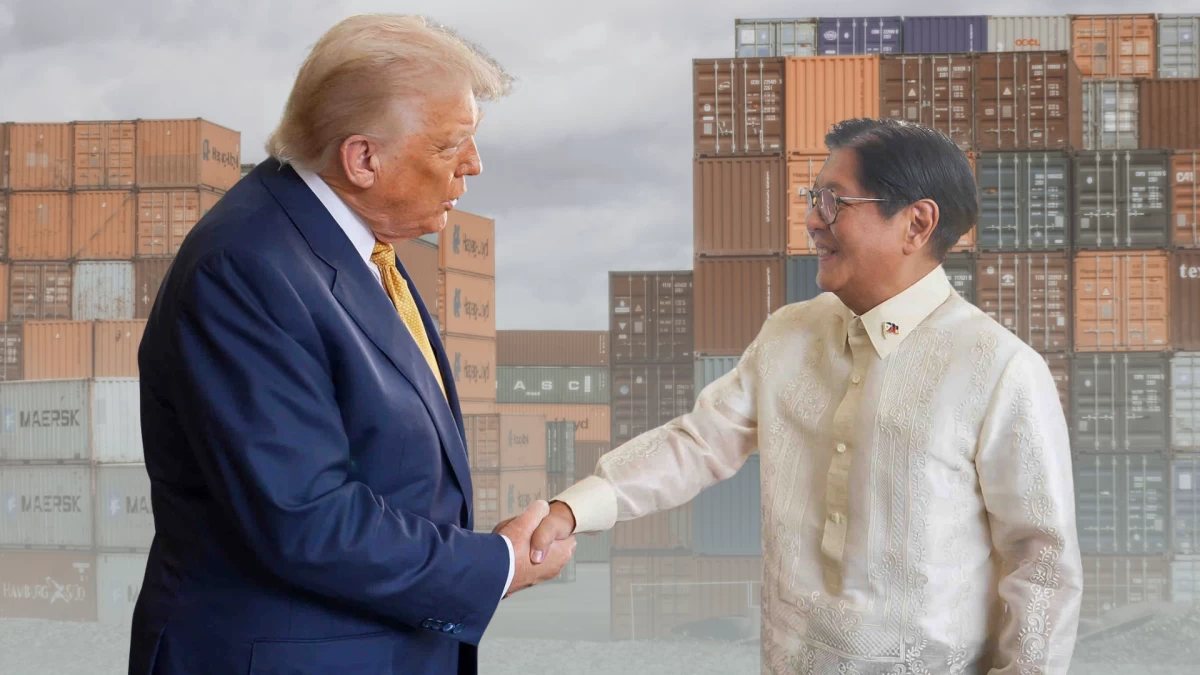
President Marcos Jr. meets with U.S. President Donald Trump at the White House on July 22, 2025. Marcos negotiated a slight reduction in reciprocal tariffs—from 20 percent down to 19 percent—in exchange for opening Philippine markets to American vehicles and agricultural goods.

The country’s exports to the United States (US) are now subject to a higher 12.5-percent tariff after the Trump administration determined that the Philippines has failed to prevent the entry of goods produced with forced labor.

In a notice on Friday morning, July 24 (Philippine time), the Office of the US Trade Representative (USTR) said it is imposing a 12.5-percent tariff on the Philippines, in accordance with the directive of US President Donald Trump.

The USTR earlier included the Philippines in its investigation into the US’ top 60 trading partners as it sought to crack down on imports made with forced labor that were found to be harmful to American commerce.

In a report on the probe’s findings, the USTR said the Philippines “has failed to impose and effectively enforce a forced labor import prohibition.”

Apart from the Philippines, 40 other economies are subject to the 12.5-percent tariff.

“The US has had a forced labor import ban for nearly a century, and rigorously enforces it. It’s well past time for our trading partners to do the same,” said USTR Ambassador Jamieson Greer.

“Today’s action will begin to correct what is both a human rights abuse and distortive trade practice to improve the welfare of workers everywhere,” he added.

The USTR said it would exempt certain products from the tariff, including goods that cannot be produced in sufficient quantities or at reasonable prices in the US, and products that could cause economy-wide disruptions if they were subjected to the tariffs.

Philippine goods exempt from the 12.5-percent tariff include most of the country’s major exports to the US, including semiconductors, its top export commodity.

Also exempted are agricultural commodities such as coconuts, pineapples, and bananas, as well as raw minerals such as nickel ores and concentrates.

The US remains the Philippines’ largest export market, accounting for $13.46 billion, or 15.9 percent, of the country’s total exports in 2025.

Philippine imports to the US have been subject to a 10-percent tariff since February, after the US Supreme Court declared the Trump administration’s previous enforcement of reciprocal tariffs unconstitutional.

The 10-percent tariff expired on Friday after being implemented for 150 days, making way for the new duties linked to forced labor.

Trade Secretary Cristina Roque said the government will continue its engagement with the US, noting the Philippines’ firm policy against forced labor.

“In the meantime, we will continue to value our strategic relationship with the US, especially in ensuring that our trade remains intact, resilient, and stable,” Roque told Manila Bulletin.

“This is especially true since Philippine exports to the US, particularly in electronics, semiconductors, and key agricultural products, support US supply-chain stability,” she added.

Meanwhile, Management Association of the Philippines (MAP) president Donald Lim said the private sector is concerned about the introduction of the new US tariffs since they affect the competitiveness of the country’s exports.

He said the government should immediately coordinate with the US government to address its concerns about the country’s trade policies related to forced labor.

“At the same time, this should strengthen our resolve to improve supply-chain transparency, uphold internationally accepted labor standards, and accelerate reforms that make Philippine exports more competitive,” Lim told Manila Bulletin.

“We should also continue diversifying our export markets so our economy becomes more resilient to external trade shocks,” he noted.

Once the Philippines demonstrates strong compliance, Federation of Philippine Industries (FPI) chairperson Elizabeth Lee said the US may lower the tariffs imposed on Philippine imports to the 10-percent tariff rate.

“Assuming exemptions are applied on the same basis, the burden is now on rapid regulatory alignment,” she said in a statement.

In a virtual briefing, US Ambassador to ASEAN Kevin Kim said the new imposition of tariffs is part of the US’ commitment to pursuing fair and reciprocal trade.

“For a meaningful, sustainable trading relationship to continue into the future, we have to address some of the imbalances that exist,” he said.

The Philippines had been hopeful of receiving a more favorable tariff rate, especially as it began aligning its policies against imports produced with forced labor with those of the US.

At an event last Thursday, July 23, three government agencies announced the formation of an interagency committee tasked with investigating imports made with forced labor before an audience of industry leaders and officials from the US Embassy.

The committee is led by the Department of Trade and Industry (DTI), with the Department of Labor and Employment (DOLE) as vice chair, and the Department of Finance (DOF) as a member, alongside other agencies.

The Bureau of Customs (BOC) is expected to act on the committee’s findings and recommendations by implementing measures banning the importation of goods proven to have been produced, wholly or in part, through forced labor.

Related Tags

US tariffs Office of the United States Trade Representative (USTR)
ADVERTISEMENT
.most-popular .layout-ratio{ padding-bottom: 79.13%; } @media (min-width: 768px) and (max-width: 1024px) { .widget-title { font-size: 15px !important; } }

{{ articles_filter_1561_widget.title }}

.most-popular .layout-ratio{ padding-bottom: 79.13%; } @media (min-width: 768px) and (max-width: 1024px) { .widget-title { font-size: 15px !important; } }

{{ static_articles_1562_widget.title }}

.most-popular .layout-ratio{ padding-bottom: 79.13%; } @media (min-width: 768px) and (max-width: 1024px) { .widget-title { font-size: 15px !important; } }

{{ articles_filter_1563_widget.title }}

{{ articles_filter_1564_widget.title }}

.mb-article-details { position: relative; } .mb-article-details .article-body-preview, .mb-article-details .article-body-summary{ font-size: 17px; line-height: 30px; font-family: "Libre Caslon Text", serif; color: #000; } .mb-article-details .article-body-preview iframe , .mb-article-details .article-body-summary iframe{ width: 100%; margin: auto; } .read-more-background { background: linear-gradient(180deg, color(display-p3 1.000 1.000 1.000 / 0) 13.75%, color(display-p3 1.000 1.000 1.000 / 0.8) 30.79%, color(display-p3 1.000 1.000 1.000) 72.5%); position: absolute; height: 200px; width: 100%; bottom: 0; display: flex; justify-content: center; align-items: center; padding: 0; } .read-more-background a{ color: #000; } .read-more-btn { padding: 17px 45px; font-family: Inter; font-weight: 700; font-size: 18px; line-height: 16px; text-align: center; vertical-align: middle; border: 1px solid black; background-color: white; } .hidden { display: none; }
function initializeAllSwipers() { // Get all hidden inputs with cms_article_id document.querySelectorAll('[id^="cms_article_id_"]').forEach(function (input) { const cmsArticleId = input.value; const articleSelector = '#article-' + cmsArticleId + ' .body_images'; const swiperElement = document.querySelector(articleSelector); if (swiperElement && !swiperElement.classList.contains('swiper-initialized')) { new Swiper(articleSelector, { loop: true, pagination: false, navigation: { nextEl: '#article-' + cmsArticleId + ' .swiper-button-next', prevEl: '#article-' + cmsArticleId + ' .swiper-button-prev', }, }); } }); } setTimeout(initializeAllSwipers, 3000); const intersectionObserver = new IntersectionObserver( (entries) => { entries.forEach((entry) => { if (entry.isIntersecting) { const newUrl = entry.target.getAttribute("data-url"); if (newUrl) { history.pushState(null, null, newUrl); let article = entry.target; // Extract metadata const author = article.querySelector('.author-section').textContent.replace('By', '').trim(); const section = article.querySelector('.section-info ').textContent.replace(' ', ' '); const title = article.querySelector('.article-title h1').textContent; // Parse URL for Chartbeat path format const parsedUrl = new URL(newUrl, window.location.origin); const cleanUrl = parsedUrl.host + parsedUrl.pathname; // Update Chartbeat configuration if (typeof window._sf_async_config !== 'undefined') { window._sf_async_config.path = cleanUrl; window._sf_async_config.sections = section; window._sf_async_config.authors = author; } // Track virtual page view with Chartbeat if (typeof pSUPERFLY !== 'undefined' && typeof pSUPERFLY.virtualPage === 'function') { try { pSUPERFLY.virtualPage({ path: cleanUrl, title: title, sections: section, authors: author }); } catch (error) { console.error('ping error', error); } } // Optional: Update document title if (title && title !== document.title) { document.title = title; } } } }); }, { threshold: 0.1 } ); function showArticleBody(button) { const article = button.closest("article"); const summary = article.querySelector(".article-body-summary"); const body = article.querySelector(".article-body-preview"); const readMoreSection = article.querySelector(".read-more-background"); // Hide summary and read-more section summary.style.display = "none"; readMoreSection.style.display = "none"; // Show the full article body body.classList.remove("hidden"); } document.addEventListener("DOMContentLoaded", () => { let loadCount = 0; // Track how many times articles are loaded const offset = [1, 2, 3, 4, 5, 6, 7, 8, 9, 10]; // Offset values const currentUrl = window.location.pathname.substring(1); let isLoading = false; // Prevent multiple calls if (!currentUrl) { console.log("Current URL is invalid."); return; } const sentinel = document.getElementById("load-more-sentinel"); if (!sentinel) { console.log("Sentinel element not found."); return; } function isSentinelVisible() { const rect = sentinel.getBoundingClientRect(); return ( rect.top < window.innerHeight && rect.bottom >= 0 ); } function onScroll() { if (isLoading) return; if (isSentinelVisible()) { if (loadCount >= offset.length) { console.log("Maximum load attempts reached."); window.removeEventListener("scroll", onScroll); return; } isLoading = true; const currentOffset = offset[loadCount]; window.loadMoreItems().then(() => { let article = document.querySelector('#widget_1690 > div:nth-last-of-type(2) article'); intersectionObserver.observe(article) loadCount++; }).catch(error => { console.error("Error loading more items:", error); }).finally(() => { isLoading = false; }); } } window.addEventListener("scroll", onScroll); });

Sign up by email to receive news.