







Uniqlo turns Filipino heritage into wearable art
Celebrating the Philippines and Japan's 70th anniversary of diplomatic relations, the Japanese retailer collaborates with indigenous artisans and Filipino creatives on exclusive patches and cultural installations
Published Jul 24, 2026 01:37 pm


It's no secret that Uniqlo has become one of the Philippines' most beloved Japanese lifestyle and fashion brands. Known for its minimalist aesthetic and innovative Japanese technology, the retailer has long earned a place in Filipino wardrobes with everyday essentials that seamlessly blend style, comfort, and function.
As the Philippines and Japan commemorate 70 years of diplomatic friendship, Uniqlo celebrates the milestone by shining a spotlight on Filipino craftsmanship through a limited-edition collection of anniversary patches and a series of immersive art installations inspired by the country's rich cultural heritage.
Limited edition patches
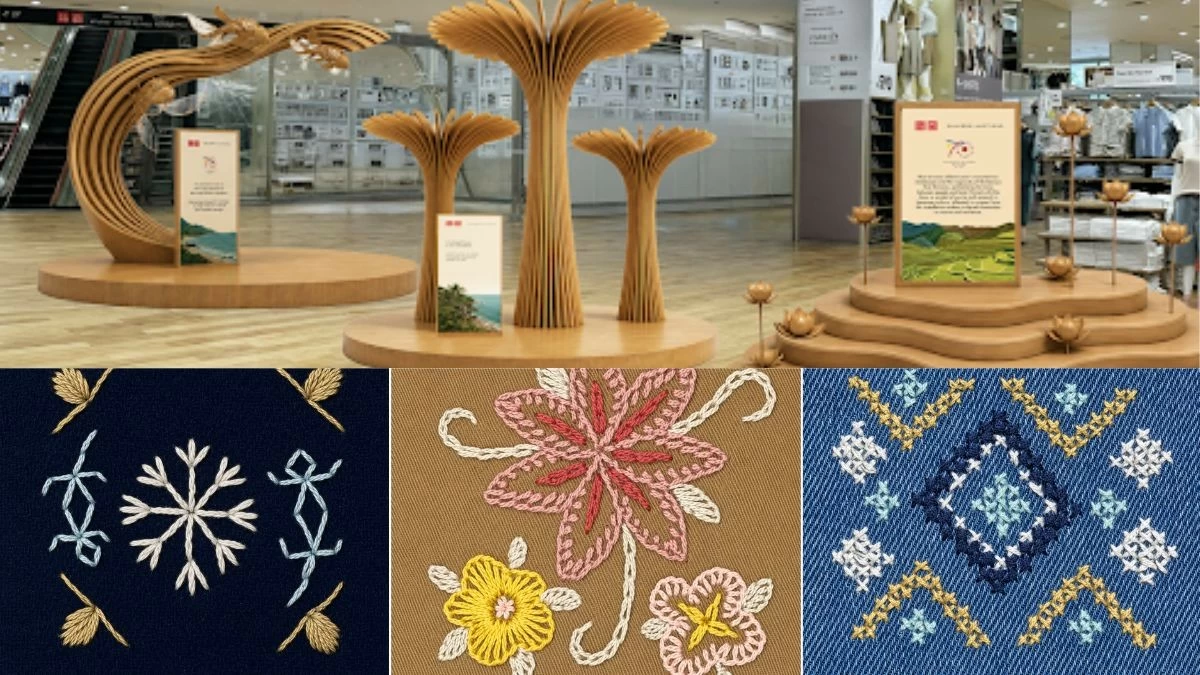
Created in collaboration with Filipino designer Wilson Limon, the Re.Uniqlo Special Collection Patches pay tribute to traditional handcrafted embroidery from the country's three main island groups—Luzon, Visayas, and Mindanao—bringing indigenous artistry into contemporary everyday fashion.
The collection was officially launched on July 23 at the Uniqlo Flagship Store in Glorietta 5, Makati City. Featuring three designs from each island group, it consists of nine unique embroidered patches, each reflecting the stories, traditions, and identity of the communities behind them.
In an interview with Manila Bulletin Lifestyle, Wilson, director of the Re.Uniqlo Special Collection Patches, shared that the project was developed in close collaboration with indigenous weaving communities whose traditions continue to be passed down through generations.
"For Luzon, we worked with Itneg weavers from Abra. For Visayas, Panay Bukidnon weavers of Iloilo, and for Mindanao, T'boli weavers of Lake Sebu in South Cotabato," he said. "There are different designs that symbolize different things. It will be sold in different parts of the country, so imagine the volume of products that they have to make. They are so excited that even younger ones are helping. In a way, it's preserving their culture and tradition."
Embroidered stories
Each patch carries cultural symbolism unique to its place of origin.
The Luzon designs draw inspiration from the frog, a symbol of abundance and fertility, and the kukko pattern, which represents hard work, productivity, and a deep connection to agriculture.
For the Visayas, the collection showcases traditional panubok embroidery, featuring motifs rooted in nature, oral traditions, and ancestral beliefs that have long shaped the cultural identity of the Panay Bukidnon community.
Meanwhile, Mindanao's intricate embroidery highlights mountains, wildlife, nature, and dream imagery—hallmarks of the T'boli people's daily life, spirituality, and artistic tradition.
Beyond celebrating indigenous craftsmanship, Wilson believes that the collaboration encourages younger generations to see cultural heritage in a new light.
"The next generation of weavers will see this platform and realize that it's possible to incorporate our traditions into something contemporary—something that can be worn every day," Wilson said. "This is an accent piece, and we worked directly with the communities."
The limited-edition patches will be available until Aug. 30, 2026, for ₱300 each.
According to Jan Ang, marketing director of Uniqlo Philippines, all proceeds from the patch sales will go directly to the partner weaving communities, helping sustain their livelihoods while preserving traditional craftsmanship.
Art that bridges two cultures
Complementing the patch collection, Uniqlo also unveiled three large-scale “Island Installations” that celebrate the shared values and artistic traditions of the Philippines and Japan.
Developed in partnership with Salcedo Auctions, the installations combine iconic Philippine landscapes with traditional Japanese visual elements. Crafted from sustainable materials by Filipino artisans, the works will be exhibited at Uniqlo Glorietta 5 and Uniqlo Mall of Asia.
Richie Lerma, chairman and chief specialist of Salcedo Auctions, shared with us the collaborative process behind the installations.
"We called them the 'Island Installations.' We at Salcedo Auctions designed the installations and then worked with Filipino craftsmen to carve and build them," he said. "The Japanese iconography was created by craftsmen from Nueva Ecija who learned techniques passed down through generations. It's a family enterprise."
Each installation interprets one of the country's island groups through a dialogue between Filipino landscapes and Japanese symbolism.
Representing Luzon, the first installation draws inspiration from the Banaue Rice Terraces, celebrating the ingenuity of the region's farming communities. An origami lotus, a Japanese symbol of purity and renewal, complements the mountainous landscape, emphasizing the enduring relationship between people and nature.
The Visayas installation highlights the region's expansive coconut groves, honoring the coconut as a symbol of abundance and livelihood. Paired with an origami crane, which represents longevity and grace in Japanese culture, the piece reflects continuity, resilience, and harmony shared by both nations.
For Mindanao, the installation turns to the sea, capturing the region's rich maritime heritage and the connections between its islands. Accompanied by the koi, a Japanese emblem of perseverance and movement, the artwork symbolizes the continuous flow of culture, tradition, and community across the Philippine archipelago.
The “Island Installations” will remain on display until the end of 2026, inviting visitors to experience a visual celebration of two nations connected by decades of friendship and a shared appreciation for craftsmanship, culture, and creativity.