






Manila Bulletin
 Philippines
National
PCG condemns fresh China Coast Guard water cannon attacks near Bajo de Masinloc
Philippines
National
PCG condemns fresh China Coast Guard water cannon attacks near Bajo de Masinloc
Philippines
National
PCG condemns fresh China Coast Guard water cannon attacks near Bajo de Masinloc
PCG condemns fresh China Coast Guard water cannon attacks near Bajo de Masinloc
Published Jul 24, 2026 01:58 pm


At A Glance
- China Coast Guard (CCG) vessels again fired water cannons at Philippine Coast Guard (PCG) and Bureau of Fisheries and Aquatic Resources (BFAR) vessels conducting the Kadiwa ng Bagong Bayaning Mangingisda mission near Bajo de Masinloc on July 24, while also carrying out dangerous maneuvers that nearly caused collisions.
- Despite the harassment, the Philippine mission continued. All PCG and BFAR personnel were reported safe as the vessels completed the delivery of fuel subsidies and food provisions to Filipino fishermen in their traditional fishing grounds.
- The PCG condemned China's actions as illegal and dangerous, stressing that Bajo de Masinloc is part of Philippine territory and that the 2016 Arbitral Award upholds the fishing rights of Filipino fishermen in the area.
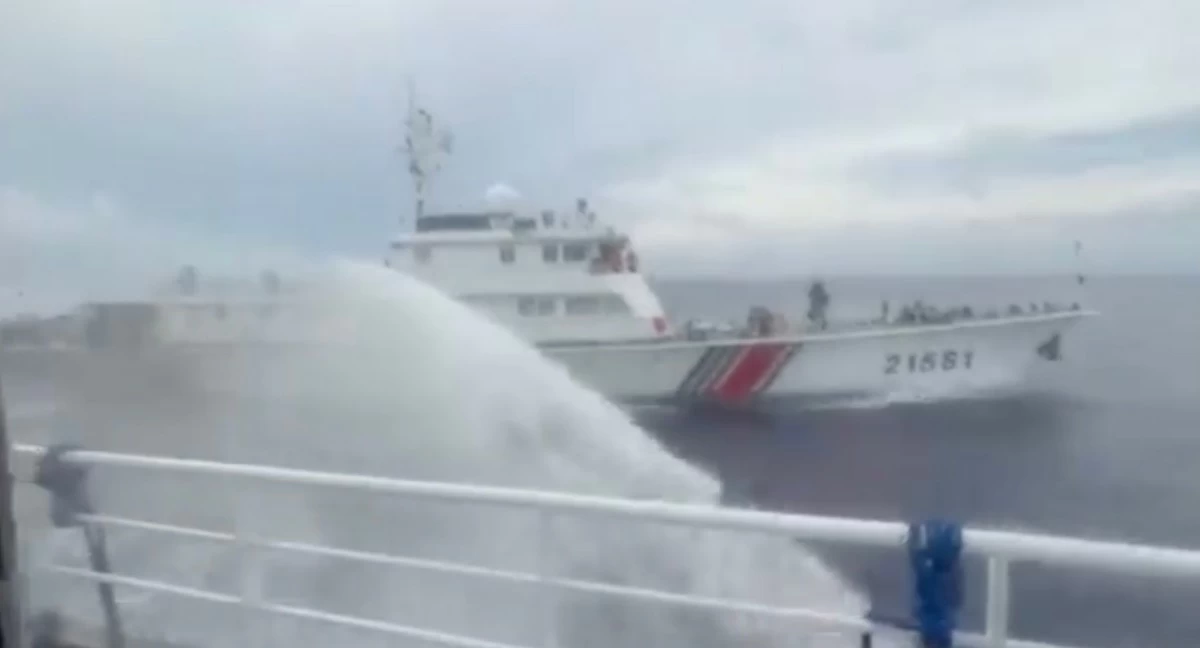
A China Coast Guard (CCG) vessel with bow number "21581" fires a water cannon at Bureau of Fisheries and Aquatic Resources (BFAR) vessel BRP Datu Paduhinog while it was sailing to conduct its regular monitoring, control, and surveillance mission about 12 nautical miles northeast of the Bajo de Masinloc (Scarborough or Panatag Shoal) in the West Philippine Sea on July 24, 2026. (Courtesy of Philippine Coast Guard)
The Philippine Coast Guard (PCG) condemned another series of dangerous actions by the China Coast Guard (CCG) after several Philippine vessels were hit by water cannons while delivering assistance to Filipino fishermen near Bajo de Masinloc (Scarborough or Panatag) Shoal in the West Philippine Sea (WPS) on Friday, July 24.
The incident occurred while the PCG and the Bureau of Fisheries and Aquatic Resources (BFAR) were implementing the Kadiwa ng Bagong Bayaning Mangingisda (KBBM) program, a national government initiative that aims to deliver fuel subsidies and food provisions to Filipino fishermen while ensuring their security in their traditional fishing grounds.
The first water cannon attack occurred at around 6:26 a.m. when a CCG vessel with bow number “3107” blasted BRP Cape San Agustin from about 400 meters away. The PCG vessel was conducting a maritime patrol about 15 nautical miles northeast of Bajo de Masinloc.
Before the attack, BRP Cape San Agustin was already being shadowed by at least six CCG vessels together with Chinese maritime militia boats, the PCG said.
Another confrontation took place at around 7:35 a.m. when CCG vessel 21581 fired its water cannon at BFAR vessel BRP Datu Paduhinog while it was sailing to conduct its regular monitoring, control, and surveillance mission about 12 nautical miles northeast of the shoal.
The PCG said the Chinese vessel came as close as seven meters from the BFAR vessel's port bow, creating a serious risk of collision.
It also said CCG 21581 had deliberately turned off its Automatic Identification System (AIS).
“The CCG vessel had deliberately switched off its Automatic Identification System, concealing its identity in violation of international regulations on safety of navigation,” the PCG said.
At around 7:53 a.m., the same Chinese vessel directly hit BRP Datu Paduhinog with a water cannon. Two more direct hits followed at around 8 a.m.
Shortly after the attacks, BRP Datu Paduhinog temporarily lost its satellite internet connection while sailing about 10 nautical miles northeast of Bajo de Masinloc. Communications were restored at 8:36 a.m.
The PCG also reported another unsafe maneuver at around 8:09 a.m. after Chinese maritime militia vessel “00318” was seen dragging a rope about 100 meters behind BRP Datu Sumakwel. The agency said the act posed a danger to the safe navigation of the Philippine vessel.
At around 8:55 a.m., CCG vessel 3303 also fired its water cannon at BRP Datu Cabaylo from about 300 meters behind the vessel.
The PCG said the latest confrontation showed that Chinese vessels continued to interfere with lawful Philippine government operations in the WPS. On July 23, CCG vessels also used water cannon against PCG and BFAR vessels during the first day of the Kadiwa mission in Bajo de Masinloc.
“The PCG strongly condemns the dangerous and unprofessional actions of the China Coast Guard,” PCG spokesperson for WPS Rerar Adm. Jay Tarriela said.
Despite the incidents, the PCG said all personnel were unharmed and the Philippine vessels continued their mission.
“Despite these illegal, coercive, aggressive, and deceptive actions, all PCG and DA-BFAR personnel are safe, and the vessels sustained their presence in the area in continued support of Filipino fisherfolk exercising their legitimate rights in their traditional fishing ground,” Tarriela said.
As of 9:30 a.m., the PCG monitored three PCG vessels and seven BFAR vessels operating near Bajo de Masinloc, which were matched by 12 CCG vessels and three Chinese maritime militia vessels.
The latest incident came less than a week after CCG personnel injured two Philippine Navy (PN) sailors during a confrontation near BRP Sierra Madre in Ayungin Shoal.
China has repeatedly used water cannons, dangerous maneuvers, and close shadowing against Philippine government vessels despite the 2016 Arbitral Award, which ruled that Filipino fishermen have traditional fishing rights in the area.
The PCG stressed that “Bajo de Masinloc is an integral part of the Philippine territory, and its surrounding waters form part of the country's territorial sea and exclusive economic zone.”
“The 2016 Arbitral Award has affirmed that Bajo de Masinloc is a traditional fishing ground of Filipino fisherfolk, whose rights cannot be lawfully impeded by any foreign power,” Tarriela added.
The PCG said it will continue carrying out lawful maritime operations in the WPS.
“The PCG, under the leadership of Admiral Ronnie Gil Gavan and in coordination with the National Task Force for the West Philippine Sea, remains steadfast in adhering to the guidance of President Ferdinand Marcos Jr. that is to protect Filipino fisherfolk, uphold the rule of law, and defend the country's sovereignty, sovereign rights, and jurisdiction in the West Philippine Sea without escalating tensions and in accordance with international law, particularly the 1982 United Nations Convention on the Law of the Sea (UNCLOS),” Tarriela underscored.