ADVERTISEMENT

Indonesia's 'Floating Ambassador' makes final stop in Manila

Published Jul 24, 2026 10:40 pm
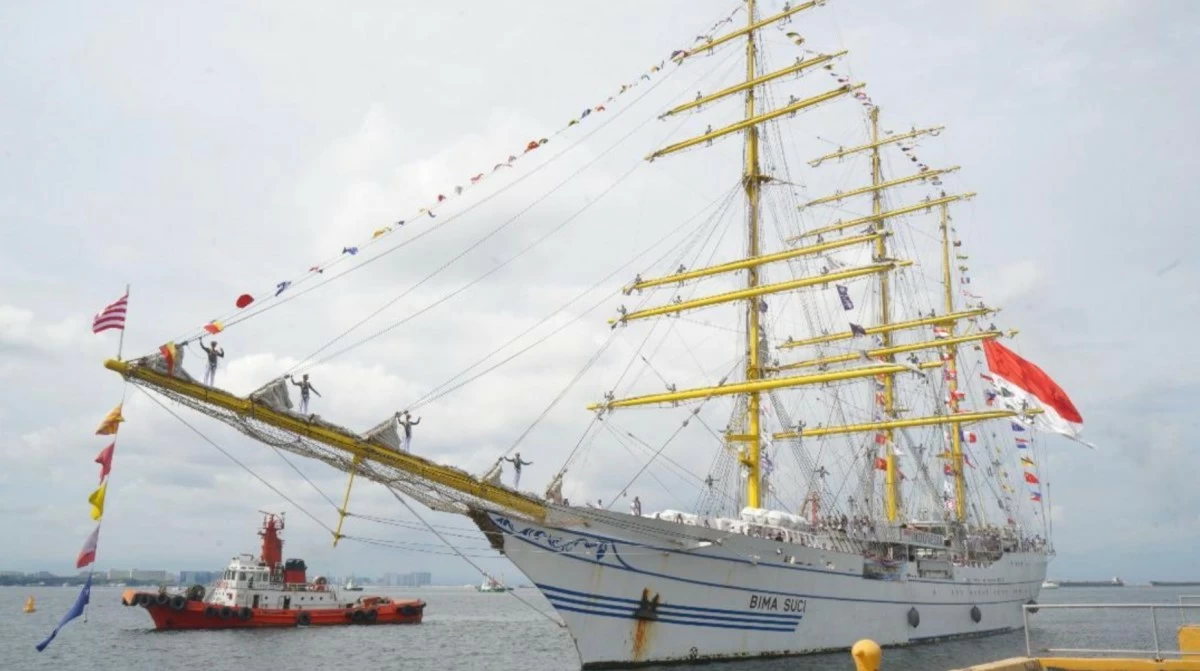
KRI Bima Suci-945, Indonesia’s tall ship, arrives in Manila for a goodwill visit. (Photos: Indonesian Embassy)
The Indonesian Navy’s tall ship KRI Bima Suci-945 made Manila the final stop of its 124-day goodwill voyage, bringing with it naval cadets, Indonesian cultural traditions, and a message of friendship between two neighboring maritime nations.
Arriving on July 2, the Manila visit marked the ship’s fourth call to the Philippines since 2018 and the eighth port of its latest journey across Asia. Before reaching the country, KRI Bima Suci had called at Colombo, Singapore, Da Nang, Shanghai, Busan, Vladivostok, and Nagasaki.
Known as Indonesia’s “Floating Ambassador,” KRI Bima Suci serves as both a naval training vessel and a platform for maritime diplomacy. Launched in 2017, the barque-rigged tall ship provides Indonesian naval cadets with practical training at sea while representing the country at international port visits and maritime events.

Hon. Victorina Hesti Dewayani, Chargé d’Affaires of the Indonesian Embassy in Manila, delivers her welcome remarks.
For its latest voyage, the ship carried 202 personnel, including 77 naval cadets undergoing hands-on training.
Its Manila stop combined naval engagement with cultural diplomacy. Activities began with a wreath-laying ceremony led by Indonesian Navy Lt. Gen. Nur Alamsyah, Manila Vice Mayor Angela Lei “Chi” Atienza, and Philippine Navy Commodore Redentor R. Cortezano.
The cultural program that followed reflected the close ties between Indonesia and the Philippines, two archipelagic neighbors whose connections extend well beyond official government relations.
Indonesia’s Gita Jala Taruna Cadet Marching Band showcased the discipline and traditions of its naval cadets, while members of the ship’s crew performed Reog Ponorogo, the dramatic traditional dance from East Java.
Filipino culture was equally represented. The Philippine Normal University’s Kislap Sining Dance Troupe performed a medley that included “Bagani,” “Pagapir,” and “Tinikling,” while the Philsilat Sports Association demonstrated Pencak Silat. Sanggar Merpati, an embassy-based cultural group, also presented the Sundanese dance “Bajidor Kahot.”
Opening the program, Indonesian Embassy Chargé d’Affaires Victorina Hesti Dewayani welcomed guests, while Atienza extended Manila’s greetings to the visiting delegation.
The engagement continued aboard KRI Bima Suci, where a deck reception brought together members of the diplomatic corps, government officials, and foreign armed forces attachés. Dewayani and Philippine Navy Littoral Combat Force Commodore Lued L. Lincuna spoke during the reception, underscoring the cooperation between the two countries and their navies.
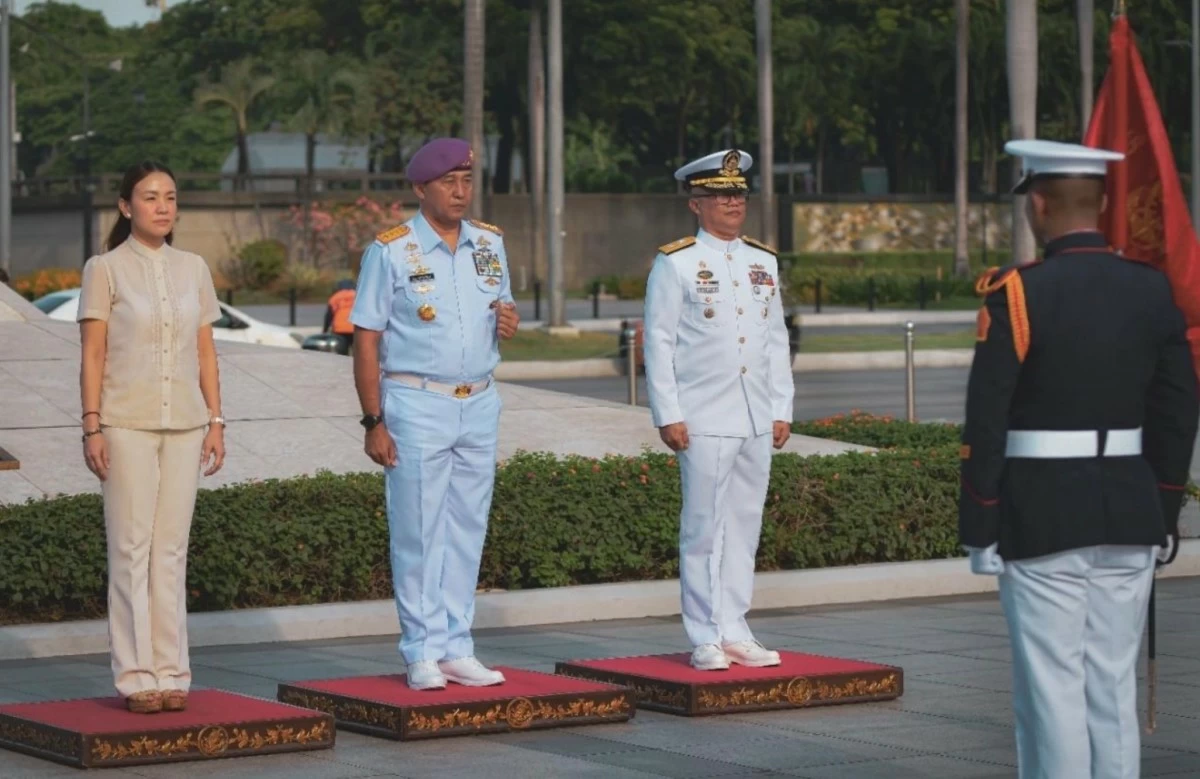
Wreath-laying ceremony held with (from left) Hon. Angela Lei “Chi” Atienza, Vice Mayor of Manila; Lt. Gen. Nur Alamsyah, Commander of the Naval Doctrine, Education and Training Command, Indonesian Navy; and Commodore Redentor R. Cortezano, PN, Deputy Commander of the Naval Reserve Command.
The visit also provided opportunities for more formal military engagement. Alamsyah paid a courtesy call on Rear Admiral Karl A. Decapia, commander of the Philippine Navy’s Naval Education and Training Command, strengthening professional exchanges between two naval forces operating in the same region.
For Filipinos curious about life aboard the distinctive tall ship, KRI Bima Suci also opened its decks to visitors, offering the public a closer look at Indonesian naval traditions and the training of its cadets.
The ship departed Manila on July 5 for its return to Indonesia, bringing its 124-day voyage closer to completion.
For a vessel whose primary purpose is to train the next generation of Indonesian naval officers, KRI Bima Suci carries another mission each time it enters a foreign port. Its sails may recall an earlier era of seafaring, but its role is distinctly contemporary: creating connections among navies, governments, and ordinary citizens.

Related Tags

Embassy of Indonesia
ADVERTISEMENT
.most-popular .layout-ratio{ padding-bottom: 79.13%; } @media (min-width: 768px) and (max-width: 1024px) { .widget-title { font-size: 15px !important; } }

{{ articles_filter_1561_widget.title }}

.most-popular .layout-ratio{ padding-bottom: 79.13%; } @media (min-width: 768px) and (max-width: 1024px) { .widget-title { font-size: 15px !important; } }

{{ static_articles_1562_widget.title }}

.most-popular .layout-ratio{ padding-bottom: 79.13%; } @media (min-width: 768px) and (max-width: 1024px) { .widget-title { font-size: 15px !important; } }

{{ articles_filter_1563_widget.title }}

{{ articles_filter_1564_widget.title }}

.mb-article-details { position: relative; } .mb-article-details .article-body-preview, .mb-article-details .article-body-summary{ font-size: 17px; line-height: 30px; font-family: "Libre Caslon Text", serif; color: #000; } .mb-article-details .article-body-preview iframe , .mb-article-details .article-body-summary iframe{ width: 100%; margin: auto; } .read-more-background { background: linear-gradient(180deg, color(display-p3 1.000 1.000 1.000 / 0) 13.75%, color(display-p3 1.000 1.000 1.000 / 0.8) 30.79%, color(display-p3 1.000 1.000 1.000) 72.5%); position: absolute; height: 200px; width: 100%; bottom: 0; display: flex; justify-content: center; align-items: center; padding: 0; } .read-more-background a{ color: #000; } .read-more-btn { padding: 17px 45px; font-family: Inter; font-weight: 700; font-size: 18px; line-height: 16px; text-align: center; vertical-align: middle; border: 1px solid black; background-color: white; } .hidden { display: none; }
function initializeAllSwipers() { // Get all hidden inputs with cms_article_id document.querySelectorAll('[id^="cms_article_id_"]').forEach(function (input) { const cmsArticleId = input.value; const articleSelector = '#article-' + cmsArticleId + ' .body_images'; const swiperElement = document.querySelector(articleSelector); if (swiperElement && !swiperElement.classList.contains('swiper-initialized')) { new Swiper(articleSelector, { loop: true, pagination: false, navigation: { nextEl: '#article-' + cmsArticleId + ' .swiper-button-next', prevEl: '#article-' + cmsArticleId + ' .swiper-button-prev', }, }); } }); } setTimeout(initializeAllSwipers, 3000); const intersectionObserver = new IntersectionObserver( (entries) => { entries.forEach((entry) => { if (entry.isIntersecting) { const newUrl = entry.target.getAttribute("data-url"); if (newUrl) { history.pushState(null, null, newUrl); let article = entry.target; // Extract metadata const author = article.querySelector('.author-section').textContent.replace('By', '').trim(); const section = article.querySelector('.section-info ').textContent.replace(' ', ' '); const title = article.querySelector('.article-title h1').textContent; // Parse URL for Chartbeat path format const parsedUrl = new URL(newUrl, window.location.origin); const cleanUrl = parsedUrl.host + parsedUrl.pathname; // Update Chartbeat configuration if (typeof window._sf_async_config !== 'undefined') { window._sf_async_config.path = cleanUrl; window._sf_async_config.sections = section; window._sf_async_config.authors = author; } // Track virtual page view with Chartbeat if (typeof pSUPERFLY !== 'undefined' && typeof pSUPERFLY.virtualPage === 'function') { try { pSUPERFLY.virtualPage({ path: cleanUrl, title: title, sections: section, authors: author }); } catch (error) { console.error('ping error', error); } } // Optional: Update document title if (title && title !== document.title) { document.title = title; } } } }); }, { threshold: 0.1 } ); function showArticleBody(button) { const article = button.closest("article"); const summary = article.querySelector(".article-body-summary"); const body = article.querySelector(".article-body-preview"); const readMoreSection = article.querySelector(".read-more-background"); // Hide summary and read-more section summary.style.display = "none"; readMoreSection.style.display = "none"; // Show the full article body body.classList.remove("hidden"); } document.addEventListener("DOMContentLoaded", () => { let loadCount = 0; // Track how many times articles are loaded const offset = [1, 2, 3, 4, 5, 6, 7, 8, 9, 10]; // Offset values const currentUrl = window.location.pathname.substring(1); let isLoading = false; // Prevent multiple calls if (!currentUrl) { console.log("Current URL is invalid."); return; } const sentinel = document.getElementById("load-more-sentinel"); if (!sentinel) { console.log("Sentinel element not found."); return; } function isSentinelVisible() { const rect = sentinel.getBoundingClientRect(); return ( rect.top < window.innerHeight && rect.bottom >= 0 ); } function onScroll() { if (isLoading) return; if (isSentinelVisible()) { if (loadCount >= offset.length) { console.log("Maximum load attempts reached."); window.removeEventListener("scroll", onScroll); return; } isLoading = true; const currentOffset = offset[loadCount]; window.loadMoreItems().then(() => { let article = document.querySelector('#widget_1690 > div:nth-last-of-type(2) article'); intersectionObserver.observe(article) loadCount++; }).catch(error => { console.error("Error loading more items:", error); }).finally(() => { isLoading = false; }); } } window.addEventListener("scroll", onScroll); });

Sign up by email to receive news.