ADVERTISEMENT

Fate of ICC chief prosecutor heads to unprecedented vote as US sanctions keep him out of New York

Published Jul 24, 2026 10:29 am
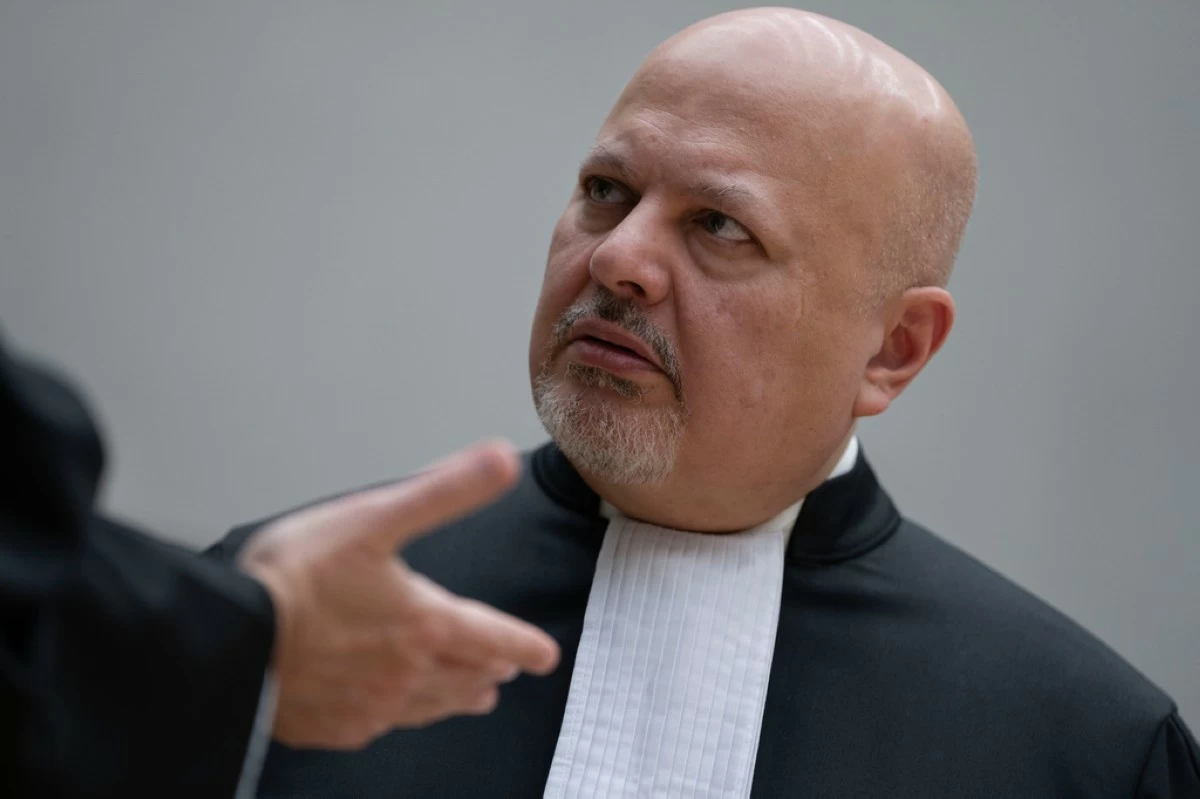
Chief Prosecutor Karim Khan talks before convening the International Criminal Court (ICC) in The Hague, Netherlands, March 14, 2025. (AP Photo/Peter Dejong, Pool, File)
THE HAGUE, Netherlands (AP) — Diplomats from around the world are gathering at United Nations headquarters in New York on Friday to decide whether to permanently remove the embattled chief prosecutor of the International Criminal Court.
British barrister Karim Khan has been accused of sexual misconduct with a female aide, as outlined by The Associated Press in a series of stories, allegations which he has steadfastly denied.
The saga has dragged on for more than two years and has had profound implications for the global tribunal, which is already under enormous pressure. Earlier this month, the United States, which has long criticized the court, announced a campaign aimed at dismantling the 24-year-old institution.
The 56-year-old Khan was formally removed from his duties at the ICC in June after the executive committee of the court’s oversight body found he had committed “serious breach of duty and serious misconduct” by engaging in a “sexual relationship ... (that) escalated over time” and tried to prevent the woman from pursuing her allegations, according to documents seen by The Associated Press. Khan disputes those findings.
Khan faces an unprecedented removal vote
Now his future lies in the hands of the 125 nations who make up the court's oversight body, the Assembly of States Parties, who are holding a special session in New York. It will culminate in a vote where a majority would need to support a resolution to oust him.
Khan will not be present at the closed-door meeting, as he is barred from entering the United States after being sanctioned by the Trump administration over the court’s investigation into Israeli officials for the military's conduct in the conflict in Gaza.
His lawyers have complained about his absence at the meeting. “We know of no court or tribunal in any proper and fair legal system that bars a person facing the gravest professional sanction from being heard,” Tayab Ali and Sareta Ashraph wrote in a letter to the ASP seen by the AP.
He goes into the vote banned from practicing law in his home country of the United Kingdom after being suspended by the British Bar Standards Board pending their own investigation into the allegations against him.
The outcome of the vote, which is secret, is unclear. The court’s host state of the Netherlands will vote for his removal, the country’s foreign minister Tom Berendsen wrote in a letter to parliament. The Netherlands is the only country to have publicly announced its position.
The Gaza investigation complicates the case
The allegations have become entwined with the court’s investigation into the war in Gaza. “Political considerations have been folded into this, especially as it is the first time a prosecutor has pursued warrants against a western ally,” Iva Vukusic, a researcher at Utrecht University who has been following the process, told the AP.
The court issued arrest warrants in 2024 for Israeli Prime Minister Benjamin Netanyahu and his former Defense Minister Yoav Gallant for crimes against humanity. That decision sparked considerable backlash, including multiple rounds of sanctions against Khan and other court staff by the Trump administration.
A divided court faces an uncertain future
The lengthy and complicated process has created huge divisions at the court at a time when the institution already is under tremendous strain. “There has been splintering over how the court has handled this,” Lucy Gaynor, a historian of international criminal tribunals at the University of Amsterdam, told the AP.
In April, a group of staff members within the prosecutor’s office sent a letter to the oversight body expressing serious concerns about Khan’s potential return, writing that his “leadership has been materially diminished.”
Last week, a group of Palestinian organizations issued a public letter expressing concerns about the investigation, including accusing the executive committee of “unwarranted political interference” and “subverting the disciplinary process.”
Should Khan be removed, his replacement will have to be elected later. His office is currently being run by his two deputy prosecutors.
Vukusic said that regardless of the outcome, “the court is going to walk away bruised and battered and wounded and less able to face the greater threats.”

Related Tags

world news International Criminal Court (ICC) ICC chief prosecutor Karim Khan
ADVERTISEMENT
.most-popular .layout-ratio{ padding-bottom: 79.13%; } @media (min-width: 768px) and (max-width: 1024px) { .widget-title { font-size: 15px !important; } }

{{ articles_filter_1561_widget.title }}

.most-popular .layout-ratio{ padding-bottom: 79.13%; } @media (min-width: 768px) and (max-width: 1024px) { .widget-title { font-size: 15px !important; } }

{{ static_articles_1562_widget.title }}

.most-popular .layout-ratio{ padding-bottom: 79.13%; } @media (min-width: 768px) and (max-width: 1024px) { .widget-title { font-size: 15px !important; } }

{{ articles_filter_1563_widget.title }}

{{ articles_filter_1564_widget.title }}

.mb-article-details { position: relative; } .mb-article-details .article-body-preview, .mb-article-details .article-body-summary{ font-size: 17px; line-height: 30px; font-family: "Libre Caslon Text", serif; color: #000; } .mb-article-details .article-body-preview iframe , .mb-article-details .article-body-summary iframe{ width: 100%; margin: auto; } .read-more-background { background: linear-gradient(180deg, color(display-p3 1.000 1.000 1.000 / 0) 13.75%, color(display-p3 1.000 1.000 1.000 / 0.8) 30.79%, color(display-p3 1.000 1.000 1.000) 72.5%); position: absolute; height: 200px; width: 100%; bottom: 0; display: flex; justify-content: center; align-items: center; padding: 0; } .read-more-background a{ color: #000; } .read-more-btn { padding: 17px 45px; font-family: Inter; font-weight: 700; font-size: 18px; line-height: 16px; text-align: center; vertical-align: middle; border: 1px solid black; background-color: white; } .hidden { display: none; }
function initializeAllSwipers() { // Get all hidden inputs with cms_article_id document.querySelectorAll('[id^="cms_article_id_"]').forEach(function (input) { const cmsArticleId = input.value; const articleSelector = '#article-' + cmsArticleId + ' .body_images'; const swiperElement = document.querySelector(articleSelector); if (swiperElement && !swiperElement.classList.contains('swiper-initialized')) { new Swiper(articleSelector, { loop: true, pagination: false, navigation: { nextEl: '#article-' + cmsArticleId + ' .swiper-button-next', prevEl: '#article-' + cmsArticleId + ' .swiper-button-prev', }, }); } }); } setTimeout(initializeAllSwipers, 3000); const intersectionObserver = new IntersectionObserver( (entries) => { entries.forEach((entry) => { if (entry.isIntersecting) { const newUrl = entry.target.getAttribute("data-url"); if (newUrl) { history.pushState(null, null, newUrl); let article = entry.target; // Extract metadata const author = article.querySelector('.author-section').textContent.replace('By', '').trim(); const section = article.querySelector('.section-info ').textContent.replace(' ', ' '); const title = article.querySelector('.article-title h1').textContent; // Parse URL for Chartbeat path format const parsedUrl = new URL(newUrl, window.location.origin); const cleanUrl = parsedUrl.host + parsedUrl.pathname; // Update Chartbeat configuration if (typeof window._sf_async_config !== 'undefined') { window._sf_async_config.path = cleanUrl; window._sf_async_config.sections = section; window._sf_async_config.authors = author; } // Track virtual page view with Chartbeat if (typeof pSUPERFLY !== 'undefined' && typeof pSUPERFLY.virtualPage === 'function') { try { pSUPERFLY.virtualPage({ path: cleanUrl, title: title, sections: section, authors: author }); } catch (error) { console.error('ping error', error); } } // Optional: Update document title if (title && title !== document.title) { document.title = title; } } } }); }, { threshold: 0.1 } ); function showArticleBody(button) { const article = button.closest("article"); const summary = article.querySelector(".article-body-summary"); const body = article.querySelector(".article-body-preview"); const readMoreSection = article.querySelector(".read-more-background"); // Hide summary and read-more section summary.style.display = "none"; readMoreSection.style.display = "none"; // Show the full article body body.classList.remove("hidden"); } document.addEventListener("DOMContentLoaded", () => { let loadCount = 0; // Track how many times articles are loaded const offset = [1, 2, 3, 4, 5, 6, 7, 8, 9, 10]; // Offset values const currentUrl = window.location.pathname.substring(1); let isLoading = false; // Prevent multiple calls if (!currentUrl) { console.log("Current URL is invalid."); return; } const sentinel = document.getElementById("load-more-sentinel"); if (!sentinel) { console.log("Sentinel element not found."); return; } function isSentinelVisible() { const rect = sentinel.getBoundingClientRect(); return ( rect.top < window.innerHeight && rect.bottom >= 0 ); } function onScroll() { if (isLoading) return; if (isSentinelVisible()) { if (loadCount >= offset.length) { console.log("Maximum load attempts reached."); window.removeEventListener("scroll", onScroll); return; } isLoading = true; const currentOffset = offset[loadCount]; window.loadMoreItems().then(() => { let article = document.querySelector('#widget_1690 > div:nth-last-of-type(2) article'); intersectionObserver.observe(article) loadCount++; }).catch(error => { console.error("Error loading more items:", error); }).finally(() => { isLoading = false; }); } } window.addEventListener("scroll", onScroll); });

Sign up by email to receive news.