ADVERTISEMENT

Domestic tourism cushions 'substantial' Middle East war impact—DOT official

Published Jul 24, 2026 03:28 pm
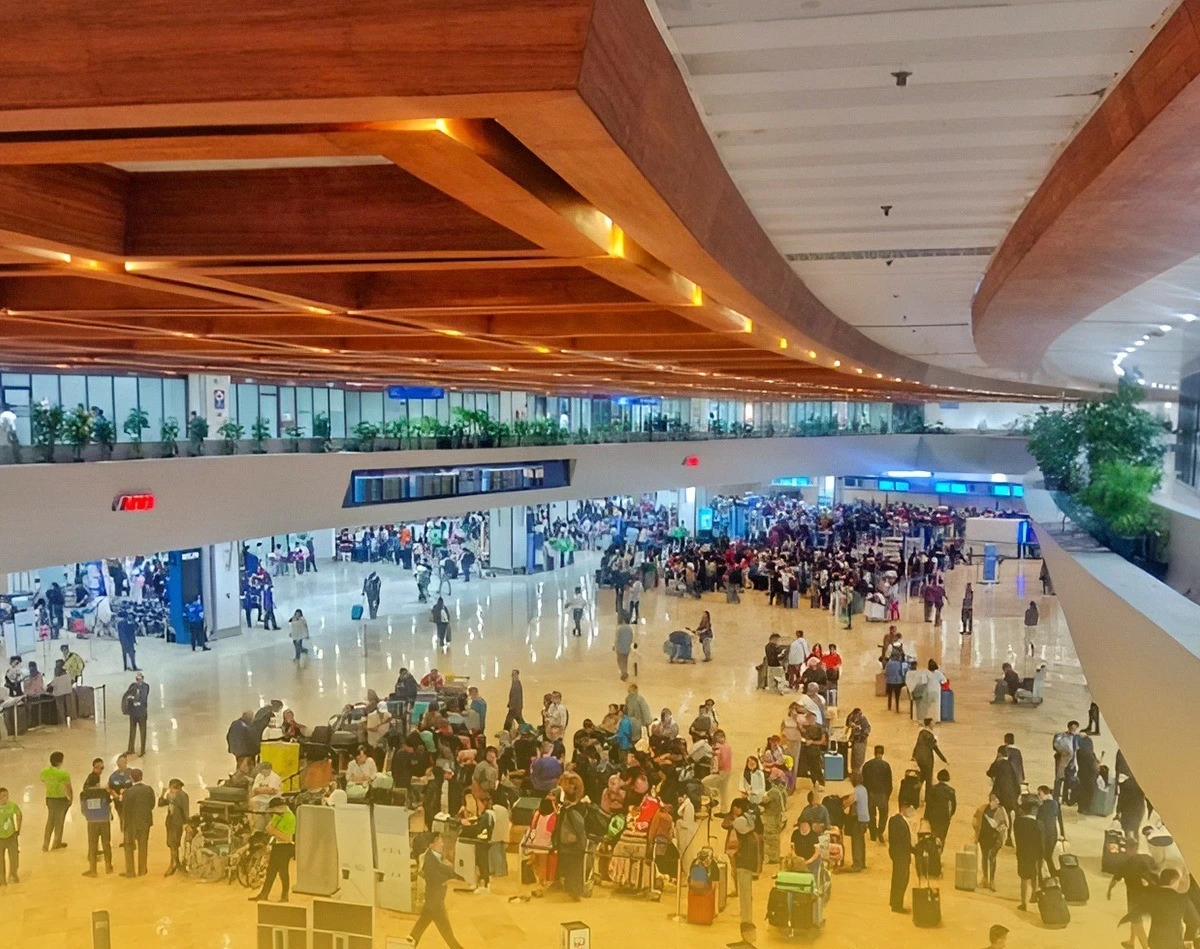
The tourism industry is backed by domestic travel. (DOT-Metro Manila Facebook)

The ongoing war in the Middle East continues to substantially weigh on the Philippine tourism industry, although strong domestic tourism has helped cushion the impact, according to the Department of Tourism (DOT).

Speaking during the 117th Asian Impact Webinar organized by the Manila-based Asian Development Bank (ADB) held last Thursday, July 23, titled “Association of Southeast Asian Nations (ASEAN) Tourism Sectoral Plan 2026-2030: Bringing Resilience Amidst Uncertainties,” DOT Undersecretary Verna Esmeralda Buensuceso said domestic tourism has enabled the industry to withstand external shocks while continuing to support economic growth and employment.

“In 2025, tourism generated ₱2.27 trillion in direct gross value added (GVA). This accounts for about 8.1 percent of the country’s gross domestic product (GDP), and tourism has actually supported 7.7 million jobs,” she said.

Buensuceso added that domestic tourism expenditure continued to grow in 2025 to ₱3.26 trillion, making the Philippines one of the largest domestic tourism markets in ASEAN.

“This strong domestic market has actually helped sustain the sector’s economic contribution and employment, demonstrating how a diversified tourism base can also strengthen resilience amid external uncertainties,” she said.

Despite the strong domestic tourism market, Buensuceso said the Middle East conflict has disrupted travel flows because some of the Philippines’ key source markets are linked to Europe and the Middle East.

“Because of the Middle East crisis, you have a lot of travel to and from ASEAN linking us to all these opportunity markets that we have in Europe and the Middle East was of course impeding. So this is one of the things that gravely affected us,” she said.

She added that the war has also disrupted fuel supplies, driving up transportation costs, as well as the prices of goods and services across the tourism value chain.

“Of course, it also affected us in terms of fuel supply. And because there was a limit in the fuel supply; of course, this also drove costs higher,” Buensuceso said.

“And it wasn’t only the cost of fuel; of course, it had an impact on the cost of goods and services. And this also quite substantially affected the tourism industry,” she added.

Buensuceso said the industry has become more resilient after learning from previous global disruptions, allowing tourism stakeholders to quickly pivot to near-shore and intra-ASEAN markets during periods of uncertainty.

She also underscored the need for greater investments in tourism infrastructure, noting that the industry extends far beyond hotels, visitor attractions, and destinations.

“Tourism industry extends far beyond hotels and visitor attractions and destinations. It depends on reliable transport networks, connectivity, utilities, digital connectivity, and public infrastructure,” she said.

Buensuceso noted that financing tourism infrastructure remains a challenge because projects are often planned and funded by agencies outside the DOT, causing tourism investments to compete with other national priorities for limited public resources.

She said many emerging destinations across the country’s 7,641 islands possess rich natural and cultural assets, but lack the basic infrastructure needed to support sustainable tourism, requiring stronger coordination among national and local governments, as well as the transport, public works, environment, and digital infrastructure sectors.

According to the latest World Tourism Barometer of United Nations (UN) Tourism, geopolitical tensions, including the Middle East conflict, continue to weigh on global travel demand for destinations.

Earlier, think tank Oxford Economics said the Philippines is among the economies that stand to benefit from the reopening of the Strait of Hormuz, as normalized global oil trade and supply would help ease fuel costs and broader economic pressures.

The ASEAN Tourism Sectoral Plan 2026-2030 is a four-year strategic roadmap aligned with the ASEAN Economic Community (AEC) Strategic Plan 2026-2030 and ASEAN Community Vision 2045, aimed at guiding tourism development across Southeast Asia through 2030. - Danielle T. Bayani

Related Tags

Verna Buensuceso Asian Development Bank (ADB) Middle East war Department of Tourism (DOT) Association of Southeast Asian Nations (ASEAN)
ADVERTISEMENT
.most-popular .layout-ratio{ padding-bottom: 79.13%; } @media (min-width: 768px) and (max-width: 1024px) { .widget-title { font-size: 15px !important; } }

{{ articles_filter_1561_widget.title }}

.most-popular .layout-ratio{ padding-bottom: 79.13%; } @media (min-width: 768px) and (max-width: 1024px) { .widget-title { font-size: 15px !important; } }

{{ static_articles_1562_widget.title }}

.most-popular .layout-ratio{ padding-bottom: 79.13%; } @media (min-width: 768px) and (max-width: 1024px) { .widget-title { font-size: 15px !important; } }

{{ articles_filter_1563_widget.title }}

{{ articles_filter_1564_widget.title }}

.mb-article-details { position: relative; } .mb-article-details .article-body-preview, .mb-article-details .article-body-summary{ font-size: 17px; line-height: 30px; font-family: "Libre Caslon Text", serif; color: #000; } .mb-article-details .article-body-preview iframe , .mb-article-details .article-body-summary iframe{ width: 100%; margin: auto; } .read-more-background { background: linear-gradient(180deg, color(display-p3 1.000 1.000 1.000 / 0) 13.75%, color(display-p3 1.000 1.000 1.000 / 0.8) 30.79%, color(display-p3 1.000 1.000 1.000) 72.5%); position: absolute; height: 200px; width: 100%; bottom: 0; display: flex; justify-content: center; align-items: center; padding: 0; } .read-more-background a{ color: #000; } .read-more-btn { padding: 17px 45px; font-family: Inter; font-weight: 700; font-size: 18px; line-height: 16px; text-align: center; vertical-align: middle; border: 1px solid black; background-color: white; } .hidden { display: none; }
function initializeAllSwipers() { // Get all hidden inputs with cms_article_id document.querySelectorAll('[id^="cms_article_id_"]').forEach(function (input) { const cmsArticleId = input.value; const articleSelector = '#article-' + cmsArticleId + ' .body_images'; const swiperElement = document.querySelector(articleSelector); if (swiperElement && !swiperElement.classList.contains('swiper-initialized')) { new Swiper(articleSelector, { loop: true, pagination: false, navigation: { nextEl: '#article-' + cmsArticleId + ' .swiper-button-next', prevEl: '#article-' + cmsArticleId + ' .swiper-button-prev', }, }); } }); } setTimeout(initializeAllSwipers, 3000); const intersectionObserver = new IntersectionObserver( (entries) => { entries.forEach((entry) => { if (entry.isIntersecting) { const newUrl = entry.target.getAttribute("data-url"); if (newUrl) { history.pushState(null, null, newUrl); let article = entry.target; // Extract metadata const author = article.querySelector('.author-section').textContent.replace('By', '').trim(); const section = article.querySelector('.section-info ').textContent.replace(' ', ' '); const title = article.querySelector('.article-title h1').textContent; // Parse URL for Chartbeat path format const parsedUrl = new URL(newUrl, window.location.origin); const cleanUrl = parsedUrl.host + parsedUrl.pathname; // Update Chartbeat configuration if (typeof window._sf_async_config !== 'undefined') { window._sf_async_config.path = cleanUrl; window._sf_async_config.sections = section; window._sf_async_config.authors = author; } // Track virtual page view with Chartbeat if (typeof pSUPERFLY !== 'undefined' && typeof pSUPERFLY.virtualPage === 'function') { try { pSUPERFLY.virtualPage({ path: cleanUrl, title: title, sections: section, authors: author }); } catch (error) { console.error('ping error', error); } } // Optional: Update document title if (title && title !== document.title) { document.title = title; } } } }); }, { threshold: 0.1 } ); function showArticleBody(button) { const article = button.closest("article"); const summary = article.querySelector(".article-body-summary"); const body = article.querySelector(".article-body-preview"); const readMoreSection = article.querySelector(".read-more-background"); // Hide summary and read-more section summary.style.display = "none"; readMoreSection.style.display = "none"; // Show the full article body body.classList.remove("hidden"); } document.addEventListener("DOMContentLoaded", () => { let loadCount = 0; // Track how many times articles are loaded const offset = [1, 2, 3, 4, 5, 6, 7, 8, 9, 10]; // Offset values const currentUrl = window.location.pathname.substring(1); let isLoading = false; // Prevent multiple calls if (!currentUrl) { console.log("Current URL is invalid."); return; } const sentinel = document.getElementById("load-more-sentinel"); if (!sentinel) { console.log("Sentinel element not found."); return; } function isSentinelVisible() { const rect = sentinel.getBoundingClientRect(); return ( rect.top < window.innerHeight && rect.bottom >= 0 ); } function onScroll() { if (isLoading) return; if (isSentinelVisible()) { if (loadCount >= offset.length) { console.log("Maximum load attempts reached."); window.removeEventListener("scroll", onScroll); return; } isLoading = true; const currentOffset = offset[loadCount]; window.loadMoreItems().then(() => { let article = document.querySelector('#widget_1690 > div:nth-last-of-type(2) article'); intersectionObserver.observe(article) loadCount++; }).catch(error => { console.error("Error loading more items:", error); }).finally(() => { isLoading = false; }); } } window.addEventListener("scroll", onScroll); });

Sign up by email to receive news.