






Manila Bulletin
 Philippines
National
Why does the Ombudsman take longer to file raps now? Clavano explains
Philippines
National
Why does the Ombudsman take longer to file raps now? Clavano explains
Philippines
National
Why does the Ombudsman take longer to file raps now? Clavano explains
Why does the Ombudsman take longer to file raps now? Clavano explains
By Jel Santos
Published Jul 23, 2026 06:33 pm



(JEL SANTOS/MB FILE PHOTO)
Many are now baffled as to why the Office of the Ombudsman (OMB) takes longer to file criminal charges than in previous years. But what changed?
According to Assistant Ombudsman Jose Dominic “Mico” Clavano IV, the longer timeline is the result of a deliberate policy shift under the reign of Ombudsman Jesus Crispin “Boying” Remulla, who raised the evidentiary threshold for filing cases in court from probable cause to reasonable certainty of conviction.
OMB investigators, he said, are now required to secure evidence supporting every element of an alleged offense before prosecutors can move forward with filing a case in court.
“Probable cause dati po ang batayan natin. Ang tanong doon, ‘did this person probably commit the crime?’ Pero ngayon, noong pumasok po ang Ombudsman [Remulla], tinaas niya po ang antas ng ebidensya para mag-file sa Korte. Ngayon po ay reasonable certainty of conviction (Probable cause used to be our standard. The question then was, “Did this person probably commit the crime?” But when Ombudsman Remulla assumed office, he raised the level of evidence required before filing a case in court. Now, the standard is “reasonable certainty of conviction),” he said.
Clavano explained that under the previous standard of probable cause, investigators could still gather additional evidence after determining that a crime had probably been committed.
“So dati sa probable cause, hindi lahat ng elemento ay kailangan supported by evidence. May panahon pa para mag-gather ng evidence para tugma sa bawat elemento. Ngayon po, kailangan bawat elemento ay satisfied na, meron nang ebidensya. (Previously, under probable cause, not every element of the offense had to be supported by evidence. There was still time to gather evidence to establish each element. Now, every element must already be supported by evidence),” he said.
The assistant ombudsman said the higher threshold is the reason why the anti-graft body now takes longer to file cases.
“That will explain also kung bakit natatagalan ng kaunti kasi kung dati probable cause lang, matagal na po sana natin na-file ang mga kaso natin. Pero ngayon dahil reasonable certainty of conviction ang ating threshold of evidence, kailangan mas diligent po ang ating investigators para makuha ang bawat elemento (That also explains why it now takes a little longer. If probable cause were still the standard, many of our cases would have already been filed. But because our threshold of evidence is now reasonable certainty of conviction, our investigators have to be more diligent in obtaining evidence for every element),” he said.
As such, Clavano said that the filing a complaint for preliminary investigation is different from filing an information before the Sandiganbayan or a Regional Trial Court (RTC).
“When we say we’re going to file a case, there are actually two meanings to that: either you file a complaint for preliminary investigation, or you file an information on the case in Court either the Sandiganbayan or the RTC,” he said.
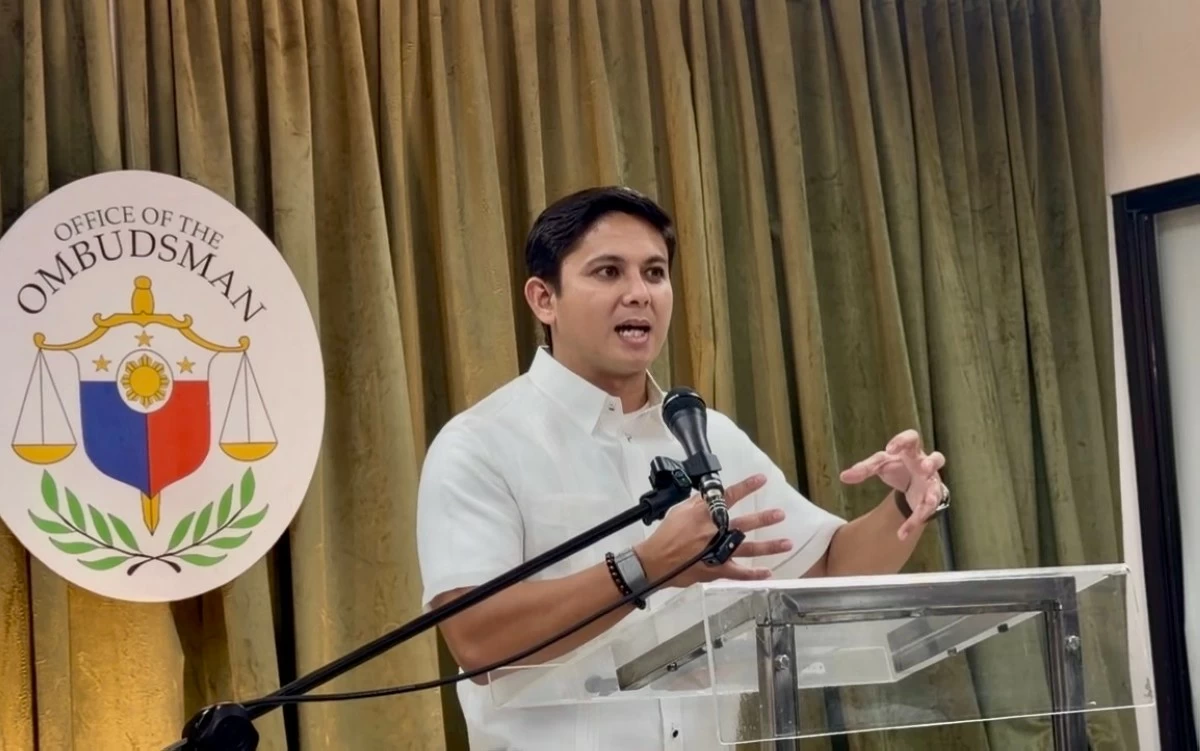
(JEL SANTOS/MB FILE PHOTO)
A preliminary investigation or PI, he explained, is conducted within the OMB after a complaint is endorsed by its fact-finding teams.
“Ang difference po ng dalawa, ang preliminary investigation is a process that is done here in the Office of the Ombudsman (The difference is that a preliminary investigation is a process conducted here in the Office of the Ombudsman),” said Clavano.
“So ang complaint ay nanggagaling sa fact-finding teams natin, tsaka siya papasok sa preliminary investigation na ang naghahawak pa rin niyan ay mga tao sa Office of the Ombudsman (The complaint comes from our fact-finding teams before it proceeds to preliminary investigation, which is also handled by personnel of the Office of the Ombudsman),” he added.
Per Clavano, PI gives respondents their first opportunity to answer the allegations through their counter-affidavits.
“Ang nangyayari po diyan sa preliminary investigation, na dito ginaganap, ay jino-join po ang issues. Ibig sabihin, papasagutin po ang mga respondent. So may mga allegations sa complaint, papasagutin po for the very first time ang mga respondents. So magsu-submit sila ng counter affidavit. Doon nailalagay lahat ng depensa ng mga respondent sa mga allegations na nandyan sa complaint (During the preliminary investigation, the issues are joined. In other words, the respondents are required to answer the allegations in the complaint for the first time by submitting their counter-affidavits, where they present all of their defenses),” he said.
He added that only after the preliminary investigation is completed and a resolution is issued can the Ombudsman decide whether to file an information before the Sandiganbayan or an RTC.
“Ngayon, ang pangalawang type ng case/complaint ay ‘yung nasa filing na sa Sandiganbayan o RTC. That only comes after meron nang resolution doon sa preliminary investigation (The second type of filing is when the case is brought before the Sandiganbayan or the RTC. That only comes after a resolution has been issued in the preliminary investigation),” he said.
The OMB noted that preliminary investigation is an essential part of due process because it determines whether prosecutors can sustain the case in court after considering the respondents’ defenses.