






Manila Bulletin
 Property and Living
Real estate remains resilient; industrial sector gains momentum in H1 of 2026
Property and Living
Real estate remains resilient; industrial sector gains momentum in H1 of 2026
Property and Living
Real estate remains resilient; industrial sector gains momentum in H1 of 2026
Real estate remains resilient; industrial sector gains momentum in H1 of 2026
Santos Knight Frank reports that the first half of 2026 tested the real estate sector's resilience
Published Jul 23, 2026 06:06 pm


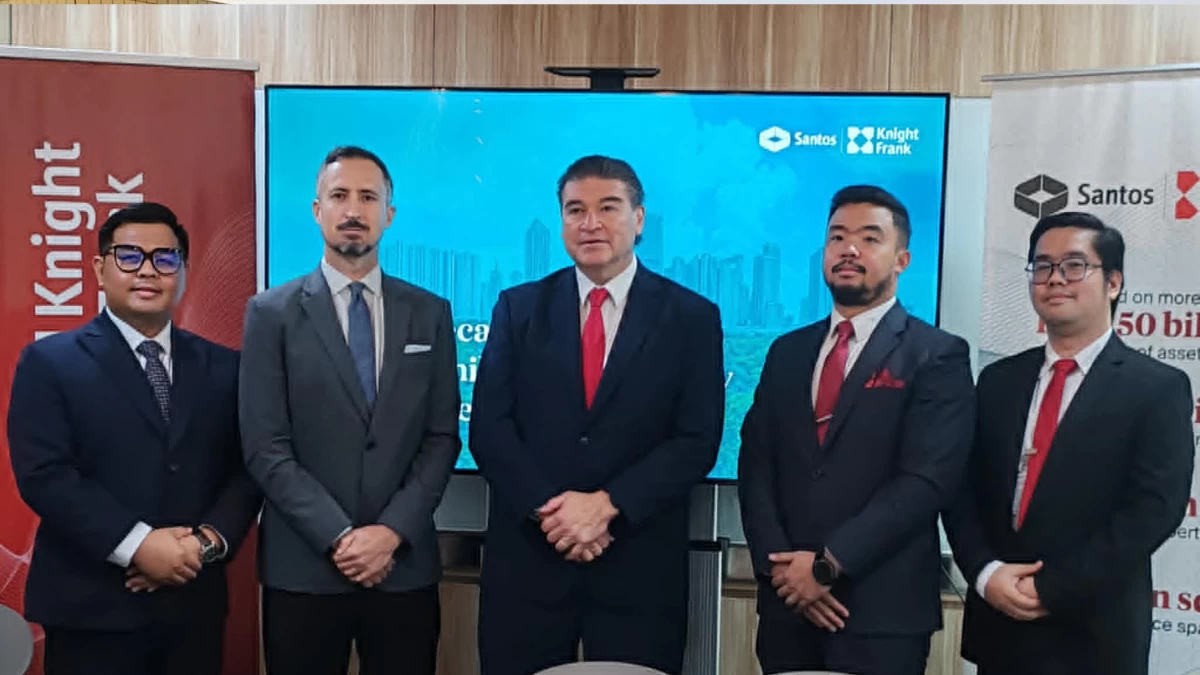
Santos Knight Frank executives: Head of Residential Services and Leasing Anjo Sumait, Senior Director Morgan McGilvray, Chairman and CEO Rick Santos, Head of Investments and Capital Markets Toby Miranda, and Manager of Investment and Capital Markets Virgilio Velasco, Jr. (Photo: Carla Mortel)
According to global real estate services company Santos Knight Frank, the Strait of Hormuz disruption pushed the country’s growth forecast down and inflation up, prompting developers to respond with real caution: fewer new launches, more selective underwriting, and slower vertical construction starts.
Rick Santos, chairman and CEO of Santos Knight Frank (SKF), said, “The Philippine real estate sector has continued to demonstrate resilience, as underlying occupier demand and long-term investment appetite held firm despite the Middle East conflict and oil price shock, amid a more selective stance among developers.”
In the first half of 2026, developers are scaling back residential launches as they recalibrate their strategies. Residential demand is expected to remain resilient, supported by OFW remittances and the growing middle-income population.
As local developers are re-strategizing to balance out projects, “they are trying to diversify outside Metro Manila, following the government’s improvement in infrastructure and the regional economic growth,” said Anjo Sumait, SKF head of Residential Services and Leasing.
Some of the horizontal launches outside the capital region were Yume at Riverpark in General Trias, Cavite, Southridge Residences in Cagayan de Oro, and Phirst Park Homes GenSan in General Santos City.
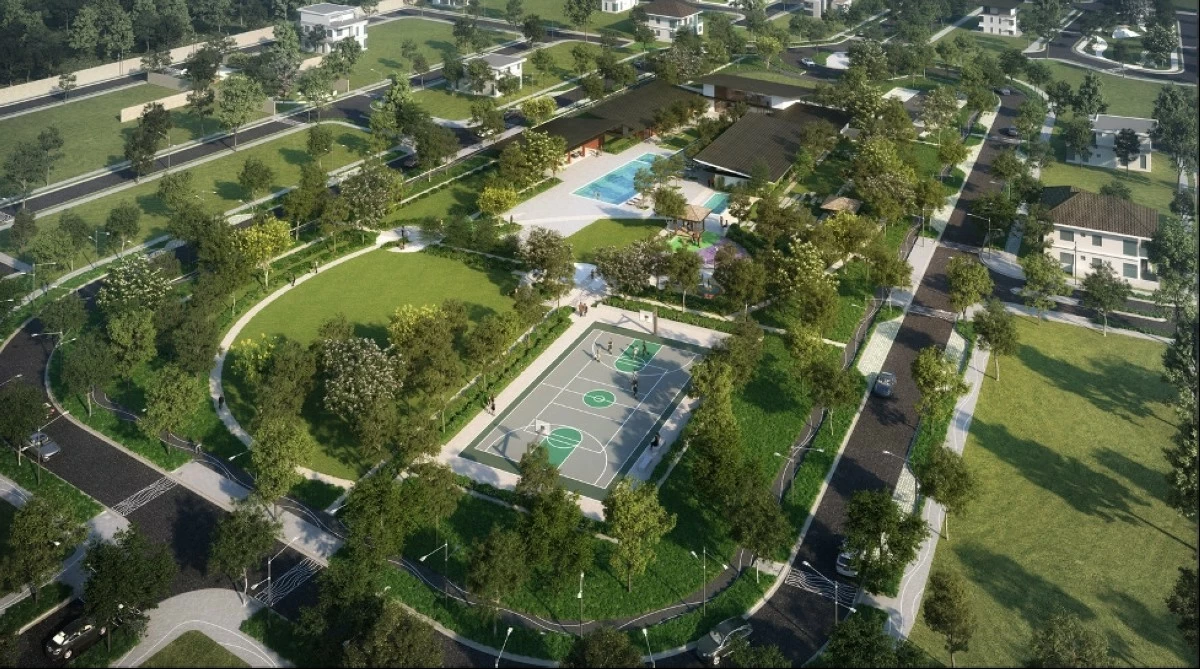
Yume at Riverpark in Cavite (Photo: FNG)
In the second half of the year, Aurelia Residences in Taguig, Eluria by Arthaland, and Parkford Suites, both in Makati, are scheduled to be completed and turned over to homeowners.
In the Metro Manila office market, demand remains steady, with vacancy easing to 18 percent, even as new supply remains limited. Taguig scored a nine percent vacancy rate, followed by Makati at 18 percent, and Ortigas at 19 percent. The total office supply is at 10.4 million sqm, with new supply coming in at 439,000 sqm in the next half of the year, and another 864,100 sqm in the next five years.
The Metro Manila retail market continues to command the highest retail lease rates, averaging ₱1,579 per sqm, with a vacancy rate of 15 percent. In the provinces, retailers are expanding with SM Nuvali, Ayala Malls Gatewalk Central, SM City General Trias, SM City Tagum, and SM City Iligan.
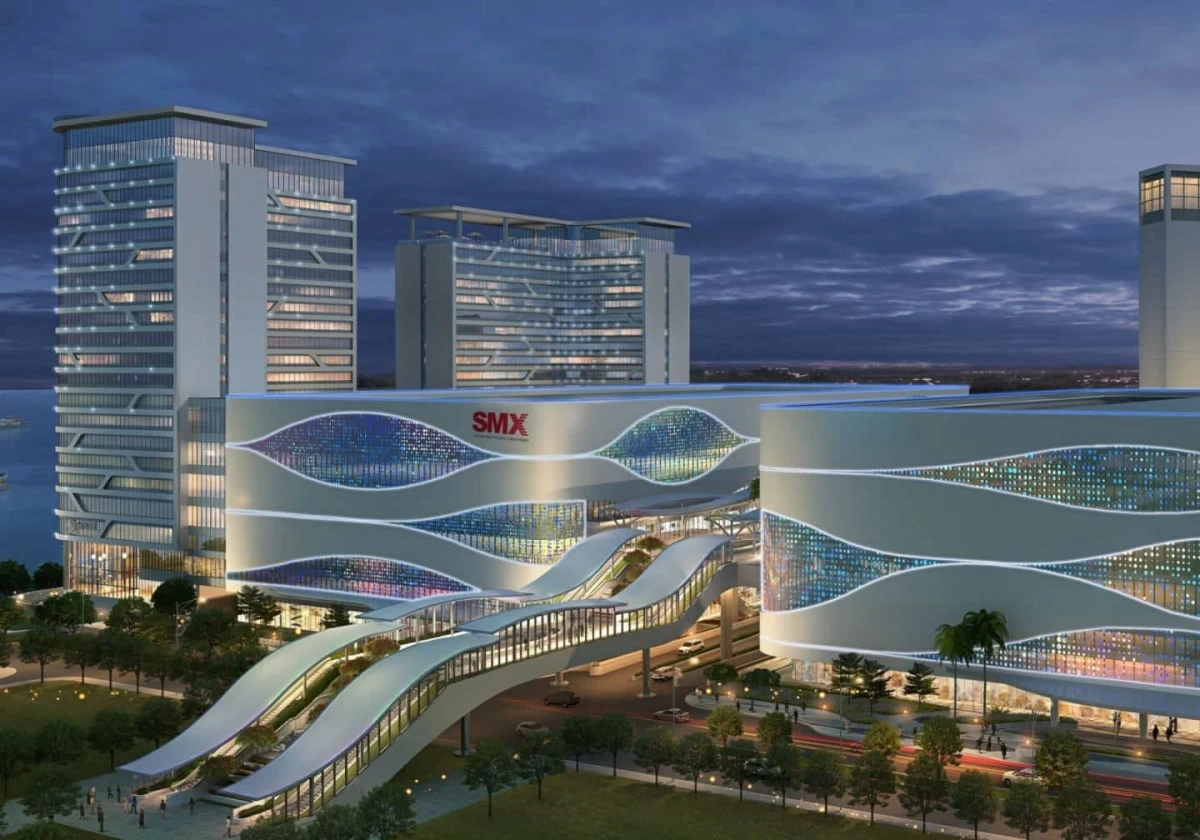
SMX Convention Center Cebu (Photo: SM Hotels)
Malls are also leaning harder into lifestyle and experiential retail, recognizing that consumers are increasingly choosing destinations over transactions. This is reshaping tenant mixes across both new and existing developments.
“Established retailers continue to enhance and modernize existing assets, so developments and upgrades are becoming equally important as malls adapt to changing consumer preferences and focus more on creating engaging lifestyle, dining, and entertainment experiences," said Virgilio Velasco, Jr. of SKF Investment and Capital Markets.
For the hospitality sector, the market is experiencing steady demand with international arrivals at 2.9 million as of June 2026, despite flight suspensions. The United States led international visitor arrivals with 531,000 tourists, followed by South Korea with 501,000 and Japan with 226,000.
More than 3,700 hotel keys are expected to be completed this year, including the openings of iconic hotels such as Mandarin Oriental Makati, Manila, Sofitel Cebu City, and Hotel 101 Davao.
The year also saw the advancement of the regional sector in MICE development. Positioning itself as an alternative destination for local and international conventions and events, Metro Cebu welcomed the rise of The Mactan Expo, SMX Convention Center Cebu, and SM Seaside Arena.
The industrial sector continues to thrive, with renewable energy, e-commerce, and digital infrastructure now emerging as key demand drivers alongside manufacturing and logistics. Region 4A and 3 command the demand for industrial facilities due to their proximity to ports, roads, industrial parks, and PEZA zones.
The Luzon Economic Corridor and Pax Silica position Luzon as a serious node in allied semiconductor and critical minerals supply chains. Anchoring this shift is the newly announced 4,000-acre Economic Security Zone in New Clark City, Tarlac — the first "AI-native Industrial Acceleration Hub" under Pax Silica.
Against this backdrop, the data center sector remains one of the sector's most active demand drivers, with local capacity on track to nearly triple to approximately 500 MW by 2028, up from roughly 150 MW today, as major campuses—including STT Fairview and VITRO's Cavite facility—move forward. Foreign manufacturers and locators continue to establish operations in the Philippines as well, drawn by the country's positioning as a lower-cost data center build destination compared with regional peers.