








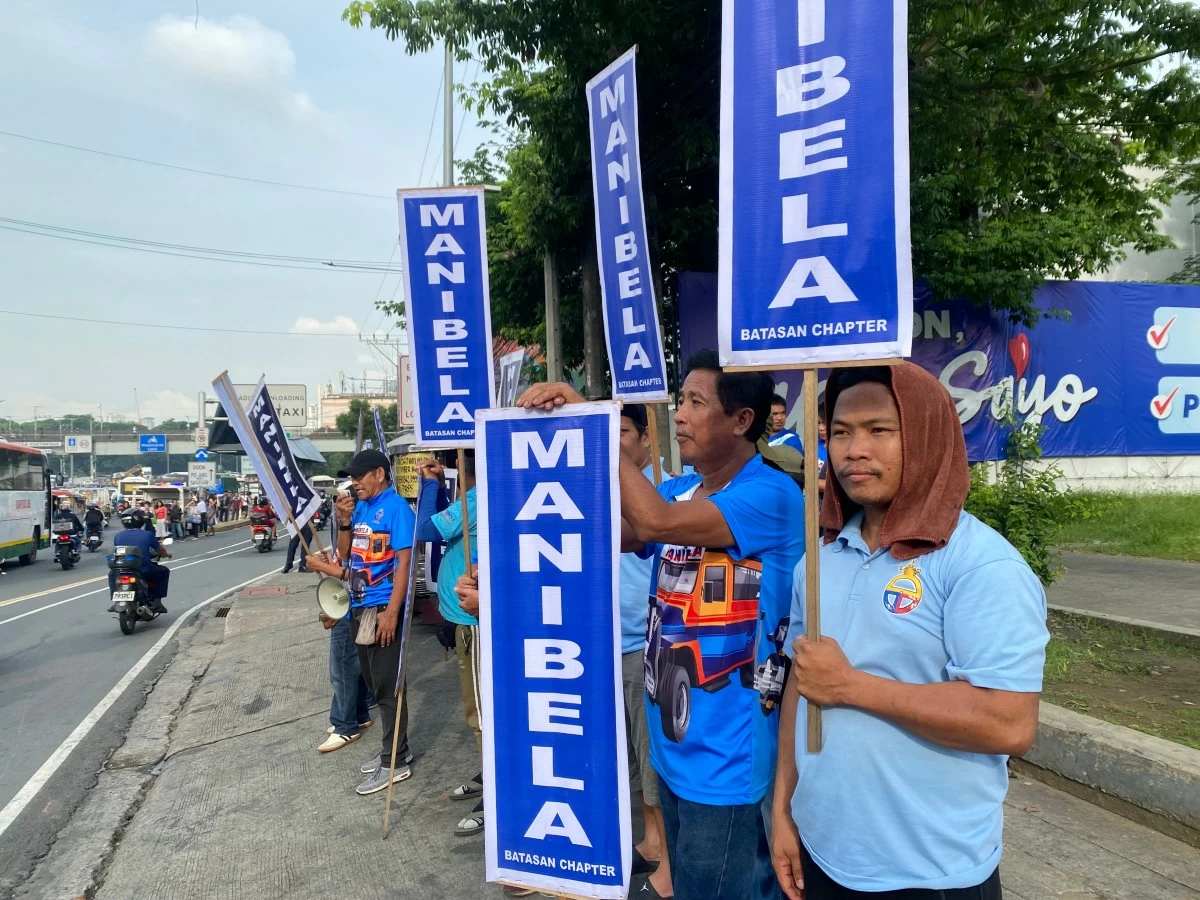
Manibela’s nationwide transport strike is now on its second day, Thursday, July 23, as members of the transport group gather in Philcoa, Quezon City, to protest successive fuel price hikes and the failure to implement a fare increase for public utility vehicles (Trixee Rosel/MANILABULLETIN)
Transport group Manibela’s two‑day strike rolled into its second day Thursday, July 23, as leaders weighed pushing the protest until Friday, July 24.
Members began massing at the Philcoa strike center in Quezon City before 6 a.m., while demonstrations continued at more than 10 strike hubs across Metro Manila.
Manibela chairperson Mar Valbuena said the group would assess later in the day whether to continue the strike until Friday, particularly amid possible class suspensions.
“Later, we will assess again. If classes are suspended, we will wait and see if we will continue until tomorrow,” Valbuena said.
Some commuters experienced difficulty finding transportation early Thursday as fewer jeepneys were operating compared with previous days.
Valbuena said many drivers and operators had joined the protest to call for government action on successive fuel price increases and demand a P2 increase in the minimum jeepney fare.
He said all Manibela members stayed at Philcoa and did not operate on the first day of the strike, resulting in fewer jeepneys plying the roads.
The strike was launched to protest the latest double-digit fuel price increases and press the government to address the impact of rising fuel costs on drivers and operators.
Fuel companies implemented maximum price increases of P10.68 per liter for diesel, P3.65 per liter for gasoline, and P11.77 per liter for kerosene amid renewed hostilities in the Middle East.
Manibela has called on the government to remove excise and value-added taxes on fuel products to help bring down their prices.
The group also wants the Land Transportation Franchising and Regulatory Board (LTFRB) to lift the suspension of the P1 jeepney fare increase and approve an additional P1 increase, bringing the proposed total increase in the minimum fare to P2.
Valbuena said the fare increase would help drivers and operators cope with rising vehicle maintenance and operating costs, noting that much of their earnings was already being spent on repairs.
Manibela also criticized the Department of Energy (DOE) for allegedly failing to protect the transport sector and ordinary Filipinos from successive fuel price increases.
The group called on the DOE to strictly monitor the oil industry and hold fuel companies accountable instead of simply accepting the prices they impose.
Meanwhile, the transport situation along Commonwealth Avenue in Quezon City appeared normal later in the morning, with passenger jeepneys continuing to operate and no longer running at full capacity after the morning rush hour.
Personnel of the Quezon City Traffic and Transport Management Department remained deployed in the area to manage traffic.