






Manila Bulletin
 Technews
The race to be an AI-first enterprise has begun, IBM plans for Asia Pacific to lead by 2030
Technews
The race to be an AI-first enterprise has begun, IBM plans for Asia Pacific to lead by 2030
Technews
The race to be an AI-first enterprise has begun, IBM plans for Asia Pacific to lead by 2030
The race to be an AI-first enterprise has begun, IBM plans for Asia Pacific to lead by 2030
Published Jul 22, 2026 01:46 pm



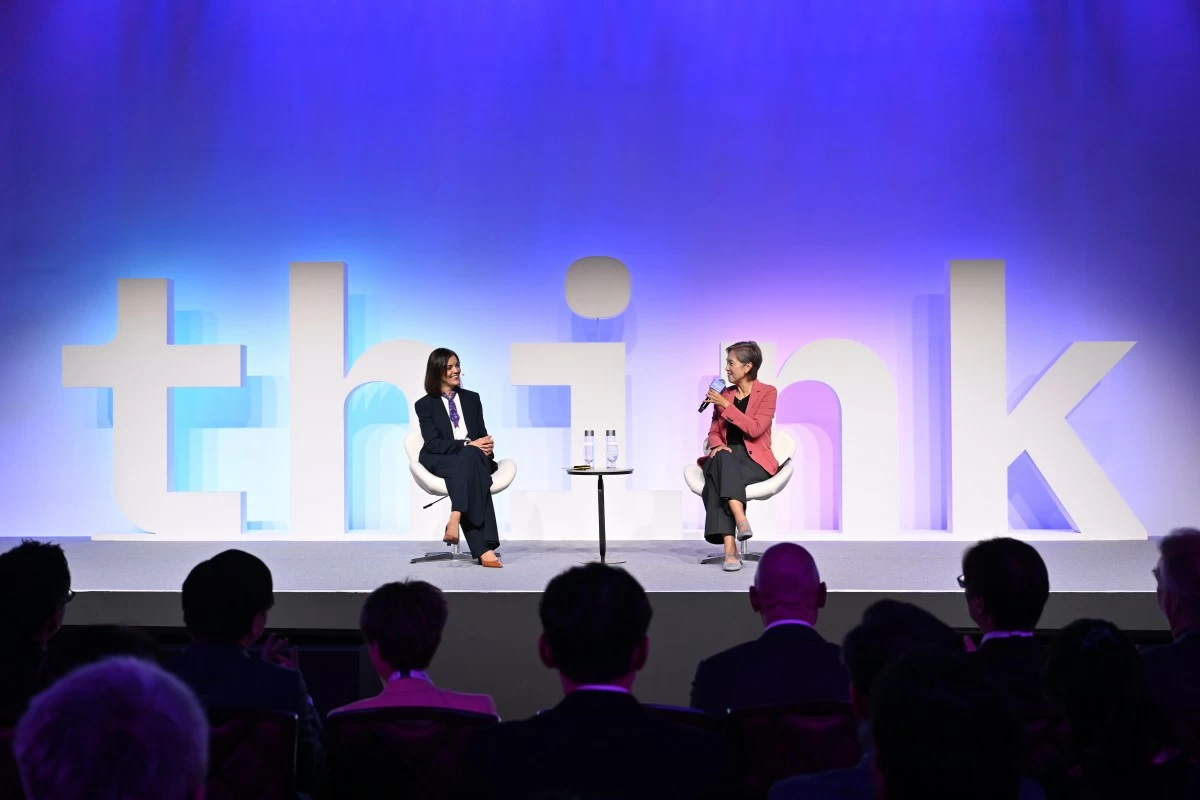
IBM unveiled its blueprint for helping organisations become AI-first enterprises by 2030 at its annual flagship conference, IBM THINK on Tour Singapore. Guest of Honour Josephine Teo, Minister for Digital Development and Information, Republic of Singapore, attended a conference showcasing how IBM is helping regional enterprises govern, orchestrate, and scale AI using advanced digital sovereignty and hybrid cloud solutions.
Against the backdrop of a rapidly accelerating AI economy, the blueprint addresses a critical market shift: moving from scattered AI experimentation to coordinated, orchestration-led governance. A recent IBM study reveals that 79% of executives globally say that AI will significantly contribute to their revenue by 2030 – centred on the adoption of Agentic AI.
About 80% of global executives are increasing investments in agentic AI, with spending on AI Agents expected to nearly triple by 2027 to drive greater visibility, tighter control, and measurable business impact.
“Asia Pacific is uniquely positioned to be a leader in the race to AI-first enterprises”, said Hans Dekkers, General Manager, IBM APAC. “The region is already navigating the realities of fragmented regulations, data sovereignty requirements, and complex hybrid environments at scale. By treating this complexity as a strategic advantage, and building AI that is sovereign by design, organisations here are setting the global benchmark for how trusted AI is governed and scaled.”
With 68% of executives citing data residency and sovereignty as a challenge, this is becoming a strategic advantage, driving organisations to build AI that is sovereign by design, with trust, control, security, and compliance embedded from the outset. Coupled with a strong appetite for innovation, 72% of APAC CEOs are willing to make strategic decisions based on AI.
Reinforcing its commitment to helping organizations become AI-first enterprises, IBM brought together visionaries, announcing several industry-leading innovations across data, AI, and quantum computing. Together, these innovations help organizations operationalize AI at scale, accelerate innovation, and deliver measurable business outcomes – as demonstrated by IBM clients across industries in the region.
“Quantum computing has the potential to transform how complex mission planning problems are solved, and we believe it is important to engage early to understand both its opportunities and limitations. Through this collaboration with IBM, the DIS and DSTA are building quantum expertise, strengthening partnerships with industry and exploring how emerging technologies can be applied to future operational challenges. By investing in our people and capabilities today, we will be better prepared to harness quantum technologies Confidential - Not for Public Consumption or Distribution as they mature,” said Military Expert 7 Guo Jinghua, Commander SAF C4 and Digitalisation Command.
“IBM and Visionbay.ai will help nations establish AI as a new digital industry — enabling local ownership of critical infrastructure, accelerating enterprise adoption, developing AI talent, and creating economic opportunities across the ecosystem. Our Build-Operate-Localize model represents the next evolution of AI infrastructure. Together with IBM, we are creating the foundation for trusted AI adoption across Asia,” said Neo Yao, CEO, Visionbay.ai.
Visionbay.ai is backed by Hon Hai Technology Group (Foxconn).
“AI is transforming healthcare by turning data into actionable intelligence. Leveraging for real-time scenario intelligence and watsonx Orchestrate for agentic workflow orchestration and performance tracking, Changi General Hospital is bringing together AI, mixed reality, and clinical expertise to deliver a next-generation training of Pediatric Mass Casualty Incident (MCI) preparedness that provides objective performance insights, enhances decision-making, and scales best practices across healthcare teams. This enables better-prepared clinicians, faster and more coordinated care, and ultimately safer, smarter, and more personalised outcomes for patients—especially when every moment matters.”
Adjunct Assistant Professor Jimmy Goh, Senior Consultant, Department of Emergency Medicine, Changi General Hospital Hans Dekkers, General Manager, IBM APAC, further added, "The enterprise AI race is already underway, and by 2030, the leaders will be organisations that embed AI across every aspect of their business to transform operations, accelerate innovation, and create lasting competitive advantage. Success will depend on three essentials: trusted AI, AI-ready data, and an open, hybrid, sovereign digital foundation built for scale. Organisations that get these fundamentals right will move beyond experimentation to operationalize AI with confidence, unlocking the speed, agility, and resilience needed to lead in the AI economy."
To help organisations operationalise this vision, IBM also showcased the most comprehensive expansion of enterprise AI and hybrid cloud management capabilities solutions to date, including the next-generation of IBM watsonx Orchestrate for multi-agent orchestration, IBM Confluent to bring real-time data to AI, IBM Concert platform for intelligent operations, IBM Sovereign Core for operational independence, and IBM Bob, an agentic AI software development partner built for enterprise. Through IBM THINK on Tour Singapore, IBM convened business leaders, policymakers, and innovators to define the next chapter of enterprise transformation together, from AI and agentic AI to quantum computing to unlock productivity, accelerate innovation, and create sustainable competitive advantage.