






Manila Bulletin
 Spotlight Features
Queen of harps: Peek into the exciting, busy life of a professional harpist
Spotlight Features
Queen of harps: Peek into the exciting, busy life of a professional harpist
Spotlight Features
Queen of harps: Peek into the exciting, busy life of a professional harpist
Queen of harps: Peek into the exciting, busy life of a professional harpist
By Yvette Tan
Published Jul 22, 2026 04:07 pm


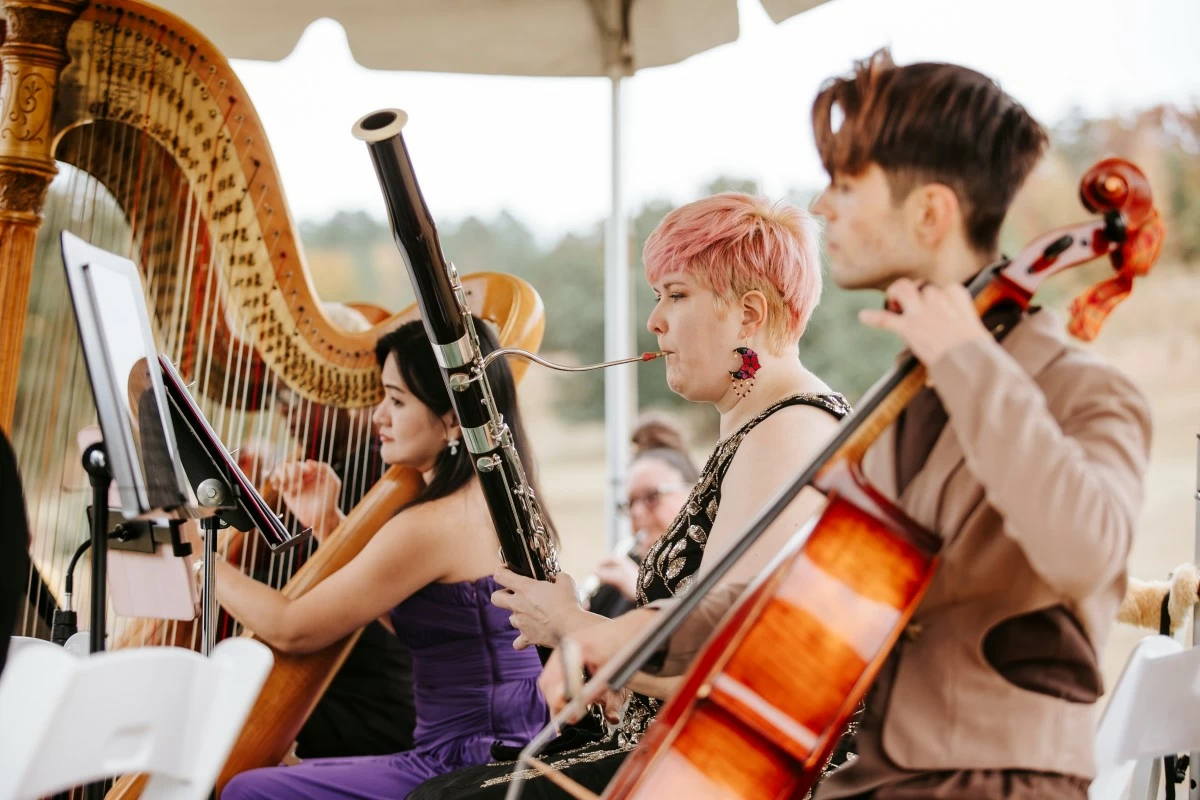
JANE BANTA playing at a wedding in the US with cellist Cashier Brooks and bassoonist Cathryn Gaylord.
The harp has been enchanting music lovers for centuries; the fascination with one of the oldest musical instruments continues to this day.
The Philippines does not have a lot of harpists, but this is slowly changing. One of the people leading the charge is Madeline Jane Banta, a harpist and pianist who describes her life as a “blur.”
Banta is a freelance orchestra harpist who has played with all the major orchestras in Manila. She also enjoys playing harp solos and as part of chamber music, and is probably the only professional harpist in the country who actively plays pop music at events, alongside classical pieces, an unexpected delight for the audience when she plays at private, government, and corporate events. She plays piano in musical theater, the occasional orchestra performance, and as a piano accompanist. She is also a senior lecturer for harp at the University of the Philippines, and she teaches harp and piano at the Manila Symphony Orchestra Academy and in private lessons.
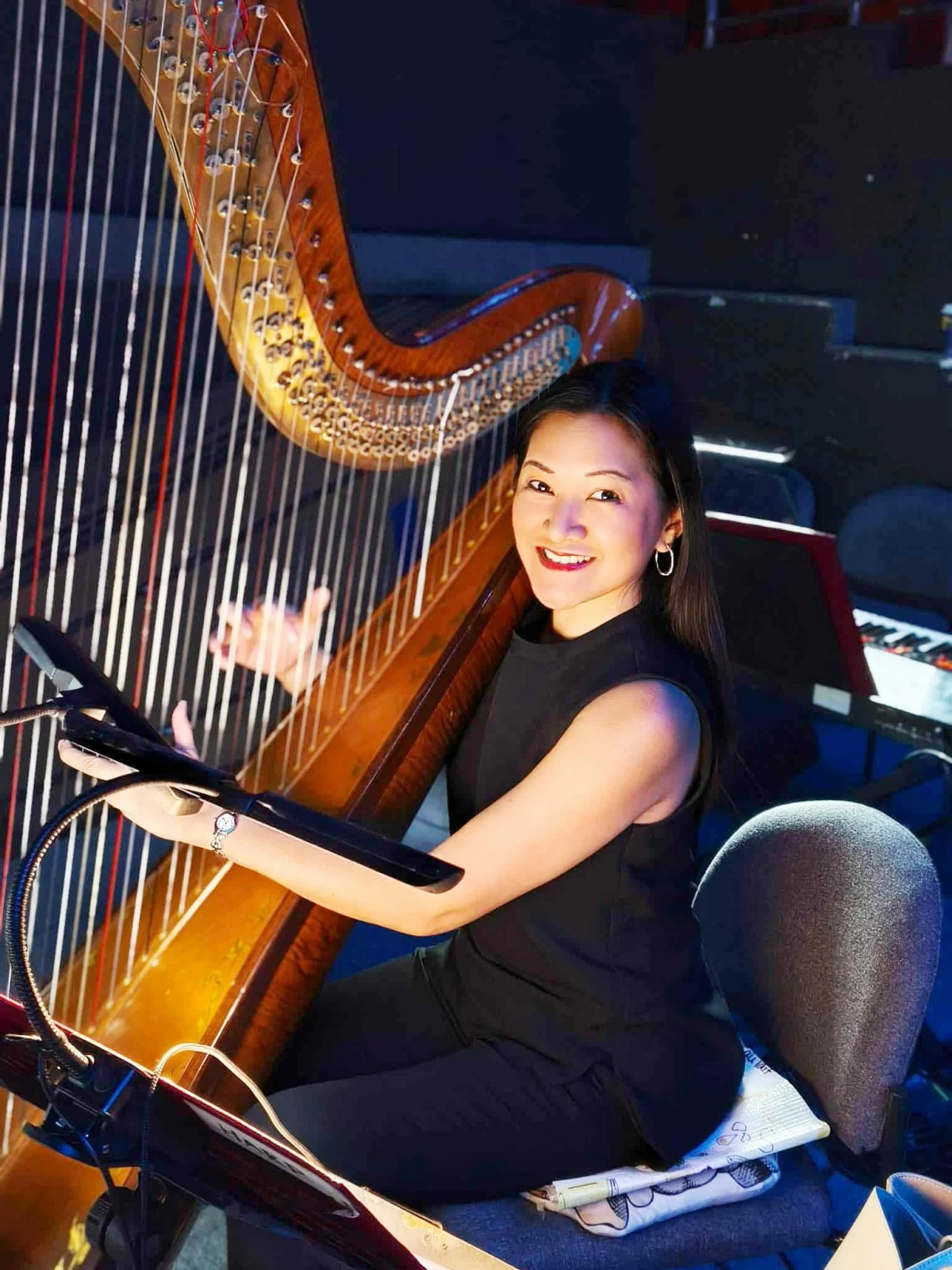
DREAM JOB — Banta with her harp in this year’s Manila Symphony Orchestra season opener conducted by Russian Maestro Alexander Vikulov.
“Every week is a different mix of performances and teaching,” she said. “I would say it’s a very busy and exciting life.”
Late bloomer
Banta did not start out wanting to be a harpist. She had been playing the piano since she was four years old. After graduating from a social science course in college, she continued her studies as a piano performance major at the St. Scholastica’s College (St. Scho) Manila School of Music. “When I was in music school, I told myself I wanted to play in an orchestra, and I also wanted to do musical theater. That’s kind of hard to do if you’re just a pianist,” she said.
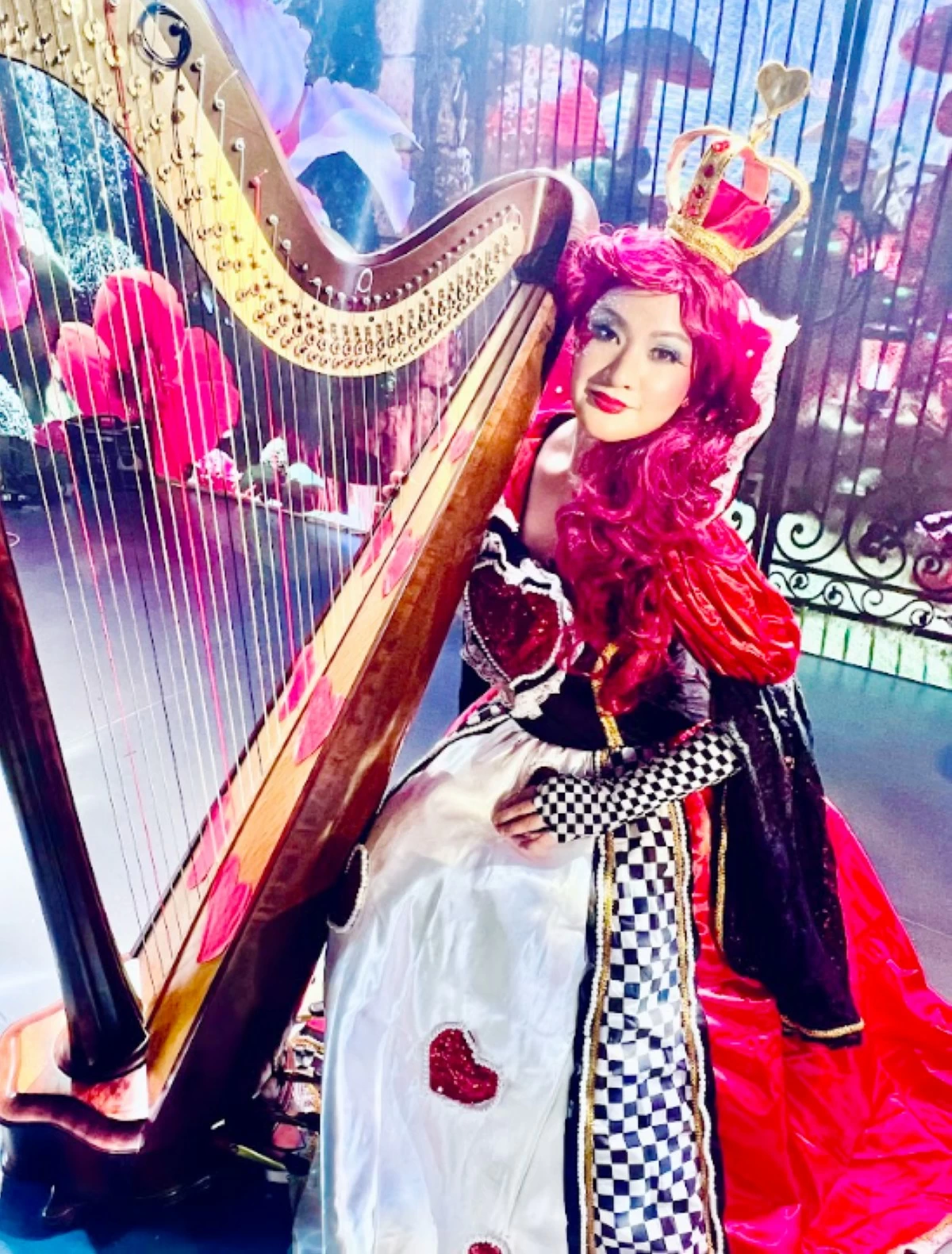
QUEEN OF HARPS — Sometimes, performing in gorgeous costumes is part of the job.
The idea to learn the harp came in music school, after a performance with the Manila Symphony Orchestra where she played the harp parts on keyboard, and the conductor suggested she learn to play the harp for real. After graduating, she learned the harp under the country’s pioneer harpist Lourdes de Leon Gregorio at the Cultural Center of the Philippines. “I thought to myself, I’ll try this out, let’s see how it goes. I’m still playing the harp now, and I think I’m pretty successful at it.”
She began playing the harp in orchestras and teaching privately. After 10 years, she decided to take her Masters of Music at the State University of New York Fredonia’s School of Music, concentrating on the harp. “I was one of the oldest students there. I graduated at 40.”
There are two kinds of harps: the pedal harp, the giant instrument where pedals are used to control pitch, and the smaller lever harp where pitch is changed by hand. Banta’s Master’s degree was in the pedal harp; she learned the lever harp from fellow harpist Noelle Cassandra during the pandemic and now plays and teaches it as well.
A growing interest
There are currently very few harpists in the Philippines, though interest is growing. This is partly because of visibility and access to lessons and practice. “When I was [studying] piano, they didn’t have harps yet in school. They started to have harps in maybe 2005,” Banta said. “When the San Miguel Philharmonic Orchestra disbanded, they donated the instruments to different conservatories of music. That’s the only reason they started having [pedal] harps.”
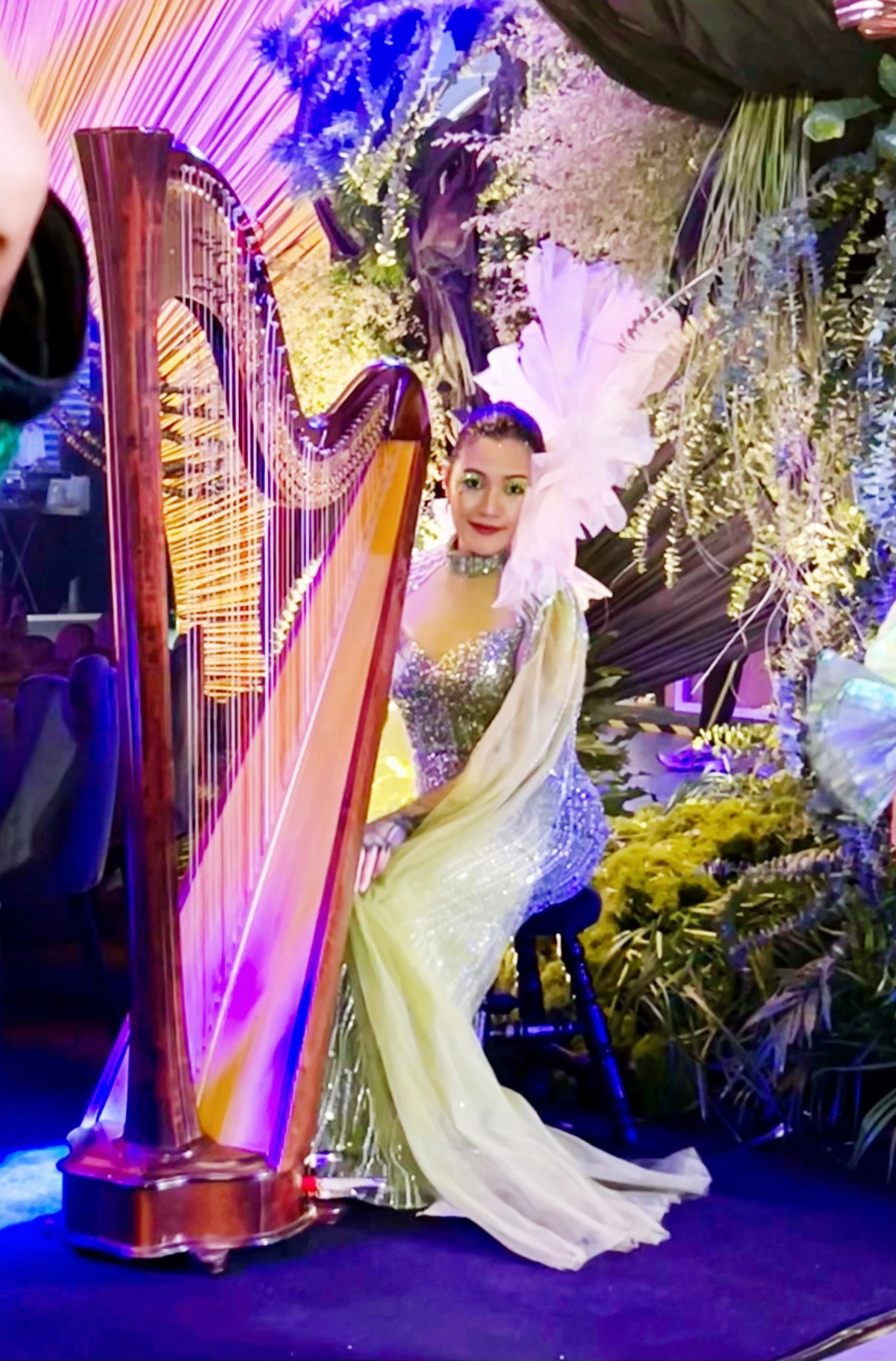
FLORAL BEAUTY — Jane dressed as a flower for a performance.
Local lever harps are mainly produced by harp and lyre maker Abraham “Abe” Alcala in Paete, Laguna. “He was actually a trumpet major in UST, but he studied how to make harps using local wood. This has been very, very helpful to anyone who wants to learn the harp now,” Banta said, before continuing in Taglish. “Before… if you wanted to practice, you had to go to CCP or a music school where you’d have to fight to use the room and the harp. That was what happened to me when I was starting.”
Discordant melodies
Banta worked hard to get where she is. “It’s really an advantage if you start younger because you develop more muscle and you grow up with the muscles needed to be able to play all these technical passages more easily.”
She had to work as a pianist to pay the bills while taking her Master’s in the US.
A single mother, she’s constantly having to choose between making money and spending time with her family.
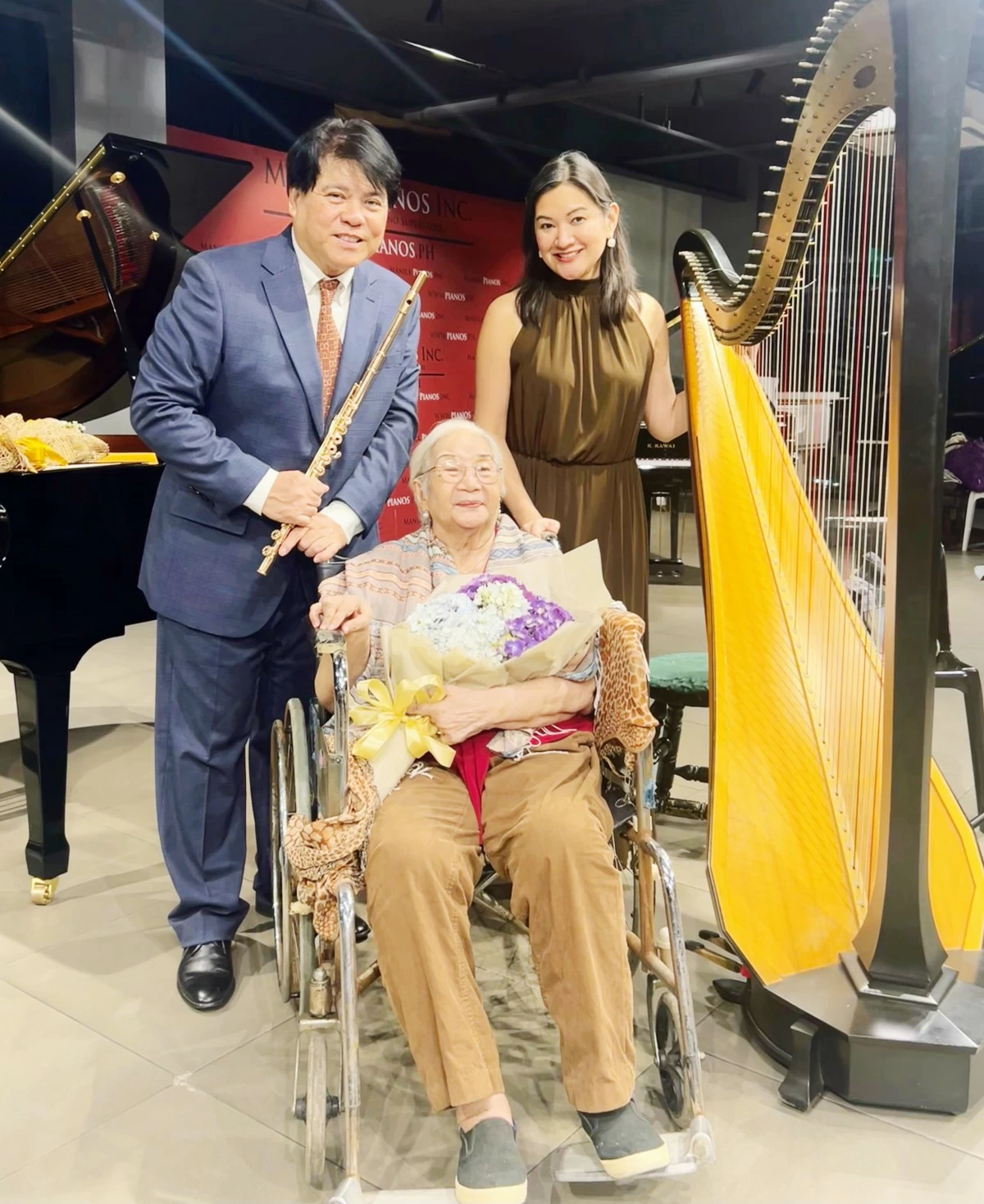
JANE BANTA with flutist Antonio Maigue and Banta’s mentor, harpist Lourdes de Leon Gregorio, who passed in February this year
She’s also noticed ageism in the classical music scene. “I still feel like there’s a preference for younger musicians in classical music, especially for events. That’s one of the things that I hope we can change.”
Orchestra music is niche in the Philippines, so funding can be a challenge. Musicians, especially those who play large instruments, often don’t have spaces to practice in. Instrument parts might only be available overseas.
Transportation is also a challenge. A pedal harp needs two people to carry it and needs to be transported in a van. The lever harp is more portable, able to fit in a car.
Music and memories
One of Banta’s biggest joys is moving people with her music. ”My main goal is if someone in the audience appreciates the harp… then I’m happy. I feel like I’ve fulfilled my purpose,” she said. “If you can make someone feel good, if it brings back memories to someone… if it uplifts someone’s spirits or if it inspires someone to learn the instrument.”
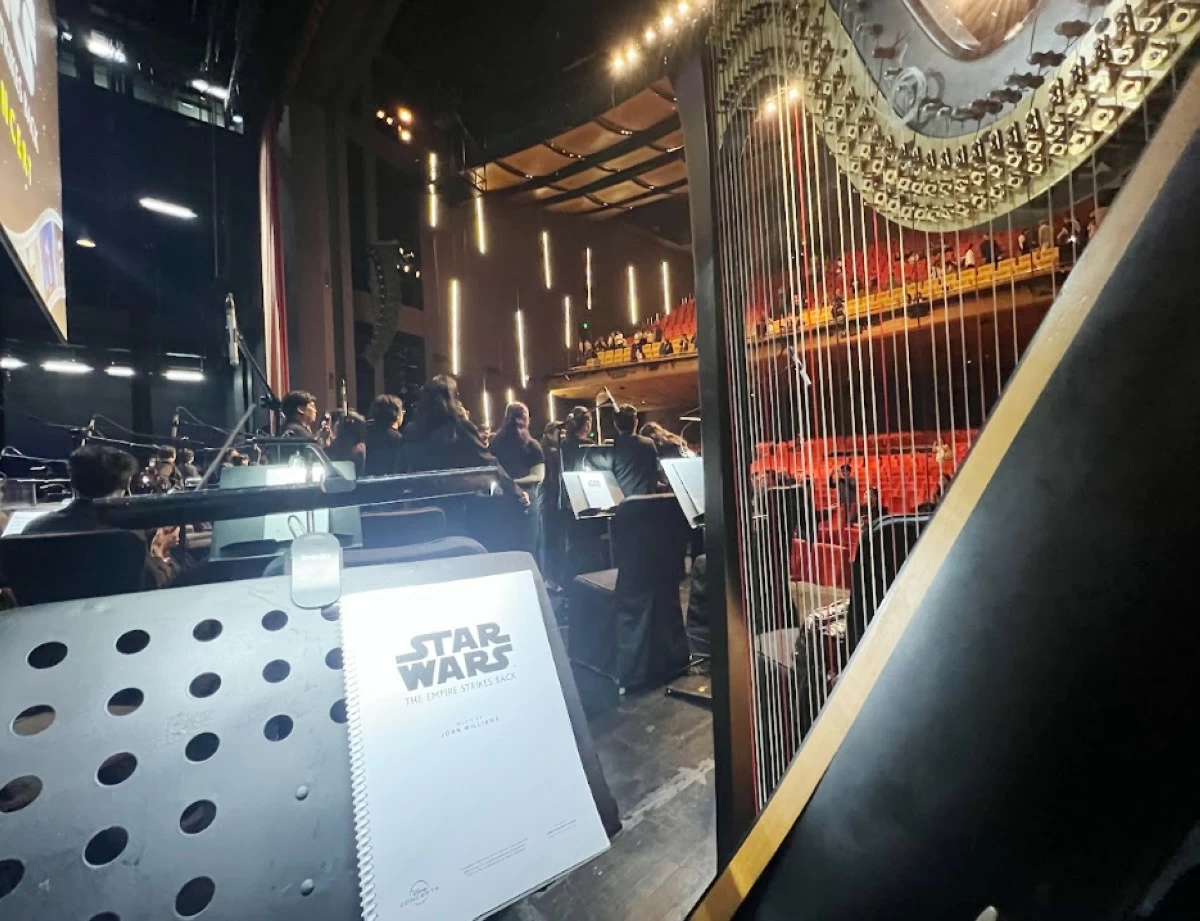
FILM SCORE — Banta enjoys playing in film concerts with Filharmonikca, where the audience can make noise and sometimes come in costume.
There’s still a lot of room for growth in terms of audience, but the local classical music scene is alive and well. “The classical music scene is very alive. We have many younger musicians who study abroad and come home with more skills to share… It’s good to be exposed to foreign standards of playing.”
Popular music played by an orchestra is a good entry point to classical music, as are film concerts, where an orchestra plays a film’s soundtrack live. “The audience for that is pretty big, so hopefully, these people will eventually be open to exploring classical music.”
Banta continues to dream. “I’ll just keep on training harpists, and hopefully, I would like to have a harp ensemble. I’ve talked to other harpists, and they’re willing to do it. It’s just the logistics,” she said. “I hope people will want to hear more of us.” (Photos courtesy of Jane Banta)