







Pax Silica, explained
Published Jul 22, 2026 08:03 pm


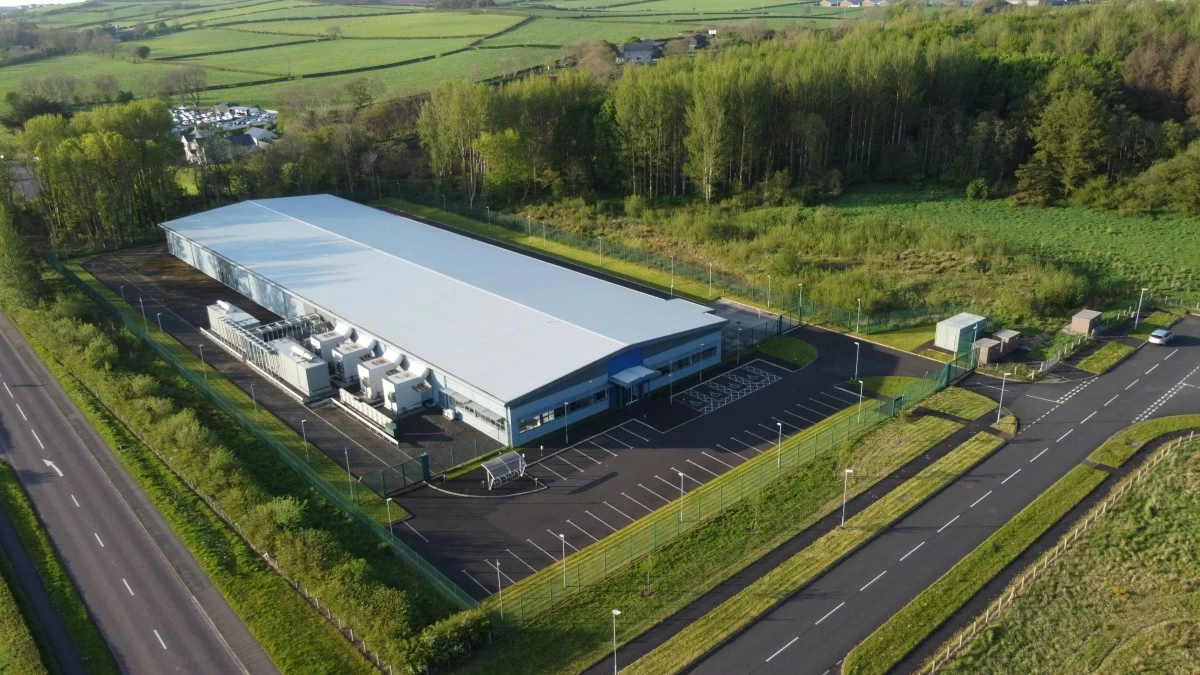
Photo by Geoffrey Moffett on Unsplash. (This is a stock image and not an actual representation of the Pax Silica infrastructure in Tarlac.)
On a stretch of land the size of roughly 1,620 hectares north of Manila, the Philippine government and its allies are racing to build what officials are billing as the country's gateway into the global artificial intelligence economy. But for thousands of farmers and residents who call that land home, the project looks less like an opportunity and more like a threat.
The development is the flagship Philippine component of Pax Silica, a US-led international coalition launched in December 2025 to secure supply chains for semiconductors, critical minerals, and artificial intelligence technologies.
What Is Pax Silica?
Pax Silica members include the United States, Japan, Australia, India, Israel, South Korea, the United Kingdom, and several European nations, with the Netherlands and the EU among the more recent entrants. The Philippines signed on in April 2026 as roughly the 13th member, becoming one of only two Southeast Asian countries in the coalition alongside Singapore.
At the center of the Philippine deal is a proposed 4,000-acre (about 1,620-hectare) "Economic Security Zone" inside New Clark City, Tarlac province, on land administered by the Bases Conversion and Development Authority (BCDA). The site is billed as the first "AI-native industrial acceleration hub" under the initiative, intended to host semiconductor assembly, testing and packaging, advanced manufacturing, and AI infrastructure development.
What it's for
Officials frame Pax Silica as both an economic and a geopolitical project. Finance Secretary Frederick Go has called it a potential "generational" opportunity, and the government hopes the zone will draw foreign capital, create jobs, and help the Philippines move beyond its traditional role in low-value chip assembly toward higher-value manufacturing.
Strategically, the initiative is widely understood as a US-led effort to bolster supply chains. The Philippines has been positioned as an attractive partner in part because of its mineral wealth, including copper deposits in places like Tampakan, South Cotabato, which are essential to chip and wiring production. The project also builds on the existing Luzon Economic Corridor, a Philippines–US–Japan infrastructure initiative covering rail, ports, and clean energy investment between Subic Bay, Clark, Manila, and Batangas.
The case against it
Opposition has grown steadily since the Philippines joined the coalition, driven by farmers' groups, and other communities, such as environmental scientists, and some government officials. Their objections cluster around several core concerns:
Mass displacement. Estimates cited by advocacy groups suggest as many as 20,000 residents and 15,000 farmers could be displaced by the New Clark City hub. Critics argue that the absence of formal land titles, common among communities that have lived on the land for generations, is being used to erase their claims rather than protect them.
Water scarcity. The Sacobia watershed, the primary water source for New Clark City, has reportedly shown signs of strain since 2020. Environmental advocates warn that a large industrial and semiconductor hub could worsen water stress for surrounding communities, even as government officials insist supply is sufficient and that local needs will remain the priority.
Mining expansion and pollution. Because the initiative depends on securing critical minerals, opponents fear it will accelerate large-scale mining in provinces such as Zambales, Palawan, and Nueva Vizcaya — areas that have already suffered from deforestation, contaminated rivers, and mine tailings from decades of extraction. The farmers' group Kilusang Magbubukid ng Pilipinas (KMP) has also pointed to soil and groundwater contamination linked to former US military bases in Clark and Subic as a warning sign of what could recur.
Food security. Much of the land under discussion supports rice, coconut, and other food production. Converting agricultural and coastal land into industrial and mining corridors, critics say, could undermine local food supplies.
Economic dependency. The arrangement was called out as a "massive sellout," arguing it locks the Philippines into supplying cheap raw materials and low-value labor—assembly, testing, packaging—while higher-value technology, control, and profit remain with foreign partners.
Sovereignty and legal jurisdiction. A separate controversy erupted in May 2026 after BCDA president Joshua Bingcang said the United States had requested that the zone operate under US law with diplomatic immunity for American personnel, a request the Philippine government said it rejected. A US State Department official later said the remarks were "taken out of context," insisting the request was about legal predictability for investors rather than immunity. The episode nonetheless fueled concerns, echoed in a House resolution filed by the Makabayan bloc, that the zone could compound foreign—particularly US military and economic—influence over Philippine territory.
In the US, there have been concerns of data centers affecting communities. Such as losing water, increased heat, and noise pollution.
On top of this, it has been forecasted that by 2035, about nine years from now, data centers will be consuming about four times as much electricity than today, which may increase electricity bills, contribute to air pollution, and strain electric grids.
What comes next
The debate over Pax Silica reflects a broader tension familiar across Southeast Asia: the promise of foreign investment and technological advancement set against the risks of displacement, environmental degradation, and diminished sovereignty over land and resources. As the Philippines and the United States work toward finalizing the framework agreement, the outcome is likely to hinge on whether the government can deliver credible safeguards or whether, as critics fear, the rush to secure a "generational" investment repeats patterns of past megaprojects that left local communities to absorb the costs.