






Manila Bulletin
 Philippines
National
'Nakakairita e': Tempers flare as senator-judges push for consistency on 2-minute rule on court interjections
Philippines
National
'Nakakairita e': Tempers flare as senator-judges push for consistency on 2-minute rule on court interjections
Philippines
National
'Nakakairita e': Tempers flare as senator-judges push for consistency on 2-minute rule on court interjections
'Nakakairita e': Tempers flare as senator-judges push for consistency on 2-minute rule on court interjections
By Dhel Nazario
Published Jul 22, 2026 05:48 pm


It wasn't a witness or a piece of evidence that became an issue at Vice President Sara Duterte's impeachment trial on Wednesday, July 22.
Instead, it was the bell.
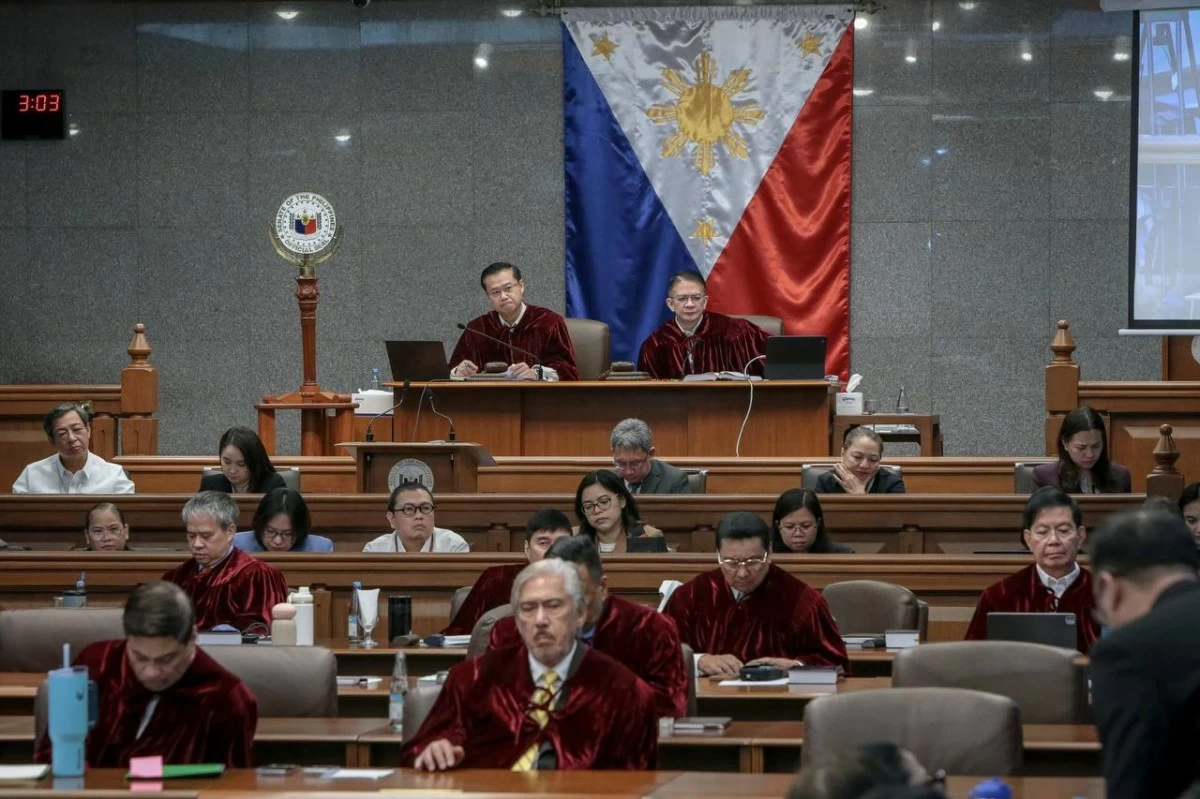
Scenes from the eighth day of the impeachment proceedings discuss Article IV on alleged grave threats that the Vice President Sara Duterte has mentioned in multiple incidents. (SPPA POOL)
Senator-judge Robin Padilla's questioning of the House prosecution briefly shifted into a debate over whether the Senate impeachment court was giving some senator-judges more time to speak than others.
The interjection came from Senator-judge Raffy Tulfo, who stood to complain about what he described as inconsistent enforcement of the court's two-minute speaking limit.
"Why is it that when it's on the other side, they're allowed five to 10 minutes, but when it's us, we're immediately cut off after two minutes?" Tulfo said in Filipino.
Although he referred to the "majority," Presiding Officer Francis "Chiz" Escudero quickly pushed back, reminding the chamber that political alignments should have no place inside the impeachment court.
Usually Escudero gives two minutes to each senator to ask questions.
"In the impeachment court, there is no majority nor minority. We are all senator-judges," Escudero said.
The Senate President explained that flexibility had been extended to members across the aisle, citing Sen. Panfilo Lacson, who had earlier been granted additional time to finish his line of questioning.
But Tulfo remained unconvinced.
He said the warning bell seemed to ring promptly whenever he spoke, while other senator-judges were allowed to continue for several more minutes.
"I've even whispered, 'Ring the bell already,' so others can also speak," Tulfo said, urging court personnel to enforce the rules equally regardless of who held the floor.
Escudero responded by directing the clerk of court to remind the official assigned to ring the bell to apply the time warnings consistently.
The exchange soon drew another participant.
Senator-judge Alan Peter Cayetano agreed that Tulfo's concern deserved to be placed on record but pointed out that he, too, had been interrupted by the warning bell in previous hearings.
Rather than rigidly enforcing the time limit, Cayetano suggested that the presiding officer simply ask senator-judges to wrap up, arguing that a measure of flexibility could prevent unnecessary motions and keep the proceedings moving.
Escudero said he would take into consideration the concerns raised by both Tulfo and Cayetano before once again asking Padilla to conclude his questioning.
Padilla, for his part, defended the length of his exchange, saying he had only been asking yes-or-no questions and that it was the prosecution's answers that consumed more time.
"I only ask yes-or-no questions. The prosecution's responses are longer," he said.
For a few moments, the arguments over evidence and witnesses gave way to an argument over the clock itself—highlighting that even the rules governing who gets to speak, and for how long, have become points of contention in the politically charged impeachment trial.