ADVERTISEMENT

Flood control and SEA Games: Justice is not a bargaining chip

Published Jul 22, 2026 12:05 am  |  Updated Jul 21, 2026 05:33 pm
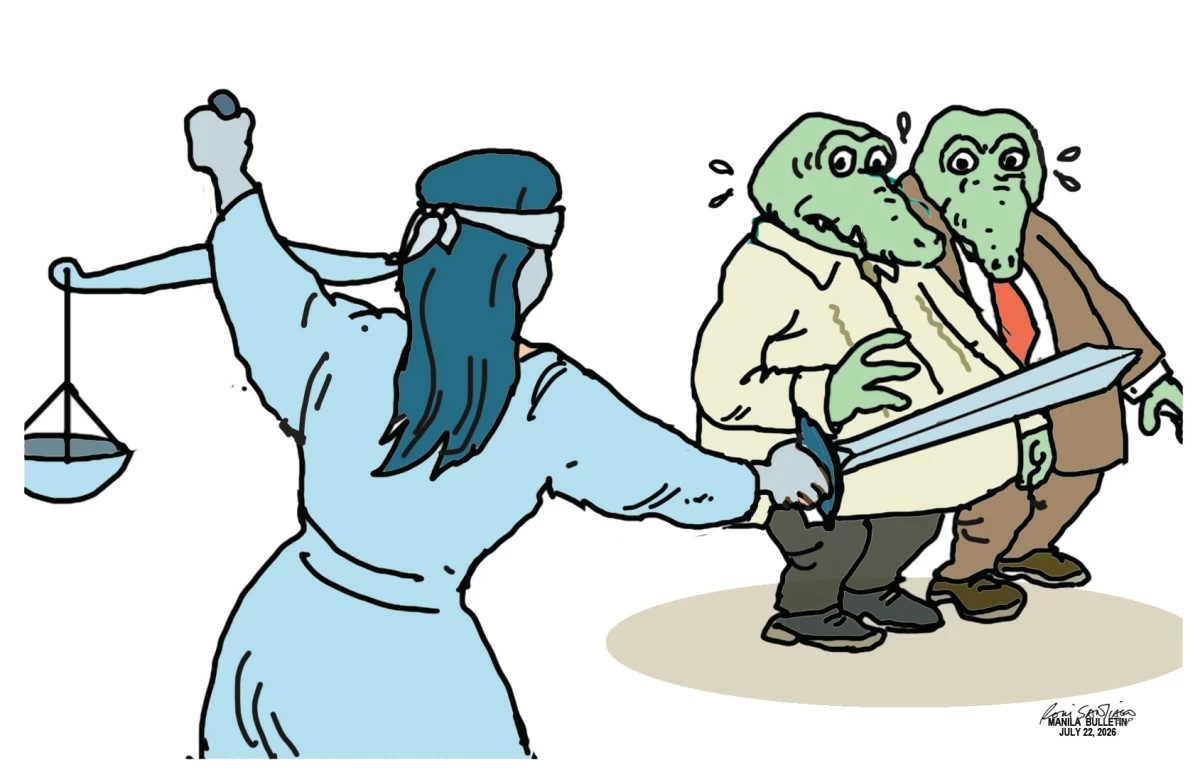
Truth and accountability are non-negotiable. They should never be contingent on political convenience. Whether the issue involves the multibillion-peso flood control program or the alleged irregularities surrounding the 2019 Southeast Asian (SEA) Games, the Filipino people deserve one thing above all else: an impartial, exhaustive, and fearless search for the truth.
The proposal to investigate one controversy in exchange for another risks sending the wrong message—that accountability is negotiable. Whether intended as a political challenge or a rhetorical gesture, the principle remains the same. Public investigations are constitutional and legal obligations, not bargaining chips to be traded across partisan lines.
The flood control controversy demands urgent attention because it directly affects lives, livelihoods, and national resilience. Year after year, communities suffer catastrophic flooding while taxpayers continue to shoulder billions of pesos allocated for flood mitigation projects. Citizens have every right to ask whether these projects were properly planned, transparently procured, competently executed, and effectively monitored. If corruption, gross negligence, overpricing, or collusion occurred, every individual involved—regardless of rank, influence, or political affiliation—must be held fully accountable.
The same principle applies to the allegations surrounding the 2019 SEA Games. The Philippines’ historic achievement as overall champion remains a proud chapter in the nation’s sporting history. That accomplishment rightfully belongs to the athletes whose discipline, sacrifice, and excellence inspired the country and earned the admiration of Southeast Asia. However, their triumph cannot be used to shield allegations involving procurement, bidding, or public expenditures from legitimate scrutiny.
The government’s response should be unequivocal. Rather than viewing calls for investigation as political challenges, authorities should treat them as opportunities to reinforce public trust. The National Bureau of Investigation, the Department of Justice, the Office of the Ombudsman, the Commission on Audit, and other oversight institutions must pursue every credible allegation with professionalism, independence, and respect for due process. Their mission is neither to vindicate nor to vilify anyone but to establish facts through evidence and ensure that justice is applied without fear or favor.
Equally vital is the participation of the private sector. Contractors, engineering firms, suppliers, auditors, financial institutions, and professional organizations involved in public projects should embrace transparency instead of resisting it. Strong compliance systems, ethical procurement practices, independent audits, and robust whistleblower protections help deter corruption while strengthening investor confidence and public trust. Honest businesses have nothing to fear from accountability. In fact, they stand to benefit when integrity becomes the standard for public contracting.
Citizens, too, have a decisive role. Accountability cannot rest solely on government and private institutions. Filipinos can contribute by demanding transparency, supporting responsible journalism, verifying information before sharing it, reporting credible evidence of wrongdoing through lawful channels, and encouraging civic organizations to monitor public spending. Universities, policy experts, engineers, accountants, lawyers, and anti-corruption advocates likewise possess expertise that can enrich public discourse and strengthen institutional oversight. Democracy flourishes when an informed citizenry refuses to be indifferent.
Ultimately, these investigations are about the credibility of public institutions and the rule of law itself. If accountability depends on political alliances or public pressure, confidence in democratic governance inevitably erodes. Conversely, when every allegation is examined objectively and every public official is held to the same legal standard, trust in government grows stronger.
Therefore, the public should reject false choices between competing investigations. There is no reason the government cannot pursue both with equal determination, fervor, and impartiality. Truth does not compete with truth, and justice does not require negotiation. The proper response to every credible allegation involving public funds is to investigate thoroughly, follow the evidence wherever it leads, prosecute when warranted, and exonerate when justified.
Keep in mind, justice loses its meaning the moment it becomes a matter of negotiation.
ADVERTISEMENT
.most-popular .layout-ratio{ padding-bottom: 79.13%; } @media (min-width: 768px) and (max-width: 1024px) { .widget-title { font-size: 15px !important; } }

{{ articles_filter_1561_widget.title }}

.most-popular .layout-ratio{ padding-bottom: 79.13%; } @media (min-width: 768px) and (max-width: 1024px) { .widget-title { font-size: 15px !important; } }

{{ static_articles_1562_widget.title }}

.most-popular .layout-ratio{ padding-bottom: 79.13%; } @media (min-width: 768px) and (max-width: 1024px) { .widget-title { font-size: 15px !important; } }

{{ articles_filter_1563_widget.title }}

{{ articles_filter_1564_widget.title }}

.mb-article-details { position: relative; } .mb-article-details .article-body-preview, .mb-article-details .article-body-summary{ font-size: 17px; line-height: 30px; font-family: "Libre Caslon Text", serif; color: #000; } .mb-article-details .article-body-preview iframe , .mb-article-details .article-body-summary iframe{ width: 100%; margin: auto; } .read-more-background { background: linear-gradient(180deg, color(display-p3 1.000 1.000 1.000 / 0) 13.75%, color(display-p3 1.000 1.000 1.000 / 0.8) 30.79%, color(display-p3 1.000 1.000 1.000) 72.5%); position: absolute; height: 200px; width: 100%; bottom: 0; display: flex; justify-content: center; align-items: center; padding: 0; } .read-more-background a{ color: #000; } .read-more-btn { padding: 17px 45px; font-family: Inter; font-weight: 700; font-size: 18px; line-height: 16px; text-align: center; vertical-align: middle; border: 1px solid black; background-color: white; } .hidden { display: none; }
function initializeAllSwipers() { // Get all hidden inputs with cms_article_id document.querySelectorAll('[id^="cms_article_id_"]').forEach(function (input) { const cmsArticleId = input.value; const articleSelector = '#article-' + cmsArticleId + ' .body_images'; const swiperElement = document.querySelector(articleSelector); if (swiperElement && !swiperElement.classList.contains('swiper-initialized')) { new Swiper(articleSelector, { loop: true, pagination: false, navigation: { nextEl: '#article-' + cmsArticleId + ' .swiper-button-next', prevEl: '#article-' + cmsArticleId + ' .swiper-button-prev', }, }); } }); } setTimeout(initializeAllSwipers, 3000); const intersectionObserver = new IntersectionObserver( (entries) => { entries.forEach((entry) => { if (entry.isIntersecting) { const newUrl = entry.target.getAttribute("data-url"); if (newUrl) { history.pushState(null, null, newUrl); let article = entry.target; // Extract metadata const author = article.querySelector('.author-section').textContent.replace('By', '').trim(); const section = article.querySelector('.section-info ').textContent.replace(' ', ' '); const title = article.querySelector('.article-title h1').textContent; // Parse URL for Chartbeat path format const parsedUrl = new URL(newUrl, window.location.origin); const cleanUrl = parsedUrl.host + parsedUrl.pathname; // Update Chartbeat configuration if (typeof window._sf_async_config !== 'undefined') { window._sf_async_config.path = cleanUrl; window._sf_async_config.sections = section; window._sf_async_config.authors = author; } // Track virtual page view with Chartbeat if (typeof pSUPERFLY !== 'undefined' && typeof pSUPERFLY.virtualPage === 'function') { try { pSUPERFLY.virtualPage({ path: cleanUrl, title: title, sections: section, authors: author }); } catch (error) { console.error('ping error', error); } } // Optional: Update document title if (title && title !== document.title) { document.title = title; } } } }); }, { threshold: 0.1 } ); function showArticleBody(button) { const article = button.closest("article"); const summary = article.querySelector(".article-body-summary"); const body = article.querySelector(".article-body-preview"); const readMoreSection = article.querySelector(".read-more-background"); // Hide summary and read-more section summary.style.display = "none"; readMoreSection.style.display = "none"; // Show the full article body body.classList.remove("hidden"); } document.addEventListener("DOMContentLoaded", () => { let loadCount = 0; // Track how many times articles are loaded const offset = [1, 2, 3, 4, 5, 6, 7, 8, 9, 10]; // Offset values const currentUrl = window.location.pathname.substring(1); let isLoading = false; // Prevent multiple calls if (!currentUrl) { console.log("Current URL is invalid."); return; } const sentinel = document.getElementById("load-more-sentinel"); if (!sentinel) { console.log("Sentinel element not found."); return; } function isSentinelVisible() { const rect = sentinel.getBoundingClientRect(); return ( rect.top < window.innerHeight && rect.bottom >= 0 ); } function onScroll() { if (isLoading) return; if (isSentinelVisible()) { if (loadCount >= offset.length) { console.log("Maximum load attempts reached."); window.removeEventListener("scroll", onScroll); return; } isLoading = true; const currentOffset = offset[loadCount]; window.loadMoreItems().then(() => { let article = document.querySelector('#widget_1690 > div:nth-last-of-type(2) article'); intersectionObserver.observe(article) loadCount++; }).catch(error => { console.error("Error loading more items:", error); }).finally(() => { isLoading = false; }); } } window.addEventListener("scroll", onScroll); });

Sign up by email to receive news.