ADVERTISEMENT

Canada to join Japan-Britain-Italy fighter development project

Published Jul 22, 2026 11:21 am
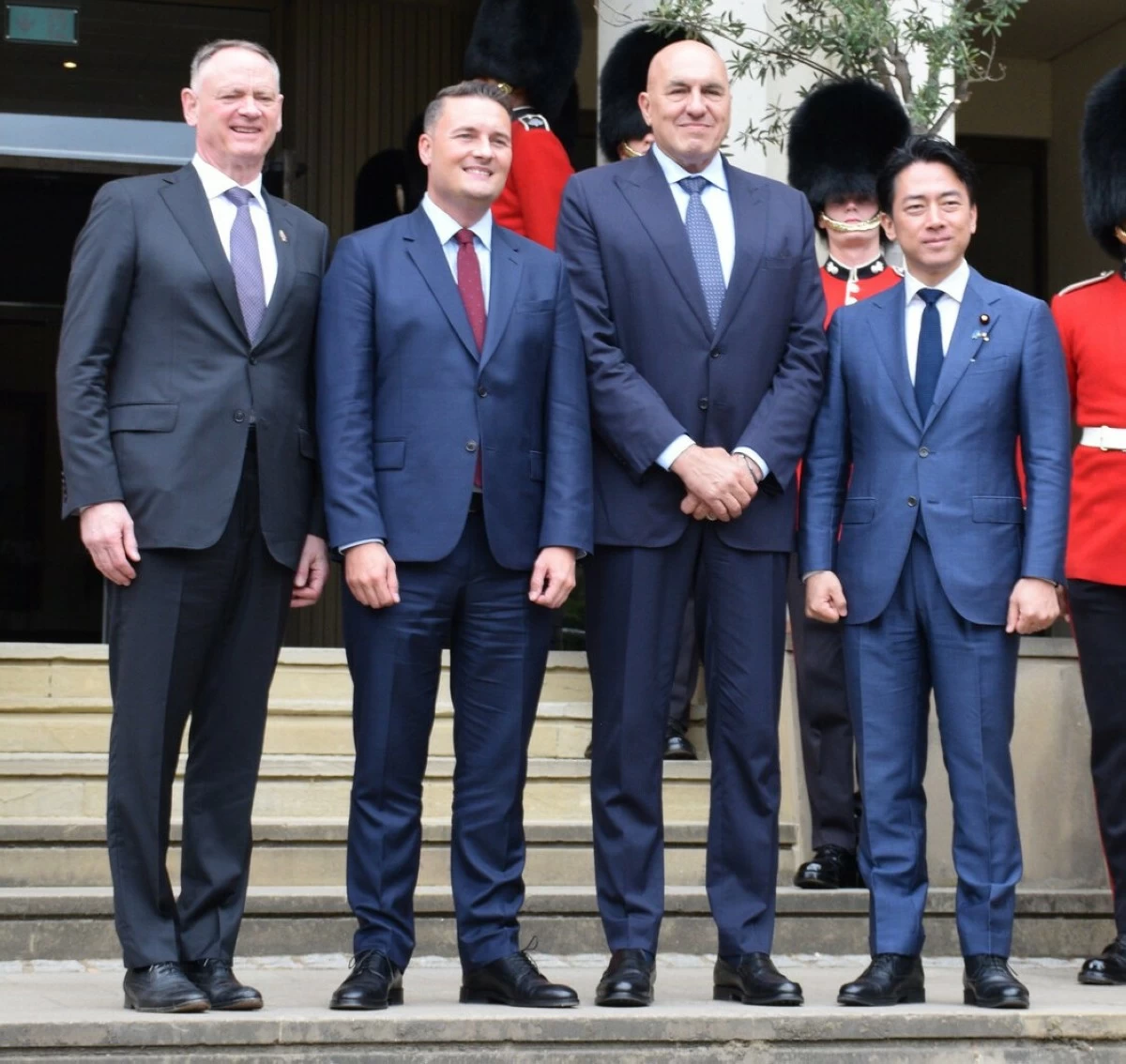
Japanese Defense Minister Shinjiro Koizumi (far right) and others pose for a photo before the Japan-Britain-Italy-Canada defense ministers' meeting in London on Tuesday (July 21).
LONDON (Jiji Press)--Canada will participate as an observer in a joint project among Japan, Britain and Italy to develop a next-generation fighter jet, it was agreed Tuesday.
Ottawa's participation in the Global Combat Air Program was confirmed at the day's meeting in London among Japanese Defense Minister Shinjiro Koizumi, Italian Defense Minister Guido Crosetto, British Defense Secretary Wes Streeting, who took office Monday, and Canadian National Defense Minister David McGuinty.
Canada is the first country to join GCAP since its launch. The Canadian government is apparently eyeing the possibility of joining the project as a full member and of purchasing jets from the project in the future.
The four ministers released a joint statement welcoming Canada's participation as an observer. "This announcement marks an important step in strengthening cooperation among trusted, like-minded partners through the program," the statement said.
"Observer status will provide Canada with enhanced insight into GCAP and an opportunity to deepen its understanding of the program's governance, capabilities and industrial framework, as well as the related security requirements and wider partnering opportunities," it said.
For Japan, Britain and Italy, Canada's involvement will "support greater alignment of strategic priorities and deepen mutual understanding of future combat air ambitions, thereby strengthening global security," it also said.
Koizumi told a joint press conference that Canada's participation is of great significance in light of the fact that the country is located between the Indo-Pacific and Euro-Atlantic regions.
In Tuesday's meeting, Koizumi explained that a missile destroyer of the Chinese navy conducted firing exercises within Japan's exclusive economic zone around the remote Tokyo island of Okinotorishima in the Pacific earlier this month.
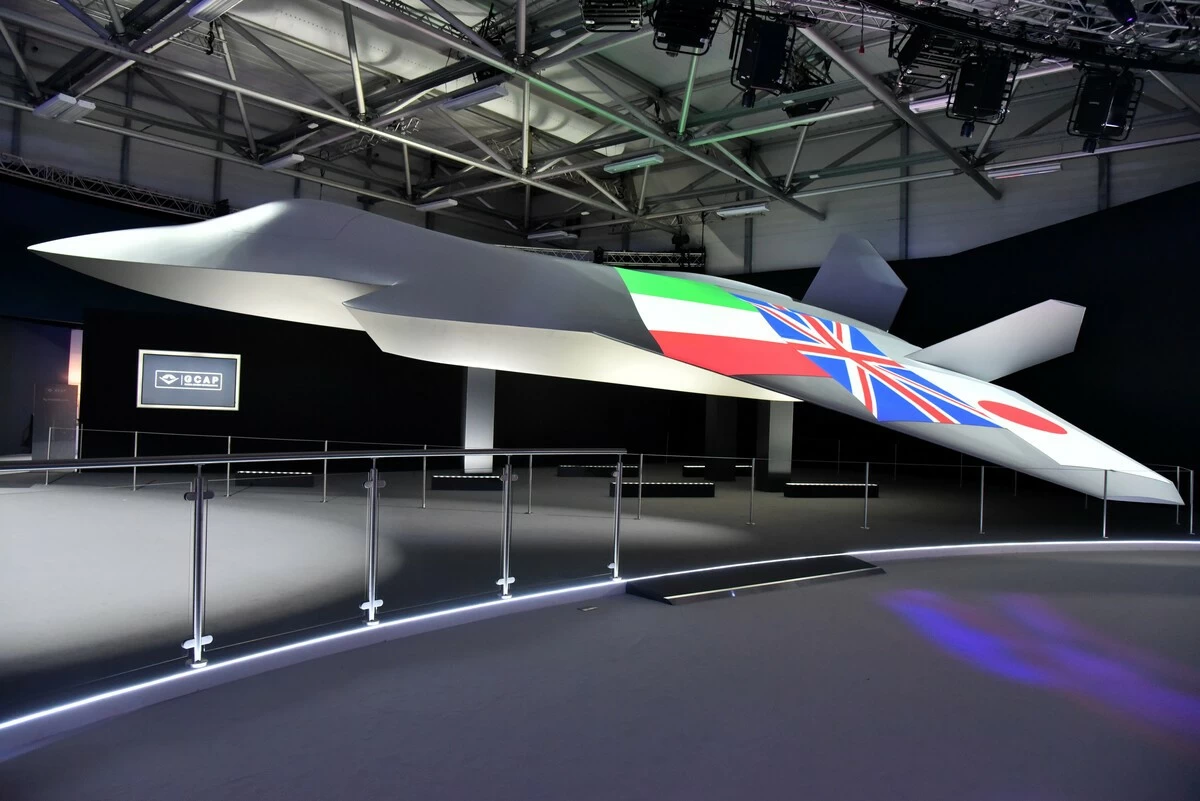
A new concept model of a next-generation fighter jet to be developed under a joint project among Japan, Britain and Italy, photographed in Farnborough, Hampshire, southern Britain, in July 2024.
As an observer, Canada will not be directly involved in the fighter development or pay a contribution. It will have access to project information, including on the fighter's capabilities and companies expected to take part in the manufacture and sale of the aircraft.
Germany is believed to be interested in joining GCAP after its fighter development project with France was scuttled. Saudi Arabia has also been reported to be considering taking part in the program.
Increasing GCAP participants "will help boost interoperability among like-minded countries in the medium to long term," a Japanese Defense Ministry source said.
The fighter jet to be developed under GCAP will succeed the Japanese Air Self-Defense Force's F-2 and the mainstay fighters of the British and Italian militaries.
It will be classified as a successor to the current fifth-generation jets such as the U.S. F-22 and the F-35, which Japan also owns. It is expected to have high stealth capabilities as well as advanced networked combat capabilities such as working in tandem with drones.
Japan aims to deploy the first batch of jets from GCAP in 2035, when the ASDF's F-2 will start to be retired from service.
Later on Tuesday, the Japanese, British and Italian ministers held a trilateral meeting and confirmed that they would work together to develop GCAP, with a view to further cooperation with like-minded countries beyond Canada.
Koizumi later told the press that GCAP has reached the next stage of cooperation with third countries. "We will work to make it a better program," he added.
He also held a bilateral meeting with Crosetto. They agreed to continue close cooperation for the success of GCAP while sharing the view that the security in the Indo-Pacific region and that in the Euro-Atlantic region are inseparable.
The ministers also affirmed the promotion of bilateral collaboration in the field of security, including through exchanges between Japan's Self-Defense Forces and the Italian military as well as defense equipment and technology cooperation.

Related Tags

world news fighter jet Canada Japan Global Combat Air Program (GCAP) Japan\'s Defense Minister Shinjiro Koizumi
ADVERTISEMENT
.most-popular .layout-ratio{ padding-bottom: 79.13%; } @media (min-width: 768px) and (max-width: 1024px) { .widget-title { font-size: 15px !important; } }

{{ articles_filter_1561_widget.title }}

.most-popular .layout-ratio{ padding-bottom: 79.13%; } @media (min-width: 768px) and (max-width: 1024px) { .widget-title { font-size: 15px !important; } }

{{ static_articles_1562_widget.title }}

.most-popular .layout-ratio{ padding-bottom: 79.13%; } @media (min-width: 768px) and (max-width: 1024px) { .widget-title { font-size: 15px !important; } }

{{ articles_filter_1563_widget.title }}

{{ articles_filter_1564_widget.title }}

.mb-article-details { position: relative; } .mb-article-details .article-body-preview, .mb-article-details .article-body-summary{ font-size: 17px; line-height: 30px; font-family: "Libre Caslon Text", serif; color: #000; } .mb-article-details .article-body-preview iframe , .mb-article-details .article-body-summary iframe{ width: 100%; margin: auto; } .read-more-background { background: linear-gradient(180deg, color(display-p3 1.000 1.000 1.000 / 0) 13.75%, color(display-p3 1.000 1.000 1.000 / 0.8) 30.79%, color(display-p3 1.000 1.000 1.000) 72.5%); position: absolute; height: 200px; width: 100%; bottom: 0; display: flex; justify-content: center; align-items: center; padding: 0; } .read-more-background a{ color: #000; } .read-more-btn { padding: 17px 45px; font-family: Inter; font-weight: 700; font-size: 18px; line-height: 16px; text-align: center; vertical-align: middle; border: 1px solid black; background-color: white; } .hidden { display: none; }
function initializeAllSwipers() { // Get all hidden inputs with cms_article_id document.querySelectorAll('[id^="cms_article_id_"]').forEach(function (input) { const cmsArticleId = input.value; const articleSelector = '#article-' + cmsArticleId + ' .body_images'; const swiperElement = document.querySelector(articleSelector); if (swiperElement && !swiperElement.classList.contains('swiper-initialized')) { new Swiper(articleSelector, { loop: true, pagination: false, navigation: { nextEl: '#article-' + cmsArticleId + ' .swiper-button-next', prevEl: '#article-' + cmsArticleId + ' .swiper-button-prev', }, }); } }); } setTimeout(initializeAllSwipers, 3000); const intersectionObserver = new IntersectionObserver( (entries) => { entries.forEach((entry) => { if (entry.isIntersecting) { const newUrl = entry.target.getAttribute("data-url"); if (newUrl) { history.pushState(null, null, newUrl); let article = entry.target; // Extract metadata const author = article.querySelector('.author-section').textContent.replace('By', '').trim(); const section = article.querySelector('.section-info ').textContent.replace(' ', ' '); const title = article.querySelector('.article-title h1').textContent; // Parse URL for Chartbeat path format const parsedUrl = new URL(newUrl, window.location.origin); const cleanUrl = parsedUrl.host + parsedUrl.pathname; // Update Chartbeat configuration if (typeof window._sf_async_config !== 'undefined') { window._sf_async_config.path = cleanUrl; window._sf_async_config.sections = section; window._sf_async_config.authors = author; } // Track virtual page view with Chartbeat if (typeof pSUPERFLY !== 'undefined' && typeof pSUPERFLY.virtualPage === 'function') { try { pSUPERFLY.virtualPage({ path: cleanUrl, title: title, sections: section, authors: author }); } catch (error) { console.error('ping error', error); } } // Optional: Update document title if (title && title !== document.title) { document.title = title; } } } }); }, { threshold: 0.1 } ); function showArticleBody(button) { const article = button.closest("article"); const summary = article.querySelector(".article-body-summary"); const body = article.querySelector(".article-body-preview"); const readMoreSection = article.querySelector(".read-more-background"); // Hide summary and read-more section summary.style.display = "none"; readMoreSection.style.display = "none"; // Show the full article body body.classList.remove("hidden"); } document.addEventListener("DOMContentLoaded", () => { let loadCount = 0; // Track how many times articles are loaded const offset = [1, 2, 3, 4, 5, 6, 7, 8, 9, 10]; // Offset values const currentUrl = window.location.pathname.substring(1); let isLoading = false; // Prevent multiple calls if (!currentUrl) { console.log("Current URL is invalid."); return; } const sentinel = document.getElementById("load-more-sentinel"); if (!sentinel) { console.log("Sentinel element not found."); return; } function isSentinelVisible() { const rect = sentinel.getBoundingClientRect(); return ( rect.top < window.innerHeight && rect.bottom >= 0 ); } function onScroll() { if (isLoading) return; if (isSentinelVisible()) { if (loadCount >= offset.length) { console.log("Maximum load attempts reached."); window.removeEventListener("scroll", onScroll); return; } isLoading = true; const currentOffset = offset[loadCount]; window.loadMoreItems().then(() => { let article = document.querySelector('#widget_1690 > div:nth-last-of-type(2) article'); intersectionObserver.observe(article) loadCount++; }).catch(error => { console.error("Error loading more items:", error); }).finally(() => { isLoading = false; }); } } window.addEventListener("scroll", onScroll); });

Sign up by email to receive news.