






Manila Bulletin
 Lifestyle
Schools and Universities
Manila high school students make history in global AI competition in Florida
Lifestyle
Schools and Universities
Manila high school students make history in global AI competition in Florida
Lifestyle
Schools and Universities
Manila high school students make history in global AI competition in Florida
Manila high school students make history in global AI competition in Florida
Published Jul 21, 2026 09:06 am
|
Updated Jul 21, 2026 05:52 pm


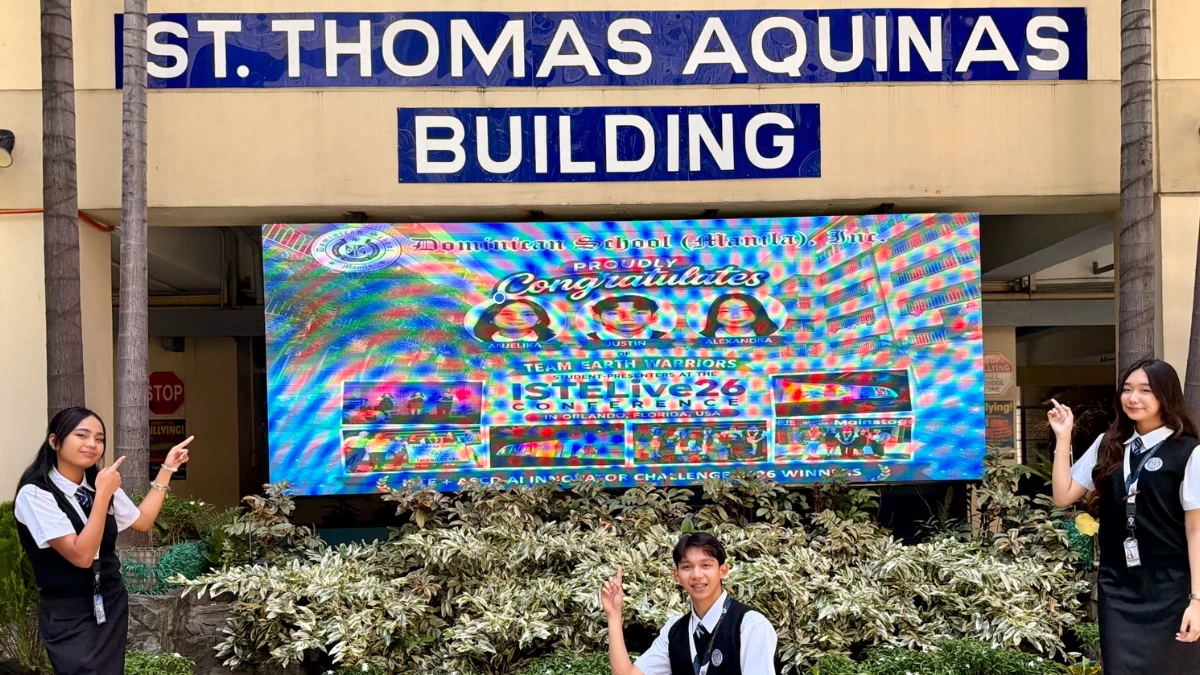
The ReSiklo team poses on the Dominican School Manila stage, with their project poster displayed onscreen during a Manila Bulletin interview.
What began as a classroom coding pursuit turned into a proud moment not just for one school, but for the Philippines, as a group of Filipino high school students stepped onto the global stage.
A group of senior high school students from Dominican School Manila placed the country on the global map after winning the prestigious AI Innovator Challenge of the International Society for Transforming Education (ISTE), held in Orlando, Florida, from June 28 to July 1.
Competing against more than 600 students from over 20 countries, the Filipino team stood out, not only as the lone Philippine representatives in the final round, but as the competition’s top winners, besting teams from the United States and Dubai.
It is a statement: Young Filipino minds, when given the tools and opportunity, can compete and stand out on the world stage.
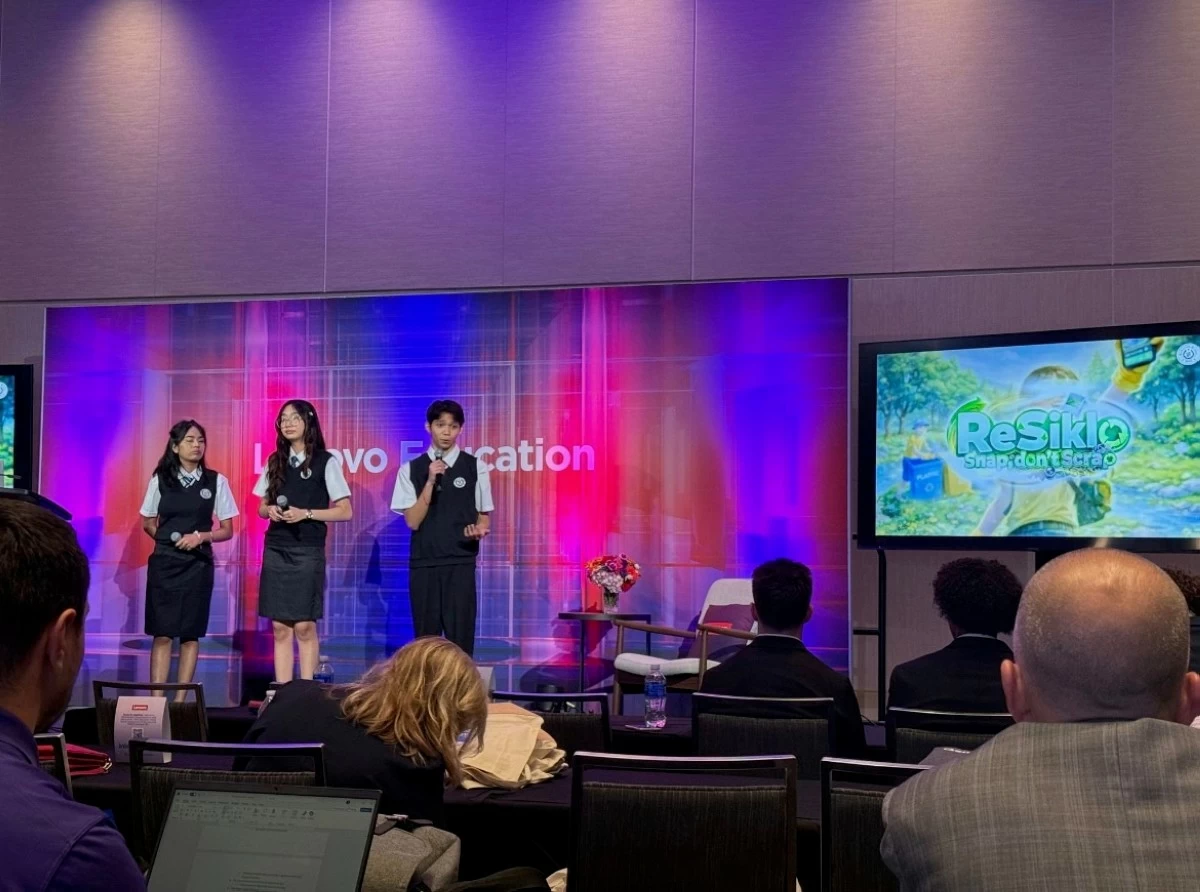
Viktoria Binuya, Alexandra Manungay, and Jo Justin Ong present their AI-powered innovation 'ReSiklo' during the SparkTalk session on the Lenovo stage.
Grade 12 students Jo Justin Ong, 18, a student-athlete, and his teammates Alexandra Manungay, 17, a working student, and Viktoria Binuya, 17, a student council leader, did not receive the recognition overnight.
Their journey began in a local competition months earlier. After placing in a nationwide challenge, they were given the opportunity to take their idea further, this time onto a global platform. What they did not expect was just how big that platform would be.
Initially seen as just another contest, the ISTE conference revealed itself to be something more: a gathering of global educators, tech leaders, and innovators shaping the future of learning. On that stage, the students were no longer just competitors. They were representatives of a nation.
They pitched their work before panels that included industry giants like Google, Microsoft, and Lenovo. They joined discussions and presentations typically reserved for seasoned professionals. And they did it as teenagers.
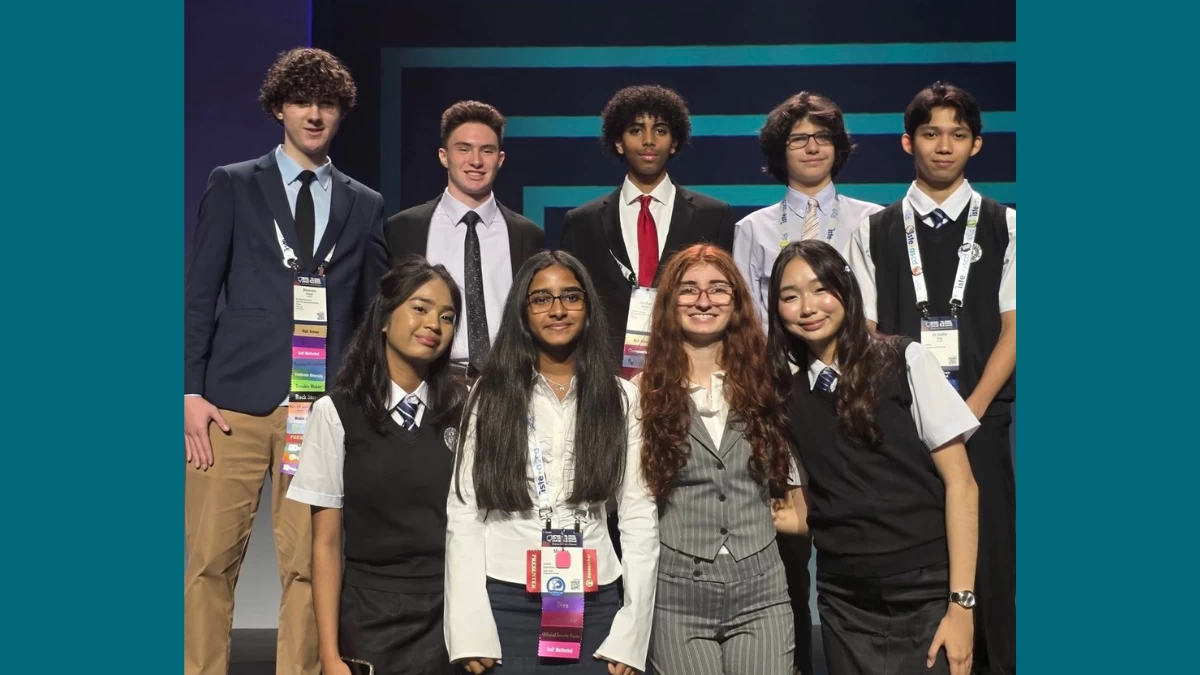
The ReSiklo team shares the main stage with fellow AI Innovator finalists PathoScan and CivicLens following their presentations.
ReSiklo: More than just a scanner
At the heart of their success was ReSiklo, an AI-powered application addressing one of the Philippines’ most urgent problems: environmental pollution.
While many entries leaned into technical complexity, their project stood out for its grounding in lived experience.
The app does more than identify waste. It explains its impact and offers solutions rooted in everyday realities such as flooding, stronger typhoons, and worsening pollution.
Using AI and augmented reality, users can scan objects like a plastic bottle and instantly understand their environmental footprint. More importantly, it tells users what to do next: reduce, reuse, or recycle.
With features like a Mini Learning Hub, EcoExtend Hub connections to local initiatives, and gamified rewards, the app bridges what the team calls the gap between knowing and doing.
“Sustainability isn’t just one action, it’s a cycle,” Manungay shared, explaining the meaning behind the name ReSiklo, inspired by the word “cycle.”
“Everything is a cycle, learning, action, change,” Ong added.
Because for them, awareness is not enough.
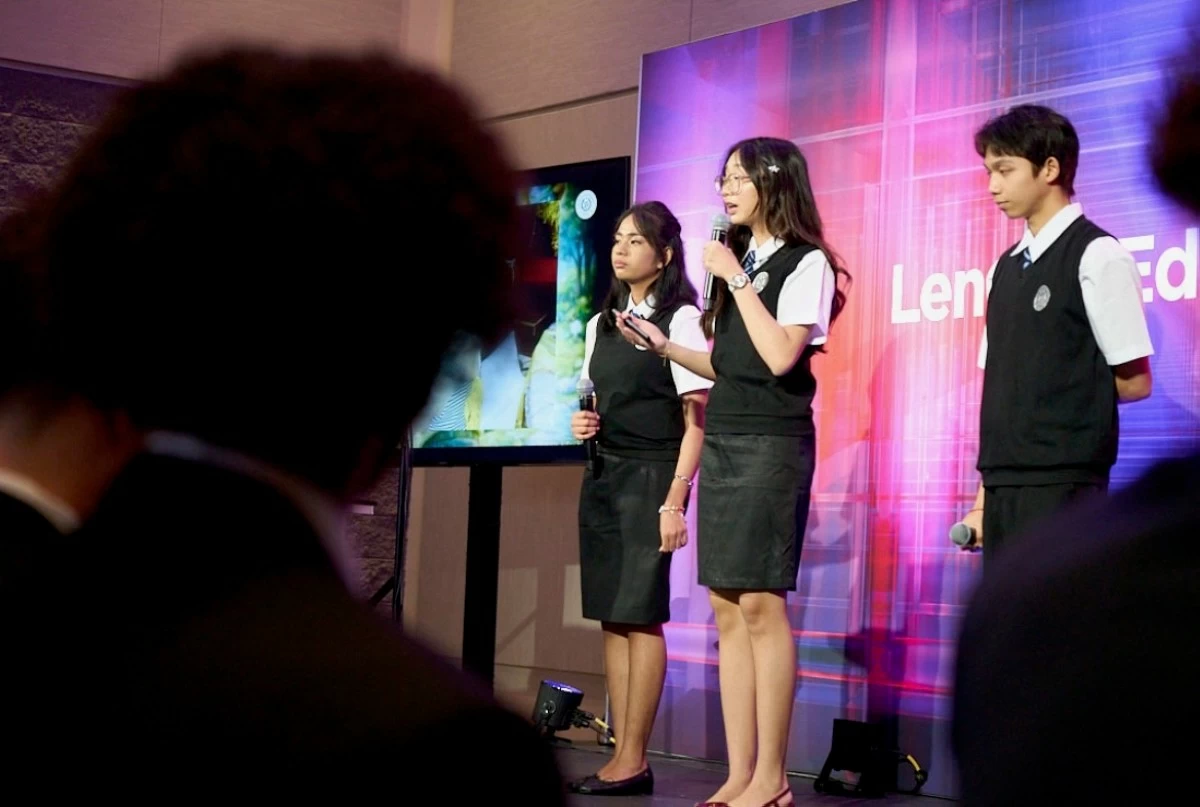
Viktoria Binuya, Alexandra Manungay, and Jo Justin Ong present their AI-powered innovation 'ReSiklo' during the SparkTalk session at the AI Pavilion and on the Lenovo stage.
From classroom to the world stage
The level of competition underscored the scale of their achievement. One finalist team developed AI for detecting colorectal cancer. Another created a tool to analyze bias in media.
Against these, the Filipino team’s edge was clear: purpose-driven technology shaped by real-world urgency.
Their solution was not just intelligent.
It was personal.
Beyond the app
The journey was not without challenges. From limited resources to refining AI models, the team worked through constraints many of their global counterparts did not face.Yet these limitations made their breakthrough even more significant.
Beyond the competition, the experience itself proved transformative. A 30-hour flight. Days in a foreign country. New friendships with fellow innovators from the United States and the United Arab Emirates.
Binuya said the moment was both overwhelming and defining. At first, being surrounded by brilliant minds felt intimidating. But that feeling shifted into something else: the realization that they were not just there to compete, but to belong.
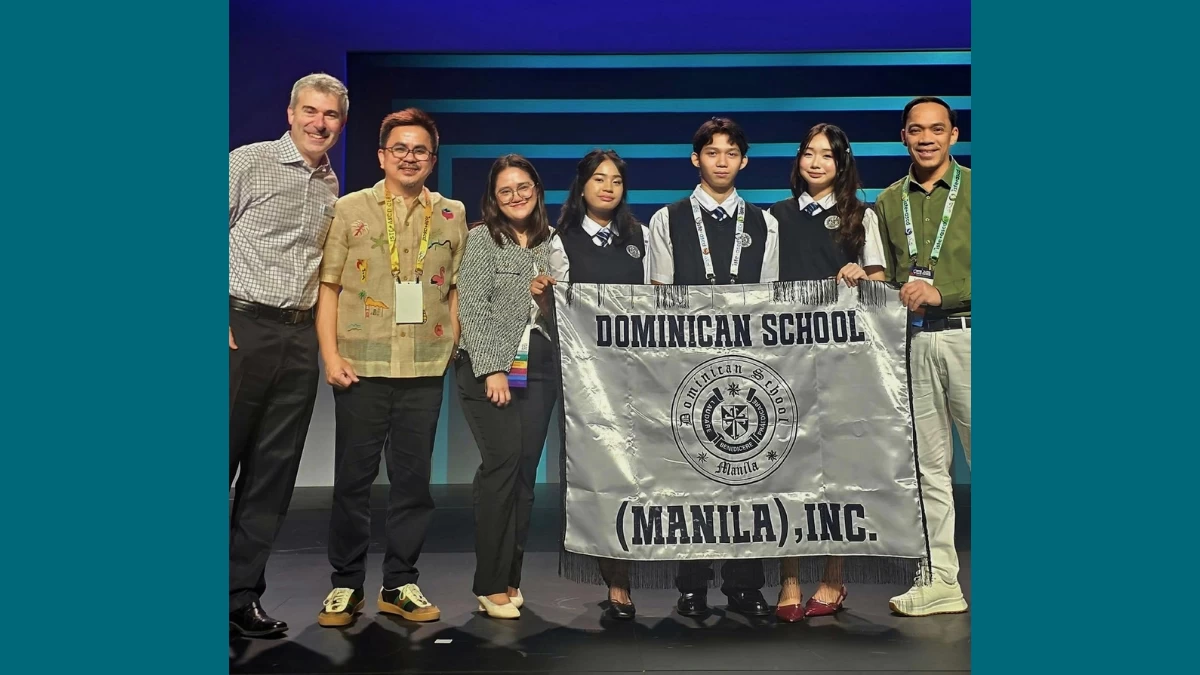
The ReSiklo team poses on the main stage with ISTE CEO Richard E. Culatta, Vice Principal for Academics Kenny Ryan Bito, and their coach, Sherylyn Dimaayo.
Young minds, new standards
What sets this story apart is not just the recognition, but what it represents. These students belong to a generation where coding begins as early as Grade 9, where innovation goes beyond textbooks, and where global participation is no longer a distant dream.
For their coach, Sherylyn Dimaayo, it was about trusting the process, believing that “just let the students explore and you’ll be surprised at what they can do,” a mindset that helped the team grow into their ideas and present with confidence. Their success reflects a shift in education, one that embraces technology, creativity, and real-world problem-solving.
Competitions are no longer confined to essays or papers. They are evolving toward digital innovation. Something bigger.
A win for the Philippines
As they returned home, they carried more than recognition. They brought back a story of possibility. That from classrooms in Manila, ideas can travel across continents. That Filipino students can stand shoulder to shoulder with the best in the world. And that innovation, when rooted in purpose, can create impact far beyond borders.